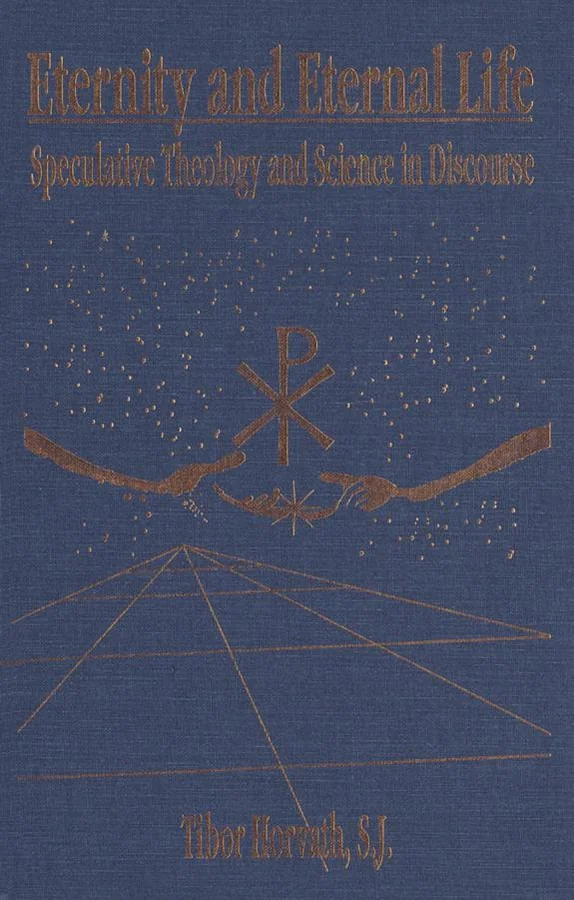
Eternity and Eternal Life
 79
79

Eternity and Eternal Life
Tibor Horvath's "Eternity and Eternal Life" undertakes the formidable task of untangling conceptual knots surrounding existence beyond the mortal coil. The book’s strength lies in its systematic deconstruction of terms like 'eternity' and 'immortality,' drawing from both philosophical theology and speculative thought. Horvath’s detailed analysis of the Augustinian concept of divine timelessness, for instance, is particularly illuminating, offering a clear contrast to more anthropomorphic notions of an afterlife. However, the work occasionally suffers from an overly academic tone, which can obscure the more visceral, existential questions at its heart. The section discussing the implications of quantum physics for consciousness, while ambitious, feels somewhat tangential to the core philosophical arguments. Despite this, the book serves as a valuable primer for anyone wishing to approach these profound topics with intellectual rigor, moving beyond simple faith or disbelief to a more nuanced understanding. It is a solid, if sometimes dry, exploration of enduring human concerns.
📝 Description
79
### What It Is Eternity and Eternal Life, by Tibor Horvath, first published in 2012, examines philosophical and theological concepts surrounding existence beyond the temporal. It dissects various understandings of eternity, from its abstract philosophical definition to its role in religious and mystical traditions. The work questions the nature of an afterlife and the potential for consciousness to persist independently of physical decay. It explores the human desire for permanence and the ways in which different cultures have conceptualized an enduring self.
### Who It's For This book is for individuals interested in the philosophical underpinnings of esotericism, theology, and metaphysics. It appeals to those seeking a rigorous exploration of concepts that transcend conventional scientific or materialist viewpoints. Readers who engage with comparative religion, existential philosophy, or the history of ideas concerning consciousness and immortality will find substantial material. It is also suited for students of spiritual traditions that posit a non-physical reality or eternal soul.
### Historical Context Horvath's work emerged in a period where renewed interest in consciousness studies and philosophical theology was evident, often engaging with critiques of secular materialism. While not directly tied to specific historical esoteric movements like Theosophy or Golden Dawn, it addresses perennial questions that these movements also grappled with regarding the soul's journey and ultimate destiny. The 2012 publication date places it in dialogue with contemporary philosophical debates on transhumanism and the nature of time, offering a counterpoint rooted in older conceptual frameworks of enduring existence.
### Key Concepts The book critically examines the distinction between 'eternal' (without beginning or end) and 'everlasting' (without end, but with a beginning), a crucial point in theological discourse. It probes the concept of the 'immortal soul' as understood across different philosophical traditions, questioning its coherence and implications. Horvath also analyzes the role of 'divine timelessness' in Abrahamic religions, contrasting it with immanent forms of eternity found in some Eastern philosophies. The work engages with the phenomenology of time and how subjective experience might hint at realities beyond linear progression.
💡 Why Read This Book?
• Gain clarity on the philosophical distinctions between 'eternal' and 'everlasting' existence, a concept critical to understanding theological debates since Augustine's writings. • Understand the concept of 'divine timelessness' as presented in Abrahamic traditions, offering a unique perspective on God's relationship with creation. • Explore Horvath's critique of materialist views on consciousness, providing arguments for the possibility of non-physical persistence beyond physical death.
⭐ Reader Reviews
Honest opinions from readers who have explored this book.
❓ Frequently Asked Questions
What is the primary philosophical distinction made in Eternity and Eternal Life?
The book meticulously distinguishes between 'eternity' (often understood as existing without beginning or end, outside of time) and 'everlastingness' (existing without end, but with a beginning), a key point in theological and philosophical discussions of existence.
Which religious traditions are discussed in relation to eternity?
Horvath's work engages with concepts from Abrahamic religions (Judaism, Christianity, Islam) regarding divine timelessness and the immortal soul, often contrasting them with immanent notions of eternity found in Eastern philosophies.
Does the book offer a specific solution to the problem of death?
No, the book does not provide a singular solution or definitive answer. Instead, it offers a rigorous philosophical examination of various conceptual frameworks for understanding existence beyond death and the nature of eternity itself.
What is the author's stance on the possibility of an afterlife?
Tibor Horvath explores the philosophical arguments for and against an afterlife and the persistence of consciousness, critically evaluating different conceptual models without necessarily advocating for one specific belief system.
When was Eternity and Eternal Life first published?
The book, "Eternity and Eternal Life," was first published in 2012, placing its conceptual discussions within the context of early 21st-century philosophical and theological discourse.
Who is the author of Eternity and Eternal Life?
The author is Tibor Horvath. The work was first published in 2012 and explores complex philosophical and theological ideas about existence beyond temporal limitations.
🔮 Key Themes & Symbolism
The Nature of Time
Horvath dissects the human perception of linear time versus the abstract philosophical concept of timelessness. The work explores how different traditions conceptualize a reality unbound by temporal progression, questioning whether 'eternity' is merely an endless duration or an entirely different mode of being. This challenges readers to reconsider their own temporal assumptions, particularly when contemplating existence beyond the physical.
Immortality and the Soul
The book critically examines the notion of an immortal soul, a cornerstone in many religious and esoteric systems. Horvath questions the coherence of this concept, analyzing its philosophical implications and contrasting it with ideas of impersonal consciousness or a non-dualistic ultimate reality. It prompts a deeper inquiry into what 'self' might persist, if anything, beyond corporeal death.
Divine Timelessness
A significant portion of the work is dedicated to the concept of divine timelessness, particularly within Abrahamic theological frameworks. This explores the idea of a divine being existing outside of all temporal constraints. Horvath contrasts this with immanent forms of eternity, inviting comparisons between transcendent and immanent understandings of the ultimate reality or God.
Human Desire for Permanence
Horvath addresses the persistent human yearning for something that endures beyond life's inevitable conclusion. This section delves into how cultural narratives, religious doctrines, and philosophical speculations have sought to satisfy this fundamental desire, offering a psychological and sociological perspective on humanity's engagement with mortality and the eternal.
💬 Memorable Quotes
“Distinguishing eternity from everlastingness is fundamental.”
— This highlights a core argument: true eternity is not merely endless time but an existence outside of time altogether, a crucial conceptual divide in philosophical theology.
“The concept of an immortal soul requires rigorous scrutiny.”
— Horvath challenges the unexamined acceptance of soul-immortality, pushing readers to analyze the philosophical underpinnings and potential contradictions within this widely held belief.
“Divine timelessness offers a unique perspective on God's relation to creation.”
— This points to the theological implications of God existing outside of time, suggesting a radically different understanding of divine action and presence in the world.
“Our experience of time shapes our understanding of existence.”
— This acknowledges the subjective, phenomenological aspect of time, suggesting that our lived experience is a significant factor in how we conceptualize both mortality and potential eternal states.
“Materialist explanations for consciousness face significant challenges when addressing persistence.”
— Horvath implies that purely physicalist accounts of consciousness struggle to account for possibilities of existence beyond the death of the physical body, opening the door for non-materialist considerations.
🌙 Esoteric Significance
Tradition
While not strictly belonging to a single esoteric lineage, Horvath's work engages with perennial philosophical questions central to many Western esoteric traditions, particularly those influenced by Neoplatonism and mystical theology. It dissects concepts like the soul's immortality and the nature of the divine that are foundational to Hermeticism, Kabbalah, and various forms of Gnosticism. Horvath's rigorous philosophical method, however, distinguishes it from more purely devotional or experiential approaches within these traditions.
Symbolism
The book's primary 'symbols' are conceptual rather than visual. The 'Circle' represents the abstract notion of eternity, a state without beginning or end, contrasting with the linear 'Arrow' of temporal existence. The 'Light' of divine timelessness is another motif, symbolizing an ultimate reality that transcends the limitations of human perception and temporal experience, akin to the 'Ein Sof' in Kabbalistic thought.
Modern Relevance
Contemporary thinkers exploring the philosophy of mind, consciousness studies, and theological debates on the nature of God find Horvath's conceptual clarity invaluable. His work provides a robust philosophical framework for those questioning materialist explanations of consciousness and seeking to understand concepts of transcendence, relevant to modern spiritual but not religious movements and philosophical explorations of post-humanism.
👥 Who Should Read This Book
• Students of comparative religion and philosophy: Those seeking to understand the diverse conceptualizations of afterlife and divine existence across different belief systems. • Metaphysical researchers: Individuals interested in rigorous philosophical arguments concerning consciousness, time, and the possibility of non-physical realities. • Theology students and scholars: Readers wanting to engage with sophisticated analyses of concepts like divine timelessness and the immortal soul within philosophical theology.
📜 Historical Context
Tibor Horvath's "Eternity and Eternal Life" (2012) emerged in an intellectual climate still grappling with the implications of post-modernism and a resurgence of interest in metaphysical and spiritual questions, often as a reaction against pervasive scientific materialism. While the book doesn't explicitly align with historical esoteric orders like the Theosophical Society founded by Helena Blavatsky in the late 19th century, it addresses the same perennial concerns regarding the nature of consciousness, the soul, and existence beyond the physical realm that animated such movements. Horvath's work can be seen as engaging in a philosophical dialogue that implicitly includes thinkers like C.S. Lewis, whose theological apologetics from the mid-20th century also sought to bridge faith and reason. Unlike purely historical analyses of esoteric thought, Horvath's approach is primarily philosophical and conceptual, dissecting the very language and logic used to discuss eternity, and offering a rigorous counterpoint to purely secular or reductionist views.
📔 Journal Prompts
The concept of divine timelessness and its implications for free will.
Reflecting on the distinction between eternity and everlastingness in personal belief.
Analyzing personal experiences of time against philosophical models of temporal existence.
The implications of an immortal soul versus a transient consciousness.
Exploring the human desire for permanence in the context of mortality.
🗂️ Glossary
Eternity
Philosophical concept of existence without beginning or end, often understood as existing outside the framework of time itself.
Everlastingness
Existence without end, but with a definite beginning; a continuous duration rather than a state outside of time.
Divine Timelessness
The theological concept of God existing beyond and independent of the passage of time, a state of being perpetually present.
Immortal Soul
The belief in a part of a person that is indestructible and survives the death of the physical body, persisting eternally.
Materialism
A philosophical stance that matter is the fundamental substance in nature, and that all phenomena, including consciousness, are results of material interactions.
Phenomenology of Time
The study of the structure of experience and consciousness as experienced from the first-person point of view, specifically concerning how humans perceive and understand time.
Perennial Philosophy
The idea that all major religions and spiritual traditions share a common core of wisdom concerning the fundamental nature of reality, the divine, and the human condition.