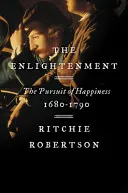
Enlightenment

 83
83

Enlightenment
Ritchie Robertson's "Enlightenment" attempts a rigorous examination of a notoriously slippery subject. The book’s strength lies in its systematic approach, breaking down the amorphous concept of spiritual awakening into digestible components. Robertson’s analysis of the ego's resistance to dissolution, particularly in Chapter 4, offers a sharp, unvarnished perspective that cuts through common platitudes. However, the prose occasionally becomes dense, bordering on academic dryness, which may alienate readers seeking a more immediately experiential account. A notable passage details the symbolic journey of the soul as a descent and ascent, a concept that, while clearly explained, could benefit from more varied illustrative examples beyond the Western Hermetic tradition. "Enlightenment" is a valuable, albeit challenging, scholarly contribution to the literature on spiritual realization.
📝 Description
83
### What It Is Enlightenment by Ritchie Robertson, first published in 2020, is an exploration of the concept of spiritual awakening as understood through various esoteric traditions. The book examines the nature of consciousness, the path toward higher awareness, and the challenges individuals face in their pursuit of ultimate truth. It provides a framework for understanding the stages and experiences associated with profound personal transformation.
### Who It's For This work is intended for serious students of esotericism, comparative religion, and spiritual philosophy. It will appeal to those who have moved beyond introductory texts and seek a deeper, more analytical understanding of enlightenment as a practical and philosophical pursuit. Readers interested in the history of ideas surrounding consciousness and self-realization will find considerable value.
### Historical Context The book emerged in 2020, a period marked by renewed interest in contemplative practices and alternative spiritualities, often fueled by online communities and a broader societal questioning of materialist paradigms. Robertson's work situates itself within a long lineage of mystical thought, drawing parallels and distinctions with figures from earlier centuries who grappled with similar questions of ultimate reality and human potential.
### Key Concepts Robertson dissects concepts such as ego dissolution, the nature of the subtle body, and the role of gnosis or direct spiritual knowledge. The work differentiates between intellectual understanding and experiential realization, a distinction central to many mystical paths. It also touches upon the symbolic language used across traditions to describe the ineffable nature of enlightened states.
💡 Why Read This Book?
• Gain a structured understanding of the stages and characteristics of spiritual awakening, as presented through Robertson's analytical framework, offering a clarity often missing in more devotional texts. • Explore the historical and philosophical underpinnings of enlightenment concepts, referencing specific thinkers and traditions that shaped its discourse before 2020. • Examine the psychological mechanisms of ego resistance and the process of its transcendence, a core element discussed in detail within the book's analytical chapters.
⭐ Reader Reviews
Honest opinions from readers who have explored this book.
❓ Frequently Asked Questions
What does Ritchie Robertson mean by "ego dissolution" in Enlightenment?
In "Enlightenment", Robertson defines ego dissolution as the temporary or permanent breakdown of the individual self's sense of separate identity, a key experience in many spiritual traditions documented in the book.
When was Ritchie Robertson's book Enlightenment first published?
Ritchie Robertson's "Enlightenment" was first published in 2020, reflecting contemporary engagement with spiritual and philosophical concepts.
Does Enlightenment discuss specific esoteric traditions?
Yes, the book explores various esoteric traditions, examining their unique perspectives on achieving enlightenment and the commonalities that bind them, as detailed in its comparative sections.
Is Enlightenment suitable for beginners in esoteric studies?
While "Enlightenment" offers depth, its analytical approach may be more suited to those with some prior exposure to esoteric or philosophical concepts, rather than absolute beginners.
What is the central argument of Enlightenment regarding spiritual practice?
The central argument is that genuine spiritual realization involves a profound transformation of consciousness, moving beyond mere intellectual assent to direct experience, a theme consistently explored throughout the text.
How does Enlightenment relate to modern spiritual movements?
The book analyzes how ancient and historical concepts of enlightenment are interpreted and sometimes adapted within modern spiritual movements, providing a critical lens on contemporary practices.
🔮 Key Themes & Symbolism
The Nature of Consciousness
Robertson examines consciousness not merely as a byproduct of the brain but as a fundamental aspect of reality, capable of expansion and transformation. The book contrasts ordinary waking consciousness with higher states, referencing contemplative practices that aim to transcend the limitations of the individuated self. It explores how various traditions, from ancient mysticism to modern psychological interpretations, conceptualize consciousness and its potential for 'awakening' beyond mundane perception. This theme is crucial for understanding the goal of the spiritual path.
Ego and Self-Realization
A significant portion of the work is dedicated to the concept of the ego – the constructed sense of individual identity – and its role as a primary obstacle to enlightenment. Robertson details the psychological mechanisms through which the ego maintains its boundaries and resists dissolution. The book outlines methods and insights from different esoteric lineages aimed at deconstructing this false self, leading towards a realization of a deeper, more unified Self or True Nature. This process is presented as central to any genuine spiritual breakthrough.
The Path of Transformation
Enlightenment is depicted not as a sudden event but as a process or path involving stages of development and often considerable effort. Robertson discusses the various practices, disciplines, and insights that facilitate this transformation, drawing on historical accounts and philosophical reasoning. The book addresses the challenges and paradoxes inherent in this journey, such as the role of suffering, the necessity of surrender, and the integration of spiritual experiences into daily life. It offers a realistic perspective on the demanding nature of spiritual work.
Symbolism in Spiritual Journeys
The book highlights the importance of symbolic language and archetypal imagery in conveying the ineffable aspects of spiritual experience. Robertson analyzes common motifs found across different traditions – such as the journey, the light, the void, and the divine marriage – as representations of inner states and cosmic principles. Understanding this symbolic lexicon is presented as key to interpreting esoteric texts and navigating the inner landscape effectively. These symbols serve as maps for the seeker's internal exploration.
💬 Memorable Quotes
“The ego is a fortress built against the infinite.”
— This statement encapsulates the book's view of the ego as a defensive structure that actively prevents direct experience of a reality beyond the limited self, highlighting its obstructive role in spiritual seeking.
“Awakening is not an acquisition, but a shedding.”
— This emphasizes that enlightenment is understood as a process of unlearning and releasing illusions and attachments, rather than gaining new knowledge or possessions.
“The map is not the territory, yet it guides the explorer.”
— This highlights the relationship between spiritual teachings (the map) and direct experience (the territory), suggesting that while texts and doctrines are essential guides, they are not the ultimate reality itself.
“The silence between thoughts is the first threshold.”
— This points to the practice of stilling the mind and observing the gaps in mental activity as a foundational step in accessing deeper states of awareness.
“True knowledge arises from being, not merely knowing.”
— This contrasts intellectual understanding with embodied, experiential wisdom, suggesting that profound insight comes from direct participation in reality rather than passive observation.
🌙 Esoteric Significance
Tradition
The work situates itself within the broader Western Esoteric Tradition, drawing connections to Hermeticism, Gnosticism, and various forms of mysticism. It seeks to synthesize insights from these disparate sources, offering a unified perspective on the nature and attainment of enlightenment. Robertson departs from purely sectarian interpretations by focusing on the universal principles underlying diverse paths, aiming to provide a philosophical and psychological framework applicable across traditions.
Symbolism
Key symbols explored include the journey of the soul, often depicted as a descent into darkness followed by an ascent into light, representing the process of confronting the shadow self and achieving higher awareness. The concept of the 'divine spark' or inner light is examined as the inherent spiritual essence within each individual, obscured by the ego. The void or 'unmanifest' is also discussed as the source from which all phenomena arise and to which the enlightened consciousness returns.
Modern Relevance
Contemporary thinkers and practitioners in fields like transpersonal psychology, consciousness studies, and integral theory often reference the foundational concepts discussed in works like Robertson's. The book's emphasis on ego dissolution and the transformative potential of consciousness continues to inform modern contemplative practices and therapeutic approaches seeking to address existential concerns and facilitate personal growth beyond conventional frameworks.
👥 Who Should Read This Book
• Students of comparative religion and philosophy seeking a structured analysis of enlightenment concepts across diverse traditions. • Practitioners of meditation and contemplative arts interested in understanding the deeper psychological and philosophical dimensions of their practice. • Scholars of esotericism and mysticism looking for a contemporary, analytical perspective that bridges historical thought with modern interpretations of spiritual realization.
📜 Historical Context
Published in 2020, Ritchie Robertson's "Enlightenment" arrived during a period of intensified global introspection, where interest in spiritual and psychological well-being surged. The work engages with a long lineage of thought concerning self-transcendence, a tradition stretching from ancient Gnosticism and Hermeticism to the mystical branches of major world religions. Robertson's approach, marked by its analytical rigor, offers a counterpoint to more devotional or purely experiential accounts that often dominated popular spiritual discourse. It implicitly addresses the challenges posed by scientific materialism, a competing intellectual current of the 20th and 21st centuries that often dismisses esoteric claims. The book positions itself within a scholarly effort to understand the phenomenology of spiritual experience, building upon the foundational work of figures like William James and later scholars of religion who examined altered states of consciousness.
📔 Journal Prompts
The ego as a fortress: Identify one belief or habit that reinforces your sense of separate self.
Shedding illusions: What is one deeply held assumption you might be willing to question on your path?
The threshold of silence: How can you cultivate brief moments of stillness in your daily life?
The map and the territory: Reflect on a time when a teaching seemed to 'click' with direct experience.
The divine spark: Consider an experience where you felt a connection to something larger than yourself.
🗂️ Glossary
Ego Dissolution
The temporary or permanent loss of the sense of a separate, individual self, often experienced as a merging with a larger reality or consciousness.
Gnosis
Direct, intuitive knowledge of spiritual truths, often contrasted with intellectual or empirical knowledge. Central to Gnostic traditions.
Subtle Body
In many esoteric systems, a non-physical body composed of energy, chakras, and nadis, considered intermediate between the physical body and pure spirit.
Transcendence
The state or act of surpassing limits, particularly the limitations of the ordinary physical world or the mundane consciousness.
The Unmanifest
The realm of potentiality from which all manifest reality arises; the primordial source or ground of being before creation.
True Self
The essential, authentic nature of an individual, often understood as identical with the divine or the ultimate reality, distinct from the ego.
Spiritual Path
The systematic course of practices, disciplines, and insights undertaken by an individual seeking spiritual realization or enlightenment.