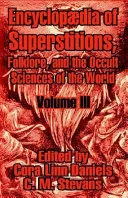
Encyclopædia of Superstitions, Folklore, and the Occult Sciences of the World
 72
72

Encyclopædia of Superstitions, Folklore, and the Occult Sciences of the World
The 'Encyclopædia of Superstitions, Folklore, and the Occult Sciences of the World' is an ambitious undertaking, presenting a vast cross-section of human belief from the late Victorian era. Its strength lies in its sheer scope and the organizational effort to alphabetize entries within broad categories, offering a historical snapshot of occult and folk traditions as perceived in 1903. For instance, its detailed entries on various forms of divination, from ancient scrying to more modern spiritualist practices, are particularly illuminating. However, the work's primary limitation is its inherent bias; it reflects the cultural and scientific perspectives of its time, often presenting superstitions with a degree of detached curiosity or implicit judgment rather than a neutral anthropological stance. The interpretation of 'demonology' and 'witchcraft' often leans towards cataloging perceived errors rather than exploring the lived experience or symbolic meaning. Despite these shortcomings, its value as a historical document for understanding the intellectual landscape of early occult studies remains considerable.
📝 Description
72
### What It Is This monumental work, originally published in 1903, functions as a comprehensive compendium of human belief and practice concerning the mysteries of existence. It meticulously documents intuitions and instincts that have shaped civilization across more than six millennia. The authors, Cora Linn Daniels and C. M. Stevans, aimed to capture the foundational elements of theology, mythology, demonology, and the occult sciences as understood at the turn of the 20th century.
### Who It's For Scholars of folklore, comparative religion, and esoteric history will find this an invaluable resource. It is also suited for those interested in the historical underpinnings of modern occultism, psychology, and sociology. Anyone seeking to understand the evolution of human belief systems, from ancient superstitions to early 20th-century occult theories, will benefit from its breadth.
### Historical Context The Encyclopædia emerged during a period of intense interest in the occult and spiritualism, following the rise of Theosophy and the Hermetic Order of the Golden Dawn. It sought to categorize and present a vast array of beliefs that were often viewed with skepticism by mainstream academia. The work reflects an attempt to compile and legitimize a wide spectrum of human thought, from folk magic to more formal mystical traditions, before the full impact of early modern psychology and anthropology.
### Key Concepts The book systematically explores a wide range of phenomena, including divination practices, magical beliefs, witchcraft traditions, and the lore surrounding various supernatural entities. It examines the shared roots and divergent expressions of these beliefs across different cultures and historical epochs. The authors emphasize the underlying human instincts and intuitions that drive these persistent forms of belief and ritual, presenting them not as mere curiosities but as integral to the development of civilization itself.
💡 Why Read This Book?
• Gain a historical perspective on divination practices as documented in 1903, understanding early 20th-century interpretations of techniques like scrying. • Explore the categorized entries on witchcraft and folk magic, offering concrete examples of beliefs prevalent at the turn of the century. • Understand the foundational intuitions and instincts underlying civilization, as theorized by Daniels and Stevans in their extensive 1903 compilation.
⭐ Reader Reviews
Honest opinions from readers who have explored this book.
❓ Frequently Asked Questions
When was the Encyclopædia of Superstitions, Folklore, and the Occult Sciences of the World first published?
The Encyclopædia was first published in 1903, offering a comprehensive look at human beliefs and occult practices from over six thousand years of history.
Who are the authors of this extensive work?
The book is authored by Cora Linn Daniels and C. M. Stevans, who compiled this extensive library of human belief and practice.
What kind of information can I expect to find within its pages?
You can expect to find entries on a vast array of topics, including mythology, demonology, theology, and various occult sciences, arranged alphabetically within broad subject categories.
Is this book suitable for academic research?
Yes, it serves as an excellent source for historical perspective on superstitions and folklore, valuable for academic research into the history of beliefs.
Does the book cover a wide range of cultures?
The original blurb suggests it covers human belief and practice through more than six thousand years of experience and progress, implying a broad, though historically situated, cultural scope.
What is the original subtitle of the book?
The original subtitle is 'A comprehensive library of human belief and practice in the mysteries of life through more than six thousand years of experience and progress including the fundamental intuitions and instincts underlying the structure of civilization, theology, mythology, demonology, ma'.
🔮 Key Themes & Symbolism
The Evolution of Belief
This work meticulously tracks the historical trajectory of human belief systems, from ancient superstitions to more formalized occult sciences as understood in 1903. It emphasizes how fundamental intuitions and instincts have shaped civilization, theology, and mythology across millennia. The categorized, alphabetical arrangement allows for a comparative study of how similar concepts, like divination or demonology, have manifested and transformed across different eras and cultures, providing a rich historical context for understanding the persistence of these ideas.
Foundations of Civilization
Daniels and Stevans posit that the 'fundamental intuitions and instincts' underlying human belief are crucial to the very structure of civilization. The Encyclopædia explores how concepts within mythology, theology, and the occult sciences have served as foundational elements in societal development. By examining practices and beliefs that have endured for over six thousand years, the work offers insight into the psychological and cultural forces that have shaped human societies and continue to influence our understanding of the world.
Folklore and the Occult
The compendium serves as a vital record of folklore and occult sciences, preserving a wide array of practices and beliefs that were prevalent or historically significant by the early 20th century. It delves into subjects like witchcraft, magical practices, and supernatural lore, presenting them as integral components of human experience and intellectual history. This broad scope makes it an indispensable resource for understanding the historical landscape of esoteric thought and folk traditions.
Human Instinct and Intuition
A central thesis of the work is the enduring power of human instinct and intuition in shaping beliefs and practices related to the mysteries of life. The authors sought to document how these innate drives manifest across diverse cultural and historical contexts, forming the bedrock of everything from religious dogma to folk superstitions. The Encyclopædia acts as an archive of these manifestations, illustrating their pervasive influence on human understanding and societal structures over vast periods.
💬 Memorable Quotes
“A comprehensive library of human belief and practice in the mysteries of life through more than six thousand years of experience and progress.”
— This phrase from the original subtitle encapsulates the book's grand ambition: to serve as an exhaustive historical record of humanity's attempts to understand and interact with the unknown aspects of existence, spanning vast epochs.
“Fundamental intuitions and instincts underlying the structure of civilization, theology, mythology, demonology.”
— This excerpt highlights the authors' belief that seemingly disparate fields like civilization, theology, and demonology are rooted in shared, primal human instincts and intuitions, suggesting an underlying unity in human psychological and cultural development.
“Hundreds of entries are arranged alphabetically within broad subject categories.”
— This descriptive statement points to the organizational structure of the work, emphasizing its utility as a reference tool that makes a vast amount of information on superstitions and folklore accessible for study and comparison.
“An excellent source for an historical perspective on superstitions and folklore.”
— This evaluation underscores the book's primary value as a historical document, providing researchers and interested readers with a foundational text for understanding the evolution and context of folk beliefs and occult practices.
“The mysteries of life through more than six thousand years of experience and progress.”
— This phrase emphasizes the temporal scope of the work, indicating its deep dive into the long-standing human quest for knowledge regarding life's profound questions, drawing from ancient traditions up to the early 20th century.
🌙 Esoteric Significance
Tradition
This work falls broadly within the Western esoteric tradition, particularly aligning with the late 19th and early 20th-century interest in collecting and categorizing occult phenomena. While not explicitly tied to a single lineage like Hermeticism or Kabbalah, it serves as a historical repository that documents traditions and beliefs that fed into or ran parallel to these movements, including folk magic and early spiritualist ideas.
Symbolism
The Encyclopædia likely touches upon numerous symbols and motifs prevalent in folklore and occultism. For instance, concepts of 'divination' represent humanity's attempt to access hidden knowledge or future events, often employing symbolic tools like cards or celestial bodies. 'Witchcraft' entries would explore symbols associated with nature, the moon, and specific herbs, reflecting a connection to primal forces and earth-based magic that contrasts with more celestial or intellectual traditions.
Modern Relevance
Contemporary practitioners of modern witchcraft, neo-paganism, and eclectic magical traditions often draw upon historical compendiums like this for foundational knowledge and inspiration. Researchers in comparative mythology, folklore studies, and the history of consciousness also utilize such works to trace the lineage of beliefs and practices. The book's comprehensive nature makes it a valuable reference for understanding the intellectual landscape from which many contemporary esoteric paths emerged.
👥 Who Should Read This Book
• Researchers of comparative mythology and folklore: Gain access to a vast, historically contextualized collection of beliefs and practices from over six thousand years of human history. • Students of early 20th-century occultism: Understand the intellectual milieu and the types of esoteric knowledge being documented and disseminated at the turn of the century. • General readers interested in the history of human belief: Explore the origins and evolution of superstitions, magical thinking, and supernatural lore as compiled by authors from a specific historical period.
📜 Historical Context
Published in 1903, the 'Encyclopædia of Superstitions, Folklore, and the Occult Sciences of the World' emerged during a period of burgeoning interest in spiritualism and esoteric studies, heavily influenced by movements like Theosophy, founded by Helena Blavatsky in 1875. The late Victorian and Edwardian eras saw a concurrent rise in anthropological and psychological inquiry, yet many scholars viewed occultism and folk beliefs with skepticism. This work by Daniels and Stevans can be seen as an attempt to systematically compile and legitimize a broad spectrum of human belief, from ancient rituals to contemporary occult practices, positioning itself against the emerging scientific rationalism of the time. It sought to present these traditions not merely as curiosities but as integral to the development of civilization itself, reflecting a desire to understand the roots of human thought beyond purely materialist explanations. Its reception likely varied, appreciated by esoteric circles while perhaps viewed as unscientific by mainstream academia.
📔 Journal Prompts
The fundamental intuitions and instincts documented in the Encyclopædia.
Beliefs surrounding demonology across different historical periods.
The symbolic meaning of specific folklore entries from the 1903 text.
How the concept of 'mysteries of life' is explored through various occult sciences.
The historical perspective offered on witchcraft traditions.
🗂️ Glossary
Demonology
The study or belief in demons and their influence. In the context of the Encyclopædia, it refers to historical beliefs about supernatural malevolent entities and their roles in human affairs and the structure of the cosmos.
Divination
The practice of seeking knowledge of the future or the unknown by supernatural means. The work likely details various methods and historical beliefs surrounding divination.
Mythology
A collection of myths, especially one belonging to a particular religious or cultural tradition. This term in the book refers to stories and beliefs that explain natural phenomena or the origins of the world.
Occult Sciences
Branches of knowledge that deal with supernatural, mystical, or magical aspects, typically excluded from mainstream science. The book aims to compile these as understood historically.
Superstition
An excessive or irrational belief in supernatural influences, especially as leading to magical practices or strange rituals. The work cataloged numerous such beliefs.
Theology
The study of the nature of God and religious belief. In this context, it encompasses historical doctrines and beliefs about the divine and religious systems.
Witchcraft
The practice of magic, especially sorcery, by a person believed to have supernatural powers. The book likely covers historical accounts and folklore surrounding this practice.