Enchantment of the faerie realm
 75
75

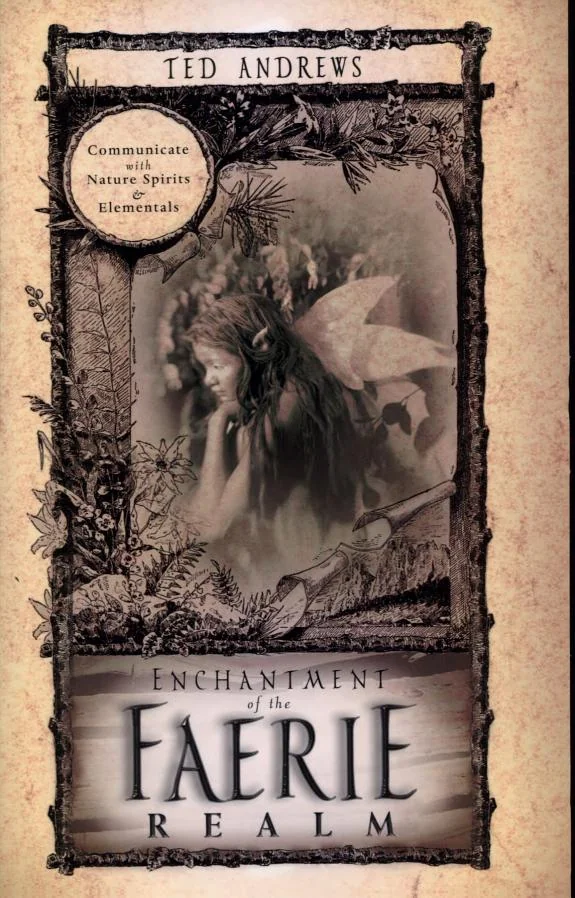
Enchantment of the faerie realm
Ted Andrews approaches the Fae with a serious, almost academic rigor that is refreshing in a field often dominated by whimsical fancy. His particular strength lies in connecting faerie lore to tangible, energetic principles, suggesting that these beings are not just storybook characters but forces that can be understood and potentially interacted with through focused consciousness. The work's limitation, however, is its occasional density; while aiming for depth, some passages might require rereading to fully grasp the energetic mechanics described. A particularly striking section discusses the 'Veil' between worlds and how intention acts as a key to perceive beyond it, a concept Andrews elaborates upon with considerable detail. "Enchantment of the Faerie Realm" offers a grounded, esoteric perspective on a subject often shrouded in myth.
📝 Description
75
Ted Andrews' 1993 book examines the Fae as energetic forces beyond folklore.
Ted Andrews' "Enchantment of the Faerie Realm," published in 1993, examines the Fae, their origins, and their connection to humanity. The book moves beyond simple folklore to discuss the energetic and spiritual dimensions associated with these beings. Andrews investigates how different cultures have historically viewed and interacted with the faerie. He presents a framework for understanding them not just as mythical creatures, but as potent intelligences or forces.
This work is suited for those interested in the metaphysical aspects of faerie lore. It appeals to readers who approach esoteric studies analytically, seeking to grasp underlying principles and energetic dynamics. Those who engage with mythology, comparative religion, or shamanic practices will find connections to broader spiritual traditions. The book is also for individuals who want to cultivate a respectful and informed relationship with unseen realms.
Published in 1993, "Enchantment of the Faerie Realm" emerged during a time when interest in nature-based spirituality was growing. Authors were re-examining folklore through modern esoteric viewpoints. While some writers focused on angelic communication or druidic traditions, Andrews specifically addressed the Fae. He integrated their lore with concepts of energy work and spiritual ecology. His perspective offered a grounding in historical accounts while providing an esoteric interpretation.
💡 Why Read This Book?
• You will learn to distinguish between folkloric accounts and the energetic principles of the Fae, as detailed in Andrews' examination of their elemental nature, offering a unique esoteric framework. • You will gain practical understanding of how intention and respect are presented as crucial elements for perceived interaction with the faerie, a concept explored in the chapter discussing the 'Veil'. • You will discover how the Fae are linked to specific natural cycles and places, providing a grounded perspective for those interested in nature-based spirituality and ecological connections.
⭐ Reader Reviews
Honest opinions from readers who have explored this book.
❓ Frequently Asked Questions
When was Ted Andrews' "Enchantment of the Faerie Realm" first published?
Ted Andrews' "Enchantment of the Faerie Realm" was first published in 1993, placing it within a period of renewed interest in esoteric and nature-based spiritualities.
What is the primary focus of "Enchantment of the Faerie Realm"?
The book focuses on understanding the Fae from an esoteric perspective, exploring their energetic nature, origins, and potential interactions with humans beyond simple folklore.
Does the book offer practical advice for interacting with faeries?
Yes, the work provides guidance on cultivating sensitivity and approaching perceived interaction with the Fae through intention and respect, as discussed in sections on energetic communion.
What cultural perspectives on faeries does Ted Andrews explore?
Andrews examines various cultural perceptions of the Fae, presenting them not just as myths but as potent forces or intelligences understood differently across traditions.
Is this book suitable for beginners in esoteric studies?
It is suitable for beginners with an analytical mindset interested in metaphysical aspects of folklore, though its depth may require dedicated study for full comprehension.
What is the significance of the 'Faerie Realm' as presented by Andrews?
The 'Faerie Realm' is depicted as an energetic dimension, a concept Andrews explores to explain the perceived existence and influence of faerie beings within a spiritual framework.
🔮 Key Themes & Symbolism
Energetic Nature of the Fae
Andrews posits that the Fae are not merely fictional beings but expressions of potent, subtle energies. The work explores how these energies manifest, connecting them to elemental forces and natural phenomena. This perspective encourages readers to view the faerie realm as an active, vibrational aspect of existence, accessible through focused consciousness and energetic attunement rather than solely through imagination. The book details how understanding this energetic signature is key to perceiving them.
The Veil and Perception
A central concept is the 'Veil' separating the human world from the faerie realm. Andrews suggests this is not a physical barrier but a perceptual one, influenced by consciousness, intention, and energetic resonance. He provides insights into how one might 'thin' this veil, not through force, but through cultivating inner stillness and developing a respectful, open awareness. This theme underscores the subjective nature of spiritual perception and the role of the individual's inner state.
Cultural Integration of Faerie Lore
The book synthesizes various cultural narratives and historical accounts of faerie encounters. Andrews examines how different societies have interpreted and interacted with these beings, suggesting common threads of energetic experience beneath diverse mythologies. This comparative approach highlights the enduring human fascination with the Fae and their perceived role as guardians or spirits of the land, offering a broader context for their significance in esoteric traditions.
Respectful Interaction and Ecology
Andrews emphasizes that any perceived interaction with the Fae must be approached with profound respect and an understanding of natural balance. The Fae are presented as intrinsically linked to the health of the environment. The work advocates for an ecological approach, suggesting that a harmonious relationship with nature is foundational to any meaningful connection with these beings. This promotes a responsible and grounded engagement with the unseen aspects of the natural world.
💬 Memorable Quotes
Direct passages from the work, attributed to the author.
“The Faerie Realm is not a place apart, but an energetic dimension.”
— This interpretation suggests that the Fae exist within a vibratory stratum of reality, accessible to those who can attune their consciousness to its specific frequency, rather than being confined to a separate physical location.
“Intention acts as the key to perceive beyond the Veil.”
— This highlights the power of focused will and directed consciousness in spiritual perception. The quote implies that a clear, purposeful mental state is essential for bridging the gap between mundane awareness and the subtler realms.
“Respect for nature is the first step toward faerie communion.”
— This emphasizes an ecological and ethical foundation for esoteric practice. It posits that a genuine connection with the unseen forces of nature, like the Fae, arises from a cultivated reverence for the natural world itself.
“Faerie beings are tied to the elemental forces.”
— This concept links the Fae to the fundamental energies of earth, air, fire, and water, suggesting they embody or act as conduits for these primal forces within the natural world.
“Cultivate your inner sensitivity to perceive subtle energies.”
— This is a practical directive for spiritual development, advising that enhanced awareness of unseen forces, including those attributed to the Fae, is an internal cultivation process.
🌙 Esoteric Significance
Tradition
This work aligns with the broader Western Esoteric tradition, particularly drawing from nature-based spiritualities, animism, and theories of subtle energy prevalent in the late 20th-century esoteric milieu. It departs from strictly Hermetic or Kabbalistic lineages by focusing on a specific class of entities (the Fae) often relegated to folklore, but reinterpreting them through an energetic and conscious lens akin to how other traditions might discuss elementals or nature spirits.
Symbolism
Key symbols include the 'Veil,' representing the perceptual barrier between dimensions, and elemental forces (earth, air, fire, water) which are seen as the energetic substratum of the Fae. Natural locations such as ancient forests, standing stones, and liminal spaces are also symbolic, acting as points of energetic convergence where the faerie realm is perceived to be more accessible.
Modern Relevance
Contemporary practitioners of animism, eco-spirituality, and certain neo-pagan paths continue to find value in Andrews' work. His emphasis on energetic interaction and the concept of the Veil influences modern approaches to spirit communication and the development of subtle sensory perception, resonating with those seeking to bridge the gap between the material and the unseen in their spiritual practice.
👥 Who Should Read This Book
• Students of comparative mythology and folklore seeking an esoteric interpretation of faerie traditions, moving beyond purely academic or folkloric analysis. • Practitioners of nature-based spirituality and neo-paganism interested in understanding the energetic role of Fae or nature spirits within their belief systems. • Individuals exploring the development of subtle perception and consciousness work, looking for frameworks to understand unseen realms and subtle energies.
📜 Historical Context
Published in 1993, "Enchantment of the Faerie Realm" emerged during a decade marked by a burgeoning interest in New Age spirituality, nature mysticism, and a re-evaluation of ancient folklore through modern esoteric frameworks. This period saw the rise of authors exploring various facets of the occult and spiritual healing, such as Doreen Virtue, who focused on angelic realms, and writers within neo-pagan and Druidic circles like John Michael Greer. Ted Andrews' work carved a distinct niche by focusing specifically on the Fae, integrating their traditional lore with concepts of energy work and subtle perception. It offered a more systematic, less purely romanticized view compared to some contemporary popularizations, aiming to provide a framework for understanding these beings as energetic intelligences. The book's reception was within a growing community seeking deeper, more metaphysical interpretations of myth and folklore, distinguishing itself from purely academic folklore studies or simplistic children's tales.
📔 Journal Prompts
The energetic dimension of the Faerie Realm: how does this concept shift your perception?
Reflect on the 'Veil' as a perceptual barrier and how intention influences its thinning.
Consider specific natural places you feel possess a unique energy; how might this relate to faerie presence?
What does 'respect for nature' mean in the context of potential faerie interaction?
Explore the idea of faerie beings as manifestations of elemental forces in your own experience.
🗂️ Glossary
Faerie Realm
An energetic dimension or plane of existence described as the dwelling place or energetic signature of faerie beings, distinct from the purely physical world.
Veil
A metaphorical or energetic barrier that separates human consciousness from subtler realms or entities, such as the Faerie Realm.
Energetic Communion
A form of interaction or connection based on shared vibrational frequencies and consciousness, rather than physical contact or verbal communication.
Elemental Forces
The fundamental energies of nature, traditionally categorized as earth, air, fire, and water, believed to be intrinsically linked to the nature of faerie beings.
Subtle Energies
Non-physical energies or vibratory forces that are not detectable by conventional scientific instruments but are considered perceptible through heightened consciousness or specialized techniques.
Liminal Spaces
Thresholds or transitional areas, both physical and psychological, where the boundaries between different states of being or realms are considered weaker.
Attunement
The process of aligning one's own energetic frequency or consciousness with that of another entity, place, or dimension.
🔮 Readers Also Liked
Browse all →








More by Ted Andrews
All books →




More Free Occult Philosophy Books
View all →