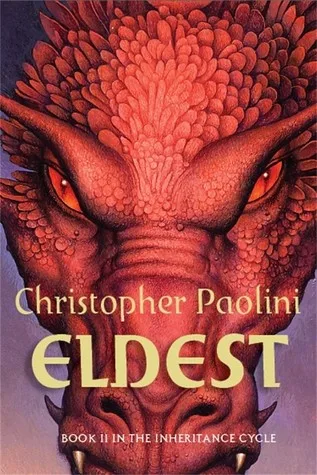
Eldest
 75
75

Eldest
Christopher Paolini’s *Eldest* endeavors to expand the world and stakes established in *Eragon*, and for the most part, it succeeds. The narrative’s strength lies in its diligent world-building; Paolini clearly has a deep affection for Alagaësia, populating it with distinct cultures and histories that feel lived-in. The exploration of the Varden’s internal politics and the burgeoning rebellion against Galbatorix provides a compelling backdrop to Eragon’s personal growth. However, the pacing occasionally falters, particularly during sections focused on exposition or Eragon's training, which can feel drawn out. A particular moment that exemplifies the book's scope is the detailed description of Ellesméra and the elves' ancient ways, offering a glimpse into a world far older and more nuanced than the immediate conflict.
*Eldest* is a solid, if at times predictable, continuation of the saga, offering more of what fans loved about the first book while deepening the established lore. It’s a commendable effort that expands the narrative scope significantly.
📝 Description
75
### What It Is
*Eldest*, the second installment in Christopher Paolini's *Inheritance Cycle*, published in 2019, continues the epic fantasy saga of Eragon and his dragon Saphira. Set in the fictional world of Alagaësia, the novel plunges deeper into the political machinations and ancient conflicts that threaten the land. It expands the lore introduced in *Eragon*, exploring the history and culture of the dragon riders and their adversaries, the Urgals and the tyrannical Galbatorix. The narrative follows Eragon as he grapples with his destiny as a dragon rider and seeks to understand his role in the impending war.
### Who It's For
This volume is primarily for fans of the *Inheritance Cycle* who are invested in the character arcs of Eragon, Saphira, and their allies. Readers who appreciate detailed world-building, intricate plotlines, and a classic hero's journey structure will find *Eldest* engaging. Those interested in themes of destiny, power, and the responsibilities that come with leadership will also connect with its narrative. It is suited for young adults and adult readers who enjoy expansive fantasy narratives with a clear moral compass.
### Historical Context
*Eldest* was published in 2005, a period when epic fantasy was experiencing a resurgence in popularity, partly fueled by the success of J.R.R. Tolkien's *The Lord of the Rings* film adaptations and J.K. Rowling's *Harry Potter* series. Paolini's work emerged within this landscape, offering a more traditional fantasy narrative that harkened back to classic tropes while incorporating modern storytelling sensibilities. The book's reception was largely positive among its target audience, though some critics noted its similarities to established fantasy works. Its publication contributed to the broader trend of accessible, high-concept fantasy for a younger demographic, solidifying Paolini's position as a prominent voice in contemporary children's and young adult literature.
### Key Concepts
The novel delves into several core concepts crucial to its world. The Dragon Riders, an ancient order tasked with maintaining peace, are central, with their bond with dragons explored in depth. The narrative also examines the nature of magic, its costs, and its limitations, particularly as Eragon learns to harness his burgeoning powers. The concept of fate versus free will is a persistent undercurrent, as Eragon struggles with the prophecies surrounding him and the choices he must make. Furthermore, the stark contrast between the oppressive rule of King Galbatorix and the burgeoning rebellion highlights themes of tyranny, freedom, and the sacrifices required for liberation.
💡 Why Read This Book?
• Learn about the complex bond between dragon riders and their dragons, as illustrated by Eragon and Saphira's evolving relationship, revealing unique dynamics of trust and power. • Understand the societal structures and ancient wisdom of the elves, as depicted during Eragon's time in Ellesméra, offering insights into a long-lived, magical civilization. • Witness the challenges of leadership and rebellion through the Varden's efforts against Galbatorix's tyranny, examining the moral compromises inherent in large-scale conflict.
⭐ Reader Reviews
Honest opinions from readers who have explored this book.
❓ Frequently Asked Questions
When was Christopher Paolini's *Eldest* first published?
Christopher Paolini's *Eldest* was first published in 2005, making it the second book in the *Inheritance Cycle* series.
What is the primary setting for *Eldest*?
The primary setting for *Eldest* is the fictional continent of Alagaësia, with significant portions of the narrative taking place in the elven city of Ellesméra and the dwarf stronghold of Tronjheim.
Who are the main protagonists in *Eldest*?
The main protagonists in *Eldest* are Eragon, a young dragon rider, and his dragon Saphira, as they navigate the ongoing war against the tyrannical King Galbatorix.
What new magical elements are explored in *Eldest*?
*Eldest* explores advanced applications of magic, including the use of ancient languages for powerful spells, the magic of the elves, and the limitations and costs associated with wielding significant arcane power.
Does *Eldest* introduce new races or cultures?
Yes, *Eldest* significantly expands on the cultures introduced in *Eragon*, featuring detailed explorations of the elves in Ellesméra and the dwarves in their mountain cities, providing distinct societal structures and histories.
What is the main conflict driving the plot of *Eldest*?
The main conflict in *Eldest* is the escalating war waged by the Varden and their allies against the tyrannical rule of King Galbatorix, with Eragon playing an increasingly pivotal role.
🔮 Key Themes & Symbolism
The Dragon Rider Bond
The intricate and profound connection between dragon riders and their dragons is a central pillar of *Eldest*. This bond transcends mere companionship; it is a psychic and emotional linkage that allows for shared consciousness, amplified abilities, and a deep understanding of one another. Paolini meticulously details how this symbiosis shapes the rider's identity and capabilities, exploring its origins in ancient lore and its critical role in maintaining balance within Alagaësia. The narrative emphasizes mutual respect and the shared responsibility that comes with such a powerful union, highlighting it as a source of both strength and vulnerability in the face of overwhelming conflict.
The Weight of Destiny
Eragon's journey in *Eldest* is heavily defined by the burden of destiny and prophecy. As a dragon rider, he is thrust into a role of immense importance, tasked with confronting the dark sorcerer King Galbatorix. The novel examines the psychological toll this takes on a young individual, forcing him to confront difficult choices and the potential consequences of his actions. Paolini explores the tension between predestination and free will, questioning whether Eragon is merely fulfilling a preordained path or actively shaping his own future through his decisions and growth, especially as he learns more about the history of the Riders.
The Nature of Magic and Power
Magic in *Eldest* is presented not as an inexhaustible force, but as a complex system with rules, limitations, and costs. Eragon's training reveals the necessity of understanding the Ancient Language, the true source of magical power, and the physical and mental exertion required to perform spells. The book contrasts different forms of magic, from the innate abilities of dragons and elves to the more structured spellcasting of humans. It also explores the corrupting influence of power, particularly through the example of Galbatorix, underscoring the ethical considerations that must accompany the use of magical abilities and the responsibility that comes with wielding great influence.
Tyranny and Rebellion
The overarching conflict in *Eldest* is the struggle against Galbatorix's oppressive regime. The novel portrays the devastating impact of tyranny on the land and its people, highlighting the fear and suffering it engenders. In response, the Varden represent the hope of rebellion, uniting disparate factions against a common enemy. Paolini explores the complexities of this rebellion, including the internal politics, strategic challenges, and the moral compromises that arise in warfare. The narrative questions the nature of true leadership and the sacrifices required to fight for freedom, contrasting the methods of the tyrant with the ideals of the resistance.
💬 Memorable Quotes
“The Spine is a dangerous place, Eragon. Full of things that want to eat you.”
— This quote, delivered by Brom, encapsulates the perilous nature of Eragon's initial journey and the harsh realities of Alagaësia. It serves as an early warning about the dangers that lie beyond the safety of his home, foreshadowing the many threats he will face as a nascent dragon rider.
“It is not the destiny of a dragon to be a slave to men.”
— Saphira's assertion highlights the independent spirit and inherent nobility of dragons, emphasizing their equality with humans and their right to freedom. This statement is crucial in understanding the dragon rider bond as one of partnership, not servitude, and underpins the conflict against Galbatorix's enslavement of dragons.
“Magic is a dangerous thing. It is easy to misuse it, and harder still to master.”
— This sentiment, often echoed through the teachings Eragon receives, underscores the central theme of responsibility in wielding power. It warns against the hubris of believing magic is simple, stressing the discipline, knowledge, and ethical considerations required to use it effectively and without succumbing to its darker temptations.
“The elves are a strange race. They live for centuries, and their ways are not our ways.”
— This observation, likely made by a human character, points to the profound cultural and temporal differences between elves and humans. It sets the stage for Eragon's immersion in elven society in Ellesméra, where he must learn to navigate their ancient customs, distinct perspectives, and unique relationship with magic and the world.
“A king’s power is in his will. And in the loyalty of his subjects.”
— This statement reflects the political realities of Alagaësia, particularly the foundation of Galbatorix's rule. It highlights the dual nature of authority—personal resolve and the social contract—and serves as a point of contrast to the Varden's more decentralized and ideologically driven rebellion.
🌙 Esoteric Significance
Tradition
While *Eldest* is primarily a work of epic fantasy, its exploration of ancient orders, hidden knowledge, and the profound connection between sentient beings aligns tangentially with certain esoteric traditions. The concept of the Dragon Riders, an ancient order tasked with maintaining balance, echoes Gnostic ideas of a guiding, enlightened vanguard. The deep, almost telepathic bond between rider and dragon can be seen as a metaphor for higher consciousness or spiritual union, a recurring theme in Hermeticism and Neoplatonism, where the union of disparate elements leads to a greater whole.
Symbolism
The Dragon itself serves as a potent symbol in *Eldest*, representing primal power, ancient wisdom, and a connection to the natural and magical forces of the world. Its bond with the rider symbolizes the integration of instinctual power with conscious will, a core concept in alchemical and Hermetic philosophies. The Ancient Language, the true source of magic, can be interpreted as a representation of the primal Logos or divine utterance from which creation springs, suggesting that true power lies in understanding and speaking the fundamental language of existence.
Modern Relevance
Contemporary practitioners of magic and spiritual seekers may find resonance in *Eldest*'s exploration of the rider-dragon bond as a model for deep empathic connection and amplified personal power. The novel's emphasis on the responsibility that accompanies great ability speaks to modern ethical considerations in personal development and the use of influence. Furthermore, the series' detailed world-building and exploration of ancient orders can inspire those interested in creating their own magical systems or exploring archetypal narratives in contemporary spiritual thought, drawing parallels to modern magical orders or philosophical systems.
👥 Who Should Read This Book
• Young adult readers seeking immersive fantasy worlds and compelling character arcs, particularly those who enjoy tales of dragons, magic, and epic quests. • Fans of the *Inheritance Cycle* who wish to continue following Eragon and Saphira's journey and explore the deeper lore of Alagaësia. • Readers interested in classic hero's journey narratives that examine themes of destiny, responsibility, and the fight against tyranny.
📜 Historical Context
Published in 2005, *Eldest* arrived during a golden age for epic fantasy, riding the wave of renewed interest sparked by blockbuster film adaptations and a burgeoning young adult market. Christopher Paolini’s *Inheritance Cycle*, beginning with *Eragon* in 2003, offered a classic hero’s journey steeped in familiar fantasy tropes but presented with a youthful energy and a focus on intricate world-building. The series found a massive audience among younger readers, a demographic actively seeking expansive narratives with clear good-versus-evil conflicts. While Paolini’s work shares thematic and structural similarities with foundational authors like J.R.R. Tolkien, its accessible prose and detailed lore distinguished it within the contemporary fantasy landscape. The critical reception, while largely positive for its target audience, sometimes noted its derivative qualities compared to established works. *Eldest*'s success further cemented the viability of intricate, multi-volume fantasy series for a generation, influencing subsequent trends in the genre by demonstrating the commercial appeal of well-crafted, immersive worlds and relatable young protagonists facing immense challenges.
📔 Journal Prompts
The nature of the bond between Eragon and Saphira, and its implications for shared consciousness.
The elves' perspective on time and mortality, as experienced in Ellesméra.
Galbatorix's use of the Ancient Language and the corrupting influence of power.
The Varden's strategy and the sacrifices made in their rebellion against the King.
Eragon's internal struggle with his destiny and personal choices.
🗂️ Glossary
Alagaësia
The fictional continent where the events of the *Inheritance Cycle* take place, characterized by diverse landscapes, races, and a history marked by conflict and magic.
Dragon Rider
An individual bonded to a dragon, forming a powerful partnership that historically served as guardians and peacekeepers of Alagaësia. The bond grants enhanced abilities to both rider and dragon.
The Spine
A vast and dangerous mountain range in Alagaësia, known for its treacherous terrain and the wild creatures that inhabit it. It is a significant early location in Eragon's journey.
Varden
A rebel organization dedicated to overthrowing the tyrannical King Galbatorix. They are a diverse group comprising various races and individuals seeking freedom from oppression.
Ancient Language
The true language of magic in Alagaësia. Speaking it grants the ability to wield powerful spells, but its use requires deep knowledge and carries significant energy costs.
Ellesméra
The hidden city of the elves, a place of great beauty, ancient wisdom, and magical power, located deep within the forest of Du Weldenvarden.
Urgals
A race of horned, warlike humanoids, often serving as soldiers for King Galbatorix. Their origins and culture are explored, revealing a complex relationship with their own nature.