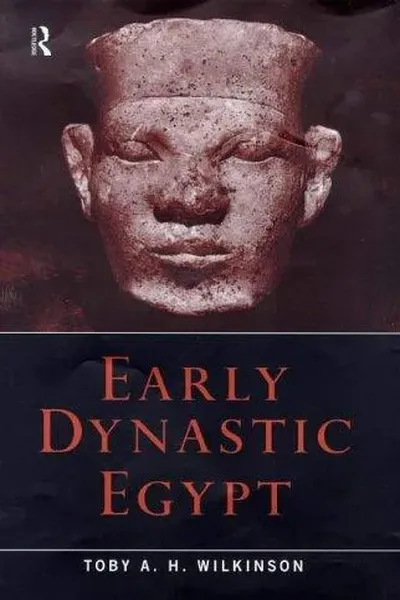
Early dynastic Egypt

 83
83

Early dynastic Egypt
Toby A. H. Wilkinson’s Early Dynastic Egypt presents a densely packed, authoritative account of Egypt’s genesis. The book excels in its detailed synthesis of archaeological findings and textual evidence, particularly in tracing the evolution of royal burial practices at Abydos. Wilkinson's strength lies in his meticulous assembly of disparate data into a coherent narrative of state formation. A notable limitation, however, is the dense prose which, while accurate, can present a steep learning curve for the uninitiated. For instance, the intricate discussion of the Narmer Palette’s iconography, while crucial, requires significant prior knowledge to fully appreciate. The work’s rigorous scholarship makes it an indispensable resource, though perhaps less accessible than other overviews. It is a foundational text for understanding Egypt's earliest pharaohs.
📝 Description
83
### What It Is Early Dynastic Egypt by Toby A. H. Wilkinson offers a comprehensive examination of the foundational period of ancient Egyptian civilization. This work meticulously reconstructs the political, social, and cultural landscape that coalesced from scattered prehistoric settlements into a unified kingdom. It details the emergence of kingship, the development of monumental architecture, and the nascent stages of hieroglyphic writing. The book charts the trajectory from pre-dynastic chiefdoms to the establishment of a centralized state, providing a detailed account of the processes and key figures involved.
### Who It's For This volume is aimed at serious students of ancient history, archaeology, and Egyptology. It will appeal to those seeking a rigorous, fact-based account of Egypt's formative centuries, moving beyond popular myth to engage with scholarly consensus. Readers interested in the origins of statehood, the development of early bureaucracies, and the complex interplay of power and ideology in antiquity will find substantial material here. It is for individuals who appreciate detailed analysis of primary evidence and the reconstruction of ancient societies.
### Historical Context The period covered, roughly 3100 to 2686 BCE, witnessed the unification of Upper and Lower Egypt, traditionally attributed to King Narmer. Wilkinson's work situates this transformation within broader Near Eastern developments, exploring the evidence for state formation across the region. The book emerged in 2001, a time when archaeological discoveries continued to refine our understanding of this era, building upon decades of scholarship by figures such as Gunter Dreyer and Stan Hendrickx. It provides a synthesis that became a standard reference for the period.
### Key Concepts Central to Wilkinson's analysis are the concepts of state formation, kingship ideology, and the consolidation of power. The book investigates the role of warfare, religious ritual, and administrative structures in forging a cohesive Egyptian identity. It examines the material culture, including early royal tombs at Abydos and the development of administrative seals, as evidence for the growing complexity of the state apparatus. The emergence of a distinct Egyptian iconography and the standardization of hieroglyphic script are also treated as crucial elements in this process.
💡 Why Read This Book?
• Gain a detailed understanding of the unification of Egypt around 3100 BCE, a pivotal moment in ancient history, by examining the archaeological evidence from sites like Abydos. • Learn about the development of early Egyptian kingship and its associated ideology, exploring how rulers like Narmer consolidated power through religious and administrative means. • Appreciate the emergence of hieroglyphic writing and early monumental architecture as key indicators of state complexity and cultural identity during the First and Second Dynasties.
⭐ Reader Reviews
Honest opinions from readers who have explored this book.
❓ Frequently Asked Questions
What period does Early Dynastic Egypt by Toby A. H. Wilkinson cover?
The book focuses on the Early Dynastic Period of ancient Egypt, primarily from the unification around 3100 BCE through the end of the Second Dynasty around 2686 BCE.
What are the main archaeological sites discussed in relation to this period?
Key sites include Abydos, with its royal cemeteries and early royal tombs, and Hierakonpolis, which provides significant evidence for pre-dynastic and early dynastic culture and kingship.
Who was King Narmer and why is he important in this context?
King Narmer is traditionally credited with unifying Upper and Lower Egypt, marking the beginning of the First Dynasty. His palette, a significant artifact, is often interpreted as depicting this unification.
How does the book explain the development of Egyptian writing?
Wilkinson traces the evolution of hieroglyphic script from proto-writing and early signs found on seals and pottery, demonstrating its increasing use in administration and royal representation.
What does 'state formation' mean in the context of Early Dynastic Egypt?
State formation refers to the process by which scattered prehistoric settlements coalesced into a centralized, hierarchical political entity with a recognized ruler, administrative apparatus, and defined territory.
Is this book suitable for beginners in Egyptology?
While comprehensive, the book is written for a scholarly audience and assumes some familiarity with Egyptology. Beginners might benefit from a more introductory text first, or by approaching this work with focused study.
🔮 Key Themes & Symbolism
The Genesis of Kingship
This theme investigates the profound transformation of Egypt from a collection of pre-dynastic polities into a unified kingdom under a divine monarch. Wilkinson examines the evidence for the consolidation of power, exploring the roles of ritual, warfare, and nascent bureaucracy. The development of royal iconography, particularly on artifacts like the Narmer Palette, serves as a crucial lens through which to understand the evolving ideology of kingship and its divine mandate. The book charts how the concept of a singular, all-powerful ruler emerged and became central to Egyptian identity and governance.
State Formation and Administration
The emergence of a complex state apparatus is a central focus. Wilkinson details how early administrative structures, evidenced by seals and inscriptions, facilitated centralized control over resources and territory. The development of monumental architecture, such as early royal tombs at Abydos, signifies the state's ability to mobilize labor and resources on a grand scale. This section explores the practicalities of governing a unified Egypt, including the organization of early settlements, the management of agricultural surplus, and the establishment of symbolic centers of power.
Cultural and Symbolic Unification
Beyond political and administrative consolidation, the book highlights the forging of a distinct Egyptian cultural identity. The standardization of hieroglyphic script is examined not just as a tool for record-keeping but as a powerful symbol of unity and continuity. Wilkinson discusses how shared religious beliefs, burial practices, and artistic conventions across the unified land helped to solidify a common sense of belonging. This theme underscores the role of symbolism and shared cultural practices in binding disparate regions into a cohesive national entity.
Material Culture and Evidence
A significant aspect of Wilkinson's work is its reliance on material evidence. The book meticulously analyzes artifacts from key sites like Abydos and Hierakonpolis, including pottery, tools, tomb goods, and inscriptions. These objects are treated as primary sources for reconstructing the social, economic, and political realities of the period. The interpretation of these finds allows for a grounded understanding of daily life, technological advancements, and the gradual development of complex societal structures that underpinned the dynastic state.
💬 Memorable Quotes
“The unification of Egypt was not a single event but a protracted process.”
— This interpretation highlights the book's nuanced view of Egypt's founding, moving away from a singular, heroic act towards a more complex, gradual evolution of political and social structures over generations.
“Royal tombs at Abydos reveal the increasing scale and complexity of state-sponsored ritual.”
— This observation points to the book's use of funerary archaeology to understand the growing power of the early Egyptian state, demonstrating how elite burials served as manifestations of centralized authority and resources.
“The development of hieroglyphic script paralleled the growth of administrative needs.”
— This highlights the functional aspect of early writing, suggesting its rise was intrinsically linked to the demands of managing a larger, more complex political entity and its economic activities.
“Iconography on artifacts like the Narmer Palette served to legitimize royal power.”
— This interpretation focuses on the symbolic function of art in early Egypt, showing how visual representations were employed to construct and reinforce the authority and divine status of the pharaohs.
“Pre-dynastic cemeteries show a marked increase in social stratification.”
— This points to the book's analysis of burial evidence as a key indicator of evolving social hierarchies, demonstrating the emergence of distinct elite classes prior to the full establishment of the dynastic state.
🌙 Esoteric Significance
Tradition
While Early Dynastic Egypt is primarily a work of history and archaeology, its focus on the origins of divine kingship and the foundational myths of Egyptian civilization touches upon themes central to Western esoteric traditions, particularly those influenced by Egyptomania. Esoteric schools often look to ancient Egypt as a source of primordial wisdom and spiritual authority. Wilkinson's scholarly reconstruction of the period, by detailing the actual historical processes, provides a factual counterpoint and grounding for the symbolic interpretations found in Hermeticism and other occult studies.
Symbolism
The emergence of the Double Crown, symbolizing the unification of Upper and Lower Egypt, is a potent symbol of cosmic balance and restored order. The hieroglyphic sign for 'ankh' (life), appearing in early contexts, signifies the vital force that kingship was believed to embody and perpetuate. Furthermore, the development of royal iconography, such as the serekh enclosing the king's name, represents the establishment of divine authority and the king's role as mediator between the earthly and celestial realms.
Modern Relevance
Contemporary esoteric practitioners and scholars of ancient religions often reference the early dynastic period when discussing the roots of Egyptian cosmology and spiritual practices. Modern Hermetic and Theosophical interpretations frequently draw upon the perceived divine nature of the earliest pharaohs. Additionally, works that analyze the psychological archetypes of power and order, such as those by Jungian analysts, can find resonance in the historical development of kingship and state ideology described by Wilkinson.
👥 Who Should Read This Book
• Archaeology enthusiasts interested in the material evidence and scholarly interpretation of Egypt's foundational period. • Students of comparative state formation seeking to understand one of the earliest examples of a complex, centralized political entity. • Scholars of ancient religion and mythology looking for a historically grounded perspective on the origins of Egyptian divine kingship and early cosmology.
📜 Historical Context
Published in 2001, Toby A. H. Wilkinson's Early Dynastic Egypt arrived at a time of continued refinement in our understanding of ancient Egypt's formative centuries. The book synthesized decades of archaeological work, particularly from sites like Abydos and Hierakonpolis, building upon the scholarship of figures such as Gunter Dreyer. This period, 3100-2686 BCE, saw the fundamental consolidation of Egyptian civilization. Wilkinson's work positioned itself within ongoing scholarly debates about the nature and timing of state formation, offering a detailed narrative that engaged with competing theories. Unlike more speculative works, Wilkinson's approach was grounded in a rigorous analysis of material culture and textual evidence, providing a scholarly standard for the era. The reception of such works is generally within academic circles, with its influence measured by citations and its adoption as a key text in university curricula.
📔 Journal Prompts
The consolidation of power by figures like Narmer: what parallels exist in modern political landscapes?
Early Dynastic administration: consider how early bureaucratic systems influence contemporary governance.
The symbolism of the Double Crown: reflect on symbols of unity and duality in your own life.
The development of hieroglyphic script: explore the relationship between communication tools and societal complexity.
Royal ideology in the First and Second Dynasties: how has the concept of leadership evolved historically?
🗂️ Glossary
Narmer Palette
A significant archaeological find from the late Pre-dynastic or early Dynastic period, featuring intricate carvings believed to depict the unification of Upper and Lower Egypt under King Narmer.
Abydos
An important ancient Egyptian religious and political center, particularly known for its royal cemeteries and early royal tombs dating from the Predynastic and Early Dynastic periods.
Hierakonpolis
An ancient Egyptian city that was the capital of Upper Egypt during the Predynastic and Early Dynastic periods, yielding crucial archaeological evidence for this era.
Serekh
An architectural motif in the shape of a palace facade, used in ancient Egypt to enclose the Horus name of the king, signifying royal authority.
State Formation
The process by which a centralized political authority emerges and consolidates control over a defined territory and population, establishing institutions for governance and administration.
Proto-writing
Early systems of symbols or signs that convey information but do not constitute a fully developed written language, often seen as precursors to true writing systems.
Social Stratification
The division of society into hierarchical layers or strata based on factors such as wealth, status, power, and occupation, evident in differences in burial goods and dwelling sizes.