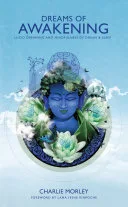
Dreams of Awakening
 73
73

Dreams of Awakening
Charlie Morley’s Dreams of Awakening provides a robust framework for anyone intrigued by the potential of the dreaming mind. The book’s primary strength lies in its seamless fusion of Tibetan Buddhist meditation practices with lucid dreaming techniques, a synthesis that feels both innovative and deeply rooted. Morley’s personal experience, spanning over a decade, lends an authentic voice to the material. He avoids sensationalism, instead presenting lucid dreaming as a serious path for self-discovery. A potential limitation for some readers might be the initial density of Buddhist terminology, though Morley does a commendable job of clarifying these concepts. The section on "Mindfulness of Dream and Sleep" is particularly compelling, offering practical exercises that can be integrated immediately. The work effectively bridges the gap between esoteric traditions and contemporary psychological understanding of consciousness.
📝 Description
73
Charlie Morley's 2019 book, Dreams of Awakening, presents lucid dreaming as a tool for spiritual growth.
Dreams of Awakening integrates Western psychological methods with Tibetan Buddhist contemplative practices to guide readers in lucid dreaming. Charlie Morley, the author, frames lucid dreaming not as mere recreation but as a powerful means for personal and spiritual advancement. The book outlines methods for achieving lucidity, both while sleeping and awake, advocating for a comprehensive approach.
This work is intended for individuals eager to broaden their awareness beyond ordinary waking life. It will appeal to those interested in dream exploration, meditation, and mindfulness, especially those wanting to apply these practices to their sleep. It is also useful for students of comparative religion and psychology interested in the connections between dream states and spiritual traditions.
Morley's work draws on traditions that have long studied altered states of consciousness. The book places lucid dreaming within a lineage that includes ancient shamanic practices and modern Western psychology's exploration of dreams. It shows how these investigations have developed, especially in the late 20th and early 21st centuries, as academic and popular interest grew.
💡 Why Read This Book?
• Gain practical techniques for achieving lucidity in dreams, specifically through Morley's "Mindfulness of Dream and Sleep" method, allowing for conscious exploration during sleep. • Understand the integration of Tibetan Buddhist contemplative practices with dreamwork, offering a spiritual dimension to exploring the subconscious that goes beyond typical dream analysis. • Learn to apply dream lucidity to waking life challenges, as detailed in the book's exploration of transforming dream experiences into actionable insights for personal growth.
⭐ Reader Reviews
Honest opinions from readers who have explored this book.
❓ Frequently Asked Questions
What is the "Mindfulness of Dream and Sleep" approach?
This is a holistic method co-created by Charlie Morley, integrating mindfulness meditation with lucid dreaming practices. It aims to cultivate awareness within the dream state, transforming sleep into an opportunity for personal and spiritual development.
How does Dreams of Awakening connect Western and Tibetan Buddhist traditions?
The book bridges these traditions by applying Buddhist contemplative techniques, such as mindfulness, to the Western exploration of lucid dreaming. It presents a unified approach to understanding and influencing consciousness during sleep.
Is this book suitable for beginners in lucid dreaming?
Yes, the book provides a thorough exploration of theory and practice, making it accessible to newcomers. It details specific techniques and foundational concepts necessary for developing lucid dreaming skills.
What is the author's background in this field?
Charlie Morley has over 12 years of personal practice in lucid dreaming and has taught these techniques to hundreds of people, drawing from both his personal experience and extensive study.
What are the benefits of lucid dreaming according to the book?
Beyond recreation, the book suggests lucid dreaming can be a powerful tool for self-discovery, spiritual growth, overcoming nightmares, and enhancing waking life awareness.
When was Dreams of Awakening first published?
Dreams of Awakening was first published on November 4, 2013, indicating its place within contemporary literature on consciousness and dream exploration.
🔮 Key Themes & Symbolism
Consciousness Beyond Waking
The book challenges the conventional perception of reality by positing that the dream state is as real and significant as waking consciousness. It explores how one can achieve and maintain awareness within dreams, using them as a training ground for deeper understanding. This theme is central to Morley's "Mindfulness of Dream and Sleep" approach, suggesting that the boundaries between states of consciousness are more fluid than commonly assumed.
Integration of Traditions
Dreams of Awakening uniquely synthesizes Western psychological perspectives on dreams with ancient Tibetan Buddhist contemplative practices. This fusion creates a comprehensive system for exploring the mind. The book demonstrates how concepts like mindfulness and compassion, integral to Buddhism, can be applied to enhance and direct lucid dream experiences, offering a path to spiritual insight.
Transformation Through Dreams
Morley presents lucid dreaming not just as an experience but as a tool for profound personal transformation. By becoming aware within dreams, individuals can confront fears, process emotions, and gain insights that have a direct impact on their waking lives. The book emphasizes the potential for dreams to serve as a catalyst for healing and self-realization.
The Nature of Reality
Through the exploration of lucid dreaming, the book prompts readers to question the fundamental nature of reality. It suggests that our perceived waking reality might be a form of 'dreaming' and that by cultivating awareness in sleep, we can gain a clearer perspective on both states. This philosophical inquiry is woven throughout the practical guidance.
💬 Memorable Quotes
“The dream state is not merely a passive reception of images, but a dynamic field of consciousness.”
— This highlights the book's core premise: dreams are active experiences that can be engaged with consciously, rather than just random mental events occurring during sleep.
“Mindfulness of Dream and Sleep offers a path to wakefulness in all states.”
— This interpretation emphasizes the practical application of the book's central methodology, suggesting its benefits extend beyond the dream state to enhance overall awareness.
“Tibetan Buddhist insights can illuminate the landscape of the dream.”
— This points to the unique synthesis within the book, showing how ancient spiritual wisdom can provide a framework for understanding and navigating the complexities of the dream world.
“Recognizing the dream as a lucid experience transforms one's relationship with sleep.”
— This captures the transformative potential of lucid dreaming, suggesting that the shift in perception can fundamentally alter how one experiences and values their sleep cycle.
“Waking life awareness can be cultivated through intentional dream practice.”
— This paraphrase underscores the reciprocal relationship between dream states and waking life, as presented in the book, where disciplined dreamwork yields tangible benefits in everyday consciousness.
🌙 Esoteric Significance
Tradition
Morley's work draws primarily from Tibetan Buddhism, particularly its advanced contemplative practices related to consciousness and illusion. It also engages with Western esoteric traditions that explore altered states and dream interpretation. The book fits within contemporary esoteric thought by presenting a structured, practice-oriented approach to consciousness that bridges ancient wisdom with modern psychological frameworks, offering a path to spiritual development through direct experience.
Symbolism
The primary symbol is the dream itself, viewed not as mere fantasy but as a manifestation of consciousness, akin to the 'illusory nature' of waking reality in Buddhist philosophy. Light and darkness also feature implicitly, representing the clarity of lucid awareness versus the obscurity of ordinary sleep. The act of 'waking up' within the dream symbolizes spiritual awakening and the dissolution of ignorance.
Modern Relevance
This work is highly relevant to contemporary mindfulness movements, transpersonal psychology, and psychedelic integration communities. Thinkers and practitioners exploring consciousness expansion, dream yoga, and non-dual awareness often reference or employ similar integrated techniques. Its emphasis on practical application makes it a valuable resource for those seeking structured methods for inner exploration beyond purely academic or purely spiritual pursuits.
👥 Who Should Read This Book
['• Practitioners of mindfulness and meditation seeking to deepen their practice by extending awareness into the dream state.', '• Individuals interested in exploring consciousness, psychology, and spirituality through the lens of dreamwork and altered states.', '• Students of comparative religion and philosophy looking for practical applications of Buddhist concepts in understanding the mind and reality.']
📜 Historical Context
Published in 2013, Dreams of Awakening arrived during a resurgence of interest in consciousness studies and alternative states of awareness, building upon decades of research into lucid dreaming. The late 20th century saw figures like Stephen LaBerge popularizing Western scientific approaches to lucid dreaming, while simultaneously, there was a growing academic and popular engagement with Eastern contemplative traditions, particularly Buddhism. Morley's work stands out by directly integrating these two streams. The book emerged in an era where the internet facilitated wider dissemination of esoteric and psychological concepts, challenging the boundaries of traditional academic discourse. While not facing direct censorship, its subject matter treads a line between psychology, spirituality, and esoteric practice, positioning it within a broader counter-cultural and self-help landscape that gained momentum throughout the early 2000s.
📔 Journal Prompts
Reflect on the concept of "Mindfulness of Dream and Sleep" in relation to your current waking awareness.
Analyze the perceived boundary between your waking reality and your dream experiences.
Consider how the "illusory nature" of dreams, as explored in Buddhist thought, might apply to your waking life.
Explore potential symbols or recurring themes within your dreams that could offer personal insight.
How might intentional practice within dreams contribute to overcoming specific waking life challenges?
🗂️ Glossary
Lucid Dreaming
The state of being aware that one is dreaming while the dream is occurring, allowing for conscious control and exploration within the dream environment.
Mindfulness
A mental state achieved by focusing one's awareness on the present moment, while calmly acknowledging and accepting one's feelings, thoughts, and bodily sensations.
Tibetan Buddhism
A form of Buddhism originating in Tibet, characterized by complex philosophical doctrines, meditation practices, and rituals, including specific techniques for consciousness exploration.
Consciousness
The state of being aware of and responsive to one's surroundings; the totality of the mental life of an individual, encompassing thoughts, feelings, sensations, and perceptions.
Dream Yoga
A practice within Tibetan Buddhism that utilizes the dream state for spiritual development and enlightenment, often involving techniques to achieve lucidity and insight during sleep.
Holistic Approach
An approach that considers the whole system—mind, body, and spirit—rather than just its parts, emphasizing the interconnectedness of different aspects of experience.
Esoteric
Intended for or likely to be understood by only a small number of people with a specialized knowledge or interest; relating to inner, spiritual knowledge.