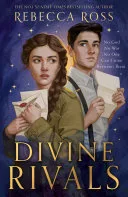
Divine Rivals (Letters of Enchantment, Book 1)
 82
82

Divine Rivals (Letters of Enchantment, Book 1)
Rebecca Ross's *Divine Rivals* opens with a premise as fragile and potent as the enchanted letters at its core. The narrative's strength lies in its vivid portrayal of a world fractured by divine war, where the personal correspondence between Iris and Roman becomes an unexpected sanctuary. Ross masterfully uses the epistolary format not merely as a plot device but as a vehicle for profound character intimacy. However, the pacing occasionally falters, particularly in the mid-section, where the focus on the gods' conflict can overshadow the burgeoning relationship. A particularly striking passage involves the discovery of a lost artifact, the description of which hints at deeper lore and a forgotten history that feels tantalizingly out of reach. The book's ambition to meld epic fantasy with a tender romance is largely successful, though some mythological elements might feel familiar to seasoned readers of the genre. Ultimately, *Divine Rivals* offers a compelling, emotionally charged beginning to what promises to be an engaging series.
📝 Description
82
### What It Is
Divine Rivals, the inaugural volume in Rebecca Ross's "Letters of Enchantment" series, published in 2023, presents a fantastical narrative steeped in epistolary exchanges. The story unfolds in a world where gods are not distant deities but active, albeit warring, forces. It centers on Iris and Roman, two young individuals caught in the crossfire of divine conflict, who communicate through enchanted letters. This mechanism allows their thoughts and feelings to transcend the physical separation imposed by the war, mirroring ancient methods of magical communication.
### Who It's For
This work is crafted for readers who appreciate character-driven fantasy narratives with a romantic undertone. It appeals to those fascinated by the intersection of mythology and personal struggle, and who enjoy stories where communication, particularly through written correspondence, plays a pivotal role in character development and plot progression. The blend of high-stakes conflict and intimate personal stakes makes it suitable for young adult and adult audiences alike seeking an emotionally resonant story.
### Historical Context
The publication of Divine Rivals in 2023 places it within a contemporary literary landscape that continues to explore themes of divine intervention and mortal agency. While not directly a historical text, its narrative structure, relying on letters, echoes the epistolary novels popular in the 18th and 19th centuries, such as Samuel Richardson's *Pamela* (1740). This classic form is recontextualized within a modern fantasy setting, demonstrating a persistent interest in exploring relationships and conflicts through written dialogue, a technique that has seen resurgence in various media.
### Key Concepts
The novel explores the concept of divine rivalry, personified by the warring gods, and its impact on the mortal realm. It examines the power of words and connection, particularly through the enchanted letters exchanged by Iris and Roman. The narrative also touches upon themes of fate versus free will, as characters grapple with their destinies amidst divine machinations. The idea of hidden truths and the unveiling of secrets, often through unearthed artifacts or prophecies, is central to the unfolding mystery.
💡 Why Read This Book?
• You will experience the unique power of communication through enchanted letters, a narrative device reminiscent of historical epistolary novels, to foster deep character connection amidst a divine war. • You will explore the concept of divine rivalry and its tangible impact on the mortal realm, learning how celestial conflicts can mirror and influence human relationships and destinies. • You will feel the tension of uncovering hidden truths and prophecies, a common motif in esoteric literature, as Iris and Roman navigate secrets that could alter their world.
⭐ Reader Reviews
Honest opinions from readers who have explored this book.
❓ Frequently Asked Questions
What is the central conflict driving the plot in Divine Rivals?
The central conflict is a war between two ancient gods, which directly impacts the mortal world and the lives of the protagonists, Iris and Roman, who communicate via magical letters.
When was Divine Rivals first published and by whom?
Divine Rivals was first published on April 13, 2023, by Rebecca Ross. It is the first book in the 'Letters of Enchantment' series.
What is the significance of the enchanted letters in the story?
The enchanted letters serve as the primary means of communication between the main characters, Iris and Roman, allowing their relationship to develop and providing a unique narrative structure that bypasses physical distance and danger.
Does Divine Rivals contain elements of romance and fantasy?
Yes, Divine Rivals is a blend of fantasy and romance, featuring a story about two young people whose lives are intertwined by a divine war and their developing feelings for each other.
What kind of world does Divine Rivals take place in?
The story is set in a fantastical world where gods actively engage in conflict, and this celestial war has direct consequences for the mortal inhabitants, shaping their lives and societies.
Is Divine Rivals part of a series?
Yes, Divine Rivals is the first book in the 'Letters of Enchantment' series by Rebecca Ross, indicating that further installments will continue the narrative and explore the characters and world further.
🔮 Key Themes & Symbolism
Divine Conflict and Mortal Repercussions
The work vividly portrays a celestial war between gods, whose ancient animosity is not a distant myth but a present, destructive force. This divine rivalry directly shapes the mortal landscape, influencing political structures, societal anxieties, and the personal lives of characters like Iris and Roman. The narrative explores how such grand, cosmic struggles can manifest in intimate, human tragedies and unexpected connections, suggesting that even gods are subject to powerful, primal forces.
The Power of Epistolary Magic
Central to the narrative is the use of enchanted letters as a primary mode of communication. This motif elevates the written word to a tangible, magical force, capable of conveying not just information but emotion and connection across perilous distances. The letters become a sacred space for Iris and Roman, a testament to the enduring human need for connection and the potential for magic to facilitate it, echoing historical practices of coded or symbolic communication.
Destiny vs. Free Will
Characters in Divine Rivals frequently grapple with their predetermined paths, set by divine decree or ancient prophecy. The narrative probes the tension between accepting one's fate and actively forging one's own destiny. Iris and Roman, in particular, must navigate the expectations and machinations of the gods while striving to assert their own agency and make choices that are truly their own, questioning whether their lives are merely pawns in a larger game.
Unveiling Lost Histories
The plot is propelled by the discovery of forgotten lore, ancient artifacts, and hidden truths. This element introduces a mystery-solving dimension, as characters seek to understand the origins of the divine war and the secrets it holds. The unearthing of these historical fragments suggests that understanding the past is crucial for navigating the present and influencing the future, a common theme in works exploring ancient magical traditions and their legacy.
💬 Memorable Quotes
“The gods are at war.”
— This stark statement immediately establishes the central conflict and its pervasive influence on the world, setting a tone of high stakes and cosmic upheaval that underpins the entire narrative.
“Their letters were a secret language.”
— This highlights the intimate and magical nature of Iris and Roman's correspondence, suggesting that their written words carry a power and significance beyond ordinary communication.
“Fate is a cruel master.”
— This expresses a common sentiment within the narrative, reflecting the characters' struggle against predetermined destinies and the oppressive forces that seek to control their lives.
“Words held power, a magic all their own.”
— This interpretation emphasizes the belief that written communication, especially in a magical context, possesses an inherent force capable of shaping reality and forging connections.
“The past whispered secrets.”
— This evocative phrase suggests that historical events and forgotten knowledge hold crucial clues and revelations that are vital for understanding the present conflict and future outcomes.
🌙 Esoteric Significance
Tradition
While not explicitly tied to a single esoteric lineage, *Divine Rivals* draws upon archetypal themes prevalent in many Western esoteric traditions, particularly those involving celestial powers and their influence on the mortal plane. The concept of warring divine entities and their impact on human destiny resonates with Gnostic ideas of a flawed creator or demiurge and the struggle of humanity against cosmic forces beyond their immediate understanding. It also touches upon Hermetic principles regarding correspondence between the macrocosm and microcosm, where celestial events mirror terrestrial ones.
Symbolism
The enchanted letters are a potent symbol of connection, magic, and the power of the written word, acting as conduits for emotion and intent. The warring gods themselves can be seen as symbolic representations of primal forces or dualistic conflicts that exist both in the cosmos and within the human psyche. Furthermore, artifacts and forgotten lore unearthed throughout the narrative symbolize hidden knowledge and the quest for truth, suggesting that understanding ancient mysteries is key to navigating present challenges.
Modern Relevance
Contemporary readers interested in how ancient mythologies and esoteric concepts can be reinterpreted for modern narratives find resonance in *Divine Rivals*. Thinkers and practitioners exploring the intersection of psychology, mythology, and storytelling, such as those influenced by Jungian archetypes, might see the divine conflicts as externalizations of internal struggles. The novel's engagement with themes of destiny, communication, and the impact of powerful forces on individual lives continues to be relevant in discussions around agency, fate, and the nature of belief in the 21st century.
👥 Who Should Read This Book
• Aspiring fantasy authors looking to learn innovative narrative structures, particularly how to utilize epistolary elements effectively within a high-stakes fantasy setting. • Young adult readers seeking character-focused fantasy novels with strong romantic subplots and a compelling exploration of themes like destiny and divine intervention. • Enthusiasts of mythology and folklore who enjoy seeing ancient themes reimagined in contemporary fictional worlds, offering a fresh perspective on divine conflicts and their impact on mortals.
📜 Historical Context
Published in 2023, *Divine Rivals* arrives in a literary climate that has seen a resurgence of interest in mythologically inspired fantasy, particularly among young adult audiences. While its direct contemporary, the early 2020s, saw authors like Madeline Miller and Alexandra Bracken reinterpreting classical myths, Ross's work distinguishes itself through its unique epistolary structure and focus on divine warfare as a direct plot driver. The reliance on letters as a narrative device echoes the epistolary novels of the 18th century, such as Samuel Richardson's *Pamela* (1740), which explored character and social dynamics through correspondence. This historical technique, when applied to a fantasy setting with warring gods, offers a fresh perspective on how intimate communication can persist and even thrive amidst large-scale conflict. The work’s reception in 2023 has been largely positive, appearing on bestseller lists like the Sunday Times, indicating its broad appeal within the contemporary fantasy market, a space often dominated by epic world-building and character-driven romance.
📔 Journal Prompts
The concept of divine rivalry and its manifestation in the mortal realm.
The magical efficacy of enchanted letters as a form of communication.
Personal reflections on the balance between accepting fate and asserting free will.
The significance of unearthed artifacts and lost histories in understanding present conflicts.
The emotional impact of communicating through written correspondence versus direct interaction.
🗂️ Glossary
Enchanted Letters
Correspondence imbued with magical properties, allowing messages to be sent and received across distances, often conveying emotions and thoughts with unusual clarity and speed.
Divine Rivalry
A state of active conflict or animosity between gods or divine entities, which has significant repercussions for the mortal world and its inhabitants.
Artifacts
Objects of historical or mystical significance, often imbued with ancient power or knowledge, that play a crucial role in uncovering secrets and advancing the plot.
Prophecy
A prediction of future events, often delivered by divine or mystical means, which characters may seek to fulfill, avert, or interpret.
Mortal Realm
The world inhabited by humans and other non-divine beings, which is directly affected by the actions and conflicts of the gods.
Epistolary Format
A literary technique where a story is told through a series of documents, such as letters, diary entries, or emails, providing an intimate perspective.
Celestial Conflict
A war or major dispute occurring among divine beings or celestial powers, distinct from earthly battles.