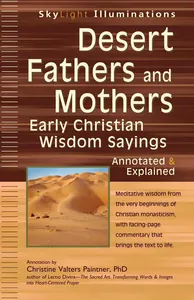
Desert fathers and mothers
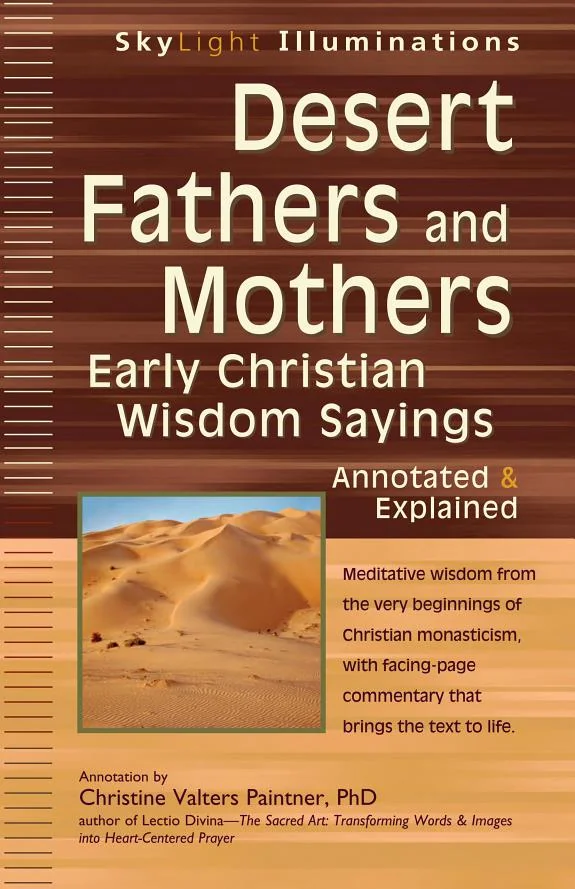
 80
80

Desert fathers and mothers
Christine Valters Paintner's "Desert Fathers and Mothers" offers a refreshingly direct engagement with these foundational ascetics. Rather than academic detachment, Paintner brings a practitioner's sensibility, illuminating the stark realities of desert spirituality. The section on *discernment of spirits*, detailing the constant internal battle against distraction and delusion, is particularly potent. While the book effectively translates ancient practices for modern life, its brevity means some concepts, like the nuances of *apophatic* prayer among different figures, could benefit from deeper exploration. The strength lies in its clear presentation of actionable wisdom from Antony the Great and Evagrius Ponticus. This is a valuable primer for anyone seeking the raw, unvarnished core of contemplative practice.
📝 Description
80
### An Introduction to the Desert Ascetics Christine Valters Paintner’s exploration of the Desert Fathers and Mothers offers a gateway into the foundational figures of early Christian monasticism. These individuals, often solitary hermits or small communities, retreated into the Egyptian, Syrian, and Palestinian deserts from the 3rd century CE onward. Their lives, though seemingly remote, were dedicated to intense spiritual discipline, prayer, and the pursuit of divine union. Paintner unpacks their rigorous practices and profound theological reflections, presenting them not as distant historical figures but as accessible guides for contemporary spiritual seekers.
### Who Will Benefit from This Study This work is specifically for individuals drawn to contemplative traditions, those interested in the roots of Western mysticism, and readers seeking wisdom from pre-Nicene and early post-Nicene Christian thought. It is particularly valuable for practitioners of prayer, meditation, and those exploring vocational discernment. Students of comparative religion, early church history, and spiritual theology will find it a rich resource. Those grappling with modern distractions and seeking anchors for inner peace and resilience will discover applicable ancient strategies.
### The Historical Landscape of the Desert The Desert Fathers and Mothers emerged during a pivotal period in Roman and Christian history. As Christianity transitioned from persecuted sect to imperial religion following the Edict of Milan in 313 CE, many sought a more radical commitment away from the perceived compromises of institutionalization. Figures like Antony the Great, often considered the first desert father, established precedents for asceticism and eremitical life. This movement flourished across North Africa and the Levant, influencing theological development and monastic structures that would shape the subsequent millennium of Christian spiritual practice across Europe and beyond.
### Core Tenets of Desert Spirituality Central to the ethos of the Desert Fathers and Mothers was *apophatic* theology – a way of understanding God through negation, recognizing the divine’s ineffability. They emphasized *discernment* of spirits, a rigorous internal vigilance against intrusive thoughts and demonic influences. The practice of *monotony* (or *hesychia*), a state of stillness and interior silence achieved through sustained prayer, was paramount. Their lives were characterized by extreme asceticism, including fasting and vigil, aimed at taming the flesh and concentrating the mind on God. The pursuit of *humility* was seen as the bedrock of all virtue, a constant self-effacement before the divine.
💡 Why Read This Book?
• Gain practical techniques for cultivating inner stillness, directly inspired by the ancient practice of *hesychia* as exemplified by figures like John Cassian. • Understand the historical context of early Christian monasticism, particularly the shift after the Edict of Milan in 313 CE, and its enduring impact on Western spirituality. • Learn the principles of *discernment of spirits* from the Desert Fathers, offering a framework for navigating internal distractions and strengthening spiritual focus.
⭐ Reader Reviews
Honest opinions from readers who have explored this book.
❓ Frequently Asked Questions
Who are the Desert Fathers and Mothers?
They were early Christian ascetics and hermits, primarily from the 3rd to 5th centuries CE, who lived in the deserts of Egypt, Syria, and Palestine seeking intense spiritual discipline and union with God.
When did the Desert Fathers and Mothers movement begin?
The movement is generally considered to have begun in the late 3rd century CE with figures like Antony the Great, who retreated into the Egyptian desert.
What was the main goal of their asceticism?
Their primary goal was spiritual purification, achieving profound prayer, and attaining a direct experience of the divine through self-denial, fasting, vigil, and constant prayer.
What is "apophatic theology" as practiced by the Desert Fathers?
It's an understanding of God through negation, recognizing that God's essence is beyond human comprehension and description, emphasizing silence and mystery.
How does this book relate to modern contemplative practices?
It bridges ancient wisdom with contemporary life, offering guidance on practices like centering prayer, mindfulness, and spiritual direction derived from the Desert tradition.
Were there famous female figures among the Desert ascetics?
Yes, while often less documented, women like Syncletica of Alexandria and Maria of Egypt also pursued rigorous ascetic lives and offered spiritual guidance.
🔮 Key Themes & Symbolism
The Practice of Stillness (Hesychia)
Paintner highlights the concept of *hesychia*, or profound interior stillness, a cornerstone of Desert spirituality. This wasn't mere quietude but an active, vigilant state of prayer achieved through sustained effort and detachment from worldly distractions. Figures like Evagrius Ponticus meticulously detailed the mental disciplines required to attain this state, which was seen as essential for direct encounter with the divine. The book explores how this ancient practice offers a potent antidote to the cacophony of modern existence, providing a path toward inner peace and clarity.
Discernment of Spirits
A central concern for the Desert Fathers and Mothers was the rigorous *discernment of spirits*. They understood the inner life as a constant battleground where divine inspiration contended with demonic deception and ordinary mental chatter. Paintner illuminates their strategies for recognizing the subtle workings of both beneficial and harmful influences. This involves cultivating deep self-awareness, vigilance over thoughts, and reliance on spiritual guidance. The book presents this ancient practice as a vital tool for anyone seeking to purify their intentions and align their will with spiritual truth.
Apophatic Theology and Divine Encounter
The work delves into the *apophatic* approach embraced by many desert ascetics, emphasizing that God's true nature transcends all human concepts and language. Rather than defining God, they sought to approach the divine through negation and silence, acknowledging the ultimate mystery. This perspective fostered a profound humility and reverence. Paintner illustrates how this method, exemplified by thinkers like Gregory of Nyssa (though not a desert ascetic himself, his influence was felt), encourages a direct, experiential encounter with the sacred that bypasses intellectualization.
The Transformative Power of Solitude
The very act of retreating to the desert was a deliberate embrace of solitude as a crucible for transformation. Paintner emphasizes that this was not about escapism but about creating an environment conducive to radical self-confrontation and spiritual growth. In the starkness of the desert, away from societal structures and diversions, individuals were stripped bare, compelled to face their inner landscape. The book explores how this intentional embrace of solitude, even in modified forms, can facilitate profound personal and spiritual development.
💬 Memorable Quotes
“The monks of the desert sought a life of intense prayer and detachment from the world.”
— This paraphrased concept highlights the core motivation of the Desert Fathers and Mothers: a deliberate withdrawal from societal norms to pursue a life centered on constant communion with the divine through disciplined spiritual practices.
“Antony the Great is often cited as the archetypal desert father.”
— This statement identifies a key historical figure, Antony the Great, and positions him as a foundational example whose life and practices set the standard for subsequent generations of male ascetics in the Egyptian desert.
“Discernment of spirits was crucial for navigating the inner life.”
— This interpretation emphasizes the importance placed by desert ascetics on actively distinguishing between divine inspiration, demonic influence, and ordinary mental activity as a means of maintaining spiritual purity.
“Humility was considered the foundation of all virtues.”
— This paraphrased concept underscores the paramount importance of humility in the spiritual hierarchy of the Desert Fathers and Mothers, viewing it as the essential prerequisite for cultivating any other positive spiritual quality.
“The desert provided a space for radical self-confrontation.”
— This interpretation captures the idea that the physical isolation and harshness of the desert environment were intentionally sought to strip away external comforts and force individuals to confront their inner selves directly.
🌙 Esoteric Significance
Tradition
The Desert Fathers and Mothers represent a pivotal lineage within early Christian mysticism, a tradition that, while rooted in orthodox Christianity, exhibits strong esoteric characteristics. Their emphasis on direct experiential knowledge of God, interior vigilance, and the taming of the passions aligns with perennial philosophies seeking inner transformation. While not belonging to explicitly labeled esoteric schools like Hermeticism or Kabbalah, their focus on inner work, symbolic interpretation of scripture, and spiritual warfare positions them as antecedents to later Western esoteric traditions that drew upon Christian contemplative sources.
Symbolism
Key symbols in their tradition include the desert itself, representing both the stark arena of spiritual combat and a place of profound encounter with the divine. The 'demon' or 'angel' encountered in the wilderness symbolizes the dual forces of distraction and divine aid operating within the psyche. The practice of *monotony* or stillness is symbolic of the unmanifest divine presence within the soul, a state to be uncovered through rigorous inner discipline and purification of the mind.
Modern Relevance
Contemporary contemplative Christianity, including practices like Centering Prayer and the Taizé community, draws heavily on the teachings of the Desert Fathers. Thinkers and writers in the modern spiritual-renewal movement often reference their wisdom for guidance on meditation, asceticism, and discerning spiritual states. Furthermore, the emphasis on psychological self-awareness and the inner journey resonates with contemporary therapeutic and self-help movements, albeit from a distinctly spiritual rather than purely psychological framework.
👥 Who Should Read This Book
• Aspiring monastics and contemplatives seeking to understand the historical and spiritual roots of their path, particularly those interested in early Christian asceticism. • Students of comparative religion and early church history who wish to grasp the foundational figures and practices that shaped Western spiritual traditions. • Individuals engaged in spiritual direction or seeking practical guidance on cultivating inner peace, discernment, and a deeper prayer life amidst modern distractions.
📜 Historical Context
The emergence of the Desert Fathers and Mothers in the late 3rd and 4th centuries CE occurred during a period of immense transition for Christianity. Following the Diocletianic Persecution and the subsequent Edict of Milan in 313 CE, which granted tolerance and later favor to the Church, many Christians felt a spiritual malaise. Some perceived the burgeoning institutionalization and integration of Christianity into the Roman Empire as a dilution of its original radical message. This disillusionment fueled a desire for a more austere, direct, and uncompromised spiritual path. Figures like Antony the Great (c. 251–356 CE) are central to this narrative, embodying the eremitical ideal. Their practices and sayings were later collected and disseminated, influencing figures such as John Cassian (c. 360–435 CE), who played a crucial role in transmitting this wisdom to Western monasticism. While Gnosticism offered alternative spiritual paths, the desert ascetics developed a distinct form of Christian asceticism rooted in biblical interpretation and communal wisdom, which would ultimately become foundational to Orthodox and Catholic monastic traditions.
📔 Journal Prompts
Reflect on the concept of *hesychia* and its potential application in your daily life.
Consider the historical context of the Edict of Milan (313 CE) and its impact on spiritual seeking.
Explore the practice of *discernment of spirits* as described by the Desert Fathers.
Analyze the symbolism of the desert as a place of both trial and divine encounter.
Examine the role of humility in your own spiritual journey, inspired by the desert ascetics.
🗂️ Glossary
Apophatic Theology
A theological approach that describes God by negation, emphasizing God's transcendence and ineffability rather than attempting to define divine attributes through positive statements.
Discernment of Spirits
The practice of carefully distinguishing between different spiritual influences—divine, demonic, or human—that affect one's thoughts, feelings, and actions.
Eremitical Life
A form of monasticism characterized by solitude and withdrawal from society, practiced by hermits living alone in remote areas, often deserts.
Hesychia
A Greek term referring to a state of profound inner stillness, silence, and prayerful contemplation, central to Eastern Orthodox spirituality and practiced by the Desert Fathers.
Monotony
Often used interchangeably with *hesychia*, referring to a state of prayerful stillness and inner quietude achieved through disciplined spiritual practice.
Asceticism
The practice of rigorous self-discipline, including fasting, abstinence, and physical hardship, undertaken for spiritual or religious reasons.
Antony the Great
An early Christian monk (c. 251–356 CE) revered as the father of desert monasticism, known for his asceticism and spiritual battles in the Egyptian desert.