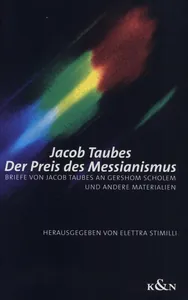
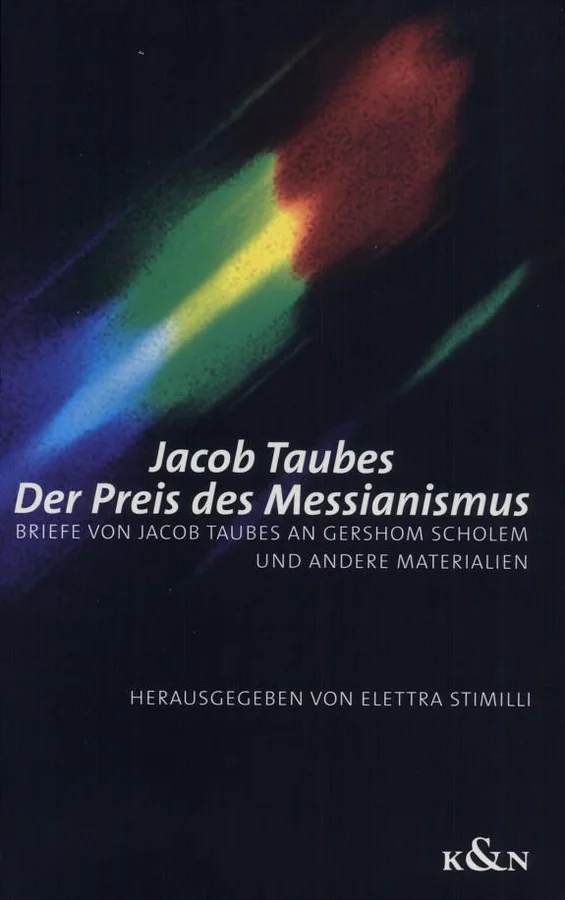
Der Preis des Messianismus
 83
83

Der Preis des Messianismus
Jacob Taubes’s Der Preis des Messianismus offers a bracingly unsentimental examination of messianism’s pervasive influence. The collection’s strength lies in Taubes’s formidable erudition, drawing connections between theological discourse and political realities with sharp, often unsettling, clarity. His analysis of how messianic fervor can be co-opted by secular ideologies, particularly evident in his discussions relating to the 20th century, remains highly pertinent. A particular passage exploring the dialectic between redemption and terror, though dense, powerfully illustrates the inherent dangers. However, the work’s academic rigor can also be a barrier; accessibility is not its primary aim, and readers unfamiliar with the theological and philosophical traditions referenced will face a steep learning curve. The fragmented essay structure, while characteristic of Taubes’s output, sometimes leaves the reader wishing for a more cohesive narrative arc. Nonetheless, it serves as a vital, if demanding, critique of utopian impulses.
📝 Description
83
Jacob Taubes's 'Der Preis des Messianismus' analyzes the costs of messianic thought in secular and religious life.
Published posthumously in 2000, Der Preis des Messianismus, or 'The Price of Messianism,' gathers essays by the German sociologist and theologian Jacob Taubes. The collection examines how religious thought, political power, and messianic concepts interrelate. It considers the often hidden expenses and consequences that arise from employing messianic ideals in both secular and religious spheres.
Taubes, who engaged with thinkers like Carl Schmitt and Gershom Scholem, offers a critical viewpoint on the secularization of messianic ideas. This perspective stands in contrast to more optimistic views of modern progress, emphasizing the enduring influence of theological categories. The work was shaped by the late 20th-century intellectual climate, which reconsidered modernity's legacy and the return of religious thought to public discourse.
Jacob Taubes's work engages with a tradition that sees messianic impulses not merely as religious doctrine but as potent forces shaping political and social realities. He critically examines how concepts of salvation and redemption, when secularized, continue to drive historical events and justify ideologies. This perspective aligns with esoteric thinkers who scrutinize the hidden motivations and latent power structures within seemingly rational or secular systems, revealing the persistent influence of theological archetypes on human action.
💡 Why Read This Book?
• Understand the 'apocalyptic' as a fundamental structure of historical consciousness, as explored by Taubes, offering a lens to analyze societal crises beyond simple political or economic factors. • Gain insight into the secularization of messianic thought, learning how religious concepts can be repurposed in political discourse, a critical theme Taubes addresses in his analyses of modernity. • Examine the tension between immanent salvation and transcendent redemption, understanding Taubes's critique of attempts to force utopian ideals into worldly existence.
⭐ Reader Reviews
Honest opinions from readers who have explored this book.
❓ Frequently Asked Questions
What is the central argument of Der Preis des Messianismus?
The central argument posits that the invocation of messianic ideals, whether overtly religious or secularized, carries inherent risks and potential for destructive consequences, examining the 'price' of such aspirations.
Who was Jacob Taubes and what was his intellectual background?
Jacob Taubes (1923-1987) was a German sociologist and theologian, known for his critical engagement with religious thought, political theory, and the philosophy of history, deeply influenced by figures like Gershom Scholem and Carl Schmitt.
When was Der Preis des Messianismus first published?
Der Preis des Messianismus was first published in the year 2000, after the author's death, as a collection of his essays.
What does Taubes mean by the 'secularization of messianism'?
Taubes refers to the process by which messianic concepts—ideas of ultimate redemption, a final crisis, or a perfected future—are detached from their religious origins and applied to political, social, or historical projects.
What are the main themes explored in the book?
The book's main themes include the messianic impulse, political theology, the nature of history, the dialectic of redemption and terror, and the critique of utopianism.
Is Der Preis des Messianismus suitable for beginners?
The book is generally not suitable for beginners due to its dense academic style, complex philosophical arguments, and reliance on specific theological and historical contexts.
🔮 Key Themes & Symbolism
Messianism Beyond Religion
Taubes dissects messianism not merely as a theological doctrine but as a potent framework for understanding historical consciousness and political action. He argues that even in secularized forms, messianic expectations—the belief in an ultimate redemption or transformative event—continue to shape political ideologies and social movements. The work scrutinizes how these eschatological impulses, when projected onto worldly affairs, can lead to justifications for radical change or even violence, revealing the 'price' of attempting to engineer salvation within history.
The Dialectic of Redemption and Terror
A core concern is the dangerous interplay between the desire for redemption and the potential for terror. Taubes examines how the pursuit of a messianic future, an envisioned utopia, can paradoxically necessitate or legitimize brutal means. This section explores the historical tendency for movements aiming at ultimate good to employ destructive methods, questioning whether the promise of salvation inherently contains the seeds of its own perverse realization in worldly power structures.
Secularization and Political Theology
The book critically engages with the concept of political theology, particularly how theological categories have been transferred to the political realm. Taubes investigates how modern states and ideologies have adopted messianic patterns of thought, seeking final solutions or ultimate historical destinies. He analyzes the persistence of theological logic in secular discourse, highlighting how concepts like crisis, judgment, and finality continue to operate in political thought, often without explicit religious reference.
History as Apocalyptic Structure
Taubes posits that a fundamental structure of Western historical consciousness is 'apocalyptic'—characterized by a sense of imminent crisis, final confrontation, and transformative resolution. This perspective challenges linear or purely progressive views of history, suggesting that historical understanding is often framed by eschatological expectations. The work explores how this apocalyptic imagination influences our perception of present events and future possibilities, seeing history itself as a stage for ultimate dramas.
💬 Memorable Quotes
“The messianic is the dimension of the end which breaks into the present.”
— This highlights Taubes's view of messianism not as a distant future event, but as a force that can radically alter the perception and experience of the present moment, often through a sense of impending crisis or ultimate significance.
“The price of messianism is the price of the possible realization of the impossible.”
— This encapsulates the core theme: the attempt to achieve utopian or absolute ideals in the temporal realm incurs a cost, often involving compromise, violence, or unintended negative consequences stemming from the very pursuit of perfection.
“Secularization is the continuation of theology by other means.”
— This provocative statement suggests that even when religious language is abandoned, the underlying theological structures of thought—such as eschatological hopes or ultimate justifications—persist in secular political and social ideologies.
“The apocalyptic is the fundamental structure of historical consciousness.”
— This suggests that our understanding of history is inherently shaped by apocalyptic frameworks—narratives of ultimate crisis, judgment, and transformation—rather than purely linear or empirical progression.
“The messianic promise is always also a threat.”
— This interpretation underscores the dual nature of messianic aspirations: while promising ultimate good or salvation, they simultaneously carry the potential for destruction, exclusion, or the imposition of a singular vision.
🌙 Esoteric Significance
Tradition
While not strictly adhering to a single esoteric lineage, Taubes's work draws heavily on the Gnostic and Kabbalistic traditions, particularly as mediated through scholars like Gershom Scholem. His exploration of messianism, redemption, and the apocalyptic resonates with Gnostic dualism and Kabbalistic concepts of cosmic restoration. He applies these frameworks to analyze modern political phenomena, suggesting that esoteric concepts possess a potent symbolic logic applicable to understanding historical crises and societal transformations.
Symbolism
Key symbols explored include the 'apocalyptic' and the 'messianic' themselves, understood not just as theological terms but as structural elements of consciousness and political action. The concept of the 'end of days' or 'final crisis' functions as a potent symbol for historical rupture and transformative potential. Taubes also implicitly engages with symbols of judgment and redemption, examining how these archetypal narratives manifest in secular ideologies and political movements seeking ultimate resolution.
Modern Relevance
Contemporary thinkers in critical theory, political philosophy, and religious studies continue to draw on Taubes's insights. His analysis of political theology remains vital for understanding contemporary populism, religious nationalism, and the rhetoric of societal salvation or collapse. Scholars examining the persistence of eschatological thinking in secular contexts, or the ethical implications of revolutionary movements, find Taubes’s critique of messianism’s inherent dangers particularly relevant to current global political dynamics.
👥 Who Should Read This Book
• Advanced students of political theology and critical theory seeking to understand the enduring influence of messianic thought on secular ideologies. • Scholars of comparative religion and philosophy interested in how esoteric concepts like the apocalyptic structure historical consciousness. • Researchers analyzing the relationship between religious impulses and political extremism, looking for nuanced critiques of utopian aspirations.
📜 Historical Context
Der Preis des Messianismus emerged in the intellectual milieu of the late 20th century, a period marked by a resurgence of interest in political theology and critical engagement with modernity's failures. Jacob Taubes, a figure who bridged sociology, theology, and philosophy, was particularly attuned to the enduring power of messianic concepts in both religious and secular thought. His work often engaged critically with thinkers like Carl Schmitt, whose theories on the political and the state of exception resonated with Taubes’s concerns about the 'price' of messianic politics. In the post-war German intellectual landscape, Taubes's critical stance on utopianism and his focus on the theological dimensions of political power offered a counterpoint to more optimistic theories of secular progress. His publications, though sometimes challenging to access, were influential among scholars interested in the philosophical underpinnings of Western political thought and the persistence of religious categories in secular discourse.
📔 Journal Prompts
The concept of the 'apocalyptic' as a structure of historical consciousness: how does this framework shape your understanding of current events?
Taubes's critique of the 'price of messianism': reflect on instances where utopian promises led to unintended negative consequences.
Consider the secularization of theological categories: identify examples in contemporary politics where messianic language is employed without explicit religious reference.
Analyze the dialectic between redemption and terror: how might the pursuit of an ideal future justify harmful actions?
Explore the tension between immanent and transcendent salvation as presented by Taubes: what are the risks of attempting to fully realize salvation in the earthly realm?
🗂️ Glossary
Messianism
The belief in a messiah or a divinely appointed savior figure who will bring about a period of peace, justice, or ultimate redemption. Taubes extends this to include secularized versions focused on historical or political salvation.
Apocalyptic
Relating to or characteristic of an apocalypse; involving the end of the world or a final, decisive confrontation. Taubes uses it to describe a fundamental structure of historical consciousness.
Political Theology
A field of study examining the relationship between theology and political power, often exploring how theological concepts influence political thought and institutions, or vice versa.
Secularization
The process by which religious beliefs, practices, and institutions lose social significance. Taubes critiques simplistic notions of secularization, arguing theological logic often persists in secular forms.
Immanent Salvation
Salvation or redemption achieved within the temporal, earthly world, often through human action, political revolution, or societal transformation.
Transcendent Salvation
Salvation or redemption that lies beyond the earthly realm, typically involving a spiritual or divine intervention, an afterlife, or a reality separate from the temporal world.
Eschatology
The branch of theology concerned with death, judgment, and the final destiny of the soul and of humankind. Taubes applies eschatological thinking to historical analysis.