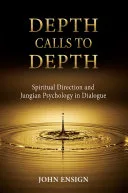
Depth Calls to Depth
 83
83

Depth Calls to Depth
John Ensign's "Depth Calls to Depth" is an ambitious project, attempting to forge a meaningful connection between the meticulous framework of Jungian analysis and the more fluid, experiential practice of spiritual direction. Ensign’s dual expertise is evident, particularly in his articulation of how Jungian concepts like archetypes and the shadow can illuminate the spiritual director’s work. The book excels when it grounds abstract psychological theories in concrete examples of spiritual guidance, such as in the discussion of the 'Self' as an organizing principle for both the psyche and spiritual development. However, the dialogue format, while intended to foster connection, occasionally feels more like a structured lecture than a spontaneous exchange. A limitation arises in the book's tendency to remain somewhat academic, potentially leaving practitioners seeking more immediate, practical techniques wanting. The exploration of the 'anima' and 'animus' in relation to spiritual companionship is particularly insightful, offering a novel perspective on inner dialogue. Ultimately, Ensign provides a valuable scholarly bridge, though it could benefit from greater emphasis on visceral, lived experience.
📝 Description
83
### What It Is Depth Calls to Depth: Jungian Psychology and Spiritual Direction in Dialogue presents a unique synthesis of two seemingly disparate yet deeply connected fields. Authored by John Ensign, a practitioner with credentials in both Jungian analysis and theological spiritual direction, the book bridges the gap between psychological healing and spiritual guidance. It explores how the principles of Carl Jung's analytical psychology offer a framework for understanding and facilitating direct spiritual experience, mirroring the aims of contemporary spiritual direction. The work examines the shared emphasis on the psyche's inner landscape and the quest for meaning.
### Who It's For This volume is intended for individuals engaged in the practice of spiritual direction, psychotherapists interested in the spiritual dimensions of their clients' lives, and students of Jungian psychology seeking to integrate its concepts with existential and spiritual concerns. It will appeal to those who are drawn to exploring the intersection of the unconscious mind and the soul's journey, particularly those who find traditional religious dogma insufficient for their spiritual inquiries. Readers who appreciate interdisciplinary scholarship will find value here.
### Historical Context The book emerges from a period of renewed interest in the spiritual lives of individuals, a trend that saw spiritual direction move from its cloistered monastic roots into broader secular and therapeutic contexts. Published in 2023, it engages with the legacy of Carl Jung, whose foundational work in analytical psychology began in the early 20th century. Ensign's approach reflects a broader contemporary movement to re-examine the relationship between psychology and spirituality, a dialogue that has involved thinkers like Mircea Eliade and, more recently, figures in transpersonal psychology. The work acknowledges the evolution of spiritual practices beyond institutional religion.
### Key Concepts Central to Ensign's exploration is the concept of "depth psychology" itself, referring to psychological theories that emphasize the exploration of the unconscious and the hidden depths of the human psyche. The book uses Jung's model of individuation—the process of psychological integration and self-realization—as a parallel to the spiritual director's role in guiding an individual toward wholeness. It also examines the Jungian notion of the "numinous," the experience of encountering the divine or sacred, and how this aligns with direct spiritual encounters sought in spiritual direction. The dialogue format is a key structural element.
💡 Why Read This Book?
• Gain a concrete understanding of how Jungian concepts like individuation provide a psychological map for spiritual growth, as detailed in the book's exploration of the "Self." • Learn to recognize and work with archetypal patterns in spiritual seeking, drawing on Ensign's analysis of the "numinous" and its connection to direct spiritual encounters. • Discover practical parallels between psychospiritual healing and spiritual direction, informed by the author's dual background and specific references to the 2023 publication date of this bridging work.
⭐ Reader Reviews
Honest opinions from readers who have explored this book.
❓ Frequently Asked Questions
What is the primary goal of "Depth Calls to Depth"?
The book aims to demonstrate the significant overlap and mutual benefit between Jungian psychology and spiritual direction, showing how each can inform and enrich the other in guiding individuals toward wholeness and spiritual experience.
Who is John Ensign, the author?
John Ensign is a certified Jungian analyst and psychologist, and also holds a master's degree in theology and works as a spiritual director, providing him with unique credentials for this interdisciplinary work.
How does the book connect Jungian psychology to spiritual direction?
It draws parallels between Jung's model of psychospiritual healing, particularly concepts like individuation and the exploration of the unconscious, and the emphasis on direct spiritual experience found in contemporary spiritual direction.
What is the significance of the title "Depth Calls to Depth"?
The title reflects the Jungian idea that the unconscious depths of the psyche call to something beyond the superficial, a concept mirrored in the spiritual director's role in guiding individuals toward deeper spiritual awareness and connection.
Is this book suitable for beginners in Jungian psychology?
While it assumes some familiarity, the book's dialogue format and clear explanations make it accessible to those new to Jungian concepts who are also interested in spiritual direction.
When was "Depth Calls to Depth" first published?
The book was first published on June 28, 2023, placing it within the contemporary discourse on spirituality and psychology.
🔮 Key Themes & Symbolism
Jungian Psychology's Role
The work posits that Carl Jung's analytical psychology offers a robust framework for understanding the human psyche's journey toward integration. Concepts such as the collective unconscious, archetypes, and the process of individuation are presented not merely as psychological theories but as vital tools for spiritual exploration. Ensign illustrates how the exploration of dreams, symbols, and the shadow can lead to profound self-understanding and a deeper connection to the spiritual dimension, moving beyond superficial consciousness.
Spiritual Direction Reimagined
Ensign examines how modern spiritual direction, having moved beyond its monastic origins, aligns naturally with Jungian principles. The emphasis on direct, personal spiritual experience rather than prescribed dogma resonates with the therapeutic goal of uncovering the individual's unique path. The book highlights the spiritual director's role in facilitating this inner journey, acting as a guide who helps individuals interpret their own encounters with the sacred and the unconscious, fostering a dialogical relationship.
The Numinous Encounter
A central theme is the concept of the 'numinous,' the experience of awe and mystery associated with the divine or the sacred. Ensign draws upon Jung's work to show how these numinous experiences are not anomalies but integral parts of the psychospiritual process. The book explores how both analytical psychology and spiritual direction can create space for these encounters, allowing individuals to connect with a transpersonal dimension of reality that transcends ordinary understanding and offers profound meaning.
Bridging Psychology and Theology
The book's core contribution lies in its successful synthesis of psychological theory and theological practice. Ensign's dual background allows him to speak fluently in both languages, demonstrating how concepts from psychology can illuminate theological understanding and vice versa. This interdisciplinary approach is crucial for contemporary seekers who often find traditional religious frameworks insufficient for their lived spiritual experiences, offering a more integrated path.
💬 Memorable Quotes
“Spiritual direction has moved beyond its monastic origins to become a major force in contemporary spirituality.”
— This highlights the evolution of spiritual guidance from a secluded practice to a widely accessible approach, underscoring its relevance in modern life and its adaptation to diverse spiritual needs beyond institutional religion.
“Its emphasis on direct spiritual experience offers a natural parallel to Jung’s model of psychospiritual healing.”
— This statement pinpoints the core thesis: the experiential focus of spiritual direction aligns remarkably well with Jungian psychology's aim to heal by engaging with the deeper, often unconscious, aspects of the self.
“The author’s dual background as a certified Jungian analyst and psychologist as well as a spiritual director.”
— This factual statement emphasizes Ensign's unique qualifications, assuring readers that the synthesis presented in the book is grounded in extensive practical and theoretical experience from both fields.
“The work explores the dialogue between the unconscious mind and the soul's journey.”
— This paraphrased concept suggests the book's focus on the inner life, where psychological exploration of hidden mental processes intersects with the quest for spiritual meaning and purpose.
“The book deconstructs traditional boundaries between psychology and theology.”
— This interpretation implies that Ensign's work actively challenges the separation often imposed between scientific psychological inquiry and spiritual or theological exploration, advocating for a unified understanding.
🌙 Esoteric Significance
Tradition
While not strictly adhering to a single esoteric lineage like Hermeticism or Kabbalah, the work draws heavily on the analytical psychology of Carl Jung, which itself is deeply influenced by Gnostic thought, alchemy, and Hermetic principles regarding the hidden correspondences between the inner and outer worlds. Ensign's exploration of the psyche's depths and the process of individuation can be seen as a modern, psychological interpretation of ancient quests for inner gnosis and wholeness.
Symbolism
Key symbols implicitly explored include the 'Self' as an archetype of wholeness, often represented in alchemical or mystical traditions as a divine center or unified field. The concept of the 'shadow' functions as a symbol for the repressed or unacknowledged aspects of the personality, mirroring alchemical ideas of separating and purifying base elements. The 'numinous' itself acts as a symbol for direct encounter with the sacred or divine, transcending rational comprehension.
Modern Relevance
Contemporary thinkers in depth psychology, transpersonal psychology, and integral theory continue to find value in Jung's framework, which Ensign elucidates. Practices like mindfulness, somatic experiencing, and various forms of spiritual coaching often incorporate principles of self-awareness and integration that echo the psychospiritual dialogue Ensign facilitates. The book speaks to modern seekers who are disillusioned with purely materialist worldviews and are seeking meaning through inner exploration.
👥 Who Should Read This Book
• Practicing spiritual directors seeking to deepen their theoretical understanding and incorporate psychological insights into their guidance, informed by Jungian concepts discussed in the book. • Jungian analysts and psychotherapists interested in the spiritual and religious dimensions of their clients' lives, benefiting from the book's theological perspective and discussion of direct spiritual experience. • Students and general readers exploring the intersection of psychology, spirituality, and personal growth, who will find the book's clear dialogue format and exploration of key concepts like individuation accessible.
📜 Historical Context
Published in 2023, "Depth Calls to Depth" arrives at a moment when the fields of psychology and spirituality are increasingly intersecting, following decades of intellectual ferment. Carl Jung’s work, originating in the early to mid-20th century, laid crucial groundwork by focusing on the unconscious and archetypes, influencing later movements like humanistic and transpersonal psychology. The resurgence of interest in spiritual direction since the late 20th century, moving beyond its monastic confines, mirrors this broader trend. Ensign’s book engages with this lineage, positioning itself within a dialogue that has included thinkers exploring the sacred in psychology, such as James Hillman. While not a direct engagement, the work implicitly responds to the ongoing conversation about integrating psyche and spirit, a topic also addressed by contemporary authors in the field of contemplative studies and depth psychology.
📔 Journal Prompts
The archetype of the Self and its manifestation in your spiritual journey.
Reflect on the parallels between Jung’s concept of the shadow and your own spiritual challenges.
Analyze the numinous experiences described in the book and their potential meaning for you.
Consider how the dialogue between psychology and spiritual direction, as presented by Ensign, informs your personal search for meaning.
Explore the concept of psychospiritual healing in relation to your own life experiences.
🗂️ Glossary
Jungian Analysis
A school of depth psychology founded by Carl Jung, focusing on the exploration of the unconscious, archetypes, individuation, and the integration of the conscious and unconscious aspects of the psyche.
Spiritual Direction
A practice in which a trained individual accompanies another person on their spiritual journey, facilitating self-reflection and deepening connection with the divine or ultimate reality.
Individuation
In Jungian psychology, the lifelong process of psychological development whereby a person becomes an individual, whole, and unique by integrating the conscious and unconscious aspects of their personality.
Archetype
Universal, archaic patterns and images that derive from the collective unconscious and are the psychic counterpart of a biological instinct; common examples include the Mother, the Hero, the Wise Old Man.
The Numinous
A term coined by Rudolf Otto, referring to the experience of awe, mystery, and profound fascination evoked by the sacred or divine, often described as 'mysterium tremendum et fascinans' (a tremendous and fascinating mystery).
The Shadow
In Jungian psychology, the unconscious or repressed aspects of the personality that the conscious ego does not identify in itself; often contains qualities that are seen as negative or undesirable.
Psychospiritual Healing
An approach that recognizes the interconnectedness of psychological well-being and spiritual development, aiming for wholeness through the integration of mind, body, and spirit.