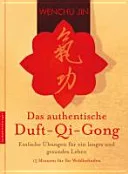
Das authentische Duft-Qi-Gong
 81
81

Das authentische Duft-Qi-Gong
Wenchu Jin's Das authentische Duft-Qi-Gong offers a novel perspective on an often-neglected aspect of energetic cultivation. The author's methodical approach to integrating olfaction with Qi-Gong principles is commendable, providing a framework for practitioners seeking to engage with energy through a less conventional sensory channel. The exploration of the 'olfactory meridian' is particularly intriguing, presenting a theoretical construct that, while perhaps not universally accepted within all traditional frameworks, offers a unique avenue for practice. A notable strength is the clear exposition of practical exercises, making the concepts accessible. However, the work could benefit from more extensive comparative analysis with similar aromatic healing traditions outside of China to further contextualize its unique position. The detailed explanation of how specific aromas interact with different organ systems, as presented in the chapter on 'scent-energy correspondences,' is a compelling focal point. Ultimately, this book serves as a valuable, albeit specialized, addition to the library of any serious student of Qi-Gong or energetic medicine.
📝 Description
81
Published in 2011, Das authentische Duft-Qi-Gong details scent-based Qi-Gong practices.
Wenchu Jin's 2011 book, Das authentische Duft-Qi-Gong, focuses on scent-based Qi-Gong, a less common area of Chinese energetic cultivation. It moves beyond typical physical exercises and breathing to use the olfactory system for internal energy flow and balance. The book aims to teach readers how to use aromas for better health, mindfulness, and spiritual growth. It covers both the theory behind scent-based Qi-Gong and how to apply it practically.
This volume is for people who already know some Qi-Gong or similar energy work and want to go deeper. It will interest those looking at the connections between traditional Chinese medicine, aromatherapy, and subtle energy practices. Readers seeking new ways to balance energy or explore less common Qi-Gong methods will find it useful. Wellness professionals might also use it to add scent practices to their work. A good level of focus is helpful for understanding the material.
Within the vast traditions of Chinese energetic cultivation, scent-based practices represent a specialized lineage. While physical postures and breathing exercises are more widely known, certain schools have historically focused on the olfactory system's role in directing internal energy (Qi). These methods often involve specific incense, herbs, or natural scents used to harmonize the body and mind. Wenchu Jin's work situates itself within this less documented but persistent thread of esoteric practice, contributing to a global rediscovery and integration of such ancient techniques into contemporary wellness approaches.
💡 Why Read This Book?
• Gain practical methods for scent-based Qi-Gong, learning how to utilize specific aromas to influence your personal energy flow, a technique distinct from conventional physical Qi-Gong forms. • Understand the concept of 'Duft-Qi' and the theoretical 'olfactory meridian,' offering a unique lens through which to view energetic interactions and therapeutic possibilities. • Discover how intentional breathing, when combined with scent absorption as detailed in the book's exercises, can amplify energetic effects and cultivate a more profound mind-body connection.
⭐ Reader Reviews
Honest opinions from readers who have explored this book.
❓ Frequently Asked Questions
What is 'Duft-Qi' as presented in Wenchu Jin's book?
'Duft-Qi' refers to the energetic properties of aromas and their capacity to influence the body's Qi, meridians, and organ systems. It is the central concept in Das authentische Duft-Qi-Gong, explaining how scents can be used for energetic balance.
Is Das authentische Duft-Qi-Gong suitable for beginners?
While the book provides practical exercises, a foundational understanding of Qi-Gong or energy work is recommended. Beginners may find the theoretical concepts of 'Duft-Qi' and the 'olfactory meridian' require some prior context for full comprehension.
What distinguishes scent-based Qi-Gong from other forms?
Unlike more common physical or meditative Qi-Gong, scent-based Qi-Gong focuses on the olfactory system as a primary pathway for interacting with and manipulating internal energy (Qi) through aromas.
When was Das authentische Duft-Qi-Gong first published?
The book by Wenchu Jin was first published in 2011, reflecting a contemporary interest in exploring diverse modalities within traditional Chinese energetic practices.
Can the practices in this book be integrated with aromatherapy?
Yes, the book explicitly explores the intersection of aromatherapy and Qi-Gong. It details how specific scents can be intentionally used to achieve energetic effects within the framework of 'Duft-Qi'.
What is the 'olfactory meridian' concept?
The 'olfactory meridian' is a theoretical pathway proposed within the book, suggesting how scent-energy can directly interact with and influence the body's internal energetic networks and meridians.
🔮 Key Themes & Symbolism
Duft-Qi and Olfactory Meridians
The core of the work revolves around 'Duft-Qi,' the concept of scent-energy, and the proposed 'olfactory meridian.' Jin posits that aromas are not merely sensory experiences but possess distinct energetic frequencies capable of interacting with the body's Qi. The 'olfactory meridian' is presented as a specific energetic pathway through which inhaled scents directly influence internal organ systems and energetic balance. This theme explores how intentional use of specific scents, combined with focused breathing, can clear energetic blockages or strengthen depleted Qi, offering a unique approach to energetic medicine.
Therapeutic Application of Aromas
Das authentische Duft-Qi-Gong details the practical, therapeutic applications of various aromas within the Qi-Gong framework. It moves beyond general aromatherapy by linking specific scents to particular meridians, organs, and energetic imbalances described in Traditional Chinese Medicine. The book provides guidance on selecting and using scents for specific energetic corrections, such as clearing stagnation in the liver meridian or tonifying kidney Qi. This section emphasizes the meticulous selection and application of aromatic substances as a direct method for harmonizing the body's vital energy.
Conscious Breathing and Scent Absorption
A significant theme is the synergy between conscious breathing techniques and scent absorption. The text elaborates on how the quality and intention of breath significantly amplify the energetic impact of inhaled aromas. Jin instructs readers on specific breathing patterns designed to maximize the absorption of 'Duft-Qi' and to direct this energy effectively throughout the body. This theme highlights the active role of the practitioner's consciousness and breath control in transforming simple scent perception into a potent tool for energetic cultivation and well-being.
Integration with Traditional Chinese Medicine
The work is deeply rooted in the principles of Traditional Chinese Medicine (TCM), extending its diagnostic and therapeutic framework to include the olfactory sense. It explains how imbalances in organs, often identified through TCM diagnostics, can be addressed or influenced through targeted aromatic interventions. This theme demonstrates how scent-based Qi-Gong serves as a specialized branch or complementary modality within the broader spectrum of TCM, offering an alternative or supplementary method for restoring health and vitality.
💬 Memorable Quotes
“The breath carries the scent, and the scent guides the Qi.”
— This concise statement encapsulates the core mechanism of scent-Qi-Gong. It emphasizes the dual action of intentional breathing in facilitating the energetic qualities of aromas, directing the flow of vital energy (Qi) within the body.
“Each aroma possesses its own energetic signature, capable of harmonizing or disrupting the body's subtle currents.”
— This highlights the fundamental principle that scents are not inert but carry specific energetic frequencies. The interpretation focuses on the potential for both therapeutic balance and energetic disharmony depending on the aroma's nature and application.
“The olfactory meridian is a direct conduit to the body's energetic core.”
— This paraphrase points to the unique theoretical contribution of the book regarding the 'olfactory meridian.' It suggests a direct, unmediated pathway for scent-energy to influence the deepest levels of the body's energetic system.
“Through Duft-Qi, we can address imbalances that physical postures alone may not reach.”
— This highlights the supplementary role of scent-based practices. It suggests that scent-Qi-Gong offers a distinct therapeutic dimension, capable of addressing energetic issues that are less accessible through conventional physical Qi-Gong exercises.
“Intentional inhalation is the key to unlocking the energetic potential of an aroma.”
— This emphasizes the active role of the practitioner. It suggests that passive smelling is insufficient; conscious, focused breathing is required to fully engage with and benefit from the energetic properties of scents.
🌙 Esoteric Significance
Tradition
This work fits within the broad spectrum of Esoteric Taoism and Traditional Chinese Energetic Medicine. While not strictly adhering to a single, named lineage like Neidan (Internal Alchemy) or specific medical schools, it draws heavily from the Taoist understanding of Qi, meridians, and organ correspondences. It departs by specifically elevating the olfactory sense, traditionally a secondary sensory input in many esoteric practices, to a primary modality for energetic cultivation and healing, suggesting a specialized branch of practical Taoist application.
Symbolism
The primary 'symbol' is the aroma itself, treated not just as a scent but as a carrier of energetic information and intention. Specific scents (e.g., sandalwood, frankincense, specific herbs) act as symbolic representations of certain energetic qualities – purity, grounding, vitality – that practitioners aim to integrate. The act of intentional breathing is also symbolic, representing conscious engagement with the subtle energies of the universe and the practitioner's own internal landscape.
Modern Relevance
Contemporary practitioners of integrative medicine, advanced aromatherapy, and specialized Qi-Gong forms can draw significantly from this work. Thinkers and practitioners exploring sensory pathways for consciousness and healing, such as those in biofield therapies or somatic psychology, might find Jin's concept of the 'olfactory meridian' a useful theoretical framework for their own investigations into subtle energy interactions.
👥 Who Should Read This Book
• Advanced Qi-Gong practitioners seeking to expand their repertoire beyond physical and meditative forms, offering a unique sensory modality for energy work. • Aromatherapy enthusiasts interested in a structured, energetic approach to using scents, moving beyond purely cosmetic or mood-enhancing applications. • Students of Traditional Chinese Medicine or comparative esoteric systems looking for specialized texts that explore less common diagnostic and therapeutic avenues within the broader energetic medicine landscape.
📜 Historical Context
Published in 2011, Wenchu Jin's Das authentische Duft-Qi-Gong emerged during a period of burgeoning global interest in complementary and alternative medicine, particularly drawing from Eastern traditions. While Qi-Gong as a practice gained significant traction in the West from the mid-20th century onwards, often through martial arts contexts or simplified health forms, Jin's work represents a dive into a more specialized, less commonly documented lineage. This book contributes to the diversification of Qi-Gong literature beyond the prevalent focus on physical forms or meditation, highlighting the olfactory dimension. It stands apart from the more widespread schools of thought that emphasized external movements or internal visualization, such as those popularized by figures like the late 20th-century master Yang Jwing-Ming, who focused heavily on martial applications and physical health Qigong. The 2011 publication date places it within an era where Western aromatherapy was also evolving, making Jin's integration of scent with Chinese energetic principles particularly noteworthy.
📔 Journal Prompts
The energetic signature of a chosen aroma and its influence on your 'Duft-Qi'.
The perceived pathway of scent-energy through the 'olfactory meridian'.
How intentional breathing amplifies the energetic effect of a specific scent.
Imbalances addressed by scent-based Qi-Gong versus physical Qi-Gong.
The symbolic meaning of a particular aroma in your personal practice.
🗂️ Glossary
Duft-Qi
Literally 'scent-energy.' The core concept in this work, referring to the energetic properties of aromas and their capacity to influence the body's vital energy (Qi) and energetic pathways.
Qi-Gong
A traditional Chinese system of coordinated body posture, movement, breathing, and meditation used for health, spirituality, and martial-training. This book focuses on a scent-based variant.
Olfaktorische Meridian
The 'olfactory meridian,' a theoretical energetic pathway proposed by the author through which scent-energy is believed to interact directly with the body's internal energetic networks.
Aroma-Energie-Korrespondenz
'Aroma-energy correspondence.' The principle that specific scents possess distinct energetic qualities that correspond to particular meridians, organs, or energetic states within the body.
Bewusste Inhalation
'Conscious inhalation.' The practice of deliberately and intentionally breathing in aromas, often combined with specific breathing techniques, to maximize their energetic impact.
Energiegleichgewicht
'Energy balance.' The state of harmony and optimal flow of Qi within the body, which scent-Qi-Gong aims to restore or maintain through aromatic intervention.
Stagnierendes Qi
'Stagnant Qi.' A condition in Traditional Chinese Medicine where the flow of vital energy is blocked or impeded, leading to discomfort or illness. Scent-Qi-Gong is presented as a method to address this.