Cryptorunes
 78
78

Cryptorunes
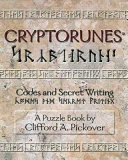
Clifford A. Pickover's "Cryptorunes" is less a straightforward puzzle book and more a curated exploration of encoded language through the lens of ancient alphabets. The sheer variety of runic scripts, some historical and others imaginatively constructed by Pickover, provides a visually and intellectually stimulating experience. The puzzles themselves are a mixed bag; while some are elegantly simple, others demand considerable dedication, offering a rewarding challenge. A particular strength lies in Pickover's insightful annotations on the historical and cultural contexts of these scripts, particularly his brief history of cryptography. However, the book occasionally feels more like a scholarly digression than a cohesive puzzle collection, with the transition between linguistic games and historical exposition sometimes feeling abrupt. The work engages with the concept of runic alphabets, which have a history stretching back to Germanic peoples in the early centuries CE, as more than mere writing systems, presenting them as vessels of deeper meaning. "Cryptorunes" offers a unique intellectual pursuit for those interested in the intersection of language, history, and cryptography.
📝 Description
78
### What It Is Cryptorunes presents over 100 language puzzles, ingeniously crafted using a variety of runic alphabets. These include established systems like Norse runes alongside novel, imaginative script designs. The encrypted messages within these puzzles range from lighthearted to deeply contemplative, challenging solvers with varying degrees of difficulty. Beyond the cryptographic challenges, the book offers informative essays on the origins and cultural contexts of runic scripts, providing a historical backdrop for the linguistic games.
### Who It's For This work appeals to individuals who enjoy intellectual challenges, particularly those with an interest in codes, ciphers, and ancient scripts. It is suitable for puzzlers seeking unique mental exercises and for students of linguistics or semiotics interested in the evolution of written communication. Those drawn to the historical and cultural dimensions of alphabets, especially the esoteric and mystical aspects of runes, will find substantial material here.
### Historical Context Published in 2000, Clifford A. Pickover's Cryptorunes emerged during a period of increased public interest in cryptography, spurred by digital communication and popular media portrayals of code-breaking. The book taps into a long-standing fascination with ancient alphabets and their perceived mystical properties, a tradition seen in figures like Johannes Trithemius, who explored magical alphabets in his 15th-century writings. The work engages with the historical use of runes, which have roots in Germanic cultures dating back to at least the 2nd century CE, and their later adoption within occult and spiritual movements.
### Key Concepts The book's central concept is the fusion of cryptography and runic symbolism. It explores how ancient alphabetic forms can be repurposed for modern intellectual puzzles, linking historical script evolution with cognitive engagement. Pickover introduces the idea of creating new runic systems, encouraging readers to think creatively about the nature of language and encoding. The work also touches upon the historical development of cryptography, from ancient methods to more modern applications, underscoring the universal human impulse to conceal and reveal information through symbolic systems.
💡 Why Read This Book?
• Learn to decipher messages using a diverse array of runic scripts, including historically significant Norse runes and innovative new alphabets, enhancing your understanding of linguistic encoding beyond standard ciphers. • Gain historical context on the evolution of written communication and cryptography, with specific notes on the origins of runic alphabets and their cultural significance, dating back to at least the 2nd century CE. • Develop an appreciation for the creative potential of symbolic systems by exploring how ancient alphabets can be adapted for novel puzzles, encouraging a deeper engagement with the relationship between form and meaning.
⭐ Reader Reviews
Honest opinions from readers who have explored this book.
❓ Frequently Asked Questions
What is the primary focus of Clifford A. Pickover's Cryptorunes?
The book's primary focus is on language puzzles presented in various runic alphabets, including traditional Norse runes and original creations. It also explores the history and cultural contexts of these scripts and the broader field of cryptography.
What kind of puzzles can I expect in Cryptorunes?
You can expect over 100 language puzzles that vary in difficulty, from simple to very challenging. The encrypted messages within them cover a wide range of topics, from the trivial to the profound.
Does Cryptorunes offer historical information beyond the puzzles?
Yes, the book includes engaging notes on runic alphabets, detailing their origins in ancient cultures, and provides a brief history of cryptography, enriching the puzzle-solving experience with historical context.
Are the runic alphabets in Cryptorunes all historically accurate?
No, while some puzzles use traditional Norse runes, many feature beautiful new runic characters designed by the author, Clifford A. Pickover, offering a blend of historical and imaginative scripts.
Who would most enjoy reading Cryptorunes?
Individuals who enjoy word puzzles, cryptography, linguistics, ancient scripts, and the esoteric or historical aspects of alphabets would find Cryptorunes particularly engaging.
When was Cryptorunes first published?
Cryptorunes was first published in the year 2000, marking its emergence during a period of renewed interest in codes and ancient communication systems.
🔮 Key Themes & Symbolism
Runic Alphabets as Encryption
This theme centers on the use of diverse runic alphabets, both historical (like Elder Futhark) and author-created, as mediums for linguistic puzzles. Pickover demonstrates how these ancient script forms can be recontextualized for modern cryptographic challenges, moving beyond their traditional applications. The book encourages an appreciation for the visual and symbolic nature of these scripts, treating them not just as carriers of meaning but as intricate systems capable of encoding hidden messages and stimulating cognitive engagement.
History of Cryptography and Scripts
Cryptorunes weaves in historical context by tracing the lineage of runic alphabets, noting their origins with Germanic cultures from at least the 2nd century CE. It also provides a concise overview of cryptography's development. This historical grounding allows readers to understand the evolution of written communication and the enduring human fascination with secret codes, linking ancient practices to contemporary intellectual pursuits.
Creative Construction of Symbols
A significant aspect of the book involves Pickover's invention of novel runic characters. This highlights the theme of creative symbolic construction, encouraging readers to consider how alphabets are formed and how new systems can be designed. It underscores that the principles of writing and encoding are not static, and that imaginative exploration can lead to new forms of expression and intellectual play, even within established linguistic frameworks.
The Nature of Language and Meaning
By embedding messages of varying tones—from silly to profound—within complex runic puzzles, the book implicitly explores the relationship between form, encoding, and meaning. It prompts reflection on how language itself can be manipulated, concealed, and revealed, questioning the stability of meaning and the diverse ways humans interact with symbolic systems across different cultural and historical contexts.
💬 Memorable Quotes
“The encrypted messages swing from silly to curious to profound.”
— This highlights the eclectic nature of the content within the puzzles, suggesting that readers should expect a broad spectrum of thematic material, from lighthearted diversions to deeply philosophical inquiries.
“Many in beautiful new runic characters.”
— This points to Pickover's original contributions to the field, indicating that the book offers more than just historical exploration; it presents innovative, aesthetically designed scripts for readers to engage with.
“Cryptorunes is more than a book of puzzles.”
— This suggests that the work transcends simple entertainment, offering substantial educational or contemplative value through its historical notes, cultural context, and exploration of symbolic systems.
“Guidelines for creating your own runes.”
— This indicates a practical, hands-on element to the book, empowering readers to move beyond solving existing puzzles to actively designing their own symbolic languages and cryptographic challenges.
“Ancient cultures from which they arose.”
— This emphasizes the book's commitment to providing historical and anthropological context for the runic alphabets, connecting the puzzles to the broader story of human civilization and written communication.
🌙 Esoteric Significance
Tradition
While not strictly adhering to a single lineage like Hermeticism or Kabbalah, "Cryptorunes" draws heavily from the esoteric tradition's fascination with ancient symbols and hidden knowledge. It echoes the historical interest in runic magic and divination found in Northern European occultism, a tradition that gained prominence in the late 19th and early 20th centuries. Pickover’s work can be seen as a modern interpretation, making these ancient symbolic systems accessible through intellectual puzzles rather than solely through magical practice.
Symbolism
The primary symbols are the runes themselves, which in esoteric traditions are often viewed as more than just letters; they are seen as potent symbols embodying cosmic forces and archetypal energies. Pickover engages with this by presenting them in diverse alphabets, encouraging readers to contemplate their forms and the potential meanings encoded within them. The act of deciphering itself becomes a symbolic journey, a process of uncovering hidden truths or patterns, mirroring esoteric quests for illumination.
Modern Relevance
Contemporary practitioners of Western esoteric traditions, particularly those interested in Norse mythology and Germanic paganism (like Ásatrú), continue to engage with runes for divination and magical purposes. "Cryptorunes" offers a unique entry point for such individuals, providing a logical and playful introduction to runic forms. Furthermore, its exploration of creative script design and cryptography resonates with modern digital culture, where symbolic systems and encoded communication are paramount, bridging ancient practices with contemporary technological and intellectual interests.
👥 Who Should Read This Book
• Puzzle enthusiasts and cryptographers seeking novel challenges beyond standard ciphers, who will appreciate the unique application of historical and invented runic alphabets. • Students of linguistics, semiotics, and comparative literature interested in the evolution of writing systems and the cultural significance of alphabets, particularly those with roots in ancient Europe. • Readers drawn to the esoteric and mystical dimensions of ancient cultures, who wish to engage with runic symbols in an intellectual and playful manner, exploring their historical context and potential for encoding meaning.
📜 Historical Context
Published in 2000, Clifford A. Pickover's "Cryptorunes" arrived at a time when digital communication was rapidly expanding, yet a strong public interest persisted in older forms of encoding and ancient scripts. The book taps into the enduring allure of runes, systems with origins among Germanic peoples dating back to at least the 2nd century CE, and their subsequent adoption in various esoteric traditions. This period also saw continued scholarly and popular engagement with cryptography, influenced by figures like David Kahn, whose seminal work "The Codebreakers" had been widely read. While "Cryptorunes" isn't a direct response to a specific intellectual debate, it situates itself within the broader currents of interest in historical linguistics, puzzle-solving, and the mystical interpretations often attached to ancient alphabets. Pickover's approach, blending academic notes with imaginative new scripts, distinguishes it from purely historical accounts or simple cipher books.
📔 Journal Prompts
The concept of creating new runic characters, as explored in the book, invites personal symbolic invention.
Reflect on the messages found in the 'silly' puzzles versus the 'profound' ones.
Consider the historical journey of alphabets like the Norse runes from practical communication to esoteric systems.
Analyze the guidelines for creating your own runes and draft a simple new runic symbol.
How does the act of deciphering a hidden message change your perception of the symbols used?
🗂️ Glossary
Rune
A character from any of several ancient Germanic alphabets, historically used for writing and later adopted for divination and magical purposes. Examples include the Elder Futhark and Younger Futhark.
Norse Runes
Refers to the runic alphabets used by Germanic peoples in Scandinavia during the Viking Age and earlier, most notably the Elder Futhark and Younger Futhark systems.
Cryptography
The practice and study of techniques for secure communication in the presence of adversaries. It involves methods of transforming information to make it unintelligible to unauthorized parties.
Elder Futhark
The oldest Germanic alphabet, consisting of 24 runes, believed to have been used from the 2nd to the 8th centuries CE. It is foundational to many later runic scripts and esoteric interpretations.
Alphabet
A standardized set of basic graphic symbols (called letters) used to represent the phonemes (units of sound) of a spoken language. Alphabets can also be used for symbolic or cryptographic purposes.
Cipher
A method of encryption or decryption that involves a systematic substitution or transposition of letters, numbers, or symbols. Cryptorunes utilizes variations on alphabetic ciphers.
Linguistic Puzzles
Problems or games that challenge the solver's understanding and manipulation of language, including codes, ciphers, anagrams, and wordplay.