Crop Circles
 82
82

Crop Circles
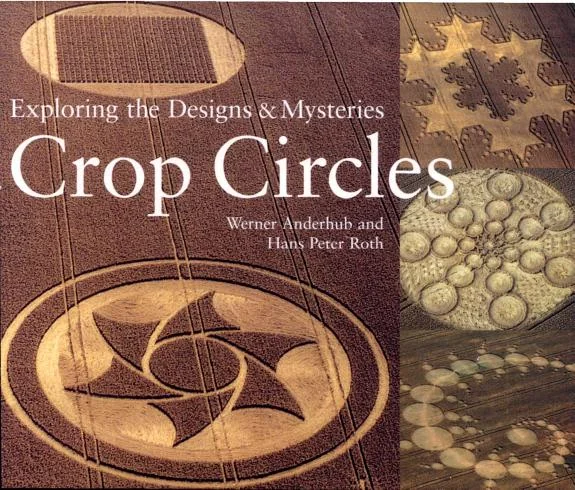
Werner Anderhub and Hans-Peter Roth’s "Crop Circles" offers a compelling visual and informational compendium of a phenomenon that has intrigued the public since the late 20th century. The book’s strength lies in its extensive photographic documentation, presenting a stunning array of formations that highlight the geometric precision and scale involved. A particularly striking aspect is the detailed analysis of how these patterns evolved in complexity and style, especially in the early 2000s, a period the book covers extensively. However, the text occasionally leans towards presenting speculative theories as fact without sufficient critical distance, which might alienate readers seeking purely empirical investigation. The authors' journalistic background is evident in their thoroughness, though a more robust engagement with the debunking efforts of skeptics might have balanced the narrative further. Despite this, the book remains a valuable, if somewhat partisan, exploration of a persistent enigma.
📝 Description
82
Werner Anderhub and Hans-Peter Roth documented crop circle formations appearing in fields.
This book chronicles the phenomenon of crop circles, presenting a visually detailed survey of the designs that appear in agricultural fields. The authors, acting as journalists focused on this subject, document numerous instances, noting the increasing complexity and artistry of these formations. They approach the subject with a journalist's eye, documenting the unexplained.
The work also engages with scientific and skeptical analyses of crop circles. It considers arguments for natural explanations, human creation, and unconventional origins, detailing the methods and limitations of studying these designs. Beyond the visual aspect, the book examines how crop circles have been interpreted within various cultural and spiritual frameworks, challenging common views of reality and intelligence. It encourages contemplation on the source and meaning of these aerial etchings.
This book fits within a tradition of esoteric inquiry that seeks meaning in unexplained natural or seemingly artificial phenomena. It aligns with interests in aerial anomalies, patterns in nature, and alternative explanations for events that defy conventional scientific understanding. The focus on symbolism, potential intelligence behind the formations, and challenges to materialist worldviews places it alongside other works exploring synchronicities, earth mysteries, and hidden orders.
💡 Why Read This Book?
• Gain a visual understanding of the evolution of crop circle designs, from simple rings to complex fractals, as documented extensively from the late 20th century onwards, providing context for the phenomenon's development. • Explore the various investigative approaches and theories surrounding crop circle creation, including proposed natural causes and evidence of human agency, as presented by journalists specializing in the field. • Contemplate the symbolic and geometric language inherent in these formations, understanding how their intricate designs have been interpreted across different cultural and esoteric viewpoints.
⭐ Reader Reviews
Honest opinions from readers who have explored this book.
❓ Frequently Asked Questions
When did the crop circle phenomenon begin to gain significant attention?
While sporadic reports existed earlier, the crop circle phenomenon gained significant global attention in the late 1970s and 1980s, with a marked increase in both frequency and complexity of formations appearing in fields worldwide.
Who are the primary authors of the book 'Crop Circles'?
The book 'Crop Circles' is authored by Werner Anderhub and Hans-Peter Roth, who are journalists with a specialization in researching this particular phenomenon.
What types of patterns are typically found in crop circles?
Crop circles feature a wide range of geometric patterns, including simple circles, rings, lines, triangles, squares, and increasingly complex designs such as fractals, spirals, and representations of mathematical equations or astronomical events.
Does the book present scientific explanations for crop circles?
Yes, the book explores various explanations, including those proposed by scientists, such as atmospheric plasma vortices or localized weather phenomena, alongside evidence for human creation and more unconventional theories.
What is the significance of the year 2002 in relation to this book?
The year 2002 marks the original publication date of 'Crop Circles' by Werner Anderhub and Hans-Peter Roth, signifying a key point in the documentation and analysis of the phenomenon.
Are there photographs included in the book 'Crop Circles'?
Yes, the book is renowned for its extensive and visually stunning pictorial survey, featuring a spectacular 30-page section dedicated to high-quality photographs of numerous crop circle formations.
🔮 Key Themes & Symbolism
Geometric Precision
The book emphasizes the astonishing geometric accuracy and complexity of crop circles. These formations often exhibit perfect circles, intricate fractal patterns, and precise mathematical ratios, suggesting an intelligence or force capable of executing designs far beyond casual human capability. The regularity of the flattened crops, often bent rather than broken, further adds to the enigma, prompting questions about the physical mechanisms involved in their creation.
The Unexplained Phenomenon
Anderhub and Roth meticulously document the ongoing mystery of crop circles, highlighting instances where these patterns appear seemingly overnight with no witnesses or discernible cause. The work addresses the bafflement of farmers and scientists, presenting a broad spectrum of proposed explanations, from hoaxes and elaborate pranks to more speculative theories involving atmospheric anomalies, unknown technologies, or even extraterrestrial intelligence.
Human vs. Non-Human Agency
Central to the discussion is the debate surrounding the origin of crop circles: are they primarily the work of human artists, or do they represent a communication or manifestation from an unknown source? The book presents evidence and arguments from both sides, examining the skill required for complex designs, the speed of their appearance, and the recurring motifs that hint at a deeper, perhaps symbolic, language.
Symbolism and Meaning
Beyond their geometric beauty, crop circles are explored for their potential symbolic content. The book touches upon how certain patterns have been interpreted within various cultural, spiritual, and esoteric contexts, with some seeing them as messages, warnings, or even maps. The recurring use of sacred geometry and archetypal forms invites contemplation on the deeper meanings these formations might convey.
💬 Memorable Quotes
“Fantastic geometric figures appear almost magically in fields.”
— This highlights the core mystery of crop circles: their sudden, inexplicable manifestation in agricultural landscapes, often with an aesthetic quality that seems to defy natural processes.
“Baffling the farmers who own the land and the scientists who examine them.”
— This phrase captures the widespread confusion and intellectual challenge posed by crop circles, emphasizing the gap between their observable reality and our current understanding or ability to explain them.
“Who (or what) is creating them?”
— This direct question encapsulates the central inquiry of the book, pointing towards the unknown agency behind the phenomenon, whether human, natural, or something entirely other.
“A spectacular 30-page pictorial, which presents an eye-catching survey of the continuing phenomenon.”
— This emphasizes the book's significant visual component, showcasing its value as a comprehensive photographic record of the diverse and evolving crop circle designs.
“Revealing answers in this bestselling and visually stunning study.”
— This suggests the book aims to provide insights and explanations, positioning itself as a definitive and aesthetically pleasing exploration of the crop circle mystery.
🌙 Esoteric Significance
Tradition
Crop circles, particularly their geometric and often fractal nature, align with traditions that view geometry as a fundamental language of the cosmos, echoing principles found in Hermeticism, Pythagoreanism, and sacred geometry. The idea of celestial or terrestrial intelligences communicating through symbolic patterns has parallels in Gnosticism and certain interpretations of Theosophy, which posit hidden forces shaping physical reality. This work fits within a modern esoteric milieu that seeks meaning in natural anomalies and synchronistic events.
Symbolism
The geometric precision, such as the prevalence of circles, spirals, and the Golden Ratio, directly relates to concepts of cosmic order, divine proportion, and universal consciousness within esoteric thought. Mandalas and yantras in Eastern traditions share this focus on geometric forms as tools for meditation and understanding reality. The formations can be seen as modern manifestations of ancient sacred geometry, acting as visual keys to unlock deeper perceptions of universal laws and interconnectedness.
Modern Relevance
Contemporary practitioners of consciousness studies, sacred geometry enthusiasts, and researchers exploring anomalous phenomena often reference crop circles. Thinkers in fields like synchronicity and subtle energy research may draw parallels between the formations and their own observations. The phenomenon continues to inspire artists, designers, and those seeking evidence of non-human intelligence or higher consciousness, keeping the conversation alive in various New Age and esoteric communities.
👥 Who Should Read This Book
• Researchers and enthusiasts of unexplained phenomena interested in a visually documented history and analysis of crop circles, particularly from the late 20th and early 21st centuries. • Students of sacred geometry and symbolic language seeking to understand how complex mathematical patterns manifest in nature and are interpreted across different cultures. • Skeptics and open-minded investigators who wish to engage with a detailed presentation of evidence and theories surrounding crop circles, including both rational explanations and more speculative interpretations.
📜 Historical Context
Published in 2002, Werner Anderhub and Hans-Peter Roth’s "Crop Circles" emerged during a period of intense public fascination and academic scrutiny of the phenomenon. The late 20th and early 21st centuries saw an explosion in the complexity and frequency of these formations, moving from simple circles to elaborate designs that challenged conventional explanations. This era was marked by a burgeoning interest in unexplained aerial phenomena, UFOlogy, and alternative explanations for mysteries that mainstream science often overlooked. Key figures like Colin Andrews were prominent in documenting and investigating circles, often presenting them as evidence of non-human intelligence. While fringe theories gained traction, established scientific bodies often dismissed crop circles as elaborate hoaxes, exemplified by the work of figures like Carl Sagan who, while not directly addressing circles, consistently advocated for skeptical inquiry and rational explanations for purported mysteries. The book’s reception likely reflected this dichotomy, appealing to those open to unconventional possibilities while facing skepticism from the scientific establishment.
📔 Journal Prompts
The precision of geometric patterns in crop circles and their potential symbolic language.
The recurring debate between human agency and unknown forces in crop circle creation.
Reflecting on the visual impact and mystery presented by the 30-page pictorial survey.
Investigating the specific claims made by journalists Anderhub and Roth regarding crop circle origins.
Consider how the appearance of crop circles challenges conventional scientific paradigms.
🗂️ Glossary
Crop Circle
A large pattern or design created by flattening or manipulating crops such as wheat, barley, or rapeseed, typically appearing mysteriously in fields.
Geometric Patterns
Designs characterized by precise mathematical shapes, lines, and angles, which are a hallmark of many complex crop formations.
Sacred Geometry
The study and use of geometric shapes and proportions considered to have divine or mystical significance, often found in nature and ancient structures.
Phenomenon
An observable fact or event, especially one whose cause or explanation is in question, referring here to the appearance of crop circles.
Hoax
A deliberate deception or trick, often employed to explain crop circles as the work of human pranksters.
Pictorial Survey
A collection of images or photographs that systematically illustrate a subject, in this case, various documented crop circle formations.
Agency
The capacity of an entity to act in a particular environment, used in discussions about whether humans or other forces are responsible for creating crop circles.