Crop Circles
 78
78

Crop Circles
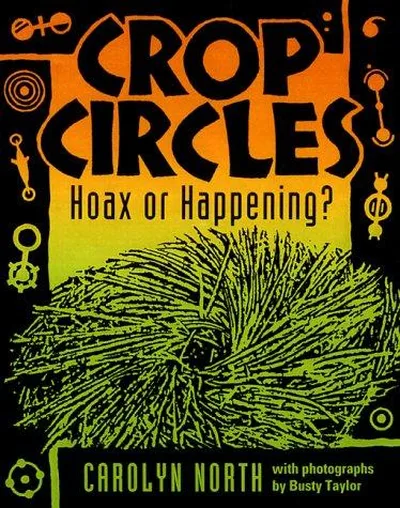
Carolyn North’s "Crop Circles" confronts a subject many would prefer to relegate to speculative fiction or outright dismissal. The book’s strength lies in its methodical approach, dissecting the arguments for and against the authenticity of crop formations. North doesn't shy away from the hoaxes, acknowledging them early, but she compellingly pivots to the formations that defy easy explanation. A particularly striking passage discusses the sheer speed and precision with which some formations appear overnight, challenging the logistical feasibility of human teams. However, the book occasionally leans into a tone that, while passionate, might alienate more scientifically-minded readers seeking purely empirical data. Despite this, North makes a robust case for treating crop circles as a phenomenon worthy of serious, open-minded investigation. It is a valuable primer for anyone considering the true nature of these enigmatic aerial art installations.
📝 Description
78
Carolyn North's 1992 book questions the human creation of 20th-century crop formations.
Carolyn North's "Crop Circles" investigates the origins of the geometric patterns that appeared in fields worldwide during the late 20th century. While many dismissed these formations as hoaxes, North challenges this view by examining their scale and complexity. She questions the practicality of human creation without detection, especially as the designs grew more intricate. The book moves beyond simple debunking to consider explanations involving non-human intelligence or unknown natural forces.
This work is suited for readers who question conventional explanations and are drawn to mysteries that resist easy answers. It will appeal to those interested in phenomena that connect art, nature, and the unexplained. Readers familiar with ufology, archaeoastronomy, and unconventional theories about Earth's anomalies will find much to consider. It is also for those who appreciate detailed inquiries into subjects often relegated to folklore or dismissed by mainstream thought.
Emerging in the early 1990s, "Crop Circles" engaged with a period of heightened interest in UFOs and paranormal phenomena, influenced by thinkers like Jacques Vallée and the broader New Age movement. North's work appeared after the 1991 confession of hoaxers Doug Bower and Dave Chorley, yet she argued that not all formations could be attributed to simple pranks. The book fits within esoteric traditions that seek explanations for unexplained phenomena beyond purely materialist or scientific paradigms, suggesting consciousness or unknown agencies might be involved in terrestrial events.
💡 Why Read This Book?
• Understand the logistical challenges of creating complex crop circles overnight, as North details the scale and precision that human pranksters would struggle to replicate without leaving traces, prompting a deeper look at their origins. • Explore the concept of anomalous electromagnetic phenomena reported at crop circle sites, a specific detail North investigates that suggests energies beyond typical human or agricultural activity. • Gain insight into the global spread and evolution of crop circle designs since the late 20th century, a historical arc North traces, providing context for their increasing complexity and potential meaning.
⭐ Reader Reviews
Honest opinions from readers who have explored this book.
❓ Frequently Asked Questions
When did crop circles start appearing?
While simple circular patterns have been noted for centuries, the phenomenon of complex, geometric crop circles gained widespread attention in the late 20th century, particularly in the 1980s and 1990s, with formations becoming increasingly elaborate.
Are all crop circles man-made hoaxes?
Carolyn North's book argues against this, presenting evidence and analysis of formations that challenge simple hoax explanations, citing complexity, speed of appearance, and lack of physical evidence of human creation.
What is the significance of the geometric precision in crop circles?
The intricate geometric designs and mathematical ratios found in many crop circles suggest a high degree of intelligence and planning, which North explores as a key argument for non-human origin or advanced unknown processes.
Have there been any scientific studies on crop circles?
While mainstream science often dismisses them, some independent researchers and fringe scientists have conducted studies, noting phenomena like localized electromagnetic disturbances and changes in plant structure, which North discusses.
Where are crop circles most commonly found?
While they appear globally, crop circles have been most frequently reported and studied in the agricultural regions of Southern England, particularly Wiltshire, though formations have been documented in countries across Europe, North America, and Asia.
What does Carolyn North suggest as the origin of crop circles?
North explores multiple possibilities, including non-human intelligence, advanced natural phenomena, or unknown atmospheric or energetic forces, while critically examining the limitations of the hoax hypothesis for many formations.
🔮 Key Themes & Symbolism
The Unexplained Phenomenon
The book centers on the appearance of complex geometric patterns in fields worldwide, challenging the common assumption that these are mere hoaxes. North presents detailed analyses of formations, highlighting their scale, intricate designs, and the lack of discernible human footprints or tool marks. She posits that the sheer artistry and precision, often appearing overnight, demand a more serious investigation than typically afforded, moving the discussion beyond simple pranks to consider genuine mysteries.
Challenging Scientific Orthodoxy
North critically examines the scientific community's tendency to dismiss crop circles outright, often citing the 1991 confessions of Doug Bower and Dave Chorley. However, she argues that these confessions do not account for the vast majority of formations that exhibit characteristics beyond simple manual creation, such as electromagnetic anomalies and altered plant physiology. The work questions the limitations of current scientific paradigms when faced with phenomena that defy conventional explanation.
Potential Intelligence and Communication
A core theme is the exploration of who or what might be creating these formations. North delves into the possibility of non-terrestrial intelligence, advanced natural processes, or unknown energetic phenomena. The intricate designs are examined not just as art, but as potential forms of communication or signaling. The book prompts readers to consider the implications if these are indeed messages from an unknown source, and what they might signify.
Global Patterns and Synchronicity
The book addresses the widespread nature of crop circles, appearing in diverse locations and climates, from rice paddies to cornfields. North discusses the temporal aspect – their appearance often coinciding with periods of heightened interest in UFOs or other anomalous events. This global distribution and apparent synchronicity are presented as further evidence that the phenomenon may be orchestrated by forces or intelligences operating on a scale far beyond local human activity.
💬 Memorable Quotes
“The sheer complexity and scale of thousands of designs across the globe, appearing without traceable human effort, demand consideration.”
— This statement encapsulates North's central argument: the physical evidence of crop circles, particularly their intricate nature and the absence of human perpetrators, necessitates a serious investigation that moves beyond easy dismissal.
“Hoaxes account for some, but the formations exhibiting advanced geometry and anomalous energy readings point elsewhere.”
— This highlights the book's nuanced approach, acknowledging acknowledged hoaxes while differentiating them from more complex cases that suggest alternative, possibly non-human, origins or unknown natural forces.
“The patterns are not random; they often display mathematical precision and artistic sophistication.”
— This emphasizes the deliberate and intelligent nature of many crop circles, suggesting they are more than accidental occurrences or simple prankster art, potentially serving as a form of communication.
“Dismissing the phenomenon outright ignores compelling evidence of unknown forces at work in our world.”
— This reflects North's critique of scientific skepticism, urging readers to remain open to possibilities that challenge conventional understanding and to consider the observable data presented by the crop circle phenomenon.
“From wheat fields to pine forests, the canvas for these aerial artworks is vast and varied.”
— This underscores the global reach and diverse environments where crop circles have manifested, illustrating the widespread and persistent nature of this enigmatic phenomenon.
🌙 Esoteric Significance
Tradition
While not strictly tied to a single esoteric lineage, "Crop Circles" engages with themes common in Western esotericism, particularly those concerning hidden intelligence, communication from non-human sources, and the interpretation of symbolic patterns. It echoes the Theosophical interest in unseen forces and intelligences shaping the material world, and the Hermetic principle of 'as above, so below' by suggesting terrestrial patterns may reflect cosmic designs or communications.
Symbolism
The primary symbols are the geometric patterns themselves. Their precision and complexity can be interpreted through numerology and sacred geometry, suggesting an underlying order or intelligence. Circles, as ancient symbols of wholeness, eternity, and the divine feminine, are foundational. More complex formations often incorporate fractal patterns, spirals, and representations of celestial bodies or known scientific concepts, hinting at a sophisticated, possibly cosmic, origin and purpose.
Modern Relevance
Contemporary thinkers in fields like consciousness studies, ufology, and even certain branches of art and design continue to draw inspiration from the crop circle phenomenon. The idea of intelligent, non-human communication via symbolic patterns remains a potent concept. Modern interpretations often link crop circles to theories of planetary consciousness, subtle energy fields, or even as direct messages from advanced intelligences, keeping the mystery alive and relevant for those exploring the fringes of known reality.
👥 Who Should Read This Book
• Skeptics open to examining evidence beyond conventional explanations: Readers who enjoy detailed analysis and are willing to consider alternative hypotheses for phenomena often dismissed. They will gain a structured argument for why crop circles deserve serious study. • Enthusiasts of ufology and paranormal research: Individuals already interested in anomalies and unexplained aerial phenomena will find this book a valuable exploration of a specific, visually striking manifestation. • Students of symbolism and sacred geometry: Those interested in the meaning of patterns and their potential connection to consciousness or higher intelligence will appreciate the book's focus on the design and potential communicative aspects of crop circles.
📜 Historical Context
Published in December 2000, Carolyn North's "Crop Circles" emerged during a period of sustained public fascination with unexplained phenomena, fueled by the internet's growing accessibility and a resurgence of interest in UFOs and ancient mysteries. The late 20th century had seen the crop circle phenomenon evolve dramatically. While the 1991 confession by Doug Bower and Dave Chorley, attributing thousands of circles to their pranks, had seemingly provided a definitive explanation for many, North's work tapped into a growing sentiment that this was an incomplete picture. The book was published in the shadow of researchers like Jacques Vallée, who advocated for more rigorous and open-minded investigation into anomalous aerial phenomena, and amidst the broader cultural currents of the New Age movement, which often sought alternative explanations for unexplained events. The reception of such works often involved a split between enthusiastic proponents who saw them as evidence of extraterrestrial contact or advanced natural forces, and a skeptical scientific establishment that largely dismissed them as elaborate hoaxes or misinterpretations of natural events.
📔 Journal Prompts
The intricate geometric designs of crop circles, such as those described in the book, and their possible meanings.
The concept of anomalous electromagnetic phenomena reported at formation sites.
Reflecting on the speed and precision of crop circle creation and the challenges it poses to human explanations.
The global distribution of crop circles and what this suggests about their origin.
Considering the potential for non-human intelligence to communicate through visual patterns.
🗂️ Glossary
Anomalous Electromagnetic Phenomena
Unusual or unexplained disturbances in electromagnetic fields, often reported by witnesses or researchers in the vicinity of crop circle formations. These can include fluctuations in radio signals, battery drain, or unusual magnetic readings.
Sacred Geometry
The study of geometric forms and patterns believed to hold symbolic or spiritual significance, often seen as reflecting universal principles of order, proportion, and harmony found in nature and the cosmos.
Non-Terrestrial Intelligence
The concept of intelligence originating from sources other than Earth, often associated with extraterrestrial beings or other unknown cosmic entities.
Formation Analysis
The detailed examination of crop circle patterns, including their geometric precision, scale, complexity, and relationship to the surrounding landscape, used to infer their method of creation and potential origin.
Plant Physiology
The study of the functions and mechanisms of living plants. In crop circle research, this refers to observed changes in plant stalks, nodes, and seeds that proponents argue cannot be explained by simple mechanical flattening.
Hoax Hypothesis
The theory that crop circles are entirely man-made deceptions, often involving simple tools like ropes and planks, intended to mislead or entertain.
Aerial Artistry
A term used to describe the visually striking and often complex designs that appear in fields, suggesting a deliberate artistic creation, regardless of the creator's identity.