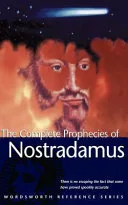
Complete Prophecies of Nostradamus
 84
84

Complete Prophecies of Nostradamus
The enduring appeal of Nostradamus lies in the tantalizing ambiguity of his quatrains, and this edition, first published in 1999, offers a commendable effort to ground the prophecies in their original language and historical context. The inclusion of the French verses alongside fresh translations is a significant asset, allowing for a more direct engagement with the source material. N. Halley’s editorial work promises a more objective assessment, a welcome departure from purely mystical interpretations. However, the inherent challenge with Nostradamus remains: discerning genuine foresight from post-hoc rationalization. While the text may compellingly argue for astute prognostication, the subjective nature of interpreting such cryptic verses means definitive proof is elusive. The strength here is the scholarly presentation; the limitation is the unresolvable nature of prophecy itself. The quatrain concerning the "great king of terror" (often linked to Napoleon) exemplifies this interpretive tightrope.
This edition serves as a valuable resource for critical examination rather than a definitive oracle.
📝 Description
84
This 2023 edition presents the full quatrains of Nostradamus with original French and new English translations.
This volume compiles the complete quatrains of Michel de Nostredame, known as Nostradamus. It includes both the original French text and new English translations. The goal is to offer an objective look at his prophecies, moving past sensationalism to consider their historical context and accuracy.
The book is for readers interested in historical prophecy, Renaissance thought, and the lasting influence of esoteric writings. It invites an understanding of Nostradamus as a man of his era, a physician and scholar who used astrology and observation to forecast events. His work, structured into 'Centuries' of 100 four-line verses, addresses recurring themes and specific predictions. The text encourages analysis of these verses against recorded history, examining references to events like the French Revolution or the rise of figures such as Hitler.
Nostradamus's prophecies belong to a long tradition of divinatory literature stretching back to antiquity. His method, blending astrological calculations with cryptic verse, echoes practices found in works like the Sibylline Oracles or medieval astrological almanacs. He wrote during the 16th century, a time when astrology was still integrated with scholarly pursuits, yet his structured approach to forecasting future events, particularly political and social upheavals, set him apart. This edition situates his quatrains within that specific historical and intellectual environment.
💡 Why Read This Book?
• Gain direct access to Nostradamus's original French quatrains and new translations, allowing for a deeper understanding than secondary interpretations alone. • Understand Nostradamus's context as a 16th-century physician and scholar, providing a more grounded perspective on his predictive methods. • Analyze specific historical events allegedly foretold, such as the French Revolution, by comparing the text's verses with established historical records.
⭐ Reader Reviews
Honest opinions from readers who have explored this book.
❓ Frequently Asked Questions
What is the original language of Nostradamus's prophecies?
Nostradamus's prophecies, known as the 'Centuries', were originally written in French. This edition includes the original French verses alongside new English translations.
Who was Nostradamus?
Michel de Nostredame was a 16th-century French physician and scholar, often referred to as Nostradamus. He is renowned for his collection of prophecies published in quatrains.
What are the 'Centuries' of Nostradamus?
The 'Centuries' are Nostradamus's most famous work, comprising roughly 100 groups of four-line verses, or quatrains, each containing predictions.
Does this book offer objective answers about Nostradamus's predictions?
The book aims to provide objective answers by presenting the original French text, new translations, and examining the historical context and accuracy of the prophecies.
When was this specific edition of Nostradamus's prophecies first published?
This edition, edited by N. Halley, was first published in 1999.
Are famous prophecies like the French Revolution discussed?
Yes, the book examines uncannily astute prophecies, including those purportedly related to the French Revolution and the rise of figures like Hitler.
🔮 Key Themes & Symbolism
The Art of Prognostication
This work explores the method by which Michel de Nostredame formulated his predictions. It posits him as a learned physician and Renaissance man, rather than a purely mystical figure. The focus is on how his understanding of astrology, combined with historical observation, informed his cryptic verses, suggesting a structured approach to foresight. The 'Centuries' are presented as a deliberate compilation, inviting analysis of recurring patterns and symbolic language used to convey future possibilities.
Historical Event Correlation
A central theme is the examination of Nostradamus's quatrains against documented historical events. The book likely scrutinizes predictions concerning major upheavals, such as the French Revolution, and the rise of influential figures like Hitler. This involves comparing the poetic and ambiguous verses with specific historical timelines and outcomes, aiming to assess the accuracy and interpretative scope of the prophecies.
Renaissance Worldview
The text situates Nostradamus within the intellectual currents of the 16th century. It highlights his background as a doctor and scholar, emphasizing the blend of scientific inquiry and esoteric beliefs prevalent during the Renaissance. This perspective challenges simplistic notions of Nostradamus as solely an occultist, portraying him as a complex figure engaging with the era's understanding of the cosmos and human destiny.
Linguistic and Interpretive Challenges
The structure of the 'Centuries' presents significant linguistic and interpretive hurdles. This edition addresses this by providing both the original French text and new translations. It underscores the difficulty in definitively interpreting the verses, acknowledging that their cryptic nature allows for multiple readings and subsequent validation against unfolding events, a core element of their mystique.
💬 Memorable Quotes
“The work reveals Michel de Nostredame... was more Renaissance man than arcane magician.”
— This interpretation suggests that Nostradamus's predictive abilities stemmed from his broad knowledge and scientific background, rather than solely from supernatural or magical means, positioning him as an intellectual of his time.
“His prognostications can be compellingly astute.”
— This statement implies that while not infallible, Nostradamus's predictions possess a notable degree of accuracy or insight when examined closely, particularly when correlated with significant historical occurrences.
“All of the cryptic short verses of Nostradamus's Centuries appear in the original French, with new translations.”
— This highlights the scholarly approach of the edition, emphasizing the importance of engaging with the source text in its original language to better understand the nuances and potential meanings of the prophecies.
“Uncanny prophecies such as those of the French Revolution and the rise of Hitler are examined.”
— This points to the book's focus on specific, widely-recognized historical events that are believed by some to be foretold in Nostradamus's writings, suggesting the text attempts to provide analysis on these correlations.
“Who was Nostradamus, and what faith should we place in his predictions?”
— This question frames the central inquiry of the book, signaling its intent to offer objective answers and a critical perspective on the credibility and nature of Nostradamus's prophetic writings.
🌙 Esoteric Significance
Tradition
Nostradamus's work is situated within the Western Esoteric Tradition, particularly drawing from Hermeticism and Renaissance Neoplatonism, blended with astrological and alchemical influences. His method of prophecy, which involved scrying and astrological calculation, aligns with practices found in various occult lineages. While not strictly Kabbalistic or Gnostic, his system reflects a broader Renaissance worldview that sought correspondences between the celestial, terrestrial, and human realms, aiming for a unified understanding of the cosmos.
Symbolism
Key symbols in Nostradamus's work include celestial bodies (stars, moon, sun) representing cosmic influences and cyclical time, and animals often carrying symbolic weight (e.g., eagles for empires, lions for royalty or power). Water frequently appears, symbolizing purification, divination (scrying), or hidden knowledge. The recurring motif of fire often signifies destruction, revelation, or transformation, reflecting both physical events and spiritual awakenings.
Modern Relevance
Contemporary interest in Nostradamus continues across various esoteric and historical circles. Modern practitioners of divination, astrology, and occult studies often reference his quatrains for comparative analysis or inspiration. His work also features in discussions of historical prophecy, comparative religion, and the enduring human fascination with predicting the future, influencing fields from popular culture to more academic explorations of predictive literature.
👥 Who Should Read This Book
• Students of Renaissance history and intellectual culture seeking to understand the blend of science, astrology, and prophecy in the 16th century. • Enthusiasts of esoteric literature and historical divination interested in examining one of the most famous prophetic texts. • Critical readers who want to analyze the alleged accuracy of predictions by comparing original verses with historical events.
📜 Historical Context
Michel de Nostredame (1503-1566) produced his 'Centuries' during a period of profound intellectual ferment in 16th-century Europe. This era witnessed the ongoing impact of the Renaissance, the burgeoning Protestant Reformation, and significant advancements in astronomy and medicine. Nostradamus, a trained physician who studied at Montpellier, was deeply versed in classical learning, mathematics, and astrology – a discipline then considered a legitimate scientific pursuit. His work appeared amidst a broader interest in divination and occult philosophy, though it also faced scrutiny. While figures like Paracelsus were exploring similar esoteric avenues, the Catholic Church maintained a cautious stance on predictive arts. Nostradamus sought royal patronage, notably from Catherine de' Medici, which likely afforded him some protection. However, the cryptic nature of his verses and their potential for political interpretation meant reception was often mixed, with some viewing him with awe and others with suspicion, particularly as his predictions gained wider circulation.
📔 Journal Prompts
The Renaissance man aspect of Nostradamus: how did his medical and scholarly background shape his prophetic method?
Nostradamus's use of cryptic language: explore the implications of ambiguity in prophecy.
The historical events correlation: select one quatrain and research its purported link to a specific event.
The original French verses: consider how translation might alter the perceived meaning of a prophecy.
Faith in predictions: reflect on the balance between objective analysis and subjective interpretation of Nostradamus's Centuries.
🗂️ Glossary
Quatrain
A verse form consisting of four lines, typically with a specific rhyme scheme. Nostradamus's prophecies are primarily composed of quatrains.
Centuries
The collective title for Nostradamus's prophecies, organized into groups of approximately 100 quatrains each, totaling ten centuries.
Prognostication
The act of predicting or foretelling future events, often based on observation, calculation, or divination.
Renaissance Man
An individual who possesses broad intellectual interests and accomplishments in many fields, reflecting the ideals of the Renaissance period.
Astrology
The study of the movements and relative positions of celestial bodies interpreted as having an influence on human affairs and the natural world.
Esoteric
Intended for or likely to be understood by only a small number of people with a specialized knowledge or interest.
Hermeticism
A religious, philosophical, and esoteric tradition based primarily upon writings attributed to Hermes Trismegistus, emphasizing mystical knowledge and the interconnectedness of the universe.