Complete Idiot's Guide to the Gnostic Gospels

 78
78

Complete Idiot's Guide to the Gnostic Gospels
Matkin's approach to the Gnostic Gospels is commendably direct, stripping away layers of academic jargon that often obscure these fascinating texts. The initial sections effectively establish the historical milieu, situating the Gnostic writings within the broader landscape of early Christianity without succumbing to overly simplistic ‘heresy vs. orthodoxy’ narratives. The explanation of the Demiurge, for instance, is clear and contextualized. However, the guide occasionally sacrifices depth for breadth. While covering a range of texts, the analysis of specific theological arguments, particularly concerning the nature of Sophia and her role in creation, feels somewhat superficial. A more detailed examination of the Nag Hammadi library’s discovery in 1945, beyond a brief mention, could have further enriched the historical grounding. Despite this, the book serves as a solid primer for those encountering Gnosticism for the first time.
📝 Description
78
### What It Is
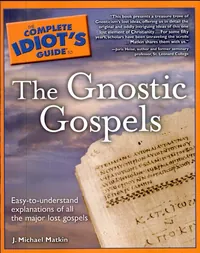
Complete Idiot's Guide to the Gnostic Gospels presents an accessible entry point into the complex world of early Christian and Gnostic literature. J. Michael Matkin's work aims to demystify texts often considered obscure, providing a structured overview for readers unfamiliar with the subject. It breaks down the historical background, key figures, and core theological ideas that define these ancient writings, moving beyond simplistic interpretations to offer a more nuanced understanding.
### Who It's For
This guide is explicitly designed for individuals new to Gnosticism and its associated texts. It caters to students of comparative religion, history buffs interested in early Christianity, and anyone curious about alternative spiritual traditions that diverged from mainstream doctrines. The approachable format makes it suitable for self-study without requiring prior academic background in theology or ancient history.
### Historical Context
The Gnostic Gospels emerged from a period of intense theological and philosophical ferment in the ancient world, particularly within the Roman Empire from the 2nd century CE onwards. This era saw a proliferation of diverse interpretations of Jewish and Christian teachings. Gnostic movements, characterized by their emphasis on divine knowledge (gnosis) for salvation, often stood in contrast to the developing orthodox Christian church. These texts, like the Gospel of Thomas and the Gospel of Philip, offer a counterpoint to the canonical Gospels, reflecting different understandings of Jesus's teachings and the nature of divinity.
### Key Concepts
Central to the Gnostic worldview is the concept of a transcendent, unknowable God distinct from the material world, which is often seen as flawed or the creation of a lesser deity (the Demiurge). Salvation is achieved not through faith or works alone, but through direct, intuitive knowledge. The texts explore themes of the divine spark within humanity, the role of a revealer figure (often Jesus), and the journey of the soul through spiritual realms to achieve liberation from the material prison. The figure of Sophia, a divine being whose fall or error is implicated in the creation of the material world, is also a recurring motif.
💡 Why Read This Book?
• Gain a clear understanding of the Demiurge concept, a key Gnostic cosmological principle, as presented in the texts discussed. • Grasp the significance of 'gnosis' as a path to salvation, differentiating it from faith-based doctrines prevalent in the 2nd century CE. • Explore the unique interpretations of Jesus's teachings found in non-canonical texts like the Gospel of Thomas, offering a different perspective on early Christian thought.
⭐ Reader Reviews
Honest opinions from readers who have explored this book.
❓ Frequently Asked Questions
What are the Gnostic Gospels and how do they differ from canonical Gospels?
The Gnostic Gospels are a collection of ancient texts, primarily from the 2nd to 4th centuries CE, that offer a different perspective on Jesus's teachings and the nature of divinity. Unlike the canonical Gospels (Matthew, Mark, Luke, John), they often emphasize esoteric knowledge (gnosis) for salvation and present a complex cosmology involving a transcendent God and a flawed material world.
When were the Gnostic Gospels discovered?
Many of the most significant Gnostic texts, including those found in the Nag Hammadi library, were discovered in 1945 near Nag Hammadi, Egypt. This discovery provided scholars with direct access to primary sources that had previously been known mainly through the writings of their opponents.
Who was J. Michael Matkin?
J. Michael Matkin is the author of the 'Complete Idiot's Guide to the Gnostic Gospels,' first published in 2005. His work aims to make complex theological and historical subjects accessible to a general audience, focusing on clarity and structured explanation.
What is the role of Sophia in Gnosticism?
In many Gnostic systems, Sophia (Greek for 'wisdom') is a divine emanation whose actions, often involving a desire to comprehend the unknowable God or a fall from grace, are believed to have led to the flawed creation of the material universe by the Demiurge.
Are the Gnostic Gospels considered part of the Bible?
No, the Gnostic Gospels are not part of the Christian biblical canon. They were excluded by early Church councils that were formalizing Christian doctrine around the 4th century CE, often due to theological differences concerning the nature of Christ and salvation.
What is the Gnostic concept of the Demiurge?
The Demiurge in Gnosticism is typically understood as a lesser, often ignorant or malevolent, creator deity responsible for the material world. This figure is distinct from the true, transcendent God and is often identified with the God of the Old Testament in some Gnostic interpretations.
🔮 Key Themes & Symbolism
The Transcendent God vs. the Demiurge
This theme contrasts the ultimate, unknowable, and purely spiritual God of Gnosticism with the creator of the material world, the Demiurge. The Gnostic texts posit that the material realm is flawed and a prison for the divine spark within humanity. The Demiurge, often conflated with the Old Testament God, is seen as an inferior being who mistakenly believes himself to be the sole deity. This duality forms the bedrock of Gnostic cosmology, explaining the perceived imperfections of existence and the need for liberation from it.
Salvation Through Gnosis
Gnosis, or direct, intuitive knowledge, is the central pathway to salvation in Gnosticism. Unlike salvation through faith or good works emphasized in orthodox Christianity, Gnostics believed individuals possess a divine spark that needs to awaken. This awakening comes through receiving and understanding secret teachings, often revealed by a divine messenger like Jesus. The goal is to recognize one's true divine origin and escape the cycle of reincarnation and suffering in the material world.
The Figure of Sophia
Sophia, meaning 'wisdom,' is a significant figure in many Gnostic myths. She is typically depicted as a divine emanation or aeon who, through a misguided act or a fall from grace, inadvertently plays a role in the creation of the material world and its flawed ruler, the Demiurge. Her story often explains the origin of suffering and the presence of the divine spark within humanity, highlighting a cosmic drama of error, entrapment, and eventual redemption.
Dualism and the Material World
Gnosticism fundamentally embraces a dualistic worldview, sharply dividing the spiritual, perfect realm from the material, imperfect realm. The material world, created by the Demiurge, is seen as a counterfeit or prison. This perspective influences the Gnostic understanding of the human condition, viewing the body as a hindrance to the spirit. The ultimate aim is the soul's liberation from this physical confinement and its return to the Pleroma, the realm of divine fullness.
💬 Memorable Quotes
“The material world is a prison designed to keep the divine spark from returning to its source.”
— This paraphrase captures the core Gnostic belief in dualism. It posits that physical existence is not inherently good but rather a restrictive environment created by a lesser deity, aimed at trapping the innate divinity within humans.
“Salvation comes not from belief, but from direct knowledge of the divine.”
— This highlights the central Gnostic tenet of gnosis. It contrasts with orthodox Christian emphasis on faith, suggesting that true liberation is achieved through an inner, intuitive understanding of spiritual truths and one's own divine nature.
“The Demiurge, believing himself to be God, created a flawed reality.”
— This interpretation points to the Gnostic understanding of the creator of the material universe. He is depicted as ignorant of the true, higher God and responsible for the imperfections and limitations inherent in the physical world.
“Jesus revealed the path back to the Pleroma, the realm of true divinity.”
— This paraphrase emphasizes the role of Jesus in Gnostic thought. He is often seen as a divine messenger sent not to die for sins, but to impart the secret knowledge (gnosis) necessary for the soul's return to the spiritual fullness.
“Within each person lies a fragment of the divine, seeking reunification.”
— This concept speaks to the Gnostic idea of the divine spark. It suggests that humanity is not wholly corrupt but contains an essential, divine element that is currently alienated and yearns to return to its origin.
🌙 Esoteric Significance
Tradition
The Gnostic Gospels are foundational to Gnosticism, an esoteric spiritual movement that flourished in the early centuries CE. While distinct from mainstream Christianity, Gnosticism shares roots with Hellenistic philosophy and certain Jewish mystical traditions. Its emphasis on direct, experiential knowledge (*gnosis*) and a complex cosmology involving divine emanations and the creation of the material world sets it apart. This work fits within the Gnostic lineage by exploring texts central to its understanding of divinity, humanity, and the cosmos.
Symbolism
Key symbols in the Gnostic Gospels include the 'divine spark' or 'pneuma,' representing the trapped fragment of the supreme God within the material world, yearning for liberation. The figure of Sophia (Wisdom) is also crucial, often symbolizing a divine being whose error led to the creation of the material realm. The 'Pleroma' represents the fullness of the divine realm, the ultimate goal of the soul's ascent.
Modern Relevance
Contemporary esoteric thinkers and spiritual seekers continue to draw inspiration from Gnostic ideas. Schools of thought influenced by Gnosticism explore themes of liberation from societal conditioning, the recognition of inner divinity, and the critique of authoritarian religious structures. Modern interpretations often focus on the psychological and philosophical aspects of Gnosticism, applying its dualistic framework and concepts of hidden knowledge to personal growth and spiritual awakening.
👥 Who Should Read This Book
• Students of comparative religion and early Christian history seeking to understand diverse theological viewpoints beyond the canonical narrative. • Individuals interested in esoteric traditions and alternative spiritual paths who want a grounded introduction to Gnostic thought and its primary texts. • Readers curious about the philosophical implications of dualism, the nature of consciousness, and the concept of hidden knowledge in ancient belief systems.
📜 Historical Context
The Gnostic Gospels emerged from a vibrant, often contentious, spiritual landscape in the Roman Empire during the 2nd and 3rd centuries CE. This period was characterized by intense intellectual and religious exchange, where ideas from Hellenistic philosophy, Judaism, and nascent Christianity mingled and diverged. Gnostic groups, with their emphasis on *gnosis* (saving knowledge) and a complex cosmology involving a transcendent God, a flawed material world, and a divine spark within humanity, presented a distinct challenge to the developing orthodox Christian doctrine. Key figures like Irenaeus of Lyons, writing in the late 2nd century, actively polemicized against Gnostic teachings, seeking to define Christian orthodoxy. The discovery of the Nag Hammadi library in 1945 provided direct textual evidence of these movements, revealing a diversity of thought that defied simple categorization as mere 'heresy.' These texts offered alternative interpretations of Jesus's life and teachings, often contrasting sharply with the emerging canon.
📔 Journal Prompts
The concept of the Demiurge and its implications for understanding perceived flaws in reality.
Reflect on the meaning of 'gnosis' as a path to personal liberation.
Analyze the role of Sophia in the Gnostic creation narrative.
Consider the Gnostic view of the material world as a prison.
Explore the potential for a divine spark within oneself.
🗂️ Glossary
Gnosis
Greek for 'knowledge,' central to Gnosticism. It refers to intuitive, experiential, or revealed knowledge of divine mysteries, considered essential for salvation and liberation from the material world.
Demiurge
In Gnosticism, a lesser, often ignorant or malevolent, creator deity responsible for the material universe. This figure is distinct from the true, transcendent God.
Sophia
Greek for 'wisdom.' A divine emanation in many Gnostic systems, whose actions are often linked to the creation of the material world and the entrapment of divine sparks within it.
Pleroma
The spiritual realm or fullness of the supreme God in Gnosticism. It represents the ultimate destination for the liberated soul, a state of divine perfection.
Aeon
In Gnostic cosmology, divine beings or emanations from the supreme God that constitute the Pleroma. They are often part of complex divine hierarchies.
Divine Spark
A fragment of the supreme God believed to be trapped within the material body of a human being. Awakening this spark through gnosis is key to spiritual liberation.
Nag Hammadi Library
A collection of early Christian and Gnostic texts discovered in 1945 near Nag Hammadi, Egypt. It provides crucial primary source material for understanding Gnosticism.