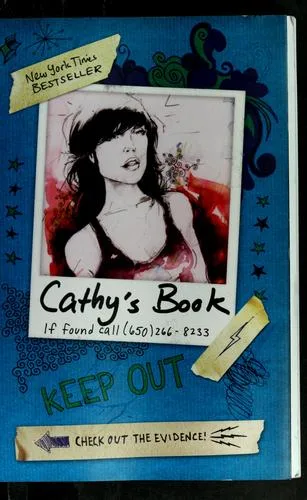
Cathy's book
 78
78

Cathy's book
Cathy's Book, a product of Sean Stewart and Jordan Weisman's collaboration, presents an intriguing proposition: a novel that demands active participation. The conceit of a found diary, complete with embedded puzzles and real-world links, is undeniably clever. Its strength lies in this innovative format, encouraging readers to become detectives. However, the execution sometimes falters; the puzzles, while conceptually interesting, can occasionally feel like arbitrary roadblocks rather than organic extensions of the narrative. The initial 2006 publication date means some of its interactive elements, particularly those relying on early internet functionality, feel dated. A specific passage detailing a coded message within a seemingly innocent photograph highlights the book's potential, but the overall coherence of the mystery can be uneven.
This is a book that prioritizes interactive mechanics over purely literary merit, offering a unique but sometimes disjointed experience.
📝 Description
78
### What It Is Cathy's Book is an interactive narrative experience, blending a compelling story with puzzles and real-world exploration. Published initially in 2006 by Sean Stewart and Jordan Weisman, it established a unique format where the reader's engagement with the text directly influences the unfolding mystery. It is not a passive read but an active investigation.
### Who It's For This work is designed for individuals who enjoy narrative puzzles, alternate reality games (ARGs), and immersive storytelling. Readers who appreciate a mystery that extends beyond the page, requiring critical thinking and a willingness to engage with unconventional formats will find it particularly rewarding. It appeals to those who liked early ARGs like The Beast.
### Historical Context Launched in 2006, Cathy's Book emerged during a period when transmedia storytelling and online alternate reality games were gaining traction. It represented an early, commercially available example of a book designed to be part of a larger, interconnected narrative universe. Its release predates the widespread adoption of many digital storytelling techniques now common.
### Key Concepts The central concept is 'transmedia storytelling,' where elements of a narrative are spread across multiple platforms and formats. The book itself is a physical artifact, but its story is intended to spill into the reader's reality through clues, online interactions, and puzzle-solving. This blurring of fiction and reality is a core mechanic.
💡 Why Read This Book?
• You will learn how to approach narrative puzzles and ciphers as presented in the 2006 release, moving beyond passive reading to active investigation. • You will experience the early application of transmedia storytelling principles, understanding how a book can serve as a gateway to a larger, interactive fictional world. • You will feel the unique sensation of engaging with a mystery designed to blur the lines between fiction and the reader's perceived reality, inspired by the book's found-document format.
⭐ Reader Reviews
Honest opinions from readers who have explored this book.
❓ Frequently Asked Questions
What is the primary interactive element of Cathy's Book?
The primary interactive element is the integration of puzzles, codes, and real-world investigation prompts embedded within the narrative, encouraging readers to actively solve mysteries.
When was Cathy's Book first published?
Cathy's Book was first published in 2006.
Who are the authors of Cathy's Book?
The authors are Sean Stewart and Jordan Weisman.
What genre does Cathy's Book fall into?
It falls into the genre of interactive fiction, mystery, and early alternate reality games (ARGs) presented in a book format.
Does Cathy's Book require internet access to complete?
While the original 2006 release may have incorporated online elements, the core narrative and puzzles are contained within the book itself, though some elements might be enhanced by external research.
What is the concept behind the book's narrative structure?
The narrative is structured as a found diary, where the reader pieces together a mystery by deciphering clues and engaging with the story's hidden layers.
🔮 Key Themes & Symbolism
Found Narrative Structure
The book adopts the format of a 'found diary,' presenting itself as a collection of personal writings, photographs, and embedded clues discovered by the reader. This technique positions the reader as an investigator, tasked with piecing together the fragmented story of Cathy. The initial publication in 2006 leveraged this format to create a sense of authenticity and encourage a deeper, more personal engagement with the mystery. It moves beyond traditional storytelling by making the artifact itself central to the experience.
Transmedia Storytelling
Cathy's Book is a seminal example of transmedia storytelling, where a single narrative is expanded across multiple platforms and formats. The book serves as the primary anchor, but its story is designed to bleed into the reader's reality through puzzles, coded messages, and implied real-world connections. This approach, prominent around its 2006 release, seeks to create a more immersive and participatory experience, blurring the lines between the fictional world and the reader's own environment.
Interactive Puzzle Design
Central to the book's appeal are the integrated puzzles and ciphers that Cathy herself created. These are not mere plot devices but interactive challenges for the reader to solve. Deciphering codes, analyzing photographs for hidden meanings, and following cryptic clues are essential to understanding the full story. This focus on active problem-solving, a hallmark of early alternate reality games, invites a different kind of reading engagement than conventional novels.
Mystery and Investigation
At its core, Cathy's Book is an exercise in mystery and investigation. The narrative revolves around uncovering the truth behind Cathy's experiences and disappearance. The reader takes on the role of a detective, sifting through evidence presented within the diary and its accompanying materials. This investigative framework, established by authors Sean Stewart and Jordan Weisman, encourages critical thinking and a methodical approach to unraveling the central enigma.
💬 Memorable Quotes
“The diary entries are filled with cryptic notes and sketches.”
— This highlights the book's core mechanic: presenting a fragmented narrative through personal writings that require interpretation and decoding by the reader.
“A photograph contains a message visible only when held to the light.”
— This refers to a specific type of puzzle integrated into the book, demonstrating how visual elements are used to conceal information, demanding close examination.
“The narrative unfolds through a series of coded messages and riddles.”
— This encapsulates the interactive nature of the story, emphasizing that understanding the plot requires solving the puzzles embedded within the text.
“Readers are encouraged to look for clues beyond the printed page.”
— This points to the transmedia aspect, suggesting that the book's story is intended to extend into the reader's world, a key characteristic of its interactive design.
“The book feels like a genuine artifact discovered by chance.”
— This speaks to the 'found document' conceit, aiming to create an authentic and immersive experience by presenting the story as a real, unearthed mystery.
🌙 Esoteric Significance
Tradition
While not strictly adhering to a single esoteric tradition, Cathy's Book draws heavily from the principles of Hermeticism, particularly its emphasis on hidden knowledge and the interconnectedness of symbols. The act of deciphering coded messages and symbols within the diary mirrors the alchemical or gnostic pursuit of unlocking hidden truths. It functions as a modern, accessible analogue to the esoteric practice of engaging with texts as living repositories of secrets, requiring active participation to reveal their deeper meanings.
Symbolism
The book employs symbolism through its very format as a found diary, representing hidden truths and personal histories. Embedded photographs with concealed messages symbolize the idea that reality is multi-layered, with significant information often obscured from casual observation. Cryptic notes and sketches function as sigils or glyphs, requiring interpretation and activation by the reader's intellect to unlock the narrative's full potential, echoing symbolic languages found in Hermetic traditions.
Modern Relevance
Cathy's Book remains relevant in contemporary discussions of interactive fiction, ARGs, and transmedia design. Its influence can be seen in modern escape rooms, immersive theatre, and digital narrative games that rely on puzzle-solving and environmental storytelling. Thinkers and creators exploring the boundaries of narrative engagement, such as those involved in the ARG community or digital humanities, often cite works like Cathy's Book as pioneering examples of how to blend physical objects with digital or conceptual layers to create compelling, participatory experiences.
👥 Who Should Read This Book
• Aspiring transmedia storytellers and game designers seeking to understand early commercial applications of interactive narrative techniques. • Readers interested in mystery novels who desire a more active, puzzle-solving engagement beyond passive consumption of text. • Enthusiasts of early alternate reality games (ARGs) looking for a foundational text that bridges the gap between traditional books and immersive digital experiences.
📜 Historical Context
Cathy's Book, released in 2006, emerged during a burgeoning era of transmedia storytelling and alternate reality games (ARGs). Authors Sean Stewart and Jordan Weisman, both with backgrounds in interactive entertainment, leveraged this period's growing interest in immersive narratives that extended beyond traditional media. Its publication coincided with ARGs like "I Love Bees" (2004) and "Vanishing Point" (2005), showcasing a trend towards participatory fiction. Unlike purely digital ARGs, Cathy's Book grounded its interactive elements within a physical artifact – the diary itself. This approach offered a more accessible entry point for mainstream audiences curious about narrative experimentation. The work's reception was largely positive, particularly for its innovative format, though some critics noted the puzzles could occasionally feel disconnected from the narrative's emotional core. It represented a significant step in bringing ARG-like mechanics into a commercially available book product.
📔 Journal Prompts
The concept of a 'found diary' as a narrative device.
Analyzing a coded message within the book for its potential meanings.
The role of photographs as carriers of hidden information.
How the book's puzzles contribute to the overall mystery.
Reflecting on the blurred lines between fiction and reality presented in Cathy's Book.
🗂️ Glossary
Transmedia Storytelling
A narrative technique where a story is conveyed across multiple media platforms and formats, with each new medium contributing unique and valuable elements to the overall narrative.
Alternate Reality Game (ARG)
An interactive narrative that uses the real world as a platform, blurring the lines between fiction and reality through the use of puzzles, codes, and real-world interactions.
Found Document Narrative
A storytelling approach where the narrative is presented as a collection of discovered documents, such as diaries, letters, or reports, creating a sense of authenticity and encouraging reader investigation.
Cipher
A secret or disguised way of writing; a code. In Cathy's Book, these are often embedded within the text or visual elements for the reader to decode.
Sigil
A symbol or sign that represents a magical intent or entity, often used in esoteric traditions. In this context, cryptic symbols or notes can function as narrative sigils.
Interactive Fiction
A genre of software and literature that presents the user with challenges and narrative choices, requiring them to interact with the story to progress.
Metafiction
Fiction that self-consciously draws attention to its status as a work of art in an attempt to blur the lines between fiction and reality.