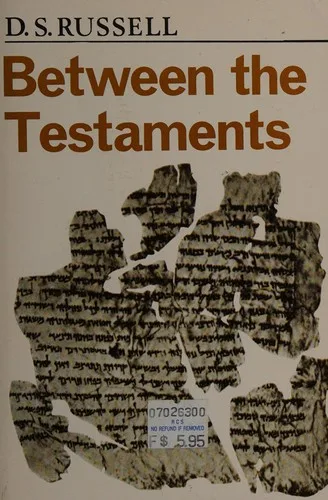
Between the Testaments
 77
77

Between the Testaments



D. S. Russell’s *Between the Testaments* offers a sober, academic survey of the inter-testamental period, a subject often treated with more devotional fervor than critical distance. Russell’s strength lies in his meticulous cataloging of the various Jewish sects and their theological divergences, particularly in relation to eschatological beliefs. For instance, his detailed exposition of the Essene community’s distinct practices and apocalyptic outlook provides a valuable counterpoint to Pharisaic and Sadducean views. However, the book sometimes feels overly dry, its academic rigor occasionally eclipsing the profound spiritual questions animating the period. The prose, while precise, can lack the evocative power needed to fully convey the vibrant, often contentious, religious landscape. Despite this, it remains a solid reference for understanding the intellectual currents shaping early Christianity.
📝 Description
77
### What It Is
Between the Testaments presents a detailed examination of the historical and religious landscape bridging the Old and New Testaments. D. S. Russell’s work, first published in 1989, scrutinizes the diverse sectarian movements and philosophical currents that characterized this pivotal era in Judeo-Christian development. It moves beyond simple chronology to explore the intellectual ferment that presaged major theological shifts.
### Who It's For
This volume is essential for scholars of ancient religion, comparative theology, and early Christian history. It will also appeal to readers interested in the development of messianic thought and the formation of distinct Jewish and Christian identities. Those seeking a rigorous, academic treatment of the Second Temple period will find substantial material here.
### Historical Context
The period covered by Russell's analysis is crucial for understanding the roots of Western religious thought. This era, often termed the Second Temple period (roughly 516 BCE to 70 CE), saw the flourishing of various Jewish groups, including the Pharisees, Sadducees, Essenes, and Zealots. It was a time of significant interaction with Hellenistic philosophy and Persian Zoroastrianism, influencing apocalyptic literature and messianic expectations.
### Key Concepts
The book critically engages with concepts such as the development of angelology, demonology, and the evolving understanding of resurrection. Russell analyzes the diverse interpretations of scripture and prophecy that circulated among different Jewish sects, setting the stage for the emergence of Christianity. The tension between observance of Mosaic Law and emerging spiritual or mystical interpretations is a recurring motif.
💡 Why Read This Book?
• Gain a granular understanding of Jewish sectarianism during the Second Temple period, moving beyond generalized views to specific details about groups like the Essenes and their unique beliefs. • Grasp the complex evolution of messianic expectations and apocalyptic thought in the centuries preceding Jesus, providing crucial context for early Christian theology. • Analyze the critical interplay between Hellenistic philosophy and nascent Jewish mysticism, revealing how foreign intellectual currents shaped indigenous religious expression.
why_read
⭐ Reader Reviews
Honest opinions from readers who have explored this book.
❓ Frequently Asked Questions
What specific Jewish groups are discussed in Between the Testaments?
The book details the Pharisees, Sadducees, and Essenes, exploring their distinct theological positions, interpretations of scripture, and eschatological views during the Second Temple period.
What is the significance of the Second Temple period for Christian origins?
This era (c. 516 BCE - 70 CE) witnessed the development of key concepts and messianic hopes that directly influenced early Christian beliefs and the context in which Christianity emerged.
Does the book cover the Dead Sea Scrolls?
While the Dead Sea Scrolls were discovered after its initial publication in 1989, Russell's work provides the essential historical and theological framework for understanding the Essene community associated with them.
What philosophical influences are examined?
Russell explores the impact of Hellenistic philosophy, particularly its concepts and modes of reasoning, on Jewish thought and religious development during the inter-testamental period.
Is Between the Testaments suitable for beginners in religious studies?
It is primarily aimed at academic readers and those with a foundational knowledge of biblical history. Beginners may find the depth of analysis challenging without prior context.
When was Between the Testaments first published?
The original publication date for D. S. Russell's Between the Testaments was 1989.
🔮 Key Themes & Symbolism
Jewish Sectarianism
The work meticulously dissects the diverse landscape of Jewish religious and political factions during the Second Temple period. Russell highlights the distinct doctrines and practices of groups like the Pharisees, Sadducees, and Essenes, emphasizing their differing approaches to the Law, ritual purity, and eschatology. This differentiation is crucial for understanding the ideological currents that shaped both later Judaism and early Christianity, illustrating a period of intense internal debate and varied interpretations of divine will.
Messianic Expectations
A central focus is the evolution and proliferation of messianic hopes in the centuries preceding the common era. Russell examines how prophecies were interpreted and reinterpreted by different groups, leading to a spectrum of expectations regarding a future deliverer. This exploration illuminates the fertile ground from which early Christian claims about Jesus as the Messiah arose, demonstrating the complex anticipation of divine intervention and a renewed Davidic kingdom.
Hellenistic Influence
The book investigates the significant impact of Greek culture and philosophy on Jewish thought during this era. Russell analyzes how concepts from Hellenism—such as dualism, ideas about the soul, and certain philosophical ethics—were integrated or reacted against within Jewish traditions. This intellectual cross-pollination is presented as a key factor in shaping the theological and spiritual environment of the time.
Apocalyptic Literature
Russell delves into the rise and characteristics of apocalyptic literature, a genre prominent in the inter-testamental period. He explores its themes of divine revelation, cosmic conflict between good and evil, angelic hierarchies, and the ultimate triumph of God. Understanding this literature is vital for grasping the worldview of many contemporary Jews and early Christians, who saw history through a lens of impending divine judgment and salvation.
💬 Memorable Quotes
“The diverse interpretations of eschatological prophecies.”
— This highlights how figures like Daniel were read differently by various Jewish sects, leading to varied predictions about the end times and the coming of a messianic figure.
“The tension between Mosaic Law and developing spiritual traditions.”
— Russell points to the ongoing debate within Judaism regarding strict adherence to the Law versus the emergence of more mystical or inner spiritual disciplines.
“The Essenes' distinct community rules and apocalyptic outlook.”
— This signifies the unique, often ascetic, lifestyle and eschatological fervor characteristic of the Qumran sect, setting them apart from other Jewish groups.
“Hellenistic philosophical concepts encountered by Jewish thinkers.”
— This refers to the philosophical ideas from the Greek world that Jewish intellectuals grappled with, sometimes adopting and sometimes rejecting them.
“The development of angelology and demonology.”
— This concept addresses the increased focus on the roles and hierarchies of celestial and infernal beings during the period, influencing perceptions of divine power and cosmic struggle.
🌙 Esoteric Significance
Tradition
While not overtly esoteric in presentation, the work engages deeply with traditions that underpin Western esoteric thought, particularly its roots in Jewish mysticism and early Christian Gnosticism. Russell's examination of angelology, demonology, and apocalyptic visions touches upon themes frequently explored in Hermetic, Kabbalistic, and later Theosophical systems. The book provides the historical and textual groundwork for understanding how these esoteric concepts developed from their ancient Judeo-Christian origins.
Symbolism
The book implicitly explores symbols crucial to esoteric traditions. Angelic hierarchies and demonic forces represent dualistic cosmic struggles, a common motif in Hermeticism and Gnosticism. The concept of the 'Elect' or 'Chosen' among sects like the Essenes speaks to notions of spiritual elites and hidden knowledge. Furthermore, the interpretation of prophecies and divine signs within apocalyptic literature can be seen as precursors to later esoteric methods of divination and spiritual discernment.
Modern Relevance
Contemporary scholars and practitioners interested in the historical Jesus, the origins of Gnosticism, or the development of Kabbalistic concepts often reference the detailed sectarian analysis found in works like Russell's. Mystics and ceremonial magicians drawing from Judeo-Christian sources find value in understanding the specific historical and theological context from which angelic and demonic lore evolved, informing their own symbolic systems and ritual practices.
👥 Who Should Read This Book
• Students of comparative religion and biblical studies seeking a scholarly overview of the period between the Old and New Testaments. • Researchers of early Christian origins and Jewish messianism interested in the diverse theological expectations of the era. • Readers exploring the historical development of concepts like angelology, demonology, and apocalyptic thought.
📜 Historical Context
Published in 1989, D. S. Russell's *Between the Testaments* emerged during a period of robust academic engagement with the Second Temple period, following decades of archaeological and textual scholarship. Key discoveries, such as the Dead Sea Scrolls (though mostly published before 1989, their analysis continued), had already begun reshaping understanding of Jewish diversity. Russell's work situated itself within this scholarly milieu, offering a synthesis of existing research on sectarianism, messianism, and the influence of Hellenism. It engaged with contemporaries like Geza Vermes and E. P. Sanders, who were also producing influential works on the historical Jesus and early Judaism. While not facing overt censorship, the academic reception of such works often involved rigorous peer review, with scholars debating interpretations of texts and historical reconstructions.
📔 Journal Prompts
The varied interpretations of messianic prophecies.
The Essene community's distinct practices and beliefs.
The impact of Hellenistic philosophy on Jewish thought.
The characteristics of apocalyptic literature.
The development of angelology and demonology in the period.
🗂️ Glossary
Second Temple Period
The era of Jewish history from the rebuilding of the Second Temple in Jerusalem (c. 516 BCE) to its destruction by the Romans in 70 CE.
Pharisees
A prominent Jewish sect during the Second Temple period, known for their adherence to oral traditions and interpretation of Mosaic Law.
Sadducees
An aristocratic Jewish sect of the Second Temple period, primarily associated with the Temple priesthood, who rejected the Pharisees' oral traditions.
Essenes
An ascetic Jewish sect of the Second Temple period, believed by many scholars to be associated with the Qumran community and the Dead Sea Scrolls.
Hellenism
The historical period and culture following the conquests of Alexander the Great, characterized by the spread of Greek language, art, and philosophy.
Apocalyptic Literature
A genre of revelatory literature prominent in Judaism and early Christianity, often featuring visions, symbolic language, and prophecies of end times.
Messianism
Belief in a messiah, a divinely appointed figure who will restore justice and salvation, often with specific expectations about their role and nature.