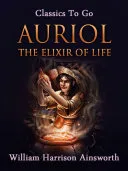
Auriol
 84
84

Auriol
Ainsworth's "Auriol" presents a grim, almost Gothic, tableau of alchemical obsession. The opening scene, with Auriol attempting to sever heads from a public gibbet on Old London Bridge, immediately establishes a bleak moral landscape. Dr. Lamb's near-discovery of the elixir of life and his subsequent demise at his grandson's hands is a particularly stark illustration of corrupted ambition. The faithful dwarf, Flapdragon, adds a touch of the grotesque, a common feature in Victorian literature exploring the uncanny. While the narrative's pacing can sometimes feel deliberate, the novel offers a potent exploration of the dangerous allure of forbidden knowledge. The work ultimately serves as a cautionary tale, portraying the pursuit of eternal life as a path leading to ruin.
📝 Description
84
### What It Is Auriol, first published in 2017, is a work by William Harrison Ainsworth that plunges into the shadowy corners of alchemical pursuit and familial intrigue. The narrative centers on Auriol Darcy, an individual caught in a web of his grandfather's arcane experiments. The story opens with a violent encounter on Old London Bridge, setting a tone of danger and desperation.
### Who It's For This text will appeal to readers interested in historical fiction with a strong occult undercurrent. Those fascinated by alchemical lore, the pursuit of immortality, and the moral ambiguities inherent in such quests will find fertile ground here. It is suited for individuals seeking narratives that blend historical settings with speculative, often dark, philosophical explorations.
### Historical Context William Harrison Ainsworth was a prolific novelist active in the 19th century, known for his historical romances. Auriol, though published in the 21st century, draws on themes and settings prevalent during Ainsworth's writing period. The era saw a surge of interest in spiritualism, mesmerism, and esoteric philosophies, influencing many literary works. Works like Auriol engaged with public fascination surrounding secret societies and arcane knowledge, a fascination also explored by contemporaries like Edward Bulwer-Lytton.
### Key Concepts The narrative revolves around the alchemical quest for the elixir of life, a concept deeply rooted in Hermetic traditions. It explores themes of inheritance, both material and spiritual, and the often-destructive consequences of ambition. The dynamic between Auriol and his grandfather, Dr. Lamb, highlights the tension between scientific curiosity and moral responsibility, particularly concerning the use of discovered potent substances.
💡 Why Read This Book?
• Gain insight into the Victorian fascination with alchemy and the elixir of life, as depicted through Dr. Lamb's desperate experiments. • Examine the complex character of Auriol Darcy, whose actions in the opening scene on Old London Bridge reveal a profound moral ambiguity. • Understand the symbolic role of Flapdragon, the dwarf, as a motif representing the grotesque or the hidden aspects within esoteric pursuits.
⭐ Reader Reviews
Honest opinions from readers who have explored this book.
❓ Frequently Asked Questions
What is the central premise of William Harrison Ainsworth's Auriol?
The book follows Auriol Darcy, whose grandfather, Dr. Lamb, is an alchemist on the verge of discovering the elixir of life. Auriol's actions, beginning with a violent act on Old London Bridge, intertwine with his grandfather's dangerous research.
When was Auriol first published?
Auriol was first published on October 31, 2017, though it draws on themes and styles from William Harrison Ainsworth's 19th-century literary output.
Who are the main characters in Auriol?
The primary characters are Auriol Darcy, the protagonist involved in his grandfather's alchemical pursuits, and his grandfather, Dr. Lamb, the alchemist. Flapdragon, a faithful dwarf, also plays a significant role.
What is the significance of Old London Bridge in the story?
Old London Bridge serves as the setting for the dramatic opening of the novel, where Auriol Darcy is involved in a violent confrontation, immediately establishing the dark and perilous tone of the narrative.
Does Auriol focus on historical accuracy or fictionalized esotericism?
The book uses historical settings, like Old London Bridge, as a backdrop for fictionalized esoteric themes, primarily the alchemical quest for the elixir of life, characteristic of Gothic and Victorian literature.
What is the nature of Dr. Lamb's alchemical work?
Dr. Lamb is depicted as an alchemist on the cusp of discovering the elixir of life. His work is central to the plot, driving the narrative toward a climactic, albeit tragic, revelation.
🔮 Key Themes & Symbolism
The Elixir of Life
The narrative hinges on the alchemical pursuit of the elixir of life, a mythical substance promising immortality. Dr. Lamb's proximity to its discovery drives the plot, exploring the corrupting influence of such ultimate power. This theme aligns with historical Hermetic traditions that sought physical and spiritual perfection through arcane arts, often with dire warnings about hubris and unintended consequences.
Familial Corruption and Inheritance
The relationship between Auriol Darcy and his grandfather, Dr. Lamb, is fraught with tension and moral compromise. Auriol's immediate act of consuming the draught upon his grandfather's death highlights a destructive inheritance, suggesting that ambition and forbidden knowledge can poison familial bonds. This reflects a recurring motif in Gothic literature where ancestral curses or secrets lead to ruin.
The Grotesque and the Hidden
The character of Flapdragon, the faithful dwarf, introduces elements of the grotesque and the uncanny. Dwarfs often symbolize hidden potential, the primal, or the subverted aspects of the human form and psyche within esoteric symbolism. Flapdragon's presence alongside Dr. Lamb's alchemical experiments suggests a connection between the outwardly strange and the profound, albeit dangerous, secrets of nature.
Moral Ambiguity in Pursuit of Knowledge
Auriol Darcy's initial actions on Old London Bridge, coupled with his hasty consumption of the alchemical draught, paint a picture of a character operating in moral grey areas. The work questions the ethical boundaries of scientific and esoteric exploration, suggesting that the pursuit of ultimate knowledge, like the elixir of life, can lead individuals to commit transgressive acts.
💬 Memorable Quotes
“Auriol Darcy is surprised attempting to remove the heads of two traitors from the Southwark Gateway of Old London Bridge.”
— This opening establishes the novel's dark and transgressive tone, immediately placing the protagonist, Auriol, in a violent and morally ambiguous situation, hinting at the dangerous undercurrents of the story.
“He is injured by the warder, Baldred, and carried to the house of Dr Lamb, an alchemist and Auriol Darcy's grandfather.”
— This sets up the central conflict and familial connection, introducing the alchemist grandfather, Dr. Lamb, and positioning Auriol as someone in need of his unconventional assistance, thus drawing him into the world of arcane science.
“Lamb, on the point of discovering the elixir of life, has a seizure and dies as his ungrateful grandson consumes the draught.”
— This pivotal moment encapsulates the tragic irony and dark ambition within the narrative. The pursuit of immortality ends in death, and the grandson's 'ungrateful' act of consumption highlights the destructive nature of his character and the perilous legacy of the alchemist's work.
“Lamb is assisted by his faithful dwarf Flapdragon.”
— The inclusion of Flapdragon, the dwarf assistant, adds a layer of the grotesque and the peculiar, common in Gothic and esoteric literature, suggesting hidden elements and potentially unsettling aspects of Dr. Lamb's alchemical practice.
“The narrative explores the dangerous pursuit of the elixir of life.”
— This concept underlines the core theme of the novel: the perilous and often destructive nature of seeking ultimate knowledge or power, particularly the legendary alchemical substance promising eternal life.
🌙 Esoteric Significance
Tradition
Auriol engages with the Hermetic tradition, specifically its alchemical branch focused on the Magnum Opus, or Great Work. The quest for the elixir of life is a central tenet of this tradition, symbolizing not just physical immortality but also spiritual transformation. The novel portrays this pursuit through a lens of dramatic narrative, highlighting the potential for corruption and destruction when such profound secrets are sought with base desires rather than pure intent.
Symbolism
The elixir of life itself is a potent symbol of ultimate knowledge, power, and the overcoming of mortality. Old London Bridge, as a setting for Auriol's violent act, symbolizes a liminal space and a point of transgression, bridging the mundane world with darker, more dangerous realities. Flapdragon, the dwarf, can be interpreted as representing the chthonic, the hidden, or the alchemical 'prima materia' – the raw, unformed substance from which transformation occurs.
Modern Relevance
Contemporary esoteric practitioners and scholars of Western esotericism may find Auriol relevant for its dramatization of alchemical themes and its exploration of the psychological impact of pursuing forbidden knowledge. The novel's narrative of ambition, familial discord, and the potential for science to yield destructive results continues to resonate in discussions about ethics in scientific advancement and the enduring human fascination with overcoming death.
👥 Who Should Read This Book
• Students of Western Esotericism: Those researching the history and literature of alchemy, Hermeticism, and the pursuit of immortality will find a narrative exploration of these concepts. • Historical Fiction Enthusiasts: Readers who enjoy period settings, particularly 19th-century London, and tales blending historical detail with dramatic, often dark, fictional elements. • Literary Critics of Gothic and Victorian Literature: Individuals interested in analyzing how authors of the era, like Ainsworth, engaged with themes of the occult, morality, and the darker side of human ambition.
📜 Historical Context
William Harrison Ainsworth penned his literary works during the Victorian era, a period marked by fervent interest in the occult, spiritualism, and scientific advancement alongside a persistent fascination with historical romance. While Auriol was published in 2017, its narrative and thematic concerns are deeply rooted in Ainsworth's 19th-century milieu. This era saw a public appetite for tales of secret societies, ancient mysteries, and the darker aspects of human ambition, themes echoed by contemporaries like Edward Bulwer-Lytton in his own explorations of esoteric subjects. The novel's focus on alchemy and the elixir of life taps into a long-standing Hermetic tradition, but within the context of Victorian sensationalism and Gothic undertones. The reception of such works often reflected a societal tension between embracing the burgeoning scientific age and a lingering attraction to the mystical and unexplained.
📔 Journal Prompts
Auriol Darcy's actions on Old London Bridge and the subsequent consumption of the elixir: explore the motivations behind such immediate transgression.
Dr. Lamb's pursuit of the elixir of life: reflect on the ethical boundaries of scientific ambition when ultimate power is the goal.
The symbolic role of Flapdragon: consider what the presence of the dwarf might represent in the context of alchemical experimentation.
The tragic outcome of Dr. Lamb's discovery: analyze the narrative's commentary on the consequences of unchecked ambition.
The inheritance of the elixir draught: contemplate the nature of legacies, both material and spiritual, and their potential for corruption.
🗂️ Glossary
Elixir of Life
A mythical potion sought by alchemists, believed to grant immortality, eternal youth, or the ability to cure all ailments. Its pursuit is central to the narrative of Auriol.
Alchemy
An ancient proto-scientific and philosophical tradition concerned with the transmutation of substances, the creation of a universal solvent, and the discovery of the elixir of life.
Hermeticism
A philosophical and religious tradition based on the purported teachings of Hermes Trismegistus, emphasizing esoteric knowledge, spiritual transformation, and the interconnectedness of the cosmos.
Old London Bridge
The historic medieval bridge crossing the River Thames, famous for its houses and shops built upon it, serving as a dramatic and dangerous setting in the novel's opening.
Magnum Opus
Latin for 'Great Work,' referring to the process and goal of alchemy, often encompassing both the creation of the Philosopher's Stone and spiritual purification.
Draught
A single dose of a liquid, particularly medicine or poison. In Auriol, it refers to the consumed elixir.
Warder
A guard or keeper, particularly of a prison or castle. In this context, Baldred is a guard on Old London Bridge.