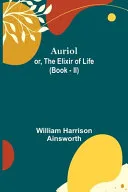
Auriol; Or, The Elixir of Life (Book - II)
 74
74

Auriol; Or, The Elixir of Life (Book - II)
Ainsworth's Auriol (Book II) presents a curious continuation of the alchemical quest, focusing less on the mechanics of transformation and more on the psychological and spiritual toll of pursuing ultimate knowledge. The pacing, while deliberate, can feel uneven, particularly in its lengthy descriptive passages that sometimes overshadow the narrative momentum. A notable strength is Ainsworth's commitment to depicting the internal struggles of his protagonist, Auriol, as he grapples with the moral implications of his pursuit. However, the conceptual leaps required to follow Auriol's alchemical breakthroughs occasionally lack clear grounding, leaving the reader to infer much of the esoteric process. The work's engagement with the symbolic language of the Great Work is more evocative than didactic. Ultimately, Auriol (Book II) offers a Victorian perspective on enduring alchemical aspirations, best appreciated for its atmospheric portrayal of a solitary, obsessive quest.
📝 Description
74
### What It Is
Auriol; Or, The Elixir of Life (Book - II) is the second volume of William Harrison Ainsworth's exploration into alchemical and occult themes, focusing on the titular character's quest. Originally published, this edition presents the work in a reformatted, modern layout ensuring clarity and readability. It delves into the narrative of seeking immortality through mystical means, a recurring motif in esoteric literature.
### Who It's For
This book will appeal to readers interested in 19th-century occult fiction and historical explorations of alchemy. It is suitable for those who appreciate narrative-driven accounts of philosophical and spiritual quests, particularly those with an interest in Ainsworth's broader literary output. Scholars of Victorian literature and the history of magic will find it a valuable text.
### Historical Context
William Harrison Ainsworth wrote during a period of burgeoning interest in spiritualism and the occult in Victorian England. The mid-19th century saw a rise in societies like the Societas Rosicruciana in Anglia, founded in 1867, reflecting a wider societal fascination with esoteric knowledge. Ainsworth's work emerged alongside authors like Edward Bulwer-Lytton, whose 'Zanoni' (1842) also explored themes of secret knowledge and immortality.
### Key Concepts
The narrative revolves around the pursuit of the Elixir of Life, a legendary alchemical substance believed to grant eternal youth or life. It examines themes of ambition, the price of forbidden knowledge, and the spiritual transformation that such a quest might entail. The book also touches upon the symbolic language of alchemy, reflecting its internal and external manifestations.
💡 Why Read This Book?
• Gain insight into 19th-century fictional interpretations of alchemical pursuit, specifically through Ainsworth's narrative lens in 'Auriol; Or, The Elixir of Life (Book - II)', offering a unique perspective on the Great Work. • Explore the thematic elements of ambition and the spiritual cost of seeking immortality, as depicted through the character of Auriol and his journey towards the Elixir of Life. • Understand the literary engagement with esoteric concepts prevalent in the Victorian era, contextualized by Ainsworth's work during a period of occult revival.
⭐ Reader Reviews
Honest opinions from readers who have explored this book.
❓ Frequently Asked Questions
What is the primary focus of Auriol; Or, The Elixir of Life (Book - II)?
This volume continues the narrative of Auriol's quest for the legendary Elixir of Life, delving into the personal and spiritual ramifications of pursuing alchemical immortality during the Victorian era.
Is this book a literal guide to alchemy?
No, 'Auriol; Or, The Elixir of Life (Book - II)' is a work of fiction. It uses alchemical themes as a narrative device to explore philosophical and psychological ideas rather than providing practical alchemical instruction.
Who was William Harrison Ainsworth?
William Harrison Ainsworth was a prolific English novelist active in the 19th century, known for historical romances and tales often featuring dramatic plots and sensational elements, including this exploration of esoteric themes.
When was Auriol; Or, The Elixir of Life (Book - II) first published?
While this specific modern edition was published on 2022-05-17, the original publication date for Ainsworth's 'Auriol' falls within the mid-19th century, reflecting the literary trends of that period.
Does the book require reading Book - I first?
It is highly recommended to read Book - I of 'Auriol' first to fully understand the character's background and the initial stages of his quest for the Elixir of Life.
What kind of historical context is relevant to this book?
The book is set against the backdrop of Victorian England's fascination with spiritualism, occultism, and esoteric philosophies, a period marked by intellectual curiosity about hidden knowledge and ancient traditions.
🔮 Key Themes & Symbolism
The Great Work Narrative
Auriol's pursuit of the Elixir of Life forms the central narrative arc, mirroring the alchemical concept of the Great Work. This theme explores not just the physical transformation sought through alchemy, but also the spiritual and psychological evolution of the seeker. Ainsworth uses Auriol's journey to examine the ambition, dedication, and potential isolation inherent in such a profound undertaking, reflecting the esoteric ideal of perfecting the self through a symbolic process.
Knowledge and Its Price
The book critically examines the acquisition of esoteric knowledge. Auriol's quest for the Elixir of Life is driven by a desire for ultimate understanding and power, yet the narrative suggests a significant personal cost. This theme questions whether such profound secrets are meant for humanity and what sacrifices are deemed acceptable in their pursuit, aligning with cautionary tales found in various mystical traditions about forbidden lore.
Symbolism of Immortality
Immortality, as represented by the Elixir of Life, is explored not merely as a physical state but as a symbolic goal. The narrative probes the desire for transcendence and permanence in a transient world. Ainsworth's treatment suggests that the true 'elixir' might lie in spiritual attainment or a profound understanding of existence, rather than mere physical longevity, echoing philosophical inquiries present in Hermeticism.
Victorian Esotericism
As a work from the 19th century, 'Auriol' reflects the era's burgeoning interest in spiritualism, occultism, and ancient mysteries. It situates itself within a literary landscape where authors like Bulwer-Lytton were also exploring secret societies and arcane knowledge. The novel serves as a window into the popular imagination's engagement with esoteric ideas during a period of significant societal change and intellectual exploration.
💬 Memorable Quotes
“The alchemist sought not only to transmute metals but to purify his own soul.”
— This encapsulates the dual nature of the alchemical quest as presented in the book: an external manipulation of matter mirroring an internal spiritual refinement. It highlights the ethical and transformative dimensions Ainsworth imbues in Auriol's pursuit.
“He pursued the secrets of life at the expense of living.”
— This observation points to the central irony of Auriol's journey. His obsessive quest for an eternal existence leads him to neglect the very essence of life, underscoring the potential for spiritual or existential loss in the pursuit of ultimate knowledge.
“The Elixir promised a knowledge beyond human ken.”
— This phrase emphasizes the transcendent and potentially dangerous nature of the knowledge Auriol seeks. It suggests that the secrets of the Elixir are not mundane but touch upon cosmic truths, the acquisition of which carries immense implications.
“In solitude, the alchemist confronted both his ambition and his fear.”
— This interpretation highlights the psychological landscape of the alchemist's path. The isolation required for the Great Work forces introspection, bringing the seeker face-to-face with their deepest motivations and anxieties about mortality and power.
“The symbols on the retort whispered ancient formulae.”
— This poetic line illustrates how the tools of alchemy are imbued with meaning and potential knowledge. The 'symbols' and 'formulae' suggest a hidden language and a legacy of wisdom that Auriol attempts to decipher and reactivate.
🌙 Esoteric Significance
Tradition
Auriol's quest for the Elixir of Life firmly places it within the Western Hermetic tradition, specifically its alchemical branch. The narrative engages with the core concepts of the Magnum Opus, or Great Work, which traditionally involves both the transmutation of base metals into gold and the spiritual purification and perfection of the alchemist. Ainsworth's fictional treatment explores the symbolic and psychological dimensions of this process, aligning with later esoteric interpretations that viewed alchemy as a path of inner transformation rather than solely a physical or chemical pursuit.
Symbolism
The Elixir of Life itself is a potent symbol of immortality, spiritual perfection, and ultimate knowledge within alchemy. The narrative likely employs other alchemical symbols, such as the retort (vessel of transformation), the serpent (representing cycles of death and rebirth or wisdom), and various colour stages (nigredo, albedo, rubedo) to signify the progressive stages of both the chemical and spiritual work. These symbols function as a coded language, inviting deeper interpretation of Auriol's internal and external journey.
Modern Relevance
Contemporary practitioners of Hermeticism and modern alchemists continue to draw inspiration from classic alchemical narratives like 'Auriol'. The book's exploration of the psychological and spiritual cost of ultimate knowledge resonates with modern discussions in depth psychology and transpersonal psychology regarding individuation and the shadow self. Its thematic exploration of the pursuit of transcendence remains relevant to those in spiritual or philosophical circles seeking to understand the human drive for meaning and permanence.
👥 Who Should Read This Book
• Students of Victorian literature interested in how authors of the era engaged with occult and esoteric themes beyond conventional historical fiction. • Aspiring practitioners of Western Hermeticism and alchemy seeking fictional narratives that explore the symbolic and psychological dimensions of the Great Work. • Readers fascinated by the literary history of immortality myths and the philosophical questions surrounding the pursuit of forbidden knowledge.
📜 Historical Context
William Harrison Ainsworth penned 'Auriol; Or, The Elixir of Life' during the mid-19th century, a period marked by a fervent resurgence of interest in spiritualism, mesmerism, and occult philosophies across Britain and Europe. This era saw the establishment of esoteric societies, such as the Hermetic Order of the Golden Dawn later in the century, and a widespread fascination with hidden knowledge. Ainsworth’s work emerged alongside and in dialogue with contemporary authors who also explored themes of secret orders and arcane powers, most notably Edward Bulwer-Lytton with his influential novel 'Zanoni' (1842), which similarly delved into the pursuit of eternal life and hidden wisdom. While Ainsworth’s narrative is fictional, it taps into the intellectual currents of the time, reflecting a cultural milieu where the boundaries between science, mysticism, and imagination were actively being explored and debated. The reception of such works often mirrored this duality, viewed by some as sensational fiction and by others as potential explorations of genuine esoteric truths.
📔 Journal Prompts
Reflect on Auriol's pursuit of the Elixir of Life and the sacrifices made.
Consider the symbolic meaning of the Elixir of Life within the context of personal transformation.
Analyze the depiction of the alchemist's solitary journey and its psychological impact.
Explore the Victorian fascination with esoteric knowledge as represented in Ainsworth's narrative.
How does the narrative balance the external quest for the Elixir with Auriol's internal state?
🗂️ Glossary
Elixir of Life
A legendary alchemical substance believed to grant immortality, eternal youth, or the ability to cure all diseases. In esoteric traditions, it often symbolizes spiritual perfection and ultimate wisdom.
Great Work (Magnum Opus)
The central process in alchemy, referring to the creation of the Philosopher's Stone and the subsequent transmutation of base metals into gold. Esoterically, it signifies the spiritual purification and perfection of the alchemist.
Alchemy
An ancient philosophical and proto-scientific tradition concerned with the transformation of matter, often seeking to convert base metals into noble metals and discover a universal elixir. It is deeply intertwined with symbolism and spiritual development.
Transmutation
In alchemy, the process of changing one substance into another, most famously base metals into gold. Esoterically, it refers to the spiritual transformation of the individual.
Hermeticism
A philosophical and religious tradition based on the purported teachings of Hermes Trismegistus. It emphasizes spiritual knowledge, the interconnectedness of all things, and the pursuit of wisdom through understanding the cosmos.
Victorian Era
The period of Queen Victoria's reign in the United Kingdom (1837–1901), characterized by industrial expansion, social change, and a complex cultural landscape including interest in spiritualism and the occult.
Retort
A type of laboratory glassware, typically a glass flask with a long, downward-pointing neck, used in distillation or decomposition. In alchemy, it is a symbolic vessel for transformative processes.