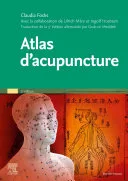
Atlas d'acupuncture
 83
83

Atlas d'acupuncture
Claudia Focks, Ulrich März, and Ingolf Hosbach's *Atlas d'acupuncture* presents a laudable effort in consolidating a vast amount of information on acupuncture points. The consistent, single-page layout for each point is its strongest asset, allowing for rapid information retrieval that is essential in a clinical setting. This visual and organizational clarity is a significant advantage over more text-heavy compendiums. However, while the work is exhaustive in its cataloging of points, it offers limited exploration into the theoretical underpinnings or the nuanced diagnostic approaches that often accompany point selection in practice. For instance, the section on the extraordinary vessels, while present, could benefit from more context on their unique energetic functions beyond mere location. Despite this, for its intended purpose as a precise anatomical and point-location guide, the *Atlas d'acupuncture* serves as a highly functional, albeit somewhat dry, reference.
📝 Description
83
### What It Is
This comprehensive reference work, *Atlas d'acupuncture*, meticulously details the twelve principal meridians and the points associated with the eight extraordinary vessels, alongside a multitude of extra-meridian points. Its structured format, presenting each point with consistent clinical information on a single page, facilitates swift comprehension and accurate location identification for practitioners. The collaboration of Claudia Focks, Ulrich März, and Ingolf Hosbach ensures a thorough and authoritative compilation for those engaged in acupuncture practice.
### Who It's For
The *Atlas d'acupuncture* is an indispensable resource for practicing acupuncturists, whether they are seasoned professionals seeking a detailed reference or students requiring a clear, organized guide to anatomical points and their clinical significance. It is also valuable for complementary health practitioners who incorporate acupressure or related modalities into their work, offering precise anatomical and energetic pathway information. Researchers in traditional medicine and anatomy will find its exhaustive cataloging useful for comparative studies.
### Historical Context
While the 2024 publication date of this edition places it in contemporary times, the field of acupuncture has a lineage stretching back millennia, with foundational texts like the *Huangdi Neijing* (Yellow Emperor's Inner Canon) established by the Han Dynasty (206 BCE – 220 CE). This atlas builds upon that ancient framework, offering a modern, visually organized presentation of meridian pathways and acupoints. It stands as a testament to the enduring clinical application and theoretical development of Traditional Chinese Medicine (TCM), translating complex anatomical and energetic concepts into a format accessible to current practitioners.
### Key Concepts
The central concept is the systematic mapping of the body's energetic pathways, known as meridians, and their associated acupoints. The atlas categorizes these points according to the twelve principal meridians (e.g., Lung, Large Intestine, Stomach) and the eight extraordinary vessels, vital for understanding the flow of Qi (vital energy). It also addresses numerous extra-meridian points, which are clinically relevant but not directly part of the primary meridian system. Each point's presentation emphasizes critical clinical data, aiming to streamline the diagnostic and treatment process for acupuncturists.
💡 Why Read This Book?
• Learn to precisely locate and understand the clinical significance of acupuncture points detailed in the twelve principal meridians and eight extraordinary vessels, as systematically presented by Focks, März, and Hosbach. • Gain a clear, organized reference for numerous extra-meridian points, expanding your therapeutic options beyond the standard meridian pathways, as illustrated in the atlas's comprehensive catalog. • Benefit from a structured approach to acupoint information, enabling faster clinical decision-making and accurate point identification, a direct outcome of the work's single-page per point methodology.
⭐ Reader Reviews
Honest opinions from readers who have explored this book.
❓ Frequently Asked Questions
What is the primary purpose of the Atlas d'acupuncture by Focks, März, and Hosbach?
The primary purpose of the *Atlas d'acupuncture* is to serve as a comprehensive and clearly organized reference for practitioners. It meticulously details the twelve principal meridians, the eight extraordinary vessels, and numerous extra-meridian points, presenting crucial clinical information for each point on a single page for easy access.
Who are the authors of the Atlas d'acupuncture?
The *Atlas d'acupuncture* is authored by Claudia Focks, with collaboration from Ulrich März and Ingolf Hosbach. This team brings together expertise to create a detailed and authoritative guide for acupuncture practitioners.
What type of information is provided for each acupuncture point in the atlas?
For each acupuncture point, the atlas provides essential clinical information. This includes its location, indications, and other relevant data, all presented in a consistent format on a single page to facilitate quick understanding and application by acupuncturists.
Does the Atlas d'acupuncture cover points not on the main meridians?
Yes, the *Atlas d'acupuncture* comprehensively covers not only the twelve principal meridians and the eight extraordinary vessels but also includes numerous extra-meridian points, offering a broad scope of clinically relevant acupoint locations and data.
What makes the Atlas d'acupuncture a useful tool for practitioners?
Its utility lies in its exhaustive compilation and standardized presentation. The single-page format for each point allows practitioners to swiftly grasp the most important clinical details, aiding in accurate point selection and treatment planning in their practice.
When was the Atlas d'acupuncture first published?
The *Atlas d'acupuncture* by Claudia Focks, Ulrich März, and Ingolf Hosbach was first published on May 28, 2024, presenting contemporary scholarship in the field of acupuncture.
🔮 Key Themes & Symbolism
Meridian Pathways
The work meticulously charts the twelve principal meridians, fundamental conduits for Qi (vital energy) in Traditional Chinese Medicine. Each meridian is explored in relation to its associated organ system and its unique energetic flow throughout the body. Understanding these pathways is crucial for diagnosing energetic imbalances and selecting appropriate treatment points. The atlas provides clear anatomical references, enabling practitioners to visualize and trace these intricate energetic routes, forming the bedrock of effective acupuncture practice.
Extraordinary Vessels
Beyond the primary meridians, *Atlas d'acupuncture* dedicates significant attention to the eight extraordinary vessels. These unique channels, often described as reservoirs of Qi and Blood, play a critical role in regulating the primary meridians and influencing the deeper energetic constitution. The atlas details their specific pathways and points, offering practitioners advanced therapeutic strategies for complex conditions that may not be adequately addressed by targeting the main meridians alone.
Acupoint Precision
A core focus is the precise identification and clinical application of acupoints. The atlas employs a standardized, single-page format for each point, consolidating essential information such as anatomical location, common indications, and specific clinical notes. This systematic approach is designed to minimize ambiguity and enhance diagnostic accuracy, empowering acupuncturists to confidently select the most effective points for patient treatment based on verifiable anatomical and clinical data.
Clinical Reference System
The *Atlas d'acupuncture* functions as a vital clinical reference system. Its organized structure, clear diagrams, and concise presentation of data transform a complex body of knowledge into an accessible tool. The emphasis on practical, immediately usable information supports practitioners in their daily work, facilitating efficient diagnosis and treatment planning. This makes it an indispensable resource for both training and advanced clinical application in the field of acupuncture.
💬 Memorable Quotes
“Each point is presented according to the same model, allowing the most important clinical information to be grasped at a glance on the same page.”
— This highlights the atlas's design philosophy: prioritizing clarity and efficiency for the busy practitioner. The standardized layout ensures that key data isn't buried, making point selection faster and more reliable.
“The objective is thus to help the practitioner in their search for the correct location.”
— This statement underscores the atlas's practical, hands-on utility. It acknowledges the challenge of precise anatomical landmarking in acupuncture and positions the book as a direct solution for that specific need.
“Comprehensive presentation of the twelve principal meridians.”
— This phrase points to the foundational scope of the work, emphasizing its role as a thorough guide to the primary energetic pathways recognized in Traditional Chinese Medicine.
“Numerous points outside the meridians.”
— This indicates the atlas's depth, going beyond the standard meridian system to include clinically significant extra-meridian points, broadening the practitioner's toolkit.
“Points of the eight extraordinary vessels.”
— This signifies the inclusion of a more advanced layer of energetic study within acupuncture, focusing on the unique functions and applications of these less commonly detailed energetic pathways.
🌙 Esoteric Significance
Tradition
While rooted in Traditional Chinese Medicine (TCM), which possesses its own sophisticated energetic and philosophical systems, the *Atlas d'acupuncture* can be viewed through an esoteric lens as mapping the subtle body's energetic pathways. In many esoteric traditions, the concept of invisible channels carrying life force (like prana or chi) is central. This atlas provides a detailed, systematic cartography of such channels, aligning with Hermetic principles of correspondence and the understanding of macrocosm and microcosm reflected in the human form.
Symbolism
The meridians themselves can be seen as symbolic representations of energetic flow and interconnectedness within the human system. Each meridian is often associated with specific organs, emotions, and elemental correspondences in TCM, imbuing its pathway with rich symbolic meaning. The points along these meridians act as specific access points, akin to spiritual gateways or nodes of power, allowing for interaction with and modulation of the body's vital energy. The number twelve, for instance, relates to cyclical patterns common in esoteric numerology.
Modern Relevance
Contemporary practitioners of energy medicine, holistic health coaches, and even some somatic therapists draw upon the principles and mapping provided by detailed acupuncture atlases. Schools teaching integrative medicine often incorporate TCM principles, making resources like this atlas essential for students seeking to understand and apply energetic anatomy. Thinkers exploring the intersection of consciousness and physiology find value in the detailed mapping of Qi flow, viewing it as a tangible representation of the mind-body connection.
👥 Who Should Read This Book
• Practicing acupuncturists seeking a highly organized, visually clear reference for meridian and acupoint location, enabling faster and more accurate clinical application. • Students of Traditional Chinese Medicine (TCM) who require a foundational text for learning the precise anatomical landmarks and clinical indications of acupuncture points. • Complementary health practitioners interested in acupressure or related modalities who need a detailed guide to the body's energetic pathways and specific treatment points.
📜 Historical Context
The field of acupuncture, originating in ancient China, has a history spanning over two thousand years, with its theoretical foundations largely established by texts like the *Huangdi Neijing* during the Han Dynasty (206 BCE – 220 CE). Modern acupuncture practice, as reflected in this 2024 atlas, builds upon this deep historical wellspring while integrating contemporary anatomical understanding and clinical research. Unlike purely theoretical or philosophical texts, this atlas emphasizes practical application and precise anatomical referencing, a shift towards empirical clinical utility that gained momentum throughout the 20th century, particularly as Traditional Chinese Medicine (TCM) gained international recognition. While competing schools of thought in Western medicine existed and continue to do so, the global dissemination and acceptance of TCM, spurred by figures like Edgar Dale and later through organizations like the World Health Organization (WHO), have cemented the importance of detailed, standardized references like this atlas for practitioners worldwide.
📔 Journal Prompts
The twelve principal meridians and their associated Qi flow.
Identifying key extra-meridian points for therapeutic use.
The energetic function of the eight extraordinary vessels.
Cross-referencing meridian pathways with anatomical structures.
Clinical application of specific acupoints based on indications.
🗂️ Glossary
Meridian
In Traditional Chinese Medicine (TCM), a network of pathways through which Qi (vital energy) and Blood circulate throughout the body. There are twelve principal meridians and eight extraordinary vessels.
Acupoint
Specific locations on the body, typically along meridian pathways, where acupuncture needles or pressure can be applied to influence the flow of Qi and treat various conditions.
Qi (Chi)
The fundamental vital life force or energy believed to flow through meridians in TCM. It is considered essential for maintaining health and well-being.
Extra-meridian Points
Acupuncture points located outside of the twelve principal meridians and eight extraordinary vessels. They are often used for specific therapeutic effects and are clinically significant.
Eight Extraordinary Vessels
A group of eight special meridians that act as reservoirs for Qi and Blood, playing a crucial role in regulating the primary meridians and influencing the body's deeper energetic constitution.
Clinical Information
Data relevant to the practice of acupuncture, including the precise anatomical location of a point, its primary therapeutic indications, and any special considerations for its use.
Anatomical Location
The precise physical position of an acupoint on the body, described using anatomical landmarks and measurements to ensure accurate identification by practitioners.