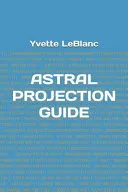
Astral Projection Guide, Book One
 80
80

Astral Projection Guide, Book One
Yvette a. LeBlanc's "Astral Projection Guide, Book One" presents a refreshingly direct, almost utilitarian, approach to the subject of out-of-body travel. Eschewing elaborate philosophical frameworks, LeBlanc focuses on the 'how-to,' a commendable effort for beginners. The clarity of the instructions for initiating an astral projection is a significant strength; it feels less like an arcane ritual and more like learning a new skill. However, the book's primary limitation lies in its brevity and the somewhat underdeveloped exploration of the potential challenges or ethical considerations inherent in astral travel. For instance, the section on aura viewing, while simple, could benefit from more context on interpretation and potential misperceptions. The 2017 publication date places it in a contemporary context, but the techniques themselves feel rooted in earlier, more practical occult literature. Ultimately, "Astral Projection Guide, Book One" serves as a functional primer for the curious but may leave seasoned practitioners seeking deeper theoretical grounding.
📝 Description
80
### What It Is
Yvette a. LeBlanc's "Astral Projection Guide, Book One" offers a direct approach to understanding and experiencing the astral plane. Originally published in 2017, this work breaks down the often-complex subject of out-of-body experiences into actionable steps. It serves as an introductory manual for those curious about consciousness beyond the physical body. The book distinguishes itself by focusing on practical application, aiming to demystify phenomena that have long been subjects of esoteric study and speculation. It covers the foundational knowledge required to approach astral projection safely and effectively.
### Who It's For
This guide is primarily intended for individuals new to the concept of astral projection or those who have attempted it without success. LeBlanc’s approach is accessible, making it suitable for the layperson seeking to explore non-physical realities. It also appeals to students of metaphysics and consciousness studies interested in practical techniques rather than purely theoretical discussions. Those who value clear, step-by-step instructions and a no-nonsense explanation of astral travel will find this book particularly useful. It is for the seeker ready to engage actively with the subject.
### Historical Context
Published in 2017, "Astral Projection Guide, Book One" emerges within a contemporary resurgence of interest in consciousness exploration, influenced by earlier 20th-century movements like Theosophy and the New Age. While figures like Helena Blavatsky explored similar concepts in texts such as "The Secret Doctrine," LeBlanc's work focuses on direct, personal experience rather than extensive philosophical or historical exegesis. The book’s direct publication date places it in an era where online forums and accessible digital content facilitate a wider dissemination of esoteric knowledge, contrasting with the more guarded dissemination of techniques by earlier occult orders. Its straightforward instruction manual format caters to a modern audience accustomed to quick-start guides.
### Key Concepts
The core concepts presented in "Astral Projection Guide, Book One" revolve around the mechanics of achieving an out-of-body experience and developing the ability to perceive auras. LeBlanc emphasizes the nature of the astral plane as a distinct energetic reality accessible through altered states of consciousness. Techniques for entering this state are detailed, focusing on mental focus, relaxation, and specific visualization exercises. The book also introduces a simplified method for aura viewing, presented as an accessible skill that can be developed with practice. The interconnectedness of consciousness, energy, and perception forms the underlying framework for these teachings.
💡 Why Read This Book?
• Learn a specific, simplified technique for viewing your own aura, a skill detailed in LeBlanc's practical guide, which can offer new perspectives on your personal energy field. • Gain practical, step-by-step instructions for initiating an astral projection, a core focus of the "Astral Projection Guide, Book One," empowering you to explore non-physical states. • Understand the fundamental nature of the astral plane as presented in the book, providing a conceptual framework for your own out-of-body explorations as described in the 2017 publication.
⭐ Reader Reviews
Honest opinions from readers who have explored this book.
❓ Frequently Asked Questions
What is the primary goal of Yvette a. LeBlanc's "Astral Projection Guide, Book One"?
The primary goal is to provide practical, easy-to-follow techniques for individuals to achieve astral projection and learn to view auras. It aims to demystify these esoteric experiences for beginners.
When was "Astral Projection Guide, Book One" first published?
The book was first published on June 30, 2017. This makes it a relatively contemporary guide in the field of esoteric studies.
Does the book offer techniques for aura viewing?
Yes, "Astral Projection Guide, Book One" includes a very simple technique for viewing one's own aura, presented as an accessible skill for readers to develop.
What distinguishes this book from other astral projection guides?
Its distinction lies in its direct, actionable approach and the simplification of complex concepts. It focuses on 'how-to' rather than extensive theory, making it highly practical for novices.
What is the "astral plane" as described in the book?
The book describes the astral plane as a non-physical dimension or energetic reality that can be accessed through specific states of consciousness, often through astral projection.
Is this book suitable for experienced astral projectors?
While it offers foundational techniques, experienced practitioners might find the book's depth limited. Its primary audience is beginners seeking clear instructions on astral projection and aura viewing.
🔮 Key Themes & Symbolism
Astral Projection Techniques
This book focuses on the practical methods required to achieve an out-of-body experience. It details specific mental and physical preparations, emphasizing relaxation and focused intention. LeBlanc breaks down the process into manageable steps, aiming to make the often-elusive art of astral projection accessible to the average reader. The techniques are designed for direct application, encouraging readers to experiment and find what works best for their individual energetic makeup.
The Astral Plane
LeBlanc examines the astral plane not as a theoretical construct but as a tangible reality accessible through consciousness. The book provides a foundational understanding of this non-physical dimension, describing its nature and how one might interact with it during an astral projection. This exploration serves to demystify the experience, presenting it as a natural extension of consciousness rather than a supernatural event, thereby encouraging a more grounded approach to exploration.
Aura Viewing
Beyond astral projection, the guide introduces a simplified technique for perceiving auras. This section aims to equip readers with a basic skill for visualizing the energetic fields surrounding living beings. The emphasis is on developing this ability through straightforward practice, offering a complementary skill to astral projection. It suggests that perceiving auras can enhance one's awareness of subtle energies and the interconnectedness of life.
Consciousness Exploration
At its heart, the book is an invitation to explore the vast potential of human consciousness. It positions astral projection and aura viewing as tools for expanding one's perception beyond the limitations of the physical senses. LeBlanc encourages readers to view these practices as methods for self-discovery and for gaining a broader understanding of existence, promoting an active engagement with the nature of reality.
💬 Memorable Quotes
“The astral plane is examined as well as the astral projection techniques necessary to enter.”
— This directly states the book's core intent: to provide both theoretical context about the astral realm and practical instructions for accessing it.
“A very simple technique to view your own aura is given.”
— This highlights a specific, accessible skill offered in the book, promising a straightforward method for developing a subtle perception ability.
“EXPLORE ALL OF CREATION. LEARN THE TRUE MEANING OF LIFE. LET ME SHOW YOU.”
— This is an interpretation of the book's ambitious scope and direct invitation to the reader, suggesting a profound, transformative potential through its teachings.
“Many Effective & Easy Astral Projection Techniques -- Astral Projection Made Doable.”
— This paraphrased concept emphasizes the book's commitment to providing practical, user-friendly methods that aim to make astral projection achievable for anyone.
“The main topics of my book are: (1) the astral projection experience and how to accomplish it.”
— This clearly outlines the primary focus on the mechanics and execution of astral projection, positioning it as the central subject matter.
🌙 Esoteric Significance
Tradition
This work can be seen as part of the broader Western esoteric tradition, particularly its modern, experiential branches focused on consciousness exploration. It departs from strict adherence to traditional frameworks like Hermeticism or Kabbalah by prioritizing direct personal experience and simplified techniques over complex symbolic systems or ritualistic practices. Its lineage is more aligned with practical occultism and psychic development literature that gained traction in the 20th century, aiming to empower individuals with accessible methods for exploring non-physical realities.
Symbolism
While "Astral Projection Guide, Book One" is primarily technique-focused, the concept of the 'astral plane' itself functions as a potent symbol. It represents a dimension of consciousness and reality beyond the physical, a symbolic landscape where the soul or consciousness can travel. The act of projection symbolizes liberation from physical constraints and the exploration of the self's deeper potentials. Aura viewing symbolizes the perception of subtle energies and the interconnectedness of all life, representing an expanded awareness of the energetic universe.
Modern Relevance
LeBlanc's guide resonates with contemporary practices in consciousness exploration, lucid dreaming communities, and remote viewing circles. Its emphasis on practical, step-by-step methods aligns with the modern desire for actionable self-improvement tools. Thinkers and practitioners focused on non-ordinary states of consciousness, neuroplasticity, and the scientific study of subjective experience may find its direct approach a useful starting point, even if they seek to integrate its techniques with more rigorous methodologies or explore related phenomena like Near-Death Experiences (NDEs).
👥 Who Should Read This Book
• Aspiring astral projectors seeking clear, foundational instructions on how to initiate and navigate out-of-body experiences. • Individuals curious about exploring consciousness beyond the physical body who prefer practical techniques over extensive theoretical study. • Beginners interested in developing subtle perception skills, such as aura viewing, as a complementary practice to consciousness exploration.
📜 Historical Context
Published in 2017, "Astral Projection Guide, Book One" enters a contemporary landscape where interest in consciousness studies and out-of-body experiences (OBEs) has seen a notable resurgence, partly fueled by online communities and accessible digital resources. This period follows decades where esoteric topics were explored by movements like Theosophy, founded by Helena Blavatsky in the late 19th century, and later by New Age authors in the latter half of the 20th century. LeBlanc's work, however, distinguishes itself by adopting a direct, instructional manual format, contrasting with the more philosophical or historical explorations of figures like Blavatsky or Arthur Conan Doyle, who also wrote on spiritualism. While the underlying concepts echo earlier Western esoteric traditions, LeBlanc’s approach emphasizes immediate practical application rather than deep theoretical immersion or adherence to a specific lineage like the Hermetic Order of the Golden Dawn. The book's publication date places it in an era where such practical guides are readily available, catering to a generation seeking direct experiential knowledge.
📔 Journal Prompts
Astral projection techniques: document your preparatory steps before attempting a projection.
The astral plane: describe your initial conceptualization of this dimension before reading.
Aura viewing: reflect on the easiest aspect of the described aura viewing method.
Consciousness exploration: how might astral projection expand your understanding of reality?
Self-discovery: what personal insights do you anticipate gaining from practicing these techniques?
🗂️ Glossary
Astral Projection
The experience of leaving one's physical body to travel consciously in an astral or non-physical form, often associated with exploring other dimensions or planes of existence.
Astral Plane
A non-physical realm or dimension of existence believed to be accessible through altered states of consciousness, such as during astral projection. It is often described as a realm of thought, emotion, and subtle energies.
Aura
A field of subtle energy or luminous radiation believed to surround living beings. It is thought to reflect a person's physical, emotional, and spiritual state.
Out-of-Body Experience (OBE)
A general term for any experience where a person feels their consciousness has temporarily separated from their physical body, allowing perception from a viewpoint outside their physical form.
Consciousness
The state or quality of awareness, or of being aware of an external object or something within oneself. In esoteric contexts, it often refers to the totality of subjective experience.
Energetic Makeup
Refers to an individual's unique combination and flow of subtle energies, often considered in relation to their physical, emotional, and spiritual states, which can influence their ability to engage in practices like astral projection.
Metaphysics
A branch of philosophy that investigates the fundamental nature of reality, including the relationship between mind and matter, substance and attribute, potentiality and actuality.