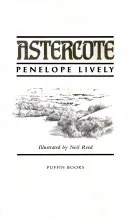
Astercote

 82
82

Astercote
Penelope Lively’s *Astercote* is less a ghost story and more an archaeological meditation on the persistence of place. The novel excels in its evocation of a landscape that seems to exhale the lives of its former inhabitants. Lively’s prose, precise and understated, renders the summer heat and the underlying chill of forgotten history with equal skill. The narrative’s strength lies in its subtle layering of the present-day family’s experiences with the spectral presence of the medieval village, Astercote. However, the deliberate eschewal of overt supernatural events, while artistically valid, might leave readers expecting a more conventional spectral encounter feeling somewhat unfulfilled. A particularly effective passage details the children’s discovery of a fragment of pottery, a tangible link to the vanished community that sparks their imagination and the reader’s. The work probes the idea that the land itself remembers, a concept explored with quiet intensity.
*Astercote* offers a sophisticated engagement with history's imprint on the present.
📝 Description
82
Penelope Lively's 1987 novel Astercote concerns a family's summer holiday in a village haunted by its medieval past.
The narrative of Penelope Lively's Astercote unfolds across multiple time periods. A family vacations in a village that carries the spectral weight of a medieval settlement and its people. The story moves between the present-day experiences of the characters and the lingering echoes of bygone eras, building a disquieting atmosphere. Lively does not offer a simple ghost story; instead, the novel examines how history impresses itself upon the present, both in the physical environment and in human minds.
Readers who appreciate literary fiction that considers historical consciousness and the enduring nature of memory will find Astercote rewarding. It suits those interested in how places can retain and transmit the impact of past events and lives, rather than those seeking overt supernatural occurrences. The novel appeals to mature readers who enjoy detailed character studies and atmospheric settings. It also engages those curious about the connections between archaeology, history, and personal experience.
Published in 1987, Astercote emerged during a time when postmodern narrative techniques that explored time and memory were prevalent. Lively's work aligns with late 20th-century literary currents that questioned linear temporality and embraced psychological depth. The novel's focus on the palpable presence of the past and its imprint on the present resonates with a broader interest in how environments can hold and transmit historical experience, a theme that touches upon certain esoteric traditions concerning place memory and residual energies.
💡 Why Read This Book?
• To understand the concept of 'landscape memory' as explored through the village of Astercote, learning how past human activity can leave an indelible psychic mark on a place. • To examine the archaeological imagination, inspired by the children's discovery of artifacts and their connection to the medieval inhabitants of Astercote. • To appreciate Penelope Lively’s distinctive literary style, as seen in her 1987 novel’s nuanced portrayal of how historical layers subtly influence contemporary consciousness.
⭐ Reader Reviews
Honest opinions from readers who have explored this book.
❓ Frequently Asked Questions
What is the primary theme of Penelope Lively's Astercote?
The primary theme is the persistent presence of the past within the landscape and its influence on contemporary consciousness, explored through the spectral echoes of a medieval village.
When was Astercote first published?
*Astercote* was first published in 1987 by Penelope Lively.
Does Astercote feature traditional ghosts?
No, the novel focuses more on the imprint of past lives and events on a location, creating an atmosphere of historical resonance rather than overt spectral visitations.
What is the significance of the medieval village in the book?
The medieval village of Astercote, now a ruin and a site of archaeological interest, serves as the focal point for the novel's exploration of historical layers and forgotten lives.
Who are the main characters experiencing the historical echoes?
The main characters experiencing the historical echoes are the children of the visiting family, whose imaginations are particularly attuned to the past.
What literary style does Penelope Lively employ in Astercote?
Lively employs a precise, understated, and evocative literary style, focusing on atmosphere and the psychological interplay between characters and their historical environment.
🔮 Key Themes & Symbolism
The Land as Memory Keeper
The novel posits that landscapes, particularly those with a long human history like the site of the medieval village Astercote, retain an imprint of past lives and events. This isn't mere suggestion but a palpable atmosphere that influences the present. The physical act of discovery, such as unearthing pottery fragments, serves as a tangible connection to this 'landscape memory,' allowing the present inhabitants to perceive the layers of time embedded within the soil and ruins. This concept aligns with certain earth-based spiritualities where the land is seen as a living entity holding collective memory.
Archaeology of Consciousness
Beyond physical excavation, *Astercote* performs an 'archaeology of consciousness.' The characters, especially the children, engage in a process of uncovering the past not through trowels and brushes, but through imagination, empathy, and the sensory experience of the place. This internal excavation reveals the psychological residue of former inhabitants, suggesting that history is not just a series of facts but a living presence that can be accessed through a receptive mind. The novel thus encourages a form of contemplative engagement with history.
The Palimpsest of Time
The village of Astercote functions as a literal and metaphorical palimpsest, a surface on which multiple histories are written, one obscuring but not entirely erasing another. The medieval village lies beneath the present-day rural landscape, and the contemporary family's summer holiday overlays both. This layered temporality challenges a linear perception of time, presenting history as an ever-present, albeit often unseen, dimension of reality. This concept encourages an awareness of the continuum of human experience across epochs.
Ephemeral Present vs. Enduring Past
Lively contrasts the transient nature of the present holiday with the seemingly enduring, silent testimony of the past. The family's stay is temporary, their lives fleeting, while the ruins and the memory of Astercote suggest a deeper, more permanent stratum of existence. This juxtaposition prompts reflection on what truly lasts and how modern life, with its constant flux, relates to the more static, yet potent, presence of ancient human endeavors. It questions the perceived progress of time.
💬 Memorable Quotes
Direct passages from the work, attributed to the author.
“The village… was a ghost. Not of a person, but of a community.”
— This highlights the novel's unique approach to haunting. The 'ghost' is not an individual apparition but the collective spectral presence of the vanished medieval village, emphasizing the theme of shared history embedded in the land.
“They were digging in the past, and the past was giving things up.”
— This describes the children's archaeological discoveries. It underscores the active nature of uncovering history, suggesting that the past is not inert but can 'give up' its secrets when actively sought, even through imaginative play.
“The land remembered.”
— A concise statement of the novel's central thesis: that the physical environment holds a form of memory, absorbing and retaining the essence of past human experiences and events.
“It was a place of endings and beginnings.”
— This phrase captures the dual nature of Astercote – the end of the medieval village and the beginning of its spectral presence, as well as the end of the family's holiday and the beginning of their altered perception of the site.
“The air was thick with the lives of others.”
— This conveys the pervasive atmosphere of the past that the characters, particularly the children, experience. It suggests a non-visual, almost tactile sense of historical presence within the landscape.
🌙 Esoteric Significance
Tradition
While *Astercote* is not overtly tied to a specific esoteric lineage like Hermeticism or Kabbalah, its exploration of psychogeography and the imprinting of collective memory on a landscape appeals to animistic and earth-centered spiritual traditions. It shares a conceptual kinship with the idea of 'genius loci' – the spirit of a place – and the belief that certain locations hold residual energies from significant past events or long-term habitation. The novel explores these themes through a literary lens, making the esoteric concept accessible through narrative.
Symbolism
The primary symbol is the ruined medieval village of Astercote itself, representing the enduring past and the collective memory of a community. Artefacts, such as pottery shards unearthed by the children, symbolize tangible links to forgotten lives and the process of uncovering historical layers. The landscape, with its ancient earthworks and subtle undulations, functions as a symbol of time's accumulation, a palimpsest where former settlements are literally buried beneath the present.
Modern Relevance
Contemporary interest in psychogeography, urban exploration, and the subtle energies of place finds a literary precursor in *Astercote*. Thinkers and practitioners in these fields, who examine how environments shape human consciousness and behavior, can draw parallels to Lively's depiction of the lingering presence of the past. The novel's nuanced portrayal of history's impact on the psyche continues to inform discussions about heritage, memory, and the deep connection between humans and their environments.
👥 Who Should Read This Book
• Readers interested in psychogeography and the study of how place influences consciousness, seeking literary examples of environmental memory. • Students of historical fiction and literary archaeology, who want to explore how authors reconstruct and engage with the past through narrative. • Individuals drawn to atmospheric novels that focus on subtle psychological tension and the evocative power of landscape over explicit plot.
📜 Historical Context
Penelope Lively’s *Astercote*, published in 1987, arrived during a period of significant literary exploration into memory, history, and narrative structure. While postmodernism was questioning grand narratives, Lively’s work offered a more grounded, yet equally complex, engagement with the past. Her previous success with *The Ghost of Thomas Kempe* (1977), which also played with historical and spectral themes, had already positioned her as a writer adept at exploring the permeability of time. *Astercote* did not align with any specific occult revival but rather tapped into a broader cultural fascination with local history, archaeology, and the psychological effects of place. Contemporaries like A.S. Byatt, with her novel *Possession* (1990), were also engaging with historical research and literary reconstruction, though from different angles. *Astercote*'s reception was positive, praised for its subtle atmosphere and psychological acuity, fitting into a literary landscape where authors were increasingly interested in how the past informs the present consciousness.
📔 Journal Prompts
The atmospheric resonance of Astercote's vanished medieval village.
The children's discovery of pottery shards and their connection to the past.
Reflecting on how a specific landscape might hold traces of its history.
The contrast between the family's temporary visit and the enduring past.
Interpreting the land's memory as depicted in the novel.
🗂️ Glossary
Palimpsest
A manuscript or piece of writing material on which the original writing has been effaced to make room for later writing, but which often shows traces of the original. In *Astercote*, the concept extends to landscapes holding layers of history.
Psychogeography
The study of the specific influence of a geographical environment on the mind and behavior of individuals. *Astercote* explores this through the characters' reactions to the historical landscape.
Genius Loci
Latin for 'spirit of place.' It refers to the unique character or atmosphere of a location, often believed to be imbued with a spiritual or psychic essence due to its history or natural features.
Archaeological Imagination
The imaginative process of reconstructing past lives and societies based on archaeological evidence, often involving empathy and speculative thought beyond purely factual interpretation.
Residual Energy
A concept suggesting that strong emotions or significant events can leave a detectable energetic imprint on a location, influencing the atmosphere and perceptions of sensitive individuals.
Landscape Memory
The idea that the physical land itself retains a form of memory, absorbing and reflecting the history of human activity, natural events, and the passage of time.
Medieval Village
A settlement dating from the Middle Ages (roughly 5th to 15th century). In *Astercote*, the focus is on a specific, vanished medieval settlement whose remnants and historical presence are central to the plot.
🔮 Readers Also Liked
Browse all →









More by Penelope Lively
All books →
More Free Occult Philosophy Books
View all →