Are You My Mother?
 72
72

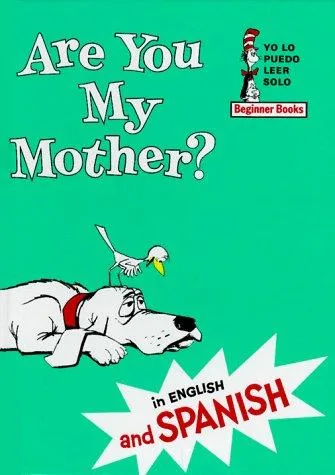
Are You My Mother?


P. D. Eastman's "Are You My Mother?" functions less as a complex literary work and more as a direct conduit to a child's immediate experience of seeking. The narrative's strength lies in its unflinching focus on the titular question, repeated with an urgency that mirrors a young child's own developmental inquiries. The bird's encounters, from a cow to a kitten, are rendered with a straightforwardness that avoids anthropomorphism, presenting them as distinct beings rather than proxies for human connection. A notable limitation, however, is the narrative's almost relentless simplicity; the emotional arc, while present, remains quite contained. The passage where the bird asks the kitten, "Are you my mother?" and receives a simple "No" is emblematic of the book's directness, offering little in the way of subtext but much in the way of clear, if stark, interaction. It's a functional text that achieves its aims with minimal embellishment.
📝 Description
72
### What It Is P. D. Eastman's "Are You My Mother?", first published in 2016, presents a foundational narrative. The work centers on a young bird's quest to locate its parent. This journey involves encounters with various creatures and objects, each offering a potential answer to the bird's central question. The story's simplicity belies a deeper exploration of identity and belonging, framed through a child's perspective.
### Who It's For This text is suited for early readers engaging with narrative structures for the first time. Beyond its primary audience, "Are You My Mother?" offers value to adults interested in the archetypal journey of seeking and recognition. It serves as a parable for any individual searching for their origin or place in the world, regardless of age. Parents and educators will find it a useful tool for discussing themes of identity, difference, and acceptance.
### Historical Context While published in 2016, the narrative style and thematic concerns of "Are You My Mother?" echo mid-20th-century children's literature. This period saw a rise in books that used simple language and clear illustrations to explore complex emotional landscapes for young audiences. The book's focus on a singular quest and clear identification challenges aligns with pedagogical approaches prevalent during the 1950s and 1960s, a time when child psychology began to heavily influence educational materials. This era also saw the emergence of authors like Dr. Seuss, who similarly utilized distinct character archetypes and repetitive questioning to engage young minds.
### Key Concepts The primary concept is the search for origin and identity. The young bird's persistent questioning, "Are you my mother?", drives the narrative and highlights the innate drive to connect with one's source. The encounters with disparate entities—a hen, a dog, a cow, a kitten, and finally a boat—represent the varied forms of life and existence the bird encounters. Each misidentification underscores the uniqueness of familial bonds and the specific nature of belonging. The resolution, finding the 'mother bird', signifies the fulfillment of this fundamental search.
💡 Why Read This Book?
• Understand the fundamental drive for origin and identity through the bird's singular quest for its mother, mirroring early developmental psychology. • Experience the power of direct questioning as a narrative engine, observing how the repeated phrase "Are you my mother?" propels the plot. • Appreciate the clear distinction between different species, such as the hen and the kitten, reinforcing the concept of unique identity and belonging.
why_read
⭐ Reader Reviews
Honest opinions from readers who have explored this book.
❓ Frequently Asked Questions
What is the central theme of "Are You My Mother?"?
The central theme is the search for origin and identity. A young bird leaves its nest and asks various creatures and objects "Are you my mother?" in its quest to find its parent, exploring themes of belonging and self-discovery.
Who is the author of "Are You My Mother?"?
The author is P. D. Eastman. The book was first published in 2016, though it draws on styles prevalent in mid-20th-century children's literature.
What age group is "Are You My Mother?" suitable for?
The book is primarily designed for early readers, typically ages 2-5. Its simple language and repetitive structure make it accessible for emergent literacy skills and basic comprehension.
Does the book offer any symbolic meaning beyond the literal story?
Yes, the bird's quest can be interpreted as an allegory for the universal human search for connection, belonging, and understanding one's place in the world. Each misidentification highlights the specific nature of familial bonds.
What makes the narrative structure of "Are You My Mother?" effective?
The narrative structure is effective due to its directness and repetition. The consistent question and the clear, albeit brief, responses from each encountered entity create a predictable yet engaging pattern for young readers.
When was "Are You My Mother?" originally published?
"Are You My Mother?" was first published in 2016. Its narrative style, however, is reminiscent of children's books from the mid-20th century.
🔮 Key Themes & Symbolism
The Archetypal Search
The narrative functions as a primal archetype of the quest for origin. The baby bird's relentless "Are you my mother?" echoes the fundamental human (and animal) drive to understand lineage and belonging. This journey is not merely a physical search but an existential one, where each interaction shapes the bird's understanding of itself and its place in the vastness of the world. The concept mirrors Gnostic explorations of the soul seeking its divine parentage, though presented in a simplified, accessible form.
Misidentification and Differentiation
Each encounter with a non-mother entity—a hen, a dog, a kitten, a boat—serves as a lesson in differentiation. The bird learns to distinguish what is not its mother, thereby refining its understanding of what its mother *is*. This process is crucial for developing a coherent sense of self and recognizing specific bonds. In an esoteric context, this can be viewed as the soul learning to discern true spiritual guidance from false paths or illusions, a common theme in Neoplatonism.
The Nature of Belonging
The story culminates in the successful reunion with the mother bird, providing a resolution to the theme of belonging. It highlights that belonging is not just about finding a parent, but about finding the *right* parent, the one with whom there is a specific, innate connection. This emphasizes the unique and often unexplainable bonds that define familial and spiritual kinship, suggesting that true belonging is found in authentic resonance, not mere proximity.
Simplicity as a Vehicle
Eastman employs extreme narrative and linguistic simplicity to convey profound concepts. The repetitive structure and straightforward language bypass intellectual complexities, speaking directly to a more intuitive understanding. This approach aligns with certain mystical traditions that emphasize clarity and direct experience over elaborate dogma. The book's accessible format allows the core message of seeking and finding to resonate universally, demonstrating how profound truths can be conveyed without esoteric jargon.
💬 Memorable Quotes
““Are you my mother?””
— This repeated question forms the core of the narrative, functioning as a mantra of seeking. It represents the fundamental drive for origin, connection, and identity that underpins both individual development and spiritual seeking.
““No,” said the dog. “I am not your mother.””
— Each instance of a creature denying motherhood serves as a crucial step in the bird's process of elimination. It underscores the distinctness of identity and the specific nature of familial bonds, moving the bird closer to its true origin.
““I want my mother!””
— This exclamation represents the emotional peak of the bird's quest, highlighting the innate longing for connection and security. It moves beyond simple questioning to express a deep-seated need for belonging and parental presence.
“The baby bird came to a boat. “Are you my mother?” he asked.”
— This encounter demonstrates the vastness of the world and the many forms of existence the bird encounters. It highlights the bird's persistent search, even when faced with inanimate objects, showing the depth of its need to find its origin.
““You are my mother!” said the baby bird.”
— This declaration signifies the resolution of the quest. It represents the fulfillment of the search for origin and the profound relief and recognition that comes with finding one's true source and place.
🌙 Esoteric Significance
Tradition
While not overtly occult, the work taps into a primal, archetypal search that resonates with Gnostic and Hermetic traditions concerning the soul's journey to find its divine source or true origin. The baby bird's quest mirrors the soul's potential disorientation in the material world and its innate yearning to return to its original state of unity or divine parentage. It represents a simplified, accessible manifestation of the 'as above, so below' principle applied to personal identity.
Symbolism
The baby bird symbolizes the nascent soul or individual consciousness, separated from its source and seeking reunion. The various creatures and objects encountered (hen, dog, kitten, boat) represent the diverse forms of existence and potential distractions or false paths encountered on the spiritual journey. The 'mother bird' symbolizes the ultimate goal: reunion with the divine, true self, or authentic origin.
Modern Relevance
Contemporary thinkers exploring archetypal psychology, particularly within Jungian frameworks, often reference such foundational narratives for their depiction of the individuation process. The book's simple yet powerful exploration of identity and belonging continues to inform modern parenting literature and early childhood education, highlighting its enduring relevance in understanding fundamental human (and animal) developmental needs and searches for connection.
👥 Who Should Read This Book
• Beginning students of comparative literature and narrative structure, seeking to understand foundational story archetypes in accessible children's texts. • Early childhood educators and parents looking for simple, effective tools to discuss themes of identity, origin, and belonging with young children. • Individuals interested in archetypal psychology, who can analyze the bird's quest as a representation of the universal search for self and connection.
📜 Historical Context
P. D. Eastman's "Are You My Mother?", while published in 2016, draws heavily from the pedagogical and literary trends of mid-20th century children's literature. This era, particularly the 1950s and 1960s, witnessed a significant shift in how childhood development and learning were approached. Influenced by figures like Dr. Benjamin Spock and the burgeoning field of child psychology, authors began creating books that used simple, direct language and clear, repetitive structures to aid young children's cognitive and emotional growth. This period saw a rise in books that focused on single, clear quests and character identification, moving away from more complex, allegorical narratives. Authors like Theodor Geisel (Dr. Seuss) were also active, employing distinct visual styles and rhythmic text to engage young readers. "Are You My Mother?" aligns with this tradition, using its straightforward narrative to explore themes of identity and belonging in a manner accessible to emergent readers, mirroring the era's focus on foundational learning.
📔 Journal Prompts
The baby bird's persistent question, "Are you my mother?"
Encountering the dog and the kitten.
The journey from nest to boat.
The final recognition of the mother bird.
The feeling of being lost in the world.
🗂️ Glossary
Baby Bird
The protagonist of the story, representing a nascent consciousness or soul on a quest for its origin and identity.
Mother Bird
The object of the baby bird's search, symbolizing the ultimate source, true origin, or divine connection sought by the individual.
Quest
The narrative's driving force; the baby bird's journey to find its mother, representing a universal search for belonging and identity.
Misidentification
The process by which the baby bird asks various creatures and objects if they are its mother, learning through negation.
Hen
One of the first entities the baby bird encounters, distinct from its mother, serving as an early lesson in differentiation.
Kitten
Another creature the baby bird questions, highlighting the variety of life and the specific nature of familial bonds.
Boat
An inanimate object the bird asks, demonstrating the extent of its search and the breadth of the world it navigates.