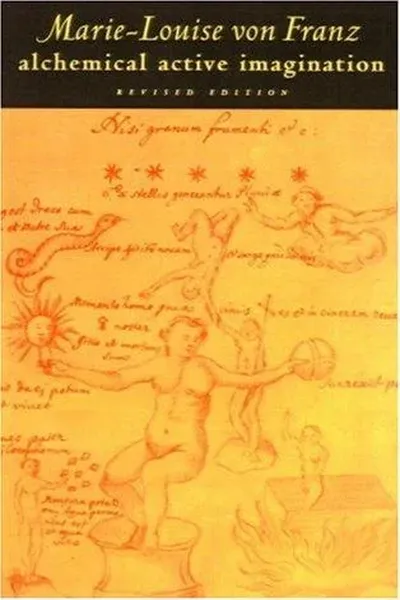
Archetypal Dimensions of the Psyche

 81
81

Archetypal Dimensions of the Psyche
Marie-Louise von Franz’s *Archetypal Dimensions of the Psyche* offers a dense, scholarly immersion into the foundational concepts of Jungian psychology. Her characteristic ability to connect abstract theory to concrete mythological examples is on full display, particularly when she dissects the manifestation of the Anima/Animus complex in various cultural narratives. The work’s strength lies in its uncompromising intellectual rigor, demanding a reader’s full attention. However, this same intensity can be a barrier; the book assumes a significant prior understanding of Jungian terminology, making it less accessible than some of her earlier works. A passage detailing the symbolic representation of the Self in alchemical texts, for instance, is brilliant but requires considerable background knowledge. For seasoned practitioners and scholars, it’s a valuable, albeit demanding, addition to the literature.
📝 Description
81
### What It Is Archetypal Dimensions of the Psyche, penned by Marie-Louise von Franz and first published in 1999, is a rigorous exploration into the symbolic language of the unconscious. It examines how universal patterns, or archetypes, manifest in human experience, myth, and dream. Von Franz, a close associate of Carl Jung, applies her deep understanding of analytical psychology to dissect the underlying structures that shape our perceptions and behaviors. The work is not an introductory primer but a scholarly examination for those already familiar with Jungian concepts.
### Who It's For This book is intended for serious students of analytical psychology, comparative mythology, and depth psychology. It will particularly appeal to individuals interested in understanding the foundational archetypal structures that inform religious, mythological, and psychological phenomena across cultures. Readers seeking to deepen their comprehension of Jungian theory beyond basic concepts will find substantial material here. It requires a degree of familiarity with psychological and mythological terminology.
### Historical Context Published in 1999, this work emerges from the late-career reflections of a prominent Jungian analyst. It builds upon the foundational work of Carl Jung, who first proposed the concept of archetypes in the early 20th century, and further developed by figures like Erich Neumann. Von Franz was a key figure in the post-Jungian era, contributing significantly to the practical application and theoretical refinement of his ideas. The book’s release occurred during a period of continued interest in Jungian psychology and its application to understanding cultural and individual phenomena.
### Key Concepts The central thesis revolves around the archetypes as primordial, universal patterns of the human psyche. Von Franz elaborates on their nature as unconscious predispositions that organize experience. The book likely discusses specific archetypes like the Shadow, the Anima/Animus, and the Self, detailing their manifestations in dreams, fairy tales, and myths. It also explores the dynamic interplay between these archetypes and the ego, as well as the process of individuation through conscious engagement with these powerful psychic forces.
💡 Why Read This Book?
• Gain a deeper understanding of the Anima/Animus archetype as described by von Franz, learning how its projections influence relationships and personal development, drawing from her analysis of mythological figures. • Explore the concept of the Self beyond simple ego-identification, understanding its role as a central organizing principle of the psyche as presented in her discussions on individuation. • Grasp the symbolic language of dreams and myths through von Franz's detailed interpretations, specifically referencing her analysis of fairy tales as expressions of archetypal patterns.
⭐ Reader Reviews
Honest opinions from readers who have explored this book.
❓ Frequently Asked Questions
What is the primary focus of Marie-Louise von Franz's Archetypal Dimensions of the Psyche?
The book primarily focuses on the nature and manifestation of universal psychic patterns, known as archetypes, within the human unconscious, drawing heavily on Jungian psychology and mythological analysis.
When was Archetypal Dimensions of the Psyche first published?
Archetypal Dimensions of the Psyche was first published in 1999, reflecting the later stage of Marie-Louise von Franz's extensive career as a Jungian analyst.
Who is Marie-Louise von Franz and what is her connection to Carl Jung?
Marie-Louise von Franz was a Swiss Jungian psychologist and scholar, and a close colleague and collaborator of Carl Jung, known for her work on fairy tales, alchemy, and archetypes.
What kind of background knowledge is beneficial for reading this book?
Familiarity with Carl Jung's core concepts, such as archetypes, the collective unconscious, and the process of individuation, is highly beneficial for fully engaging with von Franz's work.
Does the book offer practical advice for personal transformation?
While the book provides deep theoretical insights into the psyche's structure, its primary aim is scholarly analysis rather than direct, step-by-step practical guidance for personal transformation.
In what way does this book relate to mythology and fairy tales?
The book uses extensive examples from mythology and fairy tales to illustrate the presence and function of archetypes, treating them as primary sources for understanding the psyche's symbolic language.
🔮 Key Themes & Symbolism
Archetypes as Psychic Structures
The work delves into the fundamental concept of archetypes as innate, universal psychic predispositions that structure human experience. Von Franz posits these are not mere inherited ideas but primal patterns of behavior and perception that shape our understanding of the world and ourselves. She illustrates how these archetypes, such as the Great Mother or the Wise Old Man, manifest across diverse cultures and historical periods, demonstrating their enduring influence on individual psychology and collective consciousness. The book emphasizes their role in organizing emotional and cognitive responses, acting as the blueprint for common human experiences.
The Anima and Animus
A significant portion of the book likely examines the contrasexual archetypes: the Anima in men and the Animus in women. Von Franz explores how these figures within the psyche represent the unconscious feminine principle in men and the unconscious masculine principle in women. She details their projections onto external figures, the psychological dynamics involved in their integration, and their crucial role in the individuation process. Understanding these archetypes is presented as key to achieving psychological wholeness and balanced relationships, moving beyond simplistic gender stereotypes.
Symbolic Language of Myth and Dream
Von Franz meticulously deciphers the symbolic language inherent in myths, fairy tales, and dreams, arguing that these are direct expressions of the archetypal dimension of the psyche. The book illustrates how recurring motifs, characters, and narrative structures in these forms carry profound psychological meaning. By analyzing specific examples, she reveals how the unconscious communicates through symbols, offering pathways to understanding deeper psychological realities and facilitating the integration of unconscious contents into conscious awareness.
Individuation and Wholeness
Central to the book's exploration is the Jungian concept of individuation – the lifelong psychological process of becoming an individual, a distinct whole being. Von Franz frames the engagement with archetypal dimensions as essential to this process. She explains how consciously confronting and integrating the various archetypal forces, including the Shadow and the contrasexual figures, leads to a more authentic self and the realization of the Self, the archetype of wholeness, thereby fostering greater psychological maturity and integration.
💬 Memorable Quotes
“The archetypes are not learned; they are innate patterns of psychic functioning.”
— This highlights the inherited, instinctual nature of archetypes, suggesting they form the fundamental architecture of the human psyche, predisposing us to certain experiences and interpretations.
“Fairy tales reveal the archetypal structure of the psyche with remarkable clarity.”
— Von Franz posits fairy tales as direct, unadulterated expressions of the collective unconscious, offering invaluable insights into universal human psychological patterns and developmental stages.
“The Shadow represents everything we refuse to acknowledge about ourselves.”
— This interpretation points to the Shadow archetype as the repository of repressed desires, flaws, and aspects of the personality that are deemed unacceptable by the ego.
“Integration of the Anima/Animus is crucial for psychic balance.”
— This signifies the importance of confronting and integrating the contrasexual aspects of the psyche to achieve psychological wholeness and mature relationships.
“The Self is the archetype of wholeness and the ultimate goal of individuation.”
— This defines the Self not merely as the ego, but as the central organizing principle of the entire psyche, representing the potential for total integration and realization of one's true nature.
🌙 Esoteric Significance
Tradition
This work is deeply rooted in the analytical psychology tradition founded by Carl Jung, which itself draws upon Hermetic, Gnostic, and alchemical symbolism. Von Franz’s approach views the psyche not merely as a personal construct but as a field influenced by universal, primordial patterns that echo ancient esoteric cosmologies and mythologies. She bridges the gap between psychological theory and esoteric symbolism, treating myths and alchemical processes as direct expressions of psychic realities, thereby validating esoteric traditions as repositories of psychological wisdom.
Symbolism
Key symbols explored include the Dragon, often representing the undifferentiated, chaotic energy of the unconscious or the Shadow that must be confronted. The concept of the Self is frequently symbolized by mandalas or divine figures, representing the archetype of wholeness and psychic order. Furthermore, the contrasexual figures of the Anima and Animus are often depicted through specific mythological characters or dream images that embody both alluring and potentially dangerous psychic energies requiring integration.
Modern Relevance
Contemporary depth psychology practitioners, Jungian analysts, and scholars of comparative mythology continue to draw heavily on von Franz’s meticulous analyses. Her work informs modern discussions on archetypal patterns in popular culture, the therapeutic use of dream analysis, and the exploration of spiritual development through psychological lenses. Thinkers in fields like ecopsychology and archetypal astrology also find resonance in her understanding of the psyche’s connection to universal patterns and symbolic language.
👥 Who Should Read This Book
• Students of Jungian psychology seeking a deeper, scholarly exposition of archetypal theory beyond introductory texts, benefiting from von Franz's authoritative voice. • Researchers in comparative mythology and folklore interested in understanding the psychological underpinnings of myths and fairy tales, gaining insights into their symbolic meaning. • Individuals engaged in personal development through dream analysis or active imagination, looking to grasp the symbolic language of their unconscious as illuminated by archetypal principles.
📜 Historical Context
Marie-Louise von Franz’s *Archetypal Dimensions of the Psyche*, published in 1999, emerged from the rich intellectual soil of post-Jungian analytical psychology. It represents a mature synthesis of ideas developed over decades by von Franz, a leading interpreter of Carl Jung’s work. The book builds upon Jung's foundational theories of archetypes and the collective unconscious, first articulated in the early to mid-20th century. Von Franz, alongside contemporaries like Erich Neumann and James Hillman, was instrumental in expanding and applying these concepts. While Jungian psychology maintained a steady following, this period also saw increasing engagement with postmodern critiques of universalism and the rise of other psychodynamic and cognitive approaches. Von Franz’s work, however, steadfastly defended the reality and efficacy of archetypal patterns, distinguishing it from more phenomenological or deconstructionist schools of thought. Her specific focus on fairy tales and alchemy, a hallmark of her scholarship, offered a unique counterpoint to the more clinically focused psychiatric discourse of the era.
📔 Journal Prompts
The Shadow's manifestation in personal narratives.
Archetypal imagery encountered in dreams.
The projection of the Anima/Animus in relationships.
Symbolic meaning of a specific fairy tale motif.
The Self as a guiding principle in life decisions.
🗂️ Glossary
Archetype
A primordial, universal pattern or image that forms part of the collective unconscious, structuring human experience and behavior. Examples include the Mother, the Hero, and the Wise Old Man.
Collective Unconscious
The deepest layer of the psyche, inherited and shared by all humans, containing archetypes and instincts that influence thought, emotion, and behavior across cultures.
Individuation
The lifelong psychological process of integrating the conscious and unconscious aspects of the personality to achieve psychological wholeness and self-realization.
Anima
The unconscious feminine aspect within the male psyche, influencing emotions, relationships, and creativity. Its integration is key to psychological balance for men.
Animus
The unconscious masculine aspect within the female psyche, influencing logic, assertiveness, and rationality. Its integration is key to psychological balance for women.
The Self
The central archetype representing wholeness, totality, and the organizing principle of the entire psyche. It is often symbolized by mandalas or divine figures.
Shadow
The unconscious aspect of the personality that the ego rejects or fails to develop. It contains repressed desires, instincts, and inferiorities, and its integration is vital for wholeness.