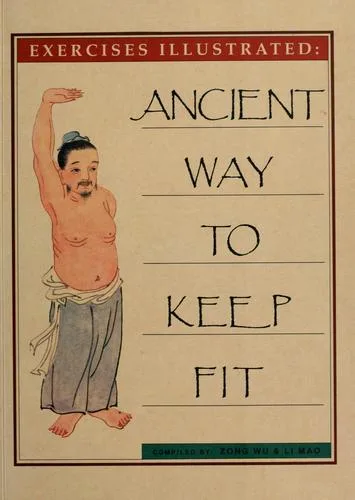
Ancient way to keep fit
 84
84

Ancient way to keep fit
Zong Wu and Li Mao's Ancient Way to Keep Fit presents a refreshing counterpoint to the high-intensity, often competitive, fitness culture prevalent today. Its strength lies in its grounded approach, offering exercises that feel both ancient and immediately applicable. The emphasis on *qi* cultivation and breathwork provides a unique perspective on physical health, linking it intrinsically to energetic and mental states. However, the book's original 1992 publication means some explanations might feel less detailed than contemporary guides, particularly for readers entirely new to these concepts. A passage detailing the 'Eight Brocades' (Ba Duan Jin) illustrates this well, offering precise movements but relying on the reader's intuition for the deeper energetic nuances. Despite this, the work's value is undeniable for those seeking a more integrated approach to fitness. It’s a solid resource for understanding foundational principles of traditional Chinese physical culture.
📝 Description
84
### What It Is
Ancient Way to Keep Fit is a practical guide to maintaining physical well-being through methods rooted in historical Chinese traditions. Published in 1992, the work by Zong Wu and Li Mao offers exercises and principles that aim to harmonize the body's energy, or *qi*, with natural rhythms. It moves beyond mere physical exertion to encompass a holistic approach to health, emphasizing breath control, specific postures, and mindful movement.
### Who It's For
This book is designed for individuals seeking an alternative to modern fitness regimes. It appeals to those interested in Eastern philosophies, martial arts history, or traditional Chinese medicine principles as applied to personal health. Readers looking for a slower, more deliberate practice that cultivates inner strength alongside physical vitality will find value here. It is particularly suited for those who appreciate the connection between mental clarity and bodily health.
### Historical Context
The 1992 publication places Ancient Way to Keep Fit within a period of renewed global interest in traditional healing and wellness practices. As Western culture increasingly explored Eastern philosophies, texts like this provided accessible entry points. The work draws on millennia of Chinese health cultivation, a lineage that predates and contrasts with the more recent development of Western scientific exercise physiology. It emerged at a time when Qigong and Tai Chi were gaining international recognition.
### Key Concepts
The core of Ancient Way to Keep Fit revolves around the concept of *qi* (vital energy), its circulation within the body, and methods to optimize this flow. It introduces specific forms, such as the 'Eight Brocades' (Ba Duan Jin), as a means of strengthening the body and clearing energetic blockages. The text also stresses the importance of posture, breath synchronization, and mental focus as integral components of effective physical cultivation. The aim is not just strength but balance and longevity.
💡 Why Read This Book?
• Learn the foundational principles of *qi* cultivation as described in traditional Chinese health practices, understanding how breath and posture influence vital energy, a concept central to the 'Eight Brocades' exercise set. • Discover specific postural and movement exercises from the early 1990s revival of Chinese health arts, offering a direct connection to practices studied by Zong Wu and Li Mao. • Gain practical techniques for harmonizing body and mind, moving beyond simple physical conditioning to achieve a state of balanced vitality, as advocated in the book's holistic approach.
⭐ Reader Reviews
Honest opinions from readers who have explored this book.
❓ Frequently Asked Questions
What is the primary focus of 'Ancient Way to Keep Fit'?
The book focuses on traditional Chinese methods for physical fitness, emphasizing the cultivation and circulation of vital energy (*qi*) through specific postures, breath control, and mindful movement, rather than conventional Western exercise.
Who are Zong Wu and Li Mao?
Zong Wu and Li Mao are the authors of 'Ancient Way to Keep Fit,' first published in 1992. They are presented as authorities on traditional Chinese health cultivation practices.
What historical context does the book draw from?
The book draws from millennia of Chinese health cultivation practices, a lineage distinct from Western exercise physiology. Its 1992 publication coincided with a global surge of interest in Eastern wellness traditions.
Does the book require prior knowledge of Chinese medicine?
While prior knowledge can be beneficial, the book aims to be accessible. It introduces core concepts like *qi* and provides practical instruction for exercises such as the 'Eight Brocades'.
What are the 'Eight Brocades' mentioned in the book?
The 'Eight Brocades' (Ba Duan Jin) are a set of ancient Chinese exercises designed to strengthen the body, improve circulation, and promote overall health and longevity through coordinated movement and breath.
How does this book differ from modern fitness guides?
Unlike modern guides often focused on intense physical output, 'Ancient Way to Keep Fit' prioritizes a balanced, energetic approach, integrating mental focus and breathwork for holistic well-being and sustained vitality.
🔮 Key Themes & Symbolism
Qi Cultivation and Circulation
The central tenet of Ancient Way to Keep Fit is the concept of *qi*, or vital life force, and its optimal circulation within the body. The authors explain how imbalances or blockages in *qi* flow can lead to physical ailments. The book details various exercises, such as the 'Eight Brocades,' specifically designed to unblock stagnant energy pathways and promote a smooth, robust flow of *qi* throughout the meridians. This focus offers a distinct perspective on health, viewing the body as an energetic system requiring balance, not just muscular strength.
Mind-Body Integration
Ancient Way to Keep Fit posits that physical health is inextricably linked to mental and energetic states. The practices described require not only physical execution but also focused intention and synchronized breathing. This integration means that performing the exercises is not merely a physical act but a meditative one, cultivating mental clarity and emotional equilibrium alongside bodily fitness. This holistic approach aims to achieve a deeper, more sustainable form of well-being than isolated physical training can provide.
Traditional Chinese Exercise Forms
The book serves as an introduction to time-honored Chinese movement practices, most notably the 'Eight Brocades' (Ba Duan Jin). These forms, passed down through generations, are presented as accessible yet potent methods for self-care. The authors elucidate the specific postures, movements, and breathing patterns associated with these exercises, offering readers a tangible way to engage with ancient wisdom. The emphasis is on gentle, repetitive movements that build internal resilience and promote longevity.
Holistic Wellness and Longevity
Beyond mere fitness, the ultimate goal presented in Ancient Way to Keep Fit is the attainment of holistic wellness and extended longevity. By harmonizing *qi*, balancing the body's energies, and fostering a connection between mind and body, the practices aim to prevent illness and promote a vibrant, healthy life. This perspective aligns with traditional Chinese views that prioritize preventative health and the cultivation of internal strength as keys to enduring well-being.
💬 Memorable Quotes
“The body's strength is not in tension, but in the flow of its vital energy.”
— This statement highlights a core principle of traditional Chinese health cultivation. It suggests that true physical vitality stems from the unimpeded movement of *qi*, rather than from muscular rigidity or forceful exertion, advocating for a more subtle and integrated form of strength.
“Each movement of the Eight Brocades is a key to unlock a different aspect of well-being.”
— This emphasizes the specific, targeted benefits of the Ba Duan Jin exercises. It implies that each of the eight forms is designed to address particular energetic pathways or bodily functions, contributing to a comprehensive system for health maintenance.
“Breath is the bridge between the physical form and the energetic spirit.”
— This interpretation underscores the critical role of respiration in traditional Chinese practices. It signifies that conscious breathing acts as the vital link connecting the tangible body with the intangible life force, enabling balance and harmony.
“To be fit is to be in harmony with the natural currents of life.”
— This paraphrase captures the book's holistic view of fitness. It suggests that true physical well-being is achieved not through isolated effort, but by aligning one's internal state and physical practices with the broader rhythms of nature.
“Cultivating stillness within movement is the highest form of exercise.”
— This concept points to the meditative aspect of the practices described. It suggests that the most profound benefits come from developing inner calm and awareness even while the body is in motion, merging physical discipline with mental tranquility.
🌙 Esoteric Significance
Tradition
This work is deeply rooted in the Taoist tradition of China, specifically its focus on health preservation and longevity practices. It aligns with the broader category of Neidan (internal alchemy) and Qigong exercises, which aim to cultivate and refine the body's vital energy (*qi*) and spiritual essence. While not overtly alchemical in the Western sense, it shares the goal of transforming the practitioner's physical and energetic being. It departs from purely philosophical Taoism by offering concrete, physical methods for achieving spiritual and physical harmony.
Symbolism
A primary symbol is the 'Eight Brocades' (Ba Duan Jin) themselves, each representing a different energetic pathway or organ system, much like the symbolic virtues in other traditions. The concept of *qi* is itself symbolic, representing the vital force that animates all things. Specific postures within the exercises might also carry symbolic weight, perhaps representing elements or cosmic principles, though the book focuses more on their functional energetic effect than explicit symbolic meaning.
Modern Relevance
Contemporary practitioners of Qigong, Tai Chi, and various forms of medical Qigong draw directly from the principles and exercises outlined in works like this. Modern somatic educators and therapists interested in mind-body integration also find value in its holistic approach. Furthermore, individuals exploring alternative health modalities and those seeking non-competitive, restorative fitness practices continue to find *Ancient Way to Keep Fit* a relevant guide to foundational Chinese health cultivation.
👥 Who Should Read This Book
• Individuals interested in the foundational principles of traditional Chinese health cultivation, seeking to understand concepts like *qi* and its role in physical well-being beyond Western physiological models. • Practitioners of martial arts or meditative disciplines who wish to deepen their understanding of energy work and its application to physical conditioning, drawing from the methods presented by Zong Wu and Li Mao. • Those seeking a gentle, low-impact fitness routine that emphasizes breath control, posture, and mental focus as core components for achieving balanced vitality and long-term health.
📜 Historical Context
Published in 1992, Zong Wu and Li Mao's *Ancient Way to Keep Fit* emerged during a global resurgence of interest in traditional Eastern wellness practices. This era saw practices like Qigong and Tai Chi gain significant traction in Western countries, often presented as alternatives to conventional fitness. The book taps into this burgeoning field, offering a more direct engagement with the principles of *qi* cultivation. It stands apart from the increasingly scientific and biomechanics-focused approach to exercise prevalent in the West at the time. While contemporary figures like Stephen Covey were popularizing concepts of personal effectiveness, *Ancient Way to Keep Fit* focused on the physical and energetic dimensions of self-cultivation, drawing from a lineage stretching back centuries, distinct from the emerging 'wellness industry' which often lacked deep historical roots.
📔 Journal Prompts
The concept of *qi* flow: how does the book describe its importance, and where do you feel blockages?
Reflect on the 'Eight Brocades' – which exercise seems most intuitive for your current physical state?
Analyze the connection between breath synchronization and mental focus presented in the text.
Consider the goal of longevity: how does this book's approach differ from modern fitness's emphasis on peak performance?
What does 'harmony with natural currents' mean in the context of the book's exercises?
🗂️ Glossary
Qi (or Chi)
The fundamental vital life force or energy believed to flow through all living beings and the universe in traditional Chinese philosophy and medicine. Its smooth circulation is considered essential for health.
Eight Brocades (Ba Duan Jin)
A set of eight ancient Chinese Qigong exercises designed to improve health, strengthen the body, and promote longevity through coordinated movements, breathing, and intention.
Meridians
In traditional Chinese medicine, these are pathways or channels through which *qi* (vital energy) is believed to flow throughout the body, connecting acupuncture points.
Posture
The way an individual holds their body, particularly significant in these practices for aligning energy pathways and facilitating the correct flow of *qi*.
Breath Control
The conscious regulation of breathing patterns, considered a crucial element in traditional Chinese health exercises for influencing *qi* and calming the mind.
Holistic Wellness
An approach to health that considers the interconnectedness of the physical, mental, emotional, and energetic aspects of an individual, aiming for overall balance.
Longevity
The state of having a long life, a key objective of many traditional Chinese health cultivation practices, including those detailed in the book.











![[Catalogue of Walter Moseley's Book Sale]](/img/thumb/catalogue-of-walter-moseley-s-book-sale-george-redway.webp)