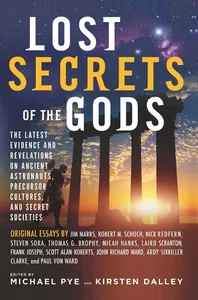
Ancient Secret Societies and Lost Knowledge

 81
81

Ancient Secret Societies and Lost Knowledge
Pye and Dalley's "Ancient Secret Societies and Lost Knowledge" provides a much-needed scholarly antidote to the pulpier narratives of clandestine brotherhoods. The authors excel at contextualizing groups like the Rosicrucians and early Masonic lodges within the intellectual ferment of their respective eras, such as the Reformation and Enlightenment. Their detailed examination of the purported "$5,000-year-old" rituals of the Rosicrucians, tracing their origins to early modern German pamphlets rather than ancient Egypt, is particularly illuminating. However, the book occasionally suffers from an overabundance of caution, sometimes leaving the reader wanting a more definitive stance on the more speculative aspects of esoteric history, even while acknowledging the lack of concrete proof. The section on alchemy, while informative, could benefit from a more focused discussion of specific alchemical symbolism beyond general principles. Ultimately, this is a valuable resource for understanding the historical and philosophical underpinnings of secret societies, grounded in diligent research.
📝 Description
81
### What It Is
Michael Pye and Kirsten Dalley's "Ancient Secret Societies and Lost Knowledge" offers a comprehensive survey of clandestine groups and their historical impact on Western thought and practice. Rather than focusing on sensationalism, the work meticulously examines the documented evidence and scholarly interpretations surrounding various societies, from antiquity to the modern era. It explores their organizational structures, core tenets, and the esoteric knowledge they purportedly preserved or developed. The book navigates the often-thin line between historical fact and persistent legend.
### Who It's For
This volume is suited for serious students of history, comparative religion, and esoteric traditions. Readers interested in the intellectual underpinnings of Freemasonry, Rosicrucianism, and other influential fraternal orders will find valuable material. It also appeals to those curious about the historical transmission of philosophical and mystical ideas, and how secret societies have served as vehicles for such transmission. It is not for casual readers seeking occult thrills, but for those who appreciate rigorous scholarship applied to shadowy subjects.
### Historical Context
The book situates its subject matter within broader intellectual and cultural currents. It acknowledges the long history of secrecy and initiation in human societies, tracing connections from ancient mystery cults to later European philosophical movements. The work implicitly engages with the academic discourse surrounding secret societies, which gained significant scholarly attention in the late 20th century. It acknowledges the challenges of separating verifiable history from mythologizing, a common issue when studying groups that deliberately obscured their activities.
### Key Concepts
Central to the work is the concept of "lost knowledge" – ideas, rituals, or cosmologies believed to have been preserved by secret societies. The authors explore how these societies functioned as repositories and transmitters of specific traditions, often outside mainstream religious or academic institutions. The book also examines the role of initiation as a transformative process, intended to impart esoteric understanding to members. Furthermore, it investigates the persistent archetypes and narratives associated with secret societies, which continue to capture the public imagination.
💡 Why Read This Book?
• Gain a grounded understanding of the historical origins and development of major secret societies, moving beyond speculative fiction to examine documented evidence, particularly concerning the Rosicrucian manifestos of the early 17th century. • Learn how esoteric knowledge was preserved and transmitted through non-mainstream channels, understanding the role of groups like Freemasonry in disseminating Enlightenment ideas. • Appreciate the scholarly methodology required to study clandestine organizations, recognizing the challenges in separating historical fact from myth, as demonstrated in the analysis of ancient mystery cults.
⭐ Reader Reviews
Honest opinions from readers who have explored this book.
❓ Frequently Asked Questions
What is the primary focus of "Ancient Secret Societies and Lost Knowledge"?
The book's primary focus is a scholarly examination of documented historical secret societies, their structures, beliefs, and the esoteric knowledge they purportedly transmitted, distinguishing historical fact from legend.
Which historical periods does the book cover regarding secret societies?
It spans from antiquity, touching on ancient mystery cults, through the Renaissance and Reformation, and into the Enlightenment and early modern periods, discussing groups like the Rosicrucians and Freemasons.
Are sensationalized accounts of secret societies addressed in this book?
While acknowledging the popular fascination, the authors prioritize rigorous academic research and historical evidence over sensationalism, aiming for a more grounded understanding of these organizations.
What is the book's approach to 'lost knowledge'?
It explores the concept of 'lost knowledge' as ideas or traditions believed to be preserved by secret societies, analyzing how these groups acted as custodians and transmitters of specific esoteric doctrines.
Who are the authors of "Ancient Secret Societies and Lost Knowledge"?
The authors are Michael Pye and Kirsten Dalley, with the book first published in 2015.
Does the book offer practical advice for joining secret societies?
No, the book is an academic historical study and does not offer practical guidance on joining secret societies; its aim is to inform about their history and nature.
🔮 Key Themes & Symbolism
The Rosicrucian Manifestos
The work meticulously examines the genesis and impact of the Rosicrucian manifestos, such as the "Fama Fraternitatis" (1614). It challenges romanticized notions of an ancient Egyptian origin, instead situating these texts within the specific context of early 17th-century German Protestantism and its intellectual currents. Pye and Dalley analyze how these pamphlets rapidly disseminated ideas about reform, hidden wisdom, and a spiritual renewal, influencing subsequent esoteric movements and the very concept of secret societies as custodians of profound, albeit often elusive, knowledge.
Freemasonry and Enlightenment
This theme explores Freemasonry not merely as a fraternal organization but as a significant conduit for Enlightenment philosophy and esoteric thought. The book discusses how Masonic lodges became spaces for intellectual exchange, blending ancient symbols with emerging rationalist and deist ideas. It highlights the tension between the public face of Freemasonry and its inner, initiatory degrees, where more complex metaphysical and alchemical concepts were sometimes explored, contributing to the era's intellectual landscape and the evolution of Western esotericism.
Ancient Mystery Cults
The authors address the historical precedents for secret societies in antiquity, focusing on Greek mystery cults like those of Eleusis or Mithras. They analyze the concept of initiation within these cults, where secret rites and teachings were imparted to select members, promising spiritual insight or salvation. The work grapples with the scarcity of direct evidence, distinguishing between scholarly reconstruction and later romantic interpretations, and considers how these ancient models might have inspired later clandestine groups.
The Transmission of Esoteric Knowledge
A core concept is how secret societies have functioned as vital mechanisms for the preservation and transmission of esoteric knowledge across centuries. The book investigates how these groups maintained traditions—philosophical, mystical, or alchemical—that often diverged from or existed in parallel to orthodox religious and academic institutions. It examines the methods employed, such as oral tradition, symbolic language, and ritual, to safeguard and pass on this specialized wisdom to successive generations of initiates.
💬 Memorable Quotes
“The Rosicrucian movement began not in ancient Egypt, but in the pamphlets of early 17th-century Germany.”
— This statement highlights the book's commitment to historical accuracy, debunking myths about the antiquity of certain esoteric orders by grounding their origins in specific, verifiable historical documents and contexts.
“Initiation rituals offered a structured path to spiritual or intellectual transformation.”
— This interpretation emphasizes the pedagogical and transformative intent behind the practices of secret societies, framing them as deliberate systems for imparting specialized understanding and personal development to their members.
“The scarcity of evidence necessitates careful interpretation of historical claims about secret groups.”
— This reflects the scholarly caution employed throughout the book, acknowledging the inherent difficulties in studying organizations that actively concealed their operations and teachings, requiring critical analysis of available sources.
“Freemasonry served as a crucible for both fraternal bonds and the exchange of Enlightenment ideas.”
— This suggests that Masonic lodges played a dual role: fostering community among members and acting as intellectual salons where philosophical and esoteric concepts of the Enlightenment could be discussed and disseminated.
“The allure of 'lost knowledge' persists, fueling continued interest in clandestine traditions.”
— This acknowledges the enduring fascination with secret societies and the idea that they hold forgotten wisdom, a phenomenon the book explores through historical analysis rather than endorsement.
🌙 Esoteric Significance
Tradition
This work fits within the broader tradition of academic study of Western esotericism, engaging with historical lineages often associated with Hermeticism, Gnosticism, and Renaissance occultism. It departs from purely devotional or practitioner-oriented texts by focusing on historical documentation and scholarly interpretation. Rather than advocating for a specific tradition, it analyzes how various groups, from antiquity to the Enlightenment, have claimed to preserve and transmit unique forms of knowledge, thus contributing to the academic understanding of esoteric movements' historical development.
Symbolism
The book touches upon the symbolic language inherent in esoteric traditions, particularly relevant to Freemasonry and Rosicrucianism. Symbols such as the compass and square in Freemasonry are presented not just as organizational emblems but as tools for moral and spiritual instruction, reflecting principles of order and divine geometry. The concept of the 'invisible college' or hidden adept, central to Rosicrucian lore, symbolizes a spiritual hierarchy and a network of enlightened individuals working behind the scenes, representing the elusive nature of true wisdom.
Modern Relevance
Contemporary scholars of religious history and cultural studies continue to draw on works that critically examine the historical development of esoteric movements. The book's approach to understanding secret societies as vehicles for transmitting ideas outside mainstream channels remains relevant for analyzing counter-cultural movements and alternative spiritualities today. Thinkers and researchers interested in the sociology of secret groups, the history of ideas, and the persistent human search for hidden knowledge can find valuable context and methodological grounding in its analysis.
👥 Who Should Read This Book
• Academic researchers and students of religious studies and Western esotericism seeking a historically grounded overview of clandestine organizations and their intellectual contributions. • Enthusiasts of early modern European history, particularly those interested in the Reformation, Enlightenment, and the cultural impact of groups like the Rosicrucians and Freemasons. • Critical readers who wish to understand the historical evolution of esoteric thought and the methods used to study groups that operated with a degree of secrecy.
📜 Historical Context
Published in 2015, "Ancient Secret Societies and Lost Knowledge" emerged at a time when academic interest in Western esotericism had solidified, moving beyond earlier dismissive attitudes. The intellectual currents it engages with include the historiography of secret societies, building on the work of scholars like Frances Yates and Christopher McIntosh. The book implicitly responds to a long tradition of popular fascination, often fueled by sensationalist literature, by offering a more rigorous, evidence-based approach. It navigates the complex reception of esoteric ideas, acknowledging how movements like Rosicrucianism, originating in early 17th-century Germany, were perceived and mythologized. While not detailing specific contemporary reviews or bans, the work’s scholarly tone positions it within the academic discourse on religious and philosophical history, contrasting with less critical popular accounts.
📔 Journal Prompts
The Rosicrucian manifestos and their specific historical context.
The role of initiation in ancient mystery cults versus later societies.
Examining the evidence for 'lost knowledge' transmission.
Analyzing the intersection of Freemasonry and Enlightenment philosophy.
The challenges of separating historical fact from myth in studying clandestine groups.
🗂️ Glossary
Rosicrucianism
An esoteric movement that emerged in early 17th-century Europe, famously announced through a series of manifestos. It espoused ideals of spiritual enlightenment, esoteric knowledge, and reform of society and religion.
Freemasonry
A fraternal organization with origins in the late medieval guilds of stonemasons. It evolved into a complex system of initiation rites and moral philosophy, becoming influential during the Enlightenment.
Esoteric knowledge
Knowledge that is specialized, secret, or intended for a select group of initiates, often concerning mystical, spiritual, or philosophical truths considered beyond ordinary understanding.
Initiation
A ritual or process through which an individual is formally admitted into a group or society, often involving symbolic acts and the imparting of secret knowledge or teachings.
Mystery cults
Religious groups in the ancient world, particularly in Greece and Rome, characterized by secret rites and initiations that promised spiritual benefits or knowledge to their members.
Enlightenment
An 18th-century intellectual and cultural movement emphasizing reason, individualism, and skepticism towards tradition, which significantly influenced philosophical, political, and social thought.
Hermeticism
A philosophical and religious tradition based primarily upon writings attributed to Hermes Trismegistus. It emphasizes divine wisdom, cosmic unity, and the potential for human spiritual ascent.