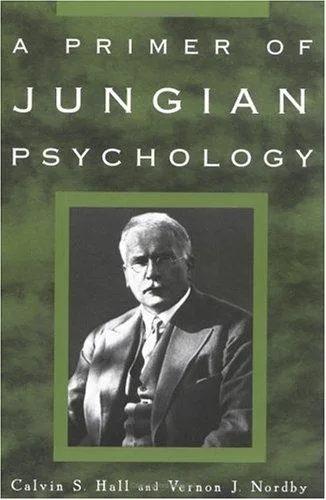
A Primer of Jungian Psychology
 79
79

A Primer of Jungian Psychology
Hall and Nordby's primer offers a commendable distillation of Carl Jung's expansive psychological system. It succeeds in presenting complex ideas like the collective unconscious and archetypes in a digestible format, particularly for those unfamiliar with Jung's own often labyrinthine prose. The authors' methodical approach, charting Jung's divergence from Freud in 1913, provides essential context for understanding his independent trajectory. However, the work occasionally feels more like a textbook summary than an exploration, lacking the depth to fully convey the profound implications of Jung's more esoteric interests, such as his studies in alchemy and astrology. A notable strength is its clear explanation of the individuation process, which it frames as a lifelong journey of psychological integration. While the book provides a solid foundation, readers seeking the full, often startling, breadth of Jung's engagement with the paranormal and mystical will need to look further. This primer is a useful starting point, but not the final destination.
📝 Description
79
### What It Is A Primer of Jungian Psychology by Calvin S. Hall and Vernon J. Nordby serves as an accessible introduction to the complex theoretical landscape carved out by Carl Gustav Jung. Originally published in 1999, this work distills Jung's extensive contributions, moving beyond his initial association with Sigmund Freud to explore his unique conceptual framework. It presents Jung's ideas not as a rigid dogma but as a developing system of thought that continually engaged with both classical psychological inquiry and more unconventional domains.
### Who It's For This primer is aimed at individuals seeking a foundational understanding of Jungian thought without immediate immersion in Jung's dense original writings. It caters to students of psychology, philosophy, and esoteric studies who need a clear overview of concepts such as the collective unconscious, archetypes, and individuation. The book also serves those interested in the psychological underpinnings of mythology, religion, and various occult traditions, providing a bridge between empirical psychology and broader metaphysical explorations.
### Historical Context Emerging from the early 20th-century schism between Freud and Jung, this book situates Jung's work within a lineage of psychological inquiry that challenged prevailing Victorian norms. Jung's investigations into the psyche were contemporaneous with thinkers like Alfred Adler and the burgeoning field of anthropology, yet he uniquely incorporated elements from alchemy, Gnosticism, and Eastern philosophies. The book acknowledges Jung's departure from Freudian psychoanalysis in 1913, a pivotal moment that allowed for his distinct explorations.
### Key Concepts The primer systematically unpacks core Jungian concepts. Central to this is the idea of the collective unconscious, a transpersonal layer of the psyche shared by all humanity, populated by archetypes. It details archetypes like the Shadow, Anima/Animus, Persona, and the Self, explaining their role in psychological development and the process of individuation. The book also addresses Jung's controversial engagement with synchronicity, his analytical psychology's approach to dreams, and the symbolic language of alchemy as a metaphorical map of psychological transformation.
💡 Why Read This Book?
• Gain a clear understanding of foundational Jungian concepts like the collective unconscious and archetypes, as detailed in the book's explanation of Jung's post-1913 theoretical divergence from Freud. • Grasp the core principles of the individuation process, presented as a central aim of Jungian analytical psychology, offering a framework for personal growth. • Explore Jung's controversial engagement with esoteric subjects like alchemy and astrology, presented as symbolic systems relevant to psychological understanding, providing a unique perspective beyond mainstream psychology.
⭐ Reader Reviews
Honest opinions from readers who have explored this book.
❓ Frequently Asked Questions
When did Carl Jung break away from Sigmund Freud's psychoanalytic school?
Carl Jung officially broke away from Sigmund Freud's psychoanalytic school in 1913. This marked a significant divergence, allowing Jung to pursue his own theories, including those related to the collective unconscious and archetypes.
What is the collective unconscious according to Jungian psychology?
The collective unconscious, a key Jungian concept, refers to a transpersonal layer of the psyche inherited by all humans. It contains archetypes, which are universal patterns of thought and imagery.
What is the significance of alchemy in Jungian psychology?
Jung saw alchemy not just as a proto-chemical practice but as a symbolic representation of psychological transformation. The book explains how alchemical processes metaphorically map the journey of individuation.
Who were Carl Jung's main influences before his split with Freud?
Before his split, Carl Jung was heavily influenced by Sigmund Freud, serving as his protégé and initial collaborator. However, other thinkers and disciplines, including mythology and religion, also played roles in shaping his early thought.
What is the process of individuation in Jungian psychology?
Individuation, as presented in the primer, is the lifelong psychological process of integrating the conscious and unconscious aspects of the self to achieve wholeness and realize one's unique potential, often symbolized by the archetype of the Self.
Does 'A Primer of Jungian Psychology' cover Jung's views on ESP and astrology?
Yes, the book touches upon Jung's more controversial theories, including his examination of the psychological relevance of ESP, astrology, and occultism, presenting them as areas Jung seriously investigated.
🔮 Key Themes & Symbolism
Archetypes and the Collective Unconscious
This primer elucidates Jung's revolutionary concept of the collective unconscious, a reservoir of universal human experiences and archetypes inherited across generations. It details figures like the Shadow, Anima/Animus, and the Self, presenting them not as mere symbols but as dynamic psychic structures influencing behavior and perception. The book frames these archetypes as the foundational architecture of the psyche, bridging individual consciousness with a shared, transpersonal human heritage, offering a profound lens for understanding myths, dreams, and spiritual phenomena.
The Individuation Process
Central to Jungian psychology, the process of individuation is thoroughly explored as the lifelong journey toward psychological wholeness and self-realization. Hall and Nordby explain individuation as the integration of conscious and unconscious elements, a complex path involving confronting the Shadow, understanding the Anima/Animus, and ultimately moving towards the realization of the Self. This concept offers a framework for personal development that is deeply intertwined with understanding one's unique destiny and place within the broader human collective.
Jung's Esoteric Inquiries
Beyond conventional psychology, this primer highlights Jung's significant engagement with esoteric traditions, including alchemy, astrology, and synchronicity. It posits that Jung viewed these fields not as superstition but as symbolic languages reflecting deep psychological truths and processes. The work discusses how Jung interpreted alchemical symbolism as a metaphor for psychic transformation, suggesting a profound connection between mystical traditions and the inner workings of the human mind, offering esoteric insights into psychological health.
Divergence from Freudian Psychoanalysis
The text situates Jung's work within its historical context, emphasizing his critical departure from Sigmund Freud's psychoanalytic theories around 1913. It outlines key differences, particularly Jung's expansion beyond Freud's focus on sexuality to include broader spiritual and mythological dimensions of the psyche. This distinction is crucial for understanding Jung's unique contributions, such as the concept of psychic energy that is not solely libido-based and the incorporation of a collective, rather than purely personal, unconscious.
💬 Memorable Quotes
“Jung soon broke away from his mentor to follow his own lines of investigation and discovery.”
— This statement encapsulates the pivotal moment in 1913 when Jung's independent theoretical path diverged sharply from Freud's. It highlights Jung's intellectual courage in pursuing his own unique exploration of the psyche, even at the cost of a significant professional relationship.
“Many of Jung's ideas are now considered fundamentals in the study of the mind.”
— This highlights the enduring impact of Jung's core concepts, such as the collective unconscious and archetypes, which have become foundational elements in various psychological and philosophical disciplines, extending far beyond analytical psychology.
“Other, more controversial theories dealing with the psychological relevance of alchemy, ESP, astrology, and occultism are only now being seriously examined.”
— This points to the radical nature of Jung's later work, suggesting that his integration of esoteric and paranormal phenomena into psychological discourse was ahead of its time and continues to challenge conventional academic boundaries today.
“Starting as Freud's most famous disciple...”
— This phrase sets the stage for Jung's intellectual journey, emphasizing his initial prominent position within Freudian psychoanalysis before his eventual independent development of analytical psychology.
“This condensation and summary of Jung's life...”
— This indicates the book's function as an introductory guide, aiming to make Jung's vast body of work more accessible by summarizing its key components and historical development.
🌙 Esoteric Significance
Tradition
Jungian psychology, particularly as presented in this primer, resonates strongly with Western esoteric traditions, especially Hermeticism and Gnosticism, due to its emphasis on inner transformation, symbolic language, and the exploration of hidden psychic realities. It departs from purely materialistic or reductionist views, aligning with traditions that posit a spiritual or psychic dimension to existence. While not strictly adhering to any single lineage, Jung's work reinterprets ancient symbolic systems through a modern psychological lens, making esoteric concepts accessible to a broader, secular audience.
Symbolism
Key symbols explored include the archetypes, which function as universal psychic patterns akin to divine or demonic figures in older mythologies. The 'Self' archetype, often depicted as a mandala or divine child, represents the goal of individuation and wholeness. Alchemy is presented as a rich symbolic system, with processes like 'nigredo' (blackening) and 'rubedo' (reddening) interpreted as stages of psychological integration and transformation, mirroring alchemical pursuits of spiritual gold.
Modern Relevance
Contemporary thinkers and practitioners in fields ranging from depth psychology and transpersonal psychology to mythology studies and even certain branches of consciousness research draw heavily on Jung's framework. His concepts of archetypes and the collective unconscious continue to inform literary criticism, film analysis, and spiritual development practices. Esoteric practitioners often utilize Jungian psychology to understand the symbolic language of their traditions, integrating psychological insights with mystical exploration.
👥 Who Should Read This Book
• Students of psychology and philosophy seeking a structured introduction to Carl Jung's complex theories beyond introductory texts. • Individuals interested in the intersection of psychology, mythology, and spirituality who want to understand how ancient symbols relate to the modern psyche. • Seekers of personal growth and self-understanding interested in the concept of individuation and the exploration of the unconscious mind.
📜 Historical Context
Published in 1999, 'A Primer of Jungian Psychology' arrived at a time when Jungian thought, though established, continued to be debated and re-evaluated. The early 20th century, when Jung developed his theories, was a period of immense intellectual ferment. Jung’s break with Sigmund Freud in 1913 was a defining moment, separating psychoanalysis from what would become analytical psychology. This period also saw the rise of anthropology and comparative religion, fields that influenced Jung's exploration of myth and the collective unconscious. Contemporaries like Alfred Adler pursued different psychological paths. While mainstream psychology often viewed Jung's interest in alchemy, astrology, and the paranormal with skepticism, his work found fertile ground in burgeoning esoteric and spiritual movements, gaining traction among those seeking a deeper, more symbolic understanding of the human condition.
📔 Journal Prompts
The concept of the collective unconscious: How might universal archetypes manifest in personal experiences or contemporary culture?
Jung's divergence from Freud: Reflect on a time when you chose an independent path despite external expectations.
The Shadow archetype: Identify a personal shadow aspect and consider its potential integration.
Individuation as a lifelong process: What small steps can be taken today toward greater self-awareness?
Jung's view of alchemy: How can metaphorical 'transformation' be observed or applied in daily life?
🗂️ Glossary
Collective Unconscious
A transpersonal layer of the psyche inherited by all humans, containing universal archetypes and patterns of thought derived from ancestral experiences.
Archetype
Universal, archaic patterns and images that derive from the collective unconscious and are the psychic counterpart of instinct. Examples include the Mother, the Hero, and the Shadow.
Individuation
The lifelong psychological process of differentiation of the self, involving the integration of conscious and unconscious aspects of the psyche to achieve wholeness.
Anima/Animus
The unconscious feminine aspect in the male psyche (Anima) and the unconscious masculine aspect in the female psyche (Animus), influencing relationships and projections.
Persona
The social mask or role that an individual presents to the world, representing a compromise between the ego and the expectations of society.
Synchronicity
Meaningful coincidences; events that are not causally related but appear to be meaningfully connected, suggesting an underlying order.
Self
The central archetype of wholeness and the totality of the psyche, representing the union of conscious and unconscious elements and the goal of individuation.