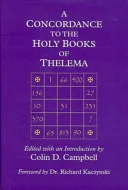
A Concordance to the Holy Books of Thelema
 83
83

A Concordance to the Holy Books of Thelema
Colin D. Campbell's A Concordance to the Holy Books of Thelema presents a formidable, if dry, instrument for navigating the labyrinthine scriptures of the Great Beast. Its strength lies in its sheer comprehensiveness; the painstaking cross-referencing of terms like 'Nuit' or 'Thelema' across multiple texts is its primary utility. However, its utility is almost exclusively for the already initiated or deeply invested scholar. The absence of interpretive commentary, while arguably maintaining scholarly neutrality, means the user must already possess significant contextual knowledge. A passage detailing the repeated use of 'Khabs' and 'The Khu' across various invocations and rituals, for instance, is presented starkly, demanding prior understanding of their significance within the magical cosmology. This is a reference work, not a guide, and its value is directly proportional to the reader's existing engagement with Thelemic lore. It offers precision but little accessibility for the uninitiated.
📝 Description
83
### What It Is
A Concordance to the Holy Books of Thelema is precisely what its title declares: an exhaustive index and guide to the foundational texts of the Thelemic system. Compiled by Colin D. Campbell, this volume meticulously cross-references terms, names, concepts, and significant phrases found within the primary scriptures of Thelema, such as Liber AL vel Legis (The Book of the Law), Liber O, and others. It serves as an indispensable tool for anyone seeking to understand the intricate textual landscape of Aleister Crowley's most significant magical and religious philosophy.
### Who It's For
This work is intended for serious students and practitioners of Thelema, scholars of Western Esotericism, and researchers interested in the occult literature of the early 20th century. It is not a beginner's introduction but a reference volume for those already familiar with the core texts and wishing to conduct in-depth textual analysis, comparative studies, or to deepen their personal understanding of Thelemic doctrine. Adepts, ceremonial magicians, and occult historians will find its systematic approach invaluable.
### Historical Context
The compilation of this concordance reflects the ongoing scholarly and practical engagement with Aleister Crowley's vast corpus of writings. Published in 2008, it emerged during a period of increased academic interest in occultism and new religious movements. While Crowley's works have been subject to varied interpretations since their initial publication, beginning with Liber AL in 1904, a systematic tool like Campbell's concordance addresses the need for precise textual navigation, aiding in the disambiguation of complex Thelemic concepts that have evolved through different initiatory lineages and scholarly debates.
### Key Concepts
The concordance illuminates recurring motifs and specialized vocabulary within Thelemic scripture. It highlights the significance of specific divine names (e.g., Nuit, Hadit, Ra-Hoor-Khuit), crucial magical operations, and philosophical tenets. By providing a structured overview, it aids in discerning the interconnections between various texts and their underlying principles. The systematic indexing allows for the rapid identification of how particular terms are employed across different scriptures, revealing patterns of usage and conceptual development within the Thelemic framework.
💡 Why Read This Book?
• Gain precise textual understanding of Thelemic scripture by locating every instance of key terms like 'The Book of the Law' across multiple foundational texts, as detailed in the concordance's indexing. • Deepen your grasp of the interconnectedness of Thelemic concepts by cross-referencing their usage in different holy books, facilitated by the work's systematic structure. • Enhance your research into early 20th-century occultism by having a reliable reference for Aleister Crowley's foundational writings, aiding comparative analysis with contemporary movements.
⭐ Reader Reviews
Honest opinions from readers who have explored this book.
❓ Frequently Asked Questions
What are the primary 'Holy Books of Thelema' included in this concordance?
The concordance primarily covers foundational texts such as Liber AL vel Legis (The Book of the Law), Liber O, Liber C, and other significant early scriptures attributed to or published by Aleister Crowley, forming the core of Thelemic doctrine.
Is this book suitable for someone new to Thelema?
No, this concordance is best suited for individuals already familiar with Thelemic concepts and scriptures. It functions as a reference tool for in-depth study rather than an introductory guide.
What is the main benefit of using a concordance for Thelemic texts?
A concordance like this allows for precise textual analysis, helping users track the usage and context of specific terms, names, and phrases across the entire body of Thelemic scripture, revealing patterns and connections.
When was A Concordance to the Holy Books of Thelema first published?
Colin D. Campbell's A Concordance to the Holy Books of Thelema was first published in 2008, providing a modern scholarly tool for an ancient and esoteric tradition.
Does this book interpret the meaning of Thelemic terms?
The primary function of this concordance is to index and cross-reference terms, not to provide interpretations. Users are expected to bring their own understanding or consult other resources for deeper meaning.
Who is Colin D. Campbell, the author of this concordance?
Colin D. Campbell is known for his meticulous work in compiling scholarly reference tools for esoteric traditions, particularly within the context of Thelema and Aleister Crowley's writings.
🔮 Key Themes & Symbolism
Textual Authority and Canon
The concordance addresses the nature of Thelemic scripture, implicitly defining its canon by indexing specific texts. It highlights the importance of Liber AL vel Legis (The Book of the Law) as the foundational document, while also providing access to its usage within other related works. This focus underscores the Thelemic emphasis on the direct reception of divine or inspired text, treating these books as authoritative pronouncements that require rigorous study and understanding.
Divine Names and Principles
Central to Thelemic cosmology are the divine entities such as Nuit, Hadit, and Ra-Hoor-Khuit. This concordance allows for precise tracking of how these names, and related concepts like 'the Star', are employed across the scriptures. By mapping their occurrences, users can explore their specific functions and relationships as presented in the texts, aiding in the comprehension of the divine principles that govern the Thelemic universe and its magical operations.
Magical and Ritual Vocabulary
Thelemic practice is rich with specialized terminology derived from various occult traditions and Crowley's own inventions. The concordance serves as a lexicon, cross-referencing magical operations, initiatory grades, and esoteric concepts. This enables practitioners and scholars to understand the precise language used in rituals and philosophical discussions, ensuring a more accurate engagement with the practical and theoretical aspects of Thelemic magick.
The Law of Thelema
The core tenet, 'Do what thou wilt shall be the whole of the Law,' is a recurring concept. The concordance facilitates the examination of how this principle is discussed, elaborated upon, or referenced within the holy books. By identifying the contexts in which 'Thelema' and 'Will' appear, students can gain a deeper appreciation for its multifaceted meaning beyond a simple libertarian interpretation, understanding its role in the broader system.
💬 Memorable Quotes
“The importance of cross-referencing 'Hadit' across multiple scriptures.”
— This highlights the concordance's function: to reveal how a central divine principle, Hadit, is consistently or variably presented throughout the Thelemic corpus, aiding scholars in understanding its role.
“The frequent appearance of the term 'Khabs' within ritual contexts.”
— By noting the recurrence of 'Khabs', the concordance points to its significance in Thelemic ritual, suggesting its connection to concepts of light, spirit, or the luminous aspect of being.
“The systematic indexing of 'Liber O' alongside Liber AL.”
— This emphasizes the concordance's scope, showing it doesn't just focus on the primary text but also includes foundational instructional works, providing a structured view of related magical teachings.
“Tracking the usage of 'Thelema' in philosophical discussions.”
— This indicates how the concordance helps users understand the nuances of the central Thelemic concept of 'Will' by showing its varied applications and discussions within the scriptures.
“The concordance notes variations in the spelling or presentation of certain divine names.”
— This points to the detailed nature of the work, acknowledging that even subtle textual differences can be significant for rigorous study and interpretation within the esoteric tradition.
🌙 Esoteric Significance
Tradition
This work is deeply embedded within the Western Esoteric Tradition, specifically serving the needs of the Thelemic system founded by Aleister Crowley. Thelema draws heavily from Hermeticism, Kabbalah, Gnosticism, and Eastern yogic philosophies, synthesizing them into a unique framework. Campbell's concordance directly supports the study and practice of this modern magical religion by providing a scholarly apparatus for its primary sacred texts, facilitating a deeper, more accurate understanding of its doctrines and practices.
Symbolism
The concordance implicitly highlights key Thelemic symbols by indexing the terms associated with them. For instance, tracking the usage of 'Nuit' (the star-goddess of infinite space) and 'Hadit' (the point-of-view, the infinitely small) reveals their foundational roles in Thelemic cosmology. Similarly, the term 'Will' (Thelema) itself is central, and the concordance allows for examination of its context, revealing its significance as the driving force of the individual's true purpose within the universe.
Modern Relevance
Modern practitioners and scholars of Thelema, as well as comparative religion researchers, rely on tools like this concordance. It is essential for contemporary Thelemic organizations and independent practitioners seeking to maintain textual fidelity and deepen their understanding of the system's core tenets. The work supports ongoing research into Aleister Crowley's influence on 20th and 21st-century occultism and new religious movements, providing a critical resource for academic study.
👥 Who Should Read This Book
• Serious students of Thelema: Those dedicated to understanding the intricate doctrines and practices of Aleister Crowley's system will find this an indispensable tool for textual analysis and comparative study. • Scholars of Western Esotericism: Researchers interested in occultism, magick, and the history of religions in the 20th century will benefit from its precise indexing of key primary sources. • Occult Librarians and Archivists: Individuals responsible for curating and organizing esoteric literature will find this concordance crucial for cataloging and referencing Thelemic texts accurately.
📜 Historical Context
Published in 2008, Colin D. Campbell's A Concordance to the Holy Books of Thelema arrived at a time when academic interest in Aleister Crowley and the esoteric movements he influenced was gaining significant traction. The early 21st century saw a rise in scholarly works examining Western Esotericism, moving beyond sensationalism to critical analysis. Campbell's effort responds to a need for rigorous textual tools, akin to those used in classical or biblical studies, applied to the unique canon of Thelema, which emerged in the early 20th century, notably with the reception of Liber AL vel Legis in 1904. This period saw Crowley's writings disseminated through various occult orders and publications, often facing both fervent adherence and strong opposition from both within and outside magical circles. The existence of this concordance can be seen as a product of, and a contribution to, the ongoing scholarly engagement with Crowley's legacy, providing a counterpoint to purely hagiographic or polemical accounts.
📔 Journal Prompts
The recurring instances of 'Ra-Hoor-Khuit' within the indexed texts.
The specific contexts in which 'The Book of the Law' is referenced.
The interplay between 'Nuit' and 'Hadit' across different scriptures.
The usage of 'Khabs' and 'The Khu' in ritualistic passages.
The concept of 'Will' as presented in the holy books.
🗂️ Glossary
Thelema
The Greek word for 'Will', central to Aleister Crowley's system of magick and religion. It signifies the individual's True Will or divine purpose, which adherents are to discover and enact.
Liber AL vel Legis
The Book of the Law, the central sacred text of Thelema, received by Aleister Crowley in Cairo in 1904. It contains the core principles and prophecies of the new Aeon.
Nuit
Thelemic goddess representing infinite space, the starry heavens, and the totality of all possibilities. She is often depicted as a winged woman arched over the earth.
Hadit
Thelemic god representing the individual point of consciousness, the infinitely small, the center of every star. He is the complement to Nuit, representing the active, fiery principle.
Ra-Hoor-Khuit
The Crowned and Conquering Child, the divine manifestation of Horus in the Aeon of the Child, representing active, divine energy and conquest. He is the active principle of the Law of Thelema.
Khabs
A term often associated with 'light' or 'star' in Thelemic contexts, related to the spiritual essence or luminous aspect of being.
The Khu
Often paired with Khabs, representing the spiritual body or ethereal essence, signifying the luminous or divine aspect of the soul.