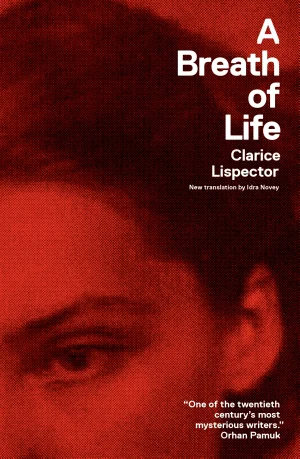
A Breath of Life
 83
83

A Breath of Life
Clarice Lispector’s A Breath of Life is less a novel and more a meticulously crafted philosophical exercise disguised as one. The authorial conceit—a writer creating and conversing with a sentient being—is potent, allowing Lispector to dissect the very act of existence and consciousness. The strength lies in its unflinching examination of the moment of being, the terrifying clarity of self-awareness that Angela Pralini experiences. However, the narrative’s intensity can also be its limitation; the prose, while precise, offers little respite, making the reader feel as trapped within Angela’s consciousness as the character herself. The passage where Angela first perceives her own body as a distinct entity, a fragile vessel, is particularly arresting in its depiction of raw, unmediated sentience. This is a work that demands introspection, offering a stark, almost clinical, view of creation.
📝 Description
83
### What It Is
A Breath of Life presents a profound exploration of existence, creation, and dissolution through the lens of a singular, introspective narrative. The work centers on an authorial figure, a thinly veiled representation of Clarice Lispector herself, who imbues a creation with "the breath of life." This act initiates a complex dialogue between the creator and the created, a being named Angela Pralini, who simultaneously experiences birth, sentience, and the inevitability of death.
### Who It's For
This text will appeal to readers interested in existential philosophy, the nature of consciousness, and the creative act. Those drawn to introspective literary narratives, particularly those that blur the lines between author and character, will find fertile ground here. It is suited for individuals who contemplate the genesis of being and the mechanics of mortality, seeking a literary rather than a purely academic or religious perspective.
### Historical Context
Originally published in 2012, A Breath of Life emerges from the rich literary tradition of Brazil, a country known for its deep engagement with existential themes in literature. Clarice Lispector, a towering figure in 20th-century Brazilian literature, was celebrated for her unique prose style that often delved into the psychological and spiritual dimensions of everyday life. This work, though published posthumously, reflects the stylistic and thematic concerns that characterized her oeuvre throughout her career.
### Key Concepts
The narrative grapples with the fundamental duality of existence: the spark of creation versus the certainty of decay. It examines the subjective experience of consciousness, particularly the moment of awakening and the ensuing awareness of self and surroundings. The relationship between the divine or authorial will and the independent, yet bound, existence of the created is central, questioning the autonomy and essence of life itself.
💡 Why Read This Book?
• Gain an intimate perspective on the philosophical act of creation, understanding the intricate parallels Lispector draws between artistic production and existential genesis, as seen in the author's dialogue with Angela Pralini. • Experience a unique literary exploration of consciousness and mortality, feeling the raw immediacy of self-awareness and the existential weight that accompanies it, mirroring Angela's awakening. • Appreciate the singular stylistic innovation of Clarice Lispector, whose introspective prose style in A Breath of Life offers a distinct approach to metaphysical inquiry not found in conventional philosophical texts.
⭐ Reader Reviews
Honest opinions from readers who have explored this book.
❓ Frequently Asked Questions
When was A Breath of Life originally published and who is the author?
A Breath of Life was first published on June 13, 2012. It is written by the renowned Brazilian author Clarice Lispector, known for her introspective literary style.
What is the central theme explored in A Breath of Life?
The book explores themes of creation, consciousness, and death. It centers on an authorial figure imbuing a creation, Angela Pralini, with life and engaging in a dialogue about existence.
Is A Breath of Life a philosophical treatise or a novel?
It blurs the lines between genres, functioning as a literary exploration of philosophical concepts. While narrative elements exist, its primary focus is on metaphysical inquiry and the nature of being.
What is the significance of the character Angela Pralini?
Angela Pralini represents the created being, a character brought to life by the authorial figure. Her consciousness, her awareness of self and mortality, forms the core of the book's existential dialogue.
What kind of writing style can I expect from Clarice Lispector in this book?
Lispector's style is introspective, precise, and often philosophical. Expect prose that delves deeply into the psychological and existential states of her characters, characterized by a unique, almost clinical, clarity.
Does the book offer religious or spiritual guidance?
A Breath of Life engages with metaphysical and existential questions from a literary and philosophical standpoint, rather than offering direct religious or spiritual doctrines. It examines the *experience* of existence.
🔮 Key Themes & Symbolism
The Act of Creation
The narrative posits creation not merely as an artistic act but as a fundamental existential event. The authorial figure, a proxy for Lispector, breathes life into Angela Pralini, initiating a process that is both miraculous and terrifying. This theme interrogates the responsibility and nature of the creator, and the emergent will of the created entity, questioning the very definition of life and sentience as it is brought forth from nothingness.
Consciousness and Self-Awareness
Central to the book is the moment of awakening into consciousness. Angela Pralini's experience of perceiving her own existence, her body, and the world around her is depicted with stark intensity. Lispector dissects the subjective experience of being, highlighting the isolation and wonder that accompany the realization of self, and the philosophical implications of being aware of one's own finite existence.
Mortality and Dissolution
Juxtaposed with creation is the inescapable reality of death. The "breath of life" is intrinsically linked to the process of decay. Angela Pralini's dialogue with her creator is as much about the affirmation of existence as it is about the confrontation with its inevitable end. The book explores how the awareness of mortality shapes the experience of life, imbuing each moment with a profound, albeit somber, significance.
The Creator-Created Dialogue
The relationship between the authorial figure and Angela Pralini forms the structural and thematic core. This dialogue is not merely conversational but a dialectical exploration of being. It probes the power dynamics, the shared essence, and the inherent separation between the divine or artistic impulse and its manifestation. The work questions the autonomy of the created while acknowledging its unique, emergent perspective.
💬 Memorable Quotes
“A man (a thinly disguised Clarice Lispector) infuses the "breath of life" into his creation.”
— This foundational premise sets the stage for the book's central exploration of genesis. It highlights the author's direct, almost divine, intervention in bringing a new consciousness into being, blurring the lines between artistic creation and existential origination.
“forms a dialogue between the god-like author and the speaking, breathing, dying creature herself: Angela Pralini”
— This captures the essence of the book's narrative engine: the dynamic exchange between the creator and the created. It emphasizes the dual nature of Angela Pralini as both a vibrant, sentient being and one acutely aware of her own finitude.
“The work explores the moment of awakening into self-awareness.”
— This paraphrased concept points to Lispector's focus on the profound, often disorienting, experience of realizing one's own existence. It is the genesis of the subjective self, a core element of the book's philosophical inquiry.
“The narrative questions the nature of autonomy for a created being.”
— This interpretation addresses the underlying tension in the creator-created relationship. It probes whether Angela Pralini, despite her sentience, possesses genuine free will or is fundamentally bound by her origin and purpose.
“The book presents a stark confrontation with mortality.”
— This highlights the thematic counterpoint to creation. Lispector does not shy away from the inevitable end of life, integrating the awareness of death as an intrinsic component of the lived experience explored within the text.
🌙 Esoteric Significance
Tradition
While not explicitly aligned with a single esoteric lineage, A Breath of Life resonates with Gnostic themes of creation, the divine spark, and the struggle for self-knowledge within a material or constructed existence. The authorial figure acts as a demiurge, bringing forth a being into a world of both wonder and limitation. The work's intense focus on the subjective experience of consciousness and the search for authentic being echoes Neoplatonic and Hermetic ideas about the soul's journey and the nature of the 'True Self'.
Symbolism
The 'breath of life' itself is a potent symbol, directly referencing the biblical Genesis account but here imbued with a more existential and psychological charge, signifying the spark of consciousness and animation. Angela Pralini's physical form can be seen as a symbolic vessel for this nascent awareness, a fragile container of sentience that is simultaneously bound by its material reality and liberated by its inner perception. The dialogue between creator and created symbolizes the internal dialogue of the self, the conscious grappling with one's origins and purpose.
Modern Relevance
Contemporary thinkers and artists exploring consciousness studies, phenomenology, and post-humanism find fertile ground in Lispector's work. Her precise dissection of subjective experience continues to inform discussions on artificial intelligence and the philosophical implications of creating sentient entities. Writers and artists interested in the existential dimensions of the creative process, particularly those who explore the uncanny relationship between author and character, draw inspiration from her unique approach to narrative and being.
👥 Who Should Read This Book
• Readers interested in existential philosophy and phenomenology, seeking literary explorations of consciousness, selfhood, and mortality beyond academic texts. • Aspiring authors and artists who contemplate the nature of the creative act and the intricate relationship between creator and creation, finding a unique perspective in Lispector's meta-narrative. • Individuals drawn to introspective and psychologically complex literature, desiring a text that challenges perceptions of reality and the fundamental questions of existence.
📜 Historical Context
Clarice Lispector's A Breath of Life, published in 2012, emerges from a rich vein of 20th-century Brazilian literature that often grappled with existential and psychological themes. Lispector herself was a titan of this movement, known for her introspective and philosophical prose, which frequently explored the inner lives of her characters and the nature of being. While this particular work was published posthumously, it carries the indelible mark of her distinctive style and thematic preoccupations. The intellectual currents of existentialism, prevalent throughout the mid-20th century, certainly inform Lispector's questioning of consciousness, freedom, and mortality, though her approach is uniquely literary and phenomenological, diverging from more systematic philosophical treatments. Unlike the more overtly political or socially engaged literature of some contemporaries, Lispector’s focus remained intensely inward, dissecting the human psyche and the fundamental act of existence. The reception of her work, celebrated for its originality and depth, consistently positioned her as a singular voice in global literature.
📔 Journal Prompts
Angela Pralini's first perception of her own body.
The authorial figure's motivation for creating Angela.
The duality of existence as presented in the dialogue.
The moment of realizing one's own mortality.
The concept of 'the breath of life' in your own creative endeavors.
🗂️ Glossary
Breath of Life
The animating force or essence that imbues a being with consciousness and existence, referencing both biblical creation accounts and the subjective experience of animation.
Angela Pralini
The created character in the narrative who experiences the awakening of consciousness, sentience, and an awareness of her own mortality.
Authorial Figure
The character representing the creator, a thinly veiled stand-in for Clarice Lispector, who imbues Angela Pralini with life and engages in dialogue with her.
Creation Dialogue
The central interaction between the authorial figure and Angela Pralini, serving as a philosophical exploration of being, consciousness, and the creator-created relationship.
Sentience
The capacity to feel, perceive, or experience subjectively. The book intensely focuses on the moment and nature of achieving sentience.
Dissolution
The process of decay or ceasing to exist; the counterpart to creation, representing mortality and the inevitable end of a conscious existence.
Existential Genesis
The fundamental origin of existence, particularly as it pertains to consciousness and self-awareness, explored through the lens of literary creation.