A Beginner's Guide to Immortality
 79
79

A Beginner's Guide to Immortality
Pickover's approach in A Beginner's Guide to Immortality offers a compelling, if sometimes scattered, look at individuals who operated decidedly outside the box. The strength lies in the sheer breadth of characters introduced, from the scientific endeavors of Wilhelm Rontgen to the philosophical musings of Truman Capote. However, the connection between these disparate figures and the titular 'immortality' can feel tenuous at times, more an interpretative leap than a direct exploration of the concept. A particularly illuminating section details Stephen Wolfram's ambitious computational theories, showcasing a mind striving for a form of lasting intellectual legacy. The work ultimately serves as an engaging, albeit broad, survey of singular minds. It's a book that sparks curiosity about lives less ordinary.
📝 Description
79
### What It Is
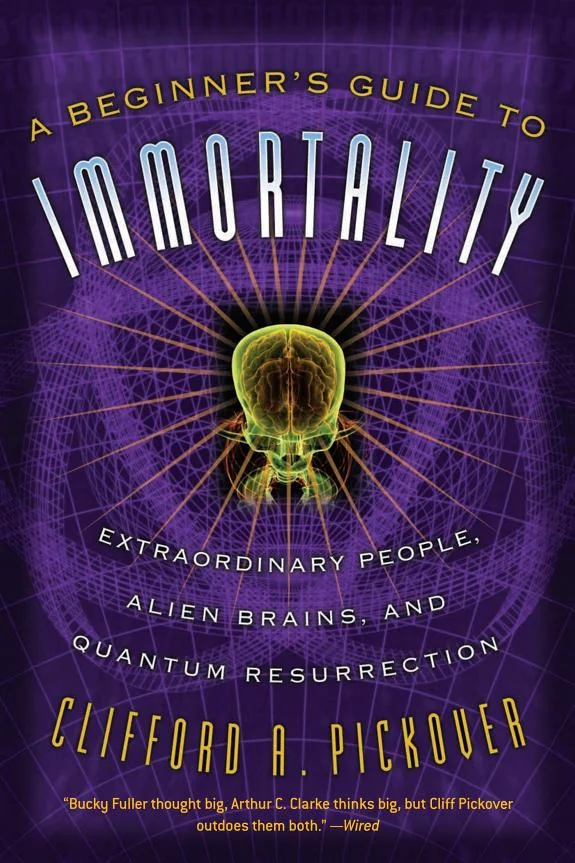
A Beginner's Guide to Immortality, first published in 2006, is Clifford A. Pickover's exploration into the lives and ideas of individuals who defied conventional boundaries to achieve unique successes. The book examines figures from various fields, analyzing their unconventional thinking and its impact.
### Who It's For
This work is suited for readers interested in biographies of thinkers and innovators who challenged norms. It appeals to those curious about the psychology of creativity, the pursuit of unconventional goals, and the diverse paths to accomplishment beyond mainstream definitions of success.
### Historical Context
Published in the mid-2000s, a period of burgeoning interest in fringe science, consciousness studies, and the intersection of technology and philosophy, Pickover's book emerged amidst discussions on artificial intelligence, longevity, and the nature of genius. It tapped into a growing fascination with counter-cultural figures and their contributions.
### Key Concepts
The book unpacks concepts related to unconventional life paths, the nature of success outside societal norms, and the thought processes of highly creative or eccentric individuals. It highlights how specific individuals, like Ray Kurzweil with his futurist predictions, or John Cage with his avant-garde music, pursued singular visions.
💡 Why Read This Book?
• Gain insight into the unconventional thought processes of figures like John Cage, understanding how his 4'33" challenged traditional musical composition. • Explore the futurist ideas of Ray Kurzweil, examining his early predictions and technological visions that shaped contemporary discourse. • Discover the scientific curiosity of Wilhelm Rontgen, learning how his accidental discovery of X-rays revolutionized medicine and physics.
⭐ Reader Reviews
Honest opinions from readers who have explored this book.
❓ Frequently Asked Questions
What kind of 'immortality' does Clifford Pickover discuss in the book?
The book explores various forms of lasting impact, including intellectual legacy, cultural influence, and the pursuit of transcending biological limitations, rather than literal eternal life.
Which specific creative thinkers are featured in A Beginner's Guide to Immortality?
Featured individuals include Truman Capote, John Cage, Stephen Wolfram, Ray Kurzweil, and Wilhelm Rontgen, among others who pushed the boundaries of their fields.
What is the primary focus of the book's biographical studies?
The focus is on the unusual lives and distinct ideas of successful individuals who operated outside conventional cultural norms and achieved recognition in their specific niches.
Does the book offer practical advice on achieving immortality?
No, the book does not offer practical steps for achieving physical immortality. Instead, it examines the lives of those who achieved a form of lasting recognition through their unique contributions and perspectives.
What makes Clifford Pickover's approach unique in this book?
Pickover's unique approach involves connecting seemingly disparate figures and ideas, highlighting their unconventional thinking and the astonishing richness of life through diverse examples.
When was A Beginner's Guide to Immortality first published?
The book was first published on December 27, 2006.
🔮 Key Themes & Symbolism
Transcendence Through Innovation
The book examines how individuals achieve a form of immortality not through biological means, but through groundbreaking innovations and unique contributions that leave an indelible mark on culture and knowledge. Figures like Stephen Wolfram, with his ambitious computational theories, or Ray Kurzweil, with his futurist visions, are presented as examples of minds striving for enduring impact. Their work, often challenging established paradigms, suggests that legacy is built through radical thought and persistent pursuit of singular ideas, extending influence beyond their physical existence.
The Eccentric Path to Genius
Pickover highlights the often-unconventional lifestyles and thinking patterns of brilliant minds. The book explores how figures like Truman Capote or John Cage, by operating outside societal expectations, were able to produce singular works. It suggests that embracing eccentricity and pursuing niche interests with intense focus can lead to profound creative breakthroughs. This theme posits that deviation from the norm is not just acceptable but can be a catalyst for extraordinary achievement and a distinct form of lasting recognition.
Defining Success Beyond Convention
This work questions traditional metrics of success by showcasing individuals who found fulfillment and achieved renown through paths diverging from mainstream ambition. The exploration of Wilhelm Rontgen's accidental discovery, which fundamentally altered scientific understanding, illustrates how impactful achievements can arise unexpectedly. The book encourages readers to consider diverse definitions of accomplishment, emphasizing personal vision and impact within specific domains over broad societal validation.
The Richness of Diverse Lives
A Beginner's Guide to Immortality celebrates the astonishing variety of human experience and intellectual pursuit. By profiling individuals from science, art, and technology, Pickover illustrates the vast spectrum of how lives can be lived and contributions made. The book serves as an ode to curiosity, individuality, and the exploration of life's multifaceted possibilities, demonstrating that a meaningful and impactful existence can manifest in myriad forms.
💬 Memorable Quotes
“Unusual lives and creative thinkers who punched through ordinary cultural norms while becoming successful in their own niches.”
— This core idea frames the book's central thesis: that true lasting impact often comes from those who refuse to conform, carving out unique spaces for their genius and influence.
“Explores curious ideas of colorful characters.”
— This suggests Pickover's focus is on the intriguing and often peculiar concepts entertained by individuals who stand out from the crowd due to their distinct perspectives.
“Glimpse the diversity of life's astonishing richness.”
— The book aims to showcase the wide array of human potential and achievement, emphasizing that success and significance can be found in many unexpected forms and fields.
“Individuals who defied conventional boundaries.”
— This highlights the book's emphasis on nonconformity and the courage it takes to pursue innovative paths, even when they diverge significantly from societal expectations.
“Becoming successful in their own niches.”
— Pickover focuses on individuals who achieved mastery and recognition within specialized areas, suggesting that deep expertise in a unique field can lead to a lasting legacy.
🌙 Esoteric Significance
Tradition
While not strictly adhering to a single esoteric lineage, Pickover's work touches upon themes common in Hermeticism and Gnosticism regarding the pursuit of higher knowledge and the transcendence of ordinary limitations. The focus on individual genius and unconventional paths to lasting influence echoes Hermetic ideals of self-mastery and the creation of one's own reality. It departs from traditional esoteric texts by grounding these explorations in modern biographical examples rather than ancient doctrines or ritualistic practices.
Symbolism
The concept of 'immortality' itself functions symbolically, representing not literal eternal life but enduring legacy through ideas, creations, or discoveries. Figures like Wilhelm Rontgen achieving lasting fame through a scientific breakthrough symbolize the alchemical transformation of the mundane into the extraordinary. The 'niche' success of individuals like John Cage can be seen as a symbol of finding one's unique spiritual or intellectual path, separate from the masses.
Modern Relevance
Pickover's exploration of minds like Stephen Wolfram and Ray Kurzweil remains relevant for contemporary thinkers in fields such as artificial intelligence, computational theory, and digital consciousness. Modern transhumanist and longevity communities often cite figures and ideas that Pickover highlighted, seeking inspiration for pushing biological and intellectual boundaries. The book's celebration of unconventional thinkers continues to inform discussions on creativity and innovation in the digital age.
👥 Who Should Read This Book
• Aspiring innovators and creatives seeking inspiration from those who defied norms, like John Cage or Truman Capote. • Readers interested in biographical studies of scientific pioneers and futurists, such as Wilhelm Rontgen and Ray Kurzweil. • Individuals curious about diverse definitions of success and how unique visions can lead to lasting impact, beyond conventional career paths.
📜 Historical Context
Published in late 2006, Clifford A. Pickover's *A Beginner's Guide to Immortality* arrived during a period of significant public interest in futurism, transhumanism, and the intersection of technology with consciousness. The early 21st century saw figures like Ray Kurzweil gaining wider recognition for their bold predictions about artificial intelligence and longevity, creating fertile ground for discussions on extended lifespans and intellectual legacies. Pickover's work tapped into this zeitgeist, exploring the lives of individuals who, like Kurzweil or the avant-garde composer John Cage, pursued singular visions that challenged conventional thought. While not directly engaging with the philosophical debates surrounding, for instance, Nick Bostrom's emerging work on superintelligence, Pickover's book offered a biographical lens on the pursuit of enduring impact. Its reception was generally positive within circles interested in popular science and unconventional biographies, appreciating its broad scope and accessible style.
📔 Journal Prompts
The pursuit of lasting legacy through unconventional means, as exemplified by Stephen Wolfram.
The role of eccentricity in achieving singular breakthroughs, considering figures like Truman Capote.
Contrasting conventional success with the niche achievements of individuals featured in the book.
How the scientific discoveries of Wilhelm Rontgen might symbolize a form of transcendence.
Identifying parallels between Ray Kurzweil's futurist visions and the concept of enduring influence.
🗂️ Glossary
Immortality (Conceptual)
In the context of the book, immortality refers not to eternal physical life, but to achieving a lasting legacy through significant contributions, ideas, or cultural impact that outlives the individual.
Niche Success
Achievement and recognition attained within a highly specialized field or area, often pursued by individuals who deviate from mainstream interests or career paths.
Unconventional Thinkers
Individuals whose ideas, methods, or lifestyles significantly differ from societal norms and expectations, often leading to innovative or groundbreaking work.
Creative Norms
The generally accepted standards, practices, and expectations within artistic, scientific, or intellectual fields that individuals may choose to challenge or redefine.
Futurist Visions
Speculative ideas and predictions about the future, particularly concerning technological advancements, societal changes, and human evolution, often associated with thinkers like Ray Kurzweil.
Avant-garde
Experimental or innovative work in the arts, music, or literature that is seen as pushing boundaries and challenging established conventions, as exemplified by John Cage.
Computational Theory
The study of the theoretical basis of computation and information, including the capabilities and limitations of computers, relevant to figures like Stephen Wolfram.