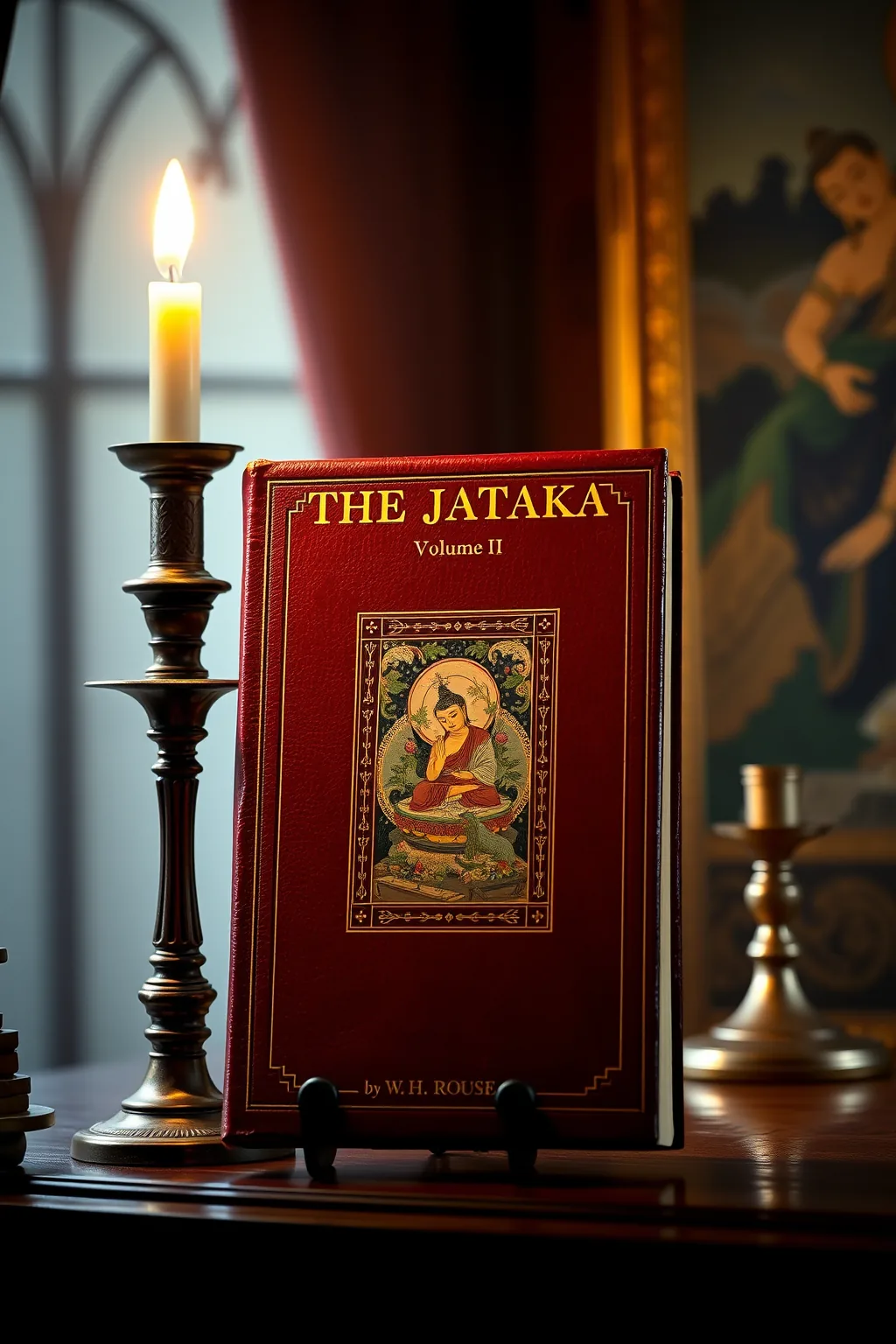
The Jataka, Volume II
 82
82

The Jataka, Volume II



Sophia Crane (Associate Editor) — W. H. D. Rouse's 'The Jataka, Volume II' stands as a monumental achievement in bringing these foundational Buddhist narratives to the English-speaking world. This volume continues the scholarly yet deeply resonant translation, revealing intricate layers of moral and spiritual instruction within each story. For the esoteric practitioner, these tales are not just allegories but potent transmissions of dharma, illustrating the development of perfections essential for spiritual awakening. Rouse's meticulous work offers invaluable insights into the pre-canonical Buddhist understanding of karma, rebirth, and the cultivation of wisdom and compassion. It is an indispensable resource for serious students of Eastern mysticism and philosophy.
📝 Description
82
W. H. D. Rouse's translation of 'The Jataka, Volume II' presents over 300 Jataka tales from the Pali Canon.
This second volume of W. H. D. Rouse's translation contains 354 Jataka tales, stories that recount the previous lives of the Buddha. These narratives span his existence as both human and animal, illustrating the development of his virtues over countless rebirths. The tales are not simply moral fables but are understood within Buddhist tradition as significant accounts of karma and the path to enlightenment.
Rouse's translation aims for clarity, making these ancient stories accessible. The text reveals the symbolic meanings embedded within the narratives, encouraging contemplation on the cycle of existence and the impact of ethical conduct. For those interested in Buddhist philosophy, these stories serve as a guide to understanding the Bodhisattva ideal and the principles of spiritual growth.
The Jataka tales are a canonical collection within Theravada Buddhism, central to understanding the Buddha's journey towards enlightenment. They are considered not just allegorical stories but accounts of the karmic cause and effect that shape existence across lifetimes. Within esoteric Buddhist thought, these narratives illuminate the gradual cultivation of perfections, or paramitas, such as compassion, generosity, and wisdom, which are essential for any being aspiring to Buddhahood. This volume, as part of Rouse's translation, makes these foundational texts available for study.
✍️ Author
💡 Why Read This Book?
Embark on a journey through the soul's evolution with 'The Jataka, Volume II.' This book offers profound moral guidance, illuminating the path to spiritual awakening through timeless fables. Ideal for seekers of wisdom, scholars of Eastern traditions, and practitioners of contemplative arts, it provides a rich source for understanding karma, compassion, and the Bodhisattva ideal. Uncover hidden meanings and cultivate inner virtues through these ancient, transformative stories.
⭐ Reader Reviews
Honest opinions from readers who have explored this book.
❓ Frequently Asked Questions
What are the Jataka tales?
The Jataka tales are ancient Buddhist narratives recounting the previous lives of the Buddha, Buddha-to-be, in both human and animal forms. They serve as moral fables illustrating virtues and the path to enlightenment.
What is the significance of Volume II?
Volume II continues the comprehensive translation of the Jataka tales, presenting a significant portion of these profound moral and spiritual stories, offering deeper insights into the Buddha's past deeds and the development of his wisdom and compassion.
Who was W. H. D. Rouse?
W. H. D. Rouse was a respected scholar and translator known for his significant contributions to making ancient Eastern texts accessible to a Western audience, particularly his work on the Jataka tales.
Are these stories suitable for beginners?
While scholarly, the narrative nature makes them accessible. Beginners can appreciate the moral lessons, while advanced readers will find deeper symbolic and philosophical layers.
What is the origin of the Jataka tales?
These tales originate from the Pali Canon of Buddhism, dating back to at least 380 BCE, making them some of the oldest extant Buddhist literature.
🔮 Key Themes & Symbolism
The Bodhisattva Path
This volume profoundly illustrates the arduous yet noble path of the Bodhisattva, the being destined for Buddhahood. Through countless rebirths, the future Buddha meticulously cultivates the paramitas, or perfections, such as generosity, morality, patience, and wisdom. Each story serves as a evidence of the incremental development of these qualities, demonstrating that enlightenment is not a sudden attainment but a gradual unfolding forged through innumerable acts of altruism and self-mastery. The narratives reveal the immense dedication and unwavering commitment required to alleviate the suffering of all sentient beings, offering a blueprint for spiritual aspirants.
Karma and Rebirth
Central to the Jataka tales is the immutable law of karma and the cycle of rebirth (samsara). The stories vividly depict how actions, whether virtuous or unwholesome, inevitably bear fruit across lifetimes. They explore the intricate web of cause and effect, showing how present circumstances are shaped by past deeds and how future destinies are forged by present choices. This understanding provides a profound ethical framework, encouraging mindfulness of one's actions and their far-reaching consequences. The recurring themes of transmigration underscore the interconnectedness of all life and the soul's enduring journey through existence.
The Cultivation of Virtues
Each Jataka tale is a deep study in virtue, intricately tying moral lessons into compelling narratives. Readers will encounter exemplary displays of compassion, honesty, courage, wisdom, and self-sacrifice, often in the most unexpected forms, including animal protagonists. These stories act as potent reminders of the ethical foundations necessary for spiritual progress and harmonious living. They encourage the reader to reflect on their own character, inspiring the cultivation of these noble qualities in their daily lives and fostering a deeper appreciation for the ethical dimensions of existence.
💬 Memorable Quotes
Direct passages from the work, attributed to the author.
“The Bodhisat was born and died a thousand times.”
— This highlights the immense duration and repetitive nature of the Bodhisattva's spiritual journey, emphasizing the gradual accumulation of merit and wisdom through countless lifetimes.
“By deeds of merit, a man may rise.”
— This expresses the core principle of karma, suggesting that virtuous actions are the direct means by which one progresses spiritually and improves their station in existence.
“Compassion is the root of all good.”
— This underscores the profound value of karuna (compassion) within the Buddhist ethical system, presenting it as the foundational virtue from which all other positive qualities arise.
“In every life, a lesson learned.”
— This suggests that the cycle of rebirth, though often challenging, serves as a continuous educational process for the soul, with each existence offering opportunities for growth and understanding.
💡 Key Ideas
Editorial paraphrase of the work's core concepts — not direct quotes.
Wisdom is the light that dispels ignorance.
A fundamental Buddhist tenet, this quote emphasizes the supreme importance of prajna (wisdom) as the ultimate tool for overcoming delusion and achieving liberation.
🌙 Esoteric Significance
Tradition
This volume is deeply rooted in the Theravada Buddhist tradition, specifically its Mahayana aspects concerning the Bodhisattva path. Esoterically, the Jataka tales are viewed as initiatory narratives, revealing the stages of spiritual development required to attain Buddhahood. They offer symbolic keys to understanding the subtle body, the workings of the mind, and the nature of consciousness as it progresses through karmic cycles.
Symbolism
The animal forms in which the Buddha-to-be often appears are rich with symbolism, representing specific virtues or karmic lessons. For instance, a lion might symbolize courage, while an elephant could represent strength and patience. The recurring motifs of generosity, sacrifice, and wisdom act as archetypal symbols for the inner transformation necessary for spiritual awakening, guiding practitioners through the labyrinth of existence.
Modern Relevance
In an era often marked by materialism and spiritual disconnection, the Jataka tales offer a profound antidote. Their emphasis on compassion, ethical conduct, and the interconnectedness of all beings resonates powerfully with contemporary challenges. The narratives provide timeless wisdom for cultivating inner resilience, fostering empathy, and understanding the long-term consequences of our actions, making them relevant for personal growth and societal well-being.
👥 Who Should Read This Book
This volume beckons to a diverse audience. **Beginners** seeking foundational moral teachings will find accessible wisdom in the fables. **Scholars** of comparative religion and Asian studies will appreciate Rouse's scholarly rigor and the texts' historical significance. **Spiritual seekers** drawn to Eastern mysticism will discover useful insights into karma, rebirth, and the path to enlightenment. **Practitioners** of meditation and mindfulness will find inspiration in the cultivation of virtues like compassion and patience, viewing the tales as practical guides for inner transformation.
📜 Historical Context
Published in 1895, 'The Jataka, Volume II' emerges from a period of intense Western scholarly interest in Eastern religions and philosophies. The late 19th century saw a surge in translations and analyses of sacred texts, driven by both academic curiosity and a nascent spiritual seeking among Western intellectuals. W. H. D. Rouse's work was part of this broader movement to decode and disseminate the wisdom of ancient traditions. At a time when Buddhism was gaining greater recognition in the West, these translations provided crucial access to its foundational narratives, influencing early Buddhist studies and contributing to the growing awareness of non-Western spiritual paths.
📔 Journal Prompts
Reflect on a time you demonstrated significant compassion, mirroring the Bodhisattva's actions. What was the outcome?
Consider the concept of karma as presented in these tales. How does your understanding of cause and effect influence your daily decisions?
Identify a virtue highlighted in a Jataka story (e.g., patience, honesty) and brainstorm ways to cultivate it more intentionally in your life.
How can the interconnectedness of beings, as implied by the rebirth cycles, foster a greater sense of responsibility towards others and the environment?
Choose a challenging situation you are currently facing and reframe it through the lens of a lesson learned in one of the Jataka tales.
🗂️ Glossary
Jataka
A collection of Buddhist scriptures detailing the previous lives of the Buddha, serving as moral exemplars and illustrating the path to enlightenment.
Bodhisattva
An enlightened being who delays their own final nirvana out of compassion to help all sentient beings achieve enlightenment.
Karma
The principle of cause and effect, where actions (physical, verbal, mental) have consequences that shape present and future existences.
Samsara
The cyclical existence of birth, death, and rebirth, characterized by suffering and driven by karma and ignorance.
Paramitas
The 'perfections' or transcendent virtues that a Bodhisattva cultivates on the path to Buddhahood, such as generosity, morality, and wisdom.
This book appears in 2 collections
🔮 Readers Also Liked
Browse all →




From the “Meditation” Collection
View all →







More Free Mysticism & Contemplation Books
View all →