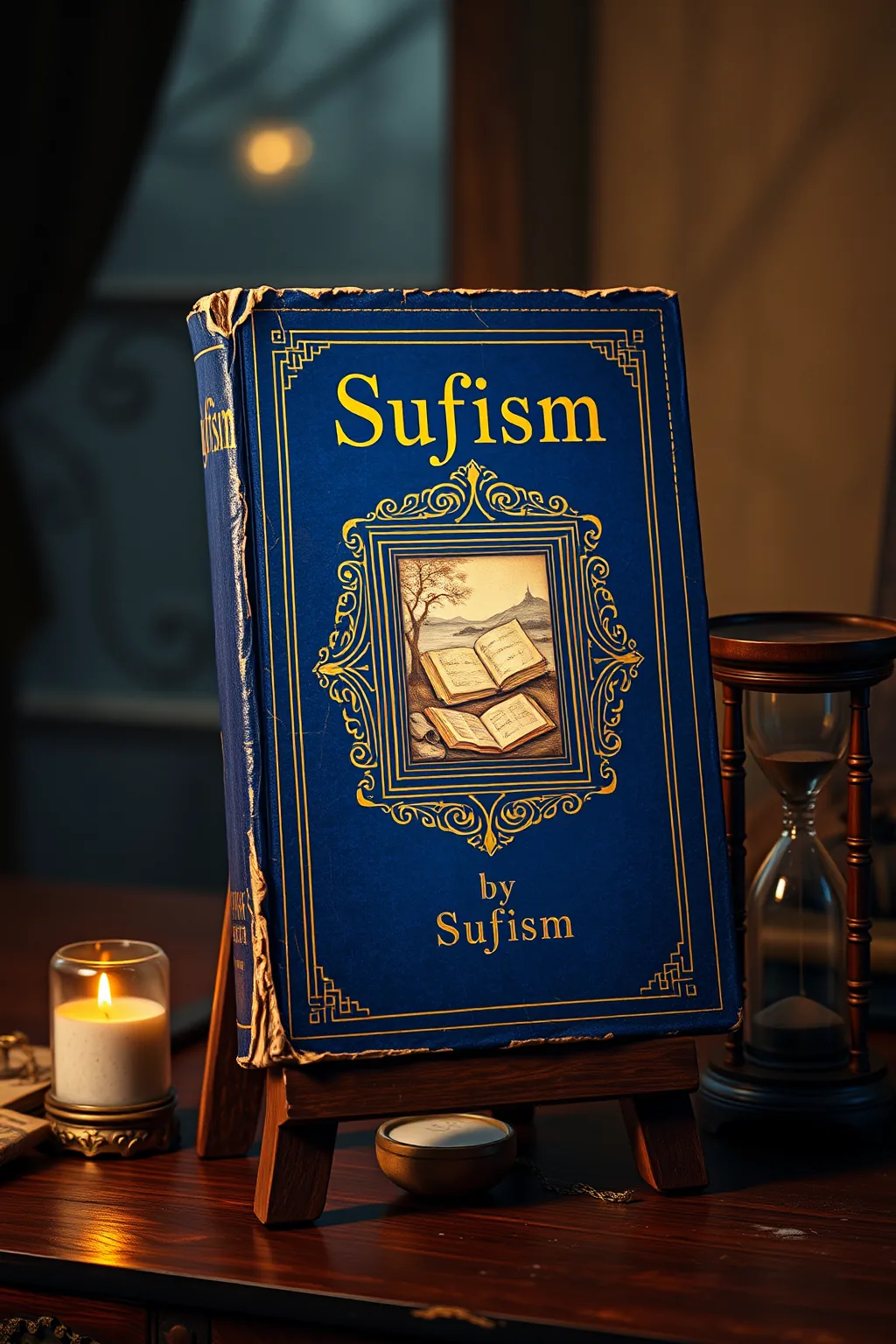
Sufism
 71
71

Sufism



Review by Isolde Whitaker (Sacred Texts Editor) — This comprehensive exploration of Sufism offers an invaluable window into one of the world's most profound mystical traditions. It masterfully navigates the labyrinthine paths of Sufi philosophy, illuminating the concepts of divine love, self-annihilation, and the journey of the soul. The author's nuanced approach unveils the esoteric insights often veiled by superficial understanding, presenting the core tenets with clarity and evocative prose. Its strength lies in its ability to convey the experiential nature of Sufism, making it accessible yet deeply resonant. Essential reading for anyone seeking to understand the inner life of Islam or the universal quest for spiritual union.
📝 Description
71
This book was written to introduce the mystical dimension of Islam to earnest seekers.
This work examines Sufism, the mystical tradition within Islam. It focuses on the path of love, devotion, and union with the Divine. The text details the inner aspects of faith, the development of the soul, and the practice of remembrance, known as dhikr. Readers will find discussions on spiritual annihilation and subsistence, concepts central to Sufi practice. The book emphasizes direct spiritual experience, prioritizing it over strict adherence to dogma. Its core philosophical tenet is the purification of the heart as the primary route to truth.
The author aims to illuminate Sufi thought for those interested in hidden traditions. The approach is described as fostering an atmosphere of reverence and spiritual yearning. It presents a philosophy that has influenced various cultures and time periods. The book is intended for individuals seeking a deeper understanding of direct experience with the sacred.
Sufism functions as the esoteric dimension of Islam, focusing on the inner spiritual path rather than solely on external observance. It emphasizes the cultivation of love, devotion, and an ecstatic connection with God. Practices like dhikr (remembrance) are central to this tradition, aiming to bring the practitioner into a state of constant awareness of the Divine. The ultimate goal is often described as union with the Beloved, achieved through the purification of the self and the transcendence of ego. This path values direct, experiential knowledge of the sacred above purely intellectual understanding or dogma.
💡 Why Read This Book?
Uncover the esoteric heart of Islam, explore the path of divine love, and discover transformative practices for spiritual growth. This book is ideal for seekers yearning for deeper meaning, scholars of mysticism, and practitioners of contemplative disciplines who wish to engage with the profound wisdom of Sufism.
⭐ Reader Reviews
Honest opinions from readers who have explored this book.
❓ Frequently Asked Questions
What is the core essence of Sufism?
Sufism's core essence lies in the direct, experiential knowledge of God, achieved through love, devotion, and the purification of the heart, transcending mere outward observance.
Is Sufism a separate religion from Islam?
No, Sufism is the mystical, esoteric dimension of Islam, focusing on the inner spiritual journey and direct communion with the Divine.
What are the key practices in Sufism?
Key practices include dhikr (remembrance of God), meditation, contemplation, ethical refinement, and often devotional music and poetry.
Who are some famous Sufi mystics?
Notable figures include Rumi, Hafiz, Ibn Arabi, and Al-Ghazali, whose writings and lives embody Sufi ideals.
How does Sufism approach the concept of 'love'?
Love in Sufism is understood as the divine essence, the driving force of creation, and the ultimate goal of the spiritual path, a passionate longing for union with God.
🔮 Key Themes & Symbolism
The Path of Love (Ishq)
At the heart of Sufism lies the concept of divine love (Ishq), a passionate, all-consuming yearning for union with the Beloved. This isn't mere earthly affection but a transformative force that purifies the soul, breaks down the ego's defenses, and leads the seeker on an ecstatic journey towards annihilation in the Divine presence. It is the engine of spiritual progress, guiding the mystic through stages of realization and deepening their connection to the sacred.
The Inner Journey (Suluk)
Sufism emphasizes the inward turning of the heart, the 'Suluk' or spiritual journey. This path is one of constant self-purification, shedding the veils of ego, desire, and illusion to reveal the divine light within. Through rigorous discipline, contemplation, and the guidance of a spiritual master, the seeker navigates the inner landscape, confronting their own limitations and awakening to their true, God-realized essence.
Remembrance of God (Dhikr)
Dhikr, the constant remembrance of God, is a core part of Sufi practice. It is not just intellectual acknowledgment but a living presence, a continuous awareness of the Divine in all moments. Through vocal or silent repetition of divine names and attributes, the Sufi aims to inundate their being with divine consciousness, silencing the ego's chatter and fostering a state of perpetual communion, a vibrant connection to the eternal.
💬 Memorable Quotes
Direct passages from the work, attributed to the author.
“Love is the bridge between you and the world.”
— Here, love is presented as the universal connector, the force that dissolves separation and fosters unity. It suggests that cultivating divine love transforms one's perception and relationship with all existence.
“Seek the Friend within.”
— This poignant phrase directs the seeker inward, emphasizing that the Divine, the ultimate Beloved, is not an external entity but an immanent presence residing within the depths of one's own being.
“Your heart is the only true temple.”
— This highlights the Sufi belief in the sacredness of the human heart as the locus of divine manifestation, superseding any physical structure. True worship and connection occur within.
“The path is love, and love is the path.”
— This aphorism powerfully equates the journey of spiritual realization with the practice of love itself, suggesting that love is both the means and the ultimate destination in Sufism.
💡 Key Ideas
Editorial paraphrase of the work's core concepts — not direct quotes.
The only way to be in God is to be out of yourself.
This quote expresses the Sufi concept of annihilation of the ego (fana) as the prerequisite for experiencing true divine presence. It signifies transcending the limited self to merge with the infinite.
🌙 Esoteric Significance
Tradition
Sufism represents the esoteric, mystical dimension of Islam, often referred to as the 'inner path' or 'heart of Islam.' It is a tradition dedicated to the direct, unmediated experience of the Divine, emphasizing the purification of the soul and the cultivation of love and gnosis (ma'rifa) as the primary means of spiritual realization. Its esoteric nature lies in its symbolic language, allegorical interpretations of scripture, and the transmission of spiritual states through direct initiation.
Symbolism
Sufism is rich in symbolism, employing allegories of the tavern, the Beloved, the lover, and the journey to convey profound spiritual truths. The wine symbolizes divine intoxication, the Beloved represents God, and the lover is the soul yearning for union. The journey itself is often depicted as a passage through various spiritual stations (maqamat) and states (ahwal), each marked by specific symbolic challenges and illuminations. These symbols act as keys, unlocking deeper layers of meaning for the initiated seeker.
Modern Relevance
In an increasingly secularized and materialistic world, Sufism offers a potent antidote by emphasizing the primacy of the spiritual and the transformative power of love and inner peace. Its focus on compassion, universal brotherhood, and the interconnectedness of all beings resonates deeply with contemporary seekers grappling with existential questions. The practical tools of mindfulness, contemplation, and ethical self-development found in Sufism are highly relevant for personal well-being and fostering interfaith dialogue.
👥 Who Should Read This Book
This book is a vital resource for anyone drawn to the spiritual depths of Islam or the universal quest for divine union. Beginners will find a clear and accessible introduction to the core tenets of Sufism. Scholars of religion and mysticism will appreciate its nuanced exploration of historical and philosophical aspects. Seekers of truth and practitioners of contemplative disciplines will discover useful insights and guidance for their personal spiritual journeys, offering a path to inner transformation and a deeper connection with the sacred.
📜 Historical Context
Emerging in the 8th century CE, Sufism developed within the broader Islamic civilization, deeply influenced by early Islamic asceticism and the contemplative traditions of other cultures. It flourished during the Abbasid Caliphate and subsequent Islamic empires, with diverse schools and orders arising across the Middle East, North Africa, Central Asia, and the Indian subcontinent. Sufi saints and scholars played a central role in disseminating Islamic teachings, fostering spiritual enlightenment, and influencing art, poetry, and philosophy. Their emphasis on inner experience and ecstatic union often led to periods of tension with more orthodox interpretations of Islam, yet their profound spiritual insights and devotional practices have left an indelible mark on the religious and cultural range of the Islamic world and beyond.
📔 Journal Prompts
Reflect on a time you felt a profound sense of love or connection. How did this experience relate to the Sufi concept of Ishq?
What aspects of your 'ego' do you feel hinder your spiritual progress? How might the practice of 'Suluk' help you to overcome these?
Consider the concept of 'Dhikr' in your daily life. In what small ways can you cultivate a more constant remembrance of something sacred or meaningful?
How does the Sufi emphasis on the 'heart' as a spiritual center challenge conventional notions of worship or spiritual pursuit?
If love is the bridge, what are the barriers you perceive in connecting with others and the Divine? How can you begin to dismantle them?
🗂️ Glossary
Fana
Annihilation of the ego or self; a state of spiritual dissolution where the individual self ceases to perceive its separate existence, merging with the Divine.
Baqa
Subsistence or permanence in God; the state that follows fana, where the individual experiences eternal life in union with the Divine, retaining a purified self.
Maqam
A spiritual station or stage on the Sufi path, achieved through effort and discipline, representing a particular level of spiritual development or realization.
Hal
A spiritual state or condition, often transient and bestowed by Divine grace, experienced by the Sufi on their journey, such as ecstasy, longing, or tranquility.
Murshid
A spiritual guide or master in Sufism, who possesses deep spiritual knowledge and experience and leads disciples on the path.
This book appears in 2 collections
🔮 Readers Also Liked
Browse all →









From the “Christian Mysticism” Collection
View all →









More Free Mysticism & Contemplation Books
View all →