Mystical Theology and Continental Philosophy
 77
77

Mystical Theology and Continental Philosophy
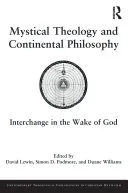
David Lewin, Simon D. Podmore, and Duane Williams’s "Mystical Theology and Continental Philosophy" tackles a formidable intellectual challenge: bridging the chasm between rigorous academic philosophy and the often ineffable terrain of mystical experience. The collection succeeds admirably in showcasing how contemporary continental thought, from phenomenology to post-structuralism, offers potent tools for analyzing theological concepts and mystical states. A particular strength lies in its exploration of apophatic traditions through a phenomenological lens, as seen in discussions of negative theology’s resonance with descriptions of the ineffable. However, the book’s dense academic prose, while precise, may prove inaccessible to those without a solid background in both fields. The section dissecting the philosophy of Jean-Luc Marion's encounter with theological concepts is especially illuminating, though it demands close attention. Ultimately, this is an essential, albeit demanding, resource for scholars seeking to understand the sophisticated dialogues occurring at the nexus of these disciplines.
📝 Description
77
Published in 2017, this collection examines the convergence of mystical theology and continental philosophy.
This book investigates the connections between mystical theology and continental philosophy, two fields often considered separate. It questions the extent to which these distinct intellectual traditions engage with similar phenomena and communicate with each other. The collection features original research by international scholars, mapping the development of this academic and spiritual dialogue. Its goal is to clarify the nature of their interaction and pinpoint shared areas of investigation.
It is intended for academics, theologians, philosophers, and serious students of mysticism. Readers should have a basic knowledge of continental philosophy, such as phenomenology, existentialism, and post-structuralism, as well as theological or mystical traditions. The work is for those interested in a rigorous academic examination of how abstract philosophical ideas can inform, or be informed by, mystical experience.
The book emerged during a time of renewed interest in the intersection of philosophy and religion, especially within continental thought. Scholars were increasingly looking at classical philosophical texts through the lens of mystical traditions, and vice versa, exploring philosophical implications in mystical texts. This work reflects the intellectual climate shaped by thinkers like Jean-Luc Marion and Michel de Certeau, whose discussions on subjectivity, experience, and the divine were influential.
The book emerges from a scholarly context where traditional divides between philosophical inquiry and mystical practice are being re-evaluated. It connects with a long-standing esoteric interest in the limits of rational discourse when encountering transcendent realities. By applying methods from continental philosophy, such as phenomenology and hermeneutics, to mystical texts and concepts like apophatic theology, the work seeks to articulate experiences that often lie beyond conventional language. This aligns with esoteric traditions that explore direct knowledge of the divine through practices that transcend ordinary understanding.
💡 Why Read This Book?
• Gain a sophisticated understanding of how continental philosophy, particularly phenomenology and post-structuralism, provides new interpretive frameworks for theological concepts, as explored in the context of the 2017 publication. • Uncover the intricate relationship between apophatic theology and philosophical descriptions of ineffable experience, a core theme examined through scholarly essays. • Appreciate the intellectual lineage connecting contemporary studies of mysticism to figures like Jean-Luc Marion, whose work is discussed in relation to divine alterity.
⭐ Reader Reviews
Honest opinions from readers who have explored this book.
❓ Frequently Asked Questions
What is the primary focus of "Mystical Theology and Continental Philosophy"?
The book investigates the intellectual and devotional intersections between mystical theology and continental philosophy, exploring the extent to which these disciplines engage with and speak about the same phenomena.
Who are the key figures associated with this academic conversation?
The collection draws on contributions from leading and emerging international scholars, engaging with thinkers whose work spans both mystical traditions and continental philosophical movements originating in the 20th century.
When was "Mystical Theology and Continental Philosophy" first published?
The work was first published on May 18, 2017, reflecting a growing academic interest in interdisciplinary studies of philosophy and theology.
What is meant by 'apophatic theology' in the context of this book?
Apophatic theology, as discussed in the book, refers to the negative theological approach emphasizing what God is not, analyzed through the lens of continental philosophy's exploration of ineffability and the limits of language.
Does the book offer practical applications of these philosophical concepts?
While primarily an academic exploration, the book's analysis of mystical experience through philosophical frameworks can inform devotional practices and theological understanding for advanced students and practitioners.
What kind of reader would benefit most from this collection?
Advanced students, academics, and scholars in philosophy, theology, religious studies, and mysticism, particularly those interested in contemporary continental philosophy's engagement with spiritual traditions.
🔮 Key Themes & Symbolism
Phenomenology of the Ineffable
This theme explores how phenomenological methods, central to continental philosophy, can articulate the qualitative experience of mystical states. The work examines how philosophers grapple with describing phenomena that transcend ordinary language and conceptualization, aligning with the apophatic traditions in theology that emphasize God's otherness and unknowability. By applying frameworks developed by thinkers like Husserl or Heidegger, scholars in the collection analyze mystical accounts not merely as subjective experiences but as structured encounters with reality that philosophical inquiry can illuminate.
Hermeneutics and Sacred Texts
The collection looks at the application of continental hermeneutical theories to the interpretation of mystical and theological texts. It considers how philosophical approaches to understanding meaning, context, and authorial intent can unlock new layers of significance in scriptures and mystical writings. This involves examining how concepts from figures such as Gadamer or Ricoeur might inform a deeper, more critical engagement with traditions that have historically relied on established interpretive methods, potentially revealing connections between ancient wisdom and modern philosophical discourse.
Divine Alterity and Otherness
A significant thread is the exploration of divine alterity through the lens of continental philosophy's focus on 'the Other.' This theme investigates how philosophical concepts of radical difference and the irreducible subjectivity of the 'other' can inform theological understandings of God's absolute transcendence. The book probes how this philosophical perspective challenges anthropocentric views of the divine and encourages a more profound apprehension of God's unique being, distinct from all created reality.
💬 Memorable Quotes
Direct passages from the work, attributed to the author.
“The extent to which mystical theology and continental philosophy are truly conversing.”
— This phrasing highlights the core critical question of the book: are these two domains merely existing in proximity, or are they engaged in a genuine dialogue that yields mutual understanding and transformation?
“Original contributions by leading and emerging international scholars.”
— This points to the book's scholarly nature, emphasizing its role as a platform for current research and diverse academic perspectives on the subject matter.
“The interface between mystical theology and continental philosophy.”
— This phrase denotes the specific area of focus – the point of contact and potential interaction between two distinct, yet related, fields of inquiry.
“Delineating emerging debates in this growing and dynamic field of research.”
— This indicates that the book is not just presenting established ideas but is actively mapping out the cutting edge of scholarly discussion and identifying areas of active contention and development.
“Spanning mystical and philosophical traditions.”
— This signifies the broad scope of the work, suggesting it encompasses a wide range of mystical experiences and theological viewpoints alongside various schools of continental philosophy.
🌙 Esoteric Significance
Tradition
This work engages with the Western Esoteric Tradition, specifically its theological and philosophical dimensions, by bridging contemplative mysticism with contemporary continental philosophy. It departs from purely devotional or dogmatic interpretations of mystical theology by subjecting them to rigorous philosophical analysis, akin to how Hermetic or Neoplatonic ideas have been historically reinterpreted through evolving philosophical paradigms.
Symbolism
The book implicitly engages with symbols of transcendence and immanence. The concept of **apophatic theology** itself acts as a symbolic representation of the ineffable divine, signifying the limits of human comprehension. The **hermeneutics of mysticism** can be seen as a symbolic act of unlocking hidden meanings within sacred texts, mirroring alchemical processes of transformation and revelation.
Modern Relevance
Contemporary scholars and practitioners interested in the philosophical roots of consciousness studies, phenomenology of religion, and post-metaphysical theology find valuable frameworks here. Thinkers exploring radical immanence, non-dual philosophies, and the critique of traditional ontology are drawing on similar interdisciplinary approaches.
👥 Who Should Read This Book
• Advanced philosophy and theology students: Gain critical tools to analyze mystical texts and theological concepts using contemporary continental philosophical frameworks. • Scholars of comparative religion: Understand how diverse mystical traditions can be illuminated through the specific interpretive lenses of phenomenology and post-structuralism. • Independent researchers of esoteric thought: Deepen their understanding of the philosophical underpinnings of mystical experiences and their articulation in modern scholarship.
📜 Historical Context
Published in 2017, "Mystical Theology and Continental Philosophy" arrived during a resurgence of interest in the philosophical underpinnings of religious experience, particularly within academic circles influenced by post-war European thought. The intellectual climate was shaped by thinkers like Jean-Luc Marion, whose work explored the phenomenology of religious experience and divine givenness, and by scholars revisiting the legacy of figures such as Simone Weil. This collection sought to formalize and expand upon the nascent dialogues between theologians engaging with phenomenology, existentialism, and post-structuralism, and philosophers exploring the limits of reason and the nature of subjectivity in relation to the sacred. It addressed a field where established theological discourse was increasingly being challenged and enriched by continental philosophy’s critical methodologies, offering a counterpoint to more traditional analytic approaches to philosophy of religion.
📔 Journal Prompts
The interface between mystical theology and continental philosophy: how do these domains converse?
Apophatic theology's description of the ineffable: how does this align with phenomenological accounts?
The concept of divine alterity: how does continental philosophy's 'otherness' illuminate God's transcendence?
Applying hermeneutics to mystical texts: what new meanings emerge?
The growing field of research at this intersection: what are its future trajectories?
🗂️ Glossary
Continental Philosophy
A broad category of philosophical traditions originating in mainland Europe in the 19th and 20th centuries, encompassing movements like phenomenology, existentialism, hermeneutics, and post-structuralism.
Mystical Theology
The branch of theology concerned with the direct, intuitive knowledge of God or the divine, often involving subjective experience and contemplation rather than solely rational inquiry.
Apophatic Theology
A theological approach that describes God by negation, emphasizing what God is not, due to the belief that God's nature is beyond human comprehension and language.
Phenomenology
A philosophical method that focuses on the structures of consciousness as experienced from the first-person point of view, aiming to describe phenomena without presupposing metaphysical theories.
Hermeneutics
The theory and methodology of interpretation, especially the interpretation of biblical texts, wisdom literature, and philosophical texts.
Divine Alterity
The concept of God's radical otherness or distinctness from creation, often explored in theological and philosophical discourse regarding God's absolute transcendence.
Post-structuralism
A philosophical and critical movement that emerged in the mid-20th century, questioning the stable, universal structures assumed by structuralism and focusing on language, power, and discourse.