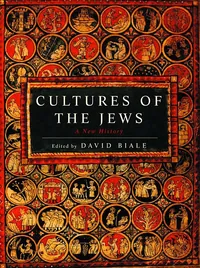
Cabala e contra-história

 73
73

Cabala e contra-história
David Biale’s *Cabala e contra-história* offers a rigorous deconstruction of how Kabbalah has been understood and misrepresented outside its original Jewish context. Rather than presenting Kabbalistic doctrine, Biale meticulously dissects the intellectual history of its reception, particularly from the Renaissance onwards. His strength lies in exposing the often-anachronistic lenses through which Kabbalistic ideas were viewed by Christian Kabbalists and later occultists. A particularly illuminating section details how figures like Pico della Mirandola selectively engaged with Kabbalistic texts to support their own theological agendas, demonstrating a significant departure from the source material.
However, the book’s dense academic prose may prove a barrier for readers not already steeped in the historiography of esotericism. While its scholarly rigor is commendable, it sometimes sacrifices accessibility. The work’s focus remains squarely on the interpretive history, meaning those seeking an introduction to Kabbalistic practice or core theological concepts will need to look elsewhere. Biale’s dissection of Christian Kabbalah, however, is invaluable for understanding the transmission of esoteric ideas. Ultimately, *Cabala e contra-história* is an essential, if demanding, study for anyone serious about the scholarly study of Western esotericism and the complex afterlife of Jewish mystical thought.
📝 Description
73
David Biale's 2004 book examines how Kabbalah has been interpreted in the West.
Cabala e contra-história, published in 2004, critically analyzes the historical reception of Kabbalistic thought, especially within Western esoteric traditions. Biale does not present a primer on Kabbalah itself. Instead, he scrutinizes how its concepts and texts were adopted, misunderstood, and reshaped over centuries.
The work traces the evolution of these interpretations. It highlights changes in understanding and the often peculiar ways Kabbalah was incorporated into various mystical and philosophical systems. Biale seeks to separate the historical development of Kabbalistic ideas from the layers of commentary and reinterpretation that have accumulated over time. This approach offers a scholarly perspective on the transmission and transformation of these ideas.
This book engages with the history of Kabbalah's presence in Western thought, a tradition often detached from its original Jewish context. Biale's work situates itself within the broader study of esotericism, examining how elements of Jewish mysticism were absorbed and altered by various philosophical and spiritual movements. It addresses the transformations Kabbalah underwent as it moved through different cultural and intellectual milieus, becoming a subject of curiosity and adaptation for non-Jewish thinkers.
💡 Why Read This Book?
• You will learn how figures like Pico della Mirandola engaged with Kabbalistic texts during the Renaissance, gaining insight into the historical process of cross-cultural mystical borrowing. • You will understand the concept of "contra-history" as applied to esoteric traditions, recognizing how interpretations can create alternative narratives distinct from original contexts. • You will appreciate the scholarly distinction between historical Kabbalah within Judaism and its subsequent adaptation into Western occultism, a crucial clarification for students of esoteric history.
⭐ Reader Reviews
Honest opinions from readers who have explored this book.
❓ Frequently Asked Questions
What is the primary focus of David Biale's *Cabala e contra-história*?
The book primarily examines the historical reception and interpretation of Kabbalistic thought, particularly how its concepts were adapted and sometimes misunderstood within Western esoteric traditions since the Renaissance.
Does this book explain how to practice Kabbalah?
No, *Cabala e contra-história* is not a practical guide to Kabbalistic practices. It focuses on the historical and intellectual analysis of Kabbalah's influence and reinterpretation by others.
Who are some key historical figures discussed in relation to Kabbalah's reception?
The book often discusses figures like Pico della Mirandola and engages with the work of prominent scholars of Kabbalah such as Gershom Scholem.
What is the significance of the 'contra-history' concept in the book?
The 'contra-history' refers to how certain interpretations of Kabbalah created alternative narratives and understandings that diverged significantly from its original Jewish context and development.
Is this book suitable for beginners interested in Kabbalah?
It is best suited for readers with some prior knowledge of Kabbalah and an academic interest in religious studies or Western esotericism, rather than complete beginners.
When was *Cabala e contra-história* first published?
The work was first published in 2004.
🔮 Key Themes & Symbolism
The History of Kabbalistic Interpretation
This theme centers on how Kabbalistic texts and ideas, originating within Jewish mysticism, were encountered and transformed by non-Jewish thinkers from the Renaissance onward. It highlights the selective appropriation and recontextualization of concepts, often to fit pre-existing Christian theological frameworks. The work scrutinizes the hermeneutical methods employed, revealing how interpretations could diverge radically from the source material, creating what Biale terms a 'contra-history' of Kabbalah's perceived lineage and meaning.
Christian Kabbalah and Syncretism
A significant focus is placed on the phenomenon of Christian Kabbalah, particularly during the 15th and 16th centuries. This section details how Renaissance humanists, notably figures like Pico della Mirandola, integrated Kabbalistic concepts into their Neoplatonic and Christian philosophies. Biale analyzes the motivations behind this syncretism, exploring how Kabbalah was perceived as a potential bridge to divine knowledge or a means to confirm Christian doctrines, often resulting in interpretations far removed from their original Jewish context.
Reception and Misappropriation
This theme addresses the broader patterns of how esoteric traditions, once secularized or popularized, are often subject to significant alteration and simplification. Biale examines how Kabbalah, stripped of its specific Jewish theological underpinnings, became a component in various Western occult systems. The work implicitly critiques the tendency to romanticize or exoticize mystical traditions, emphasizing the importance of historical accuracy and contextual understanding over speculative or popular interpretations.
Academic Historiography of Esotericism
The book engages with the academic study of esotericism itself, building upon and sometimes challenging the foundational work of scholars like Gershom Scholem. Biale’s approach exemplifies critical historical methodology applied to esoteric subjects, prioritizing textual analysis and historical context. It underscores the ongoing scholarly dialogue regarding the origins, transmission, and evolution of mystical traditions and their place within intellectual history.
💬 Memorable Quotes
Direct passages from the work, attributed to the author.
“Kabbalah was discovered by Christian scholars and became a subject of fascination.”
— This highlights the central moment when Kabbalistic texts moved beyond their immediate Jewish circles, entering the intellectual sphere of Renaissance Europe and sparking new lines of inquiry.
“Interpretations often served to legitimize existing theological systems.”
— This points to the tendency of later adopters to reshape Kabbalistic ideas to align with or reinforce their own established beliefs, rather than engaging with them on their own terms.
“The concept of a contra-history suggests a narrative diverging from established origins.”
— This refers to how certain interpretations construct alternative genealogies or meanings for Kabbalah, creating a parallel history separate from its actual development within Jewish tradition.
“Renaissance thinkers sought esoteric knowledge through various traditions.”
— This emphasizes the intellectual climate of the Renaissance, where scholars actively explored diverse mystical and philosophical systems, including Kabbalah, in their quest for deeper understanding.
“Gershom Scholem's work provided a foundational framework for Kabbalistic studies.”
— This acknowledges the significant impact of Scholem's scholarship in shaping the academic field of Kabbalah research, a context Biale's own work navigates.
🌙 Esoteric Significance
Tradition
The work primarily engages with the historical trajectory of Kabbalah, tracing its path from medieval Jewish mysticism into the broader currents of Western esotericism, particularly Christian Kabbalah and later occultism. It positions itself as a critical historical analysis rather than a direct contribution to any esoteric lineage. Biale's approach is scholarly, dissecting how Kabbalistic concepts were adopted and adapted, often departing significantly from their original theological and philosophical context within Judaism.
Symbolism
While not focused on practical symbolism, the book implicitly discusses the symbolic weight attributed to Kabbalistic concepts by later interpreters. For instance, the Sephirot, the ten divine emanations in Kabbalah, were often reinterpreted by Christian Kabbalists to align with Christian theological doctrines, such as the Trinity. The Hebrew alphabet, central to Kabbalistic exegesis, was also seen as a repository of divine secrets, subject to allegorical and mystical readings by non-Jewish scholars seeking universal wisdom.
Modern Relevance
Contemporary scholars of Western esotericism continue to draw upon Biale's meticulous historical research to understand the complex lineage of mystical thought. His work provides essential context for contemporary practitioners or students of Kabbalah who encounter its popularization in New Age or occult circles, offering a critical lens to distinguish historical development from later syncretic adaptations. Thinkers exploring the history of ideas and the cross-cultural transmission of religious concepts find his analytical framework invaluable.
👥 Who Should Read This Book
• Scholars of religious studies and intellectual history seeking to understand the reception of Jewish mysticism in the West. • Students of Western esotericism who need a critical, historically grounded perspective on Kabbalah's influence beyond its Jewish origins. • Advanced readers interested in the Renaissance period and the ways different philosophical and religious traditions were synthesized.
📜 Historical Context
Published in 2004, David Biale's *Cabala e contra-história* emerged within a vibrant academic landscape focused on Western esotericism, building upon the groundbreaking work of scholars like Gershom Scholem, who had extensively researched Kabbalah's historical development within Judaism. Biale’s study specifically targets the Renaissance period and its subsequent influence, engaging with the phenomenon of Christian Kabbalah. This era saw figures such as Giovanni Pico della Mirandola (c. 1492) actively incorporating Kabbalistic texts into Neoplatonic and Christian frameworks, often through Latin translations and interpretations that significantly altered the original meanings. Biale's work implicitly critiques earlier, more romanticized views of Kabbalah's transmission, offering a rigorous historical analysis that contrasts with purely speculative occult interpretations prevalent in later centuries. The reception of Kabbalah by Christian scholars is a key point of engagement, highlighting how these appropriations formed a 'contra-history' distinct from the tradition's internal development.
📔 Journal Prompts
The concept of 'contra-history' in relation to Kabbalah's reception.
Pico della Mirandola's engagement with Kabbalistic texts.
How Christian Kabbalists reinterpreted specific Kabbalistic concepts.
The historical shift of Kabbalah from Jewish circles to Western esoteric thought.
Analyzing the motivations behind the syncretism of Kabbalah with other traditions.
🗂️ Glossary
Kabbalah
A system of Jewish mysticism that explores the nature of God and the creation of the universe, often through esoteric interpretations of biblical texts and symbolic language.
Christian Kabbalah
A form of Kabbalah developed by Christian scholars from the 15th century onwards, which sought to integrate Kabbalistic concepts into Christian theology and philosophy.
Renaissance
A period in European history, roughly from the 14th to the 17th century, marked by a revival of classical art, literature, and learning, and a flourishing of intellectual and artistic activity.
Gershom Scholem
A highly influential scholar of Jewish mysticism, whose extensive research in the 20th century laid much of the groundwork for modern academic study of Kabbalah.
Neoplatonism
A philosophical system originating in late antiquity, based on the teachings of Plato, which emphasizes the transcendent nature of the divine and the emanation of reality from a supreme being.
Hermeneutics
The theory and methodology of interpretation, especially the interpretation of biblical texts, wisdom literature, and philosophical texts.
Syncretism
The amalgamation or attempted amalgamation of different religions, cultures, or schools of thought.
🔮 Readers Also Liked
Browse all →







More by David Biale
All books →




More Free Mysticism & Contemplation Books
View all →