The Magus, Book 2
 77
77

The Magus, Book 2

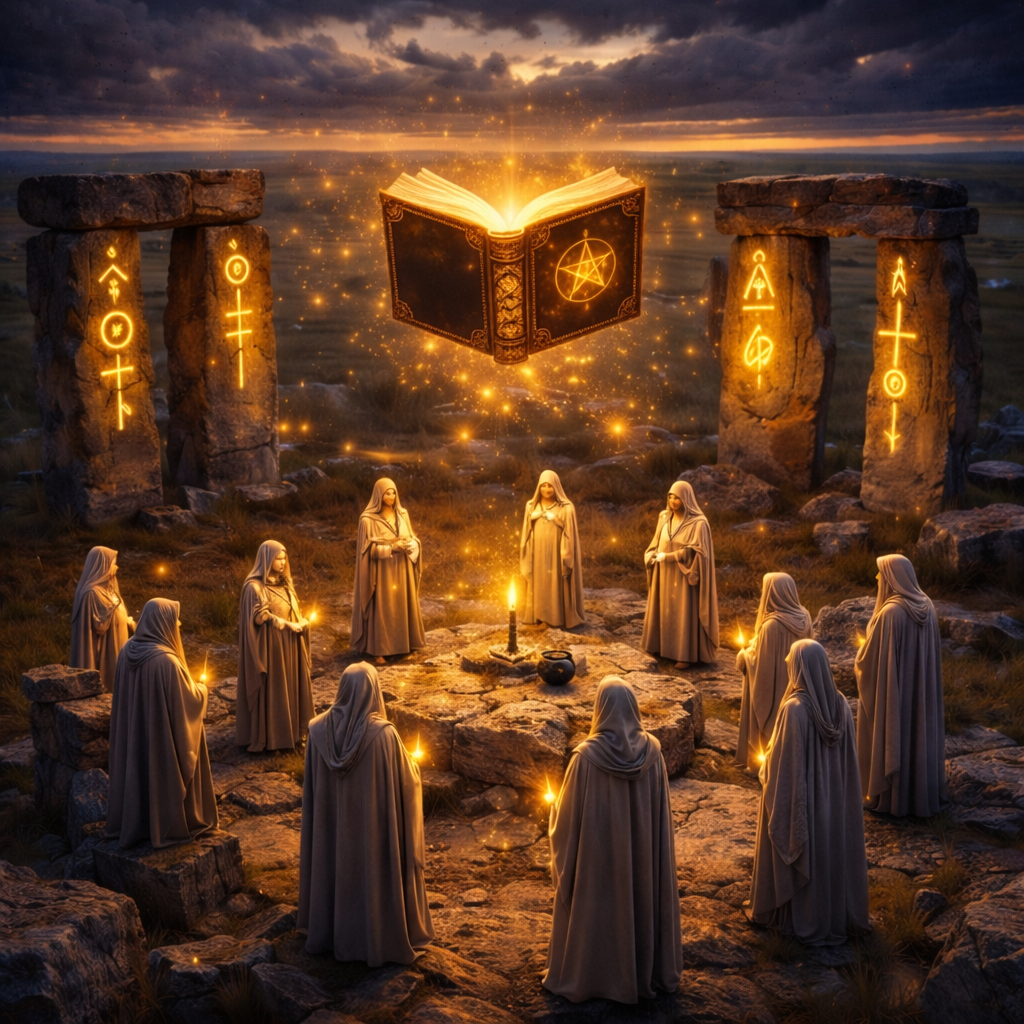

Ophelia Vance (Mystical Literature Reviewer) — Francis Barrett's 'The Magus, Book 2' stands as a cornerstone of practical occult literature, a testament to the enduring power of ceremonial magic. Building upon its predecessor, this volume focuses on the intricate mechanics of Cabalistic arts and magnetism, offering unparalleled instruction on talismans, spirit evocation, and sacred seals. Barrett's exhaustive, handbook-like approach demystifies complex rituals, making them accessible to the dedicated student. It is a formidable resource for anyone serious about understanding and practicing the higher arts, providing a direct link to the magical traditions of the past. This is not a book for the casual reader, but for the committed alchemist and ceremonial magician seeking to deepen their craft.
📝 Description
77
Delve into the arcane depths of ceremonial magic with Francis Barrett's 'The Magus, Book 2.' Published in 1801, this seminal work transcends mere natural philosophy, plunging into the sophisticated realms of magnetism and Cabalistic ritual. Barrett, a master compiler of esoteric knowledge, meticulously details the construction and operation of potent talismans, the intricate hierarchies of spirits, and the precise incantations required for profound conjurations and invocations. This volume acts as a practical handbook, a direct conduit to ancient practices, guiding the earnest student through the labyrinthine pathways of spiritual interaction. It gathers fragmented lore into a coherent, albeit challenging, system, designed for those who seek not just to understand the occult, but to actively engage with its hidden forces. The atmosphere is one of profound reverence, a whispered invitation to unlock celestial secrets and master the subtle energies that govern the cosmos. For the dedicated practitioner and the insatiable seeker of forbidden knowledge, 'The Magus, Book 2' offers a rare glimpse into the heart of Western esotericism.
✍️ Author
Francis Barret
List of English writers lists writers in English, born or raised in England (or who lived in England for a lengthy period), who already have Wikipedia pages. References for the information here appear on the linked Wikipedia pages.
💡 Why Read This Book?
For seekers of profound occult knowledge and dedicated practitioners of ceremonial magic, 'The Magus, Book 2' offers a rare, comprehensive guide. It provides practical instructions for talismans, spirit conjurations, and Cabalistic operations, bridging historical practices with actionable techniques. Scholars will find it an invaluable primary source for understanding 19th-century magical thought.
⭐ Reader Reviews
Honest opinions from readers who have explored this book.
❓ Frequently Asked Questions
What is the primary focus of 'The Magus, Book 2'?
This volume primarily focuses on the technical arts of magnetism and Cabalistic (ceremonial) magic, detailing talismans, spirit hierarchies, conjurations, and seals.
Who was Francis Barrett?
Francis Barrett was an English occultist and author, best known for his influential works on magic and the occult, aiming to compile and disseminate hidden knowledge.
Is this book suitable for beginners?
While comprehensive, the book's technical nature and reliance on prior esoteric understanding make it more suitable for intermediate to advanced practitioners or serious scholars of the occult.
What kind of spirits are discussed in the book?
The book discusses various names and hierarchies of spirits, often drawing from angelic and elemental traditions, intended for invocation and conjuration within ceremonial frameworks.
What is the historical significance of 'The Magus, Book 2'?
It represents a significant attempt in the early 19th century to systematize and present practical ceremonial magic, influencing subsequent generations of occultists and magicians.
🔮 Key Themes & Symbolism
The Art of Talismanic Magic
This volume meticulously explores the creation and potent application of talismans, imbuing inanimate objects with celestial energies for specific magical purposes. It details the precise correspondences, materials, and ritualistic operations required to craft these powerful tools, emphasizing the deep connection between earthly forms and cosmic influences. Barrett guides the reader in understanding how to harness planetary forces and angelic powers through these inscribed symbols, offering a practical pathway to manifest desired outcomes and invoke protective or beneficial energies.
Cabalistic Hierarchies and Spirit Evocation
Central to 'The Magus, Book 2' is the systematic exploration of spirit hierarchies and the intricate art of their evocation. Barrett presents a detailed taxonomy of ethereal beings, often drawing from Kabbalistic and angelic traditions, outlining their names, attributes, and spheres of influence. The book provides explicit instructions for conjurations and invocations, enabling the practitioner to establish contact with these entities. This section underscores the belief in a structured spiritual universe and the possibility of direct communication and interaction with its inhabitants.
The Principles of Magnetism in Esotericism
Francis Barrett delves into the concept of magnetism, not merely as a physical force, but as a fundamental esoteric principle connecting all things. This volume examines how this invisible force can be understood and manipulated for magical ends, often intertwined with the vital energies of the practitioner and the environment. It explores its role in talismans, spiritual attraction, and the broader energetic currents that underpin reality. Understanding magnetism becomes key to unlocking the more subtle and potent forms of ceremonial practice presented herein.
💬 Memorable Quotes
“The knowledge of the Magus is the key to the universe.”
— This quote encapsulates the profound belief in the power and scope of magical knowledge, suggesting it unlocks not just secrets, but the very fabric of existence and its underlying principles.
“Seek and ye shall find, knock and it shall be opened unto you.”
— A timeless admonition for persistent inquiry and dedication in the pursuit of hidden truths, emphasizing that earnest effort in spiritual or magical seeking will yield its own rewards.
“The power of the seal is in the intention.”
— This highlights the critical role of the practitioner's mental focus and will in activating magical tools like seals. The symbol alone is inert without the directed energy and purpose of the operator.
“Spirits are but the messengers of the divine.”
— This perspective frames spiritual entities not as independent powers, but as intermediaries or agents of a higher cosmic order, emphasizing their role in the grander divine plan.
“True magic is an art of correspondences.”
— This emphasizes the foundational principle of sympathetic magic, where understanding and manipulating the relationships and connections between different elements of the cosmos is essential for effective magical practice.
🌙 Esoteric Significance
Tradition
This work is deeply rooted in the Western Esoteric Tradition, specifically drawing from Kabbalistic magic, ceremonial invocation, and the principles of talismanic art prevalent in Renaissance and post-Renaissance magical philosophy. It represents a synthesis of earlier grimoire traditions with a more systematized, albeit still arcane, approach to interacting with spiritual forces and understanding cosmic order.
Symbolism
The book is replete with symbolic systems, including the use of divine names, angelic sigils, planetary correspondences, and geometric figures. These symbols are not merely decorative but are understood as conduits of power and keys to unlocking specific spiritual or material effects. The construction of talismans, the arrangement of ritual spaces, and the very language of conjuration are all imbued with symbolic meaning, reflecting a belief in the interconnectedness of the macrocosm and microcosm.
Modern Relevance
Despite its historical origins, 'The Magus, Book 2' continues to resonate with modern practitioners of ceremonial magic, occult scholars, and those interested in the history of Western esotericism. Its detailed instructions and theoretical underpinnings offer a valuable resource for understanding the foundations of magical practice, providing insights into ritual construction, spiritual psychology, and the enduring human quest to connect with the divine and unseen realms.
👥 Who Should Read This Book
This volume is primarily intended for serious practitioners of ceremonial magic and advanced students of the occult who possess a foundational understanding of esoteric principles. Scholars researching the history of Western esotericism and occultism will find it an invaluable primary source. While beginners may find it challenging, those with a deep and persistent curiosity about historical magical systems and a willingness to engage with complex texts might also find value in its comprehensive approach.
📜 Historical Context
Published in 1801, Francis Barrett's 'The Magus, Book 2' emerged during a period of renewed interest in esotericism and the occult, often termed the 'occult revival' of the late 18th and early 19th centuries. This era saw a fascination with ancient wisdom traditions, Freemasonry, Rosicrucianism, and Kabbalah, often fueled by Enlightenment rationalism's perceived limitations. Barrett's work, building on earlier grimoires and magical texts, aimed to provide a more systematic and accessible compendium of these practices. It served as a crucial bridge, gathering fragmented lore and presenting it in a 'handbook' format for a burgeoning community of individuals eager to explore ceremonial magic, spiritualism, and the hidden arts, thus influencing the trajectory of Western occultism.
📔 Journal Prompts
Reflect on the concept of 'correspondences' as presented in the book. How might these apply to your own life or current endeavors?
Consider the ethics of spirit evocation. What personal guidelines would you establish before attempting such practices?
Analyze the structure of a talisman described in the book. What is its symbolic purpose, and how does it relate to the desired outcome?
Barrett emphasizes intention. How can you cultivate stronger intention in your daily life, beyond magical practice?
How does the idea of 'magnetism' in an esoteric sense differ from the scientific understanding, and what are the implications of this difference?
🗂️ Glossary
Cabalistic Magic
A form of magic derived from Kabbalah, utilizing Hebrew letters, divine names, and mystical interpretations of scripture to achieve spiritual or material effects.
Talismans
Objects inscribed with symbols or sigils, believed to possess inherent magical power derived from celestial influences or divine names, used for protection, attraction, or other specific purposes.
Conjuration
A formal and often elaborate ritualistic process aimed at invoking or commanding spiritual entities, typically involving specific incantations, prayers, and symbolic actions.
Invocations
A solemn appeal to a higher power or spiritual entity for assistance, inspiration, or guidance, often involving prayer and recitation of divine names.
Sigils
Magical symbols or signs, often derived from letters or geometric patterns, believed to represent and channel specific energies or entities.