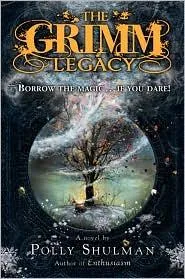
The Grimm Legacy (The Grimm Legacy #1)
 73
73

The Grimm Legacy (The Grimm Legacy #1)
Shulman's "The Grimm Legacy" initially presents as a straightforward fantasy but quickly reveals its more complex, esoteric ambitions. The premise—that the Grimm family are hereditary guardians of magical lore—is compelling. The author skillfully grounds the fantastical elements in a plausible modern setting, making the intrusion of ancient magic feel earned. A notable strength is the intricate world-building, which hints at a vast, unseen history influencing contemporary events. However, the pacing occasionally falters in the middle section as exposition on arcane family history and cryptic clues takes precedence over narrative momentum. The description of the clandestine meeting at the Walpurgis Night celebration in 1782, for instance, is vivid but slows the plot. Ultimately, "The Grimm Legacy" offers a sophisticated, lore-rich reimagining of fairy tales for a discerning audience.
📝 Description
73
Polly Shulman's 2010 novel, The Grimm Legacy, reimagines fairy tales through occult lore.
The Grimm Legacy, published in 2010, follows the descendants of the Brothers Grimm as they discover the magic woven into the very folklore they once collected. This first book in a series presents a modern mystery, drawing heavily on deep historical roots in folklore and secret societies. The narrative centers on characters caught between the world of stories and a hidden reality where these tales hold genuine power. Shulman integrates specific occult traditions and a direct connection to the original collectors, setting it apart from earlier fairy tale retellings.
The novel examines inherited legacies, not only of blood but of knowledge and the duties that accompany it. It suggests that foundational myths, such as those gathered by the Brothers Grimm, retain a potent symbolic energy that shapes the present day. The story also touches on the role of secret societies as keepers of esoteric knowledge, a concept often seen in occult literature.
Emerging in the early 21st century, a period marked by renewed literary interest in deconstructing fairy tales and exploring magical realism, The Grimm Legacy builds on traditions like Angela Carter's. Shulman's work distinguishes itself by weaving in specific historical occult practices and a direct lineage to the Brothers Grimm themselves. This approach grounds the supernatural elements in a tangible, albeit hidden, history, positioning the novel within a lineage of occult fiction that treats folklore not as mere story but as a source of active, symbolic power.
💡 Why Read This Book?
• Gain insight into the esoteric underpinnings of fairy tales, understanding how concepts like the 'Grimm Legacy' itself represent a coded transmission of occult knowledge across generations. • Explore the symbolic significance of ancestral ties to folklore, learning how Shulman connects the historical figures of the Brothers Grimm to a lineage of magical custodianship. • Experience a narrative that intertwines modern mystery with historical secret societies, specifically referencing clandestine gatherings like the Walpurgis Night of 1782, offering a unique blend of intrigue and arcane history.
⭐ Reader Reviews
Honest opinions from readers who have explored this book.
❓ Frequently Asked Questions
What is the central premise of The Grimm Legacy?
The book posits that the descendants of the Brothers Grimm are hereditary keepers of magical lore and secret histories, drawn from the very fairy tales their ancestors collected.
What is the significance of the Brothers Grimm in the book?
They are portrayed not just as folklorists but as active participants in, and preservers of, esoteric traditions, with their descendants inheriting this clandestine role.
Does the book explain specific occult practices?
While the book references esoteric concepts and historical occult events, its primary focus is on the narrative integration of these elements rather than detailed instruction.
What kind of atmosphere does The Grimm Legacy create?
It cultivates an atmosphere of mystery and hidden history, blending the familiar world of fairy tales with the intrigue of secret societies and ancient magic.
Is The Grimm Legacy a standalone novel?
No, it is the first book in 'The Grimm Legacy' series, suggesting further exploration of its characters and lore in subsequent volumes.
When was The Grimm Legacy first published?
The book was first published in 2010 by Polly Shulman.
🔮 Key Themes & Symbolism
Inherited Magical Lineages
The narrative hinges on the idea that certain families carry not just bloodlines but profound esoteric knowledge. The descendants of the Brothers Grimm are depicted as inheritors of a secret legacy tied to the very folklore they helped codify. This theme explores how ancestral roles and responsibilities can manifest in contemporary times, influencing characters' destinies and their engagement with hidden magical currents. The book suggests that the power of stories is not merely narrative but a form of transmitted energy or knowledge.
Folklore as Esoteric Code
Shulman's work presents fairy tales not as simple children's stories but as encoded reservoirs of ancient wisdom, magical practices, and societal secrets. The familiar characters and plots are re-examined for their deeper, often darker, symbolic meanings. This theme posits that the Brothers Grimm, through their collection, may have inadvertently or intentionally preserved elements of occult traditions, making the tales themselves a cryptic map to hidden truths accessible to those with the right knowledge.
Secret Societies and Knowledge Custodians
The book explores the concept of clandestine organizations that safeguard esoteric knowledge across centuries. The Grimm family's legacy is intertwined with such a society, suggesting a hidden history where powerful secrets are passed down through select groups. This exploration touches upon themes of guardianship, the control of information, and the potential dangers or responsibilities that come with possessing forbidden lore, echoing historical accounts of secret orders.
The Symbology of the Familiar
A central tenet is the reinterpretation of common fairy tale motifs and characters through an occult lens. Elements like enchanted forests, magical objects, or archetypal figures are imbued with deeper symbolic meaning relevant to esoteric philosophies. The novel invites readers to look beyond the surface narrative and perceive the underlying archetypal patterns and magical resonances that connect these tales to broader mystical traditions, revealing layers of meaning often overlooked.
💬 Memorable Quotes
Direct passages from the work, attributed to the author.
“The stories we tell ourselves are the roots of the world we live in.”
— This concept suggests that narratives and myths are not merely fictional accounts but foundational elements that shape reality, implying a potent, almost magical, influence of storytelling on existence.
“Some legacies are written in ink, others in blood, and still others in spells.”
— This highlights the multi-faceted nature of inheritance, distinguishing between conventional lineage, ancestral duties, and the transmission of arcane knowledge or magical abilities.
“The oldest libraries hold more than just books; they hold elements of power.”
— This interpretation points to the idea that historical repositories of knowledge, particularly those dealing with occult or forgotten lore, possess an active, residual energy or influence.
“To understand the present, one must first decipher the past's hidden script.”
— This emphasizes the importance of historical research and the uncovering of concealed truths or secret histories as crucial for comprehending current events and circumstances.
“Fairy tales are the forgotten language of the soul's deepest desires and fears.”
— This perspective frames folklore as a symbolic communication system that expresses fundamental human psychological states and spiritual yearnings, often in allegorical form.
🌙 Esoteric Significance
Tradition
The work draws heavily from Western Esotericism, particularly Hermeticism and Kabbalistic interpretations of symbolism, while also engaging with folkloric traditions often seen as containing pre-Christian or Gnostic echoes. It fits within the modern esoteric trend of reinterpreting ancient myths and texts for contemporary spiritual understanding, positioning fairy tales as a form of folk magic or coded spiritual teaching rather than mere stories.
Symbolism
Key symbols include the 'Grimm Legacy' itself, representing an inherited esoteric lineage and responsibility. The enchanted forest motif functions as a liminal space between the mundane and the magical, a common symbol in occult lore for the unconscious or the field of spiritual initiation. The recurring presence of hidden texts or family grimoires symbolizes the preservation and transmission of secret knowledge across generations.
Modern Relevance
Contemporary practitioners of modern paganism, witchcraft, and comparative mythology often engage with fairy tales as sources of archetypal wisdom and magical inspiration. "The Grimm Legacy" speaks to these modern interpretations by validating folklore as a potent, living source of esoteric understanding, influencing current explorations into the psychological and spiritual dimensions of traditional narratives.
👥 Who Should Read This Book
• Readers interested in the occult history of folklore, seeking to understand how fairy tales might conceal deeper esoteric meanings and historical secret traditions. • Fans of modern fantasy novels that blend mystery, magic, and historical intrigue, particularly those intrigued by secret societies and inherited legacies. • Students of comparative mythology and literature who wish to explore alternative interpretations of classic tales, moving beyond purely academic analyses to consider symbolic and potentially magical dimensions.
📜 Historical Context
Published in 2010, "The Grimm Legacy" arrived during a period of renewed literary interest in fairy tale retellings and dark fantasy, building on the deconstructive works of authors like Angela Carter from the 1970s and 80s. Shulman's novel taps into a lineage of occult fiction that gained traction throughout the 20th century, particularly within circles influenced by Theosophy and Hermeticism, which sought hidden spiritual truths within myths and folklore. The book's unique angle lies in its direct connection to the Brothers Grimm themselves, positioning their work not just as folkloric collection but as an active engagement with esoteric traditions. This contrasts with more secular or purely literary analyses of fairy tales prevalent in academia at the time. While not facing direct censorship, its thematic exploration of secret societies and hidden magical lineages aligns with a broader cultural fascination with conspiracy and concealed histories, a trend observed in various media following the turn of the millennium.
📔 Journal Prompts
The concept of the 'Grimm Legacy' as a transmitted responsibility.
Reflect on the symbolic meaning of the enchanted forest as a threshold.
Analyze how familiar fairy tale characters might represent archetypal esoteric forces.
Consider the role of secret societies in preserving hidden knowledge, as depicted in the narrative.
Explore the idea of stories as 'spells' shaping reality, as suggested by the book's premise.
🗂️ Glossary
Grimm Legacy
The inherited, secret body of magical knowledge and responsibility passed down through the descendants of the Brothers Grimm, stemming from their collection of folklore.
Esoteric Lore
Hidden or secret knowledge concerning spiritual truths, magical practices, and the underlying nature of reality, often distinct from exoteric or public teachings.
Folklore
The traditional beliefs, customs, and stories of a community, often passed through the generations by word of mouth, here reinterpreted as carriers of occult significance.
Secret Society
An organization whose membership is secret or whose activities are concealed from the public, often associated with the guardianship of esoteric knowledge or historical secrets.
Archetype
In Jungian psychology and esoteric thought, a primal, universal model or symbol from the collective unconscious that shapes human experience and understanding.
Liminal Space
A transitional or in-between state or place, often associated with magical potential, transformation, or crossing thresholds between different areas of existence.
Walpurgis Night
A traditional spring festival celebrated on the night of April 30th, often associated in folklore and occult traditions with witches' gatherings and supernatural events.
🔮 Readers Also Liked
Browse all →








More by Polly Shulman
All books →
More Free Magic & Ritual Books
View all →