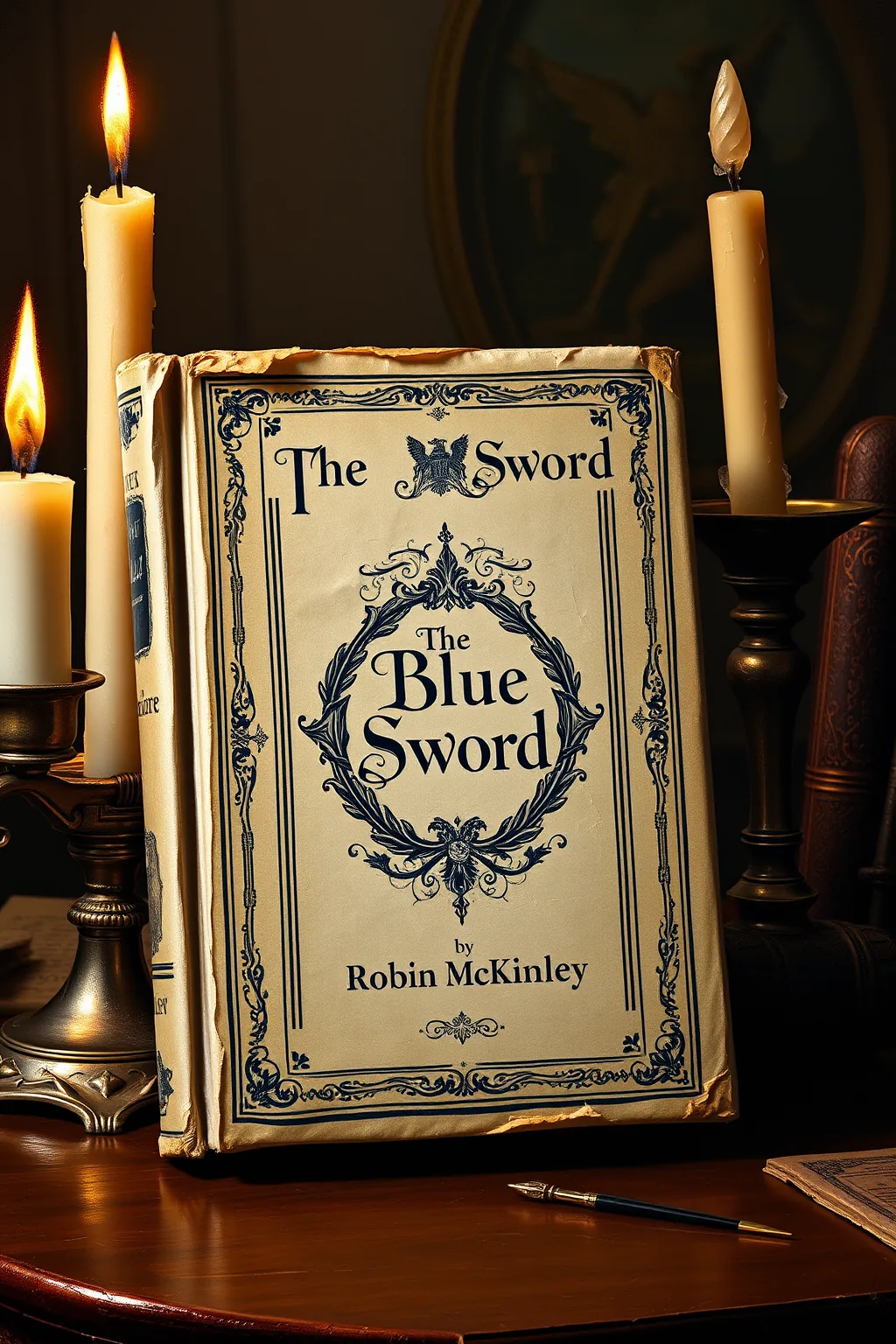
The Blue Sword
 72
72

The Blue Sword
Robin McKinley's *The Blue Sword* presents a familiar trope – the orphaned girl thrust into a world of magic and war – but imbues it with a distinct voice. Harry Crewe's initial helplessness and subsequent growth feel earned, particularly her struggle to reconcile her Damarian experiences with her past life. The world-building, especially the detailed descriptions of Damarian culture and the palpable sense of ancient magic, forms the novel's strongest foundation. However, the narrative pacing can occasionally falter, particularly in the middle section where Harry's internal development sometimes overshadows external plot momentum. The climactic confrontation, while resolved, feels somewhat compressed given the preceding build-up.
Despite these minor reservations, the novel offers a satisfying exploration of identity and belonging. The depiction of the king, an imposing yet ultimately guiding figure, is handled with a nuanced touch.
Read more ↓
*The Blue Sword* is a solid entry for those seeking a character-focused fantasy with a well-realized secondary world.
📝 Description
72
### What It Is
The Blue Sword is a fantasy novel by Robin McKinley, first published in 2016. It tells the story of Harry Crewe, an orphan sent to live with her aunt and uncle on the distant, war-torn continent of Damar. Her life is irrevocably altered when she is abducted by the king of Damar, the legendary "Blue Sword" himself, who claims her as his own. The narrative follows Harry's adaptation to a new culture, her burgeoning magical abilities, and her role in an impending conflict.
### Who It's For
This novel will appeal to readers who enjoy character-driven fantasy narratives with a strong sense of place and cultural immersion. Those interested in coming-of-age stories where the protagonist discovers hidden strengths and responsibilities will find Harry's journey compelling. It is also suitable for younger adult readers transitioning into more complex fantasy themes, as well as adults seeking a well-crafted story focused on personal growth and the challenges of adapting to unfamiliar circumstances.
### Historical Context
Published in 2016, The Blue Sword emerged during a period of robust growth in young adult fantasy literature, following in the wake of series like *Harry Potter* and *The Hunger Games*. While not directly tied to a specific historical movement, McKinley's work often engages with archetypal fantasy elements and the exploration of power dynamics, echoing themes present in earlier works of authors like Ursula K. Le Guin, who also explored anthropological and societal structures within her speculative fiction.
### Key Concepts
The novel explores the concept of "home" as a fluid and often imposed state, rather than a fixed geographical location. It examines the process of acculturation, where an outsider must learn and adapt to the customs, language, and societal expectations of a new land and people. Furthermore, it delves into the nature of destiny and self-discovery, as Harry grapples with a preordained role and the unexpected emergence of her own agency and inherent power.
💡 Why Read This Book?
• Gain insight into the transformative power of cultural immersion, as demonstrated by Harry's journey from an apprehensive outsider to a central figure in Damarian society, learning their language and customs. • Experience the archetype of the reluctant hero discovering latent magical abilities, particularly Harry's connection to the land and its ancient power, a core element of Damarian legend. • Understand the complexities of identity formation under duress, as the book illustrates how external pressures and the discovery of one's heritage can redefine one's sense of self.
⭐ Reader Reviews
Honest opinions from readers who have explored this book.
❓ Frequently Asked Questions
What is the primary setting of The Blue Sword?
The primary setting is the continent of Damar, a land with its own distinct culture, political structure, and ancient magical underpinnings, contrasting sharply with the more familiar, albeit briefly mentioned, world Harry originates from.
Who is the main protagonist and what is her initial situation?
The main protagonist is Harry Crewe, an orphaned young woman who is sent to live with her aunt and uncle in Damar. She begins as a somewhat naive and isolated individual, unaccustomed to the realities of her new home.
What is the significance of the 'Blue Sword' in the novel?
The 'Blue Sword' refers to King Gorth, the ruler of Damar, and by extension, the symbol of his authority and the ancient magical power he wields. It represents the destiny Harry is drawn into.
Does The Blue Sword contain elements of magic?
Yes, the novel features significant elements of magic, particularly concerning the connection between the king, the land of Damar, and individuals like Harry who possess latent abilities tied to this ancient power.
What themes are explored in The Blue Sword?
Key themes include identity, belonging, cultural adaptation, destiny versus free will, and the discovery of inner strength in the face of adversity.
When was The Blue Sword first published?
The Blue Sword was first published in 2016, positioning it within the contemporary landscape of young adult fantasy literature.
🔮 Key Themes & Symbolism
Cultural Assimilation and Identity
The narrative meticulously details Harry's transition into Damarian society. Her initial feelings of alienation and misunderstanding gradually give way to a deeper comprehension of the local customs, language, and spiritual beliefs. This process is not merely about adopting new habits but about fundamentally reshaping her sense of self. The 'Blue Sword' himself, King Gorth, acts as a catalyst, forcing her to confront who she is becoming, separate from her past life. The book explores how one's identity can be forged through external pressures and the acceptance of a new cultural belonging.
Latent Power and Destiny
A central theme is the discovery of Harry's inherent magical potential, deeply connected to the land of Damar and its ancient power. This power is not immediately obvious but manifests gradually, often in moments of crisis. The concept of destiny is intertwined with this, as Harry finds herself fulfilling roles and expectations she never anticipated. The work questions the extent to which one's life is predetermined versus shaped by personal choices, even when guided by powerful forces or prophecy.
The Nature of Kingship and War
The novel presents a complex portrayal of leadership through King Gorth, the "Blue Sword." He is depicted not just as a warrior but as a figure deeply connected to his land and people, responsible for their protection. The ongoing conflict with the Northerners serves as a backdrop against which these themes play out. The book examines the burdens of leadership and the human cost of war, seen through the eyes of those who must defend their homeland and those who are thrust into its defense.
💬 Memorable Quotes
“She was an orphan, and she was alone, and she was not going to be allowed to be lonely.”
— This statement captures Harry's initial vulnerability and the immediate, almost forceful, integration she experiences upon arrival in Damar. It highlights how her solitude is actively countered by the society she is thrust into, setting the stage for her transformation.
“It was a strange thing to be the only person in the world who knew what you were.”
— This reflects Harry's dawning awareness of her unique abilities and her destiny. It speaks to the isolation that can accompany possessing knowledge or power that others do not share, a common theme in narratives of self-discovery and burgeoning power.
“She was his, and he was hers, and they were Damarian.”
— This encapsulates the profound bond formed between Harry and King Gorth, signifying her complete assimilation and acceptance into Damarian culture. It marks a definitive shift from her previous identity, embracing her new role and heritage.
“The sword was not only a weapon, but a symbol of ancient power and responsibility.”
— This interpretation focuses on the symbolic weight of the 'Blue Sword' itself, extending beyond its function in combat. It represents the legacy, authority, and deep-seated magical connection that defines Damarian leadership and Harry's own unfolding destiny.
“War was a constant presence, a shadow that touched every corner of their lives.”
— This highlights the pervasive impact of conflict on the Damarian people. It underscores that war is not an isolated event but a persistent condition that shapes their society, culture, and daily existence, creating an atmosphere of underlying tension.
🌙 Esoteric Significance
Tradition
While *The Blue Sword* is primarily a fantasy novel, its exploration of a deep, inherent connection between a ruler, the land, and latent magical abilities can be loosely aligned with certain animistic and shamanistic traditions found within broader esoteric thought. The concept of a 'chosen one' with a destiny tied to the well-being of a specific territory, and the manifestation of power through a symbolic artifact (the sword), touches upon archetypal narratives common in various spiritual lineages that emphasize the sacredness of place and lineage.
Symbolism
The titular 'Blue Sword' functions as a potent symbol of authority, ancient power, and the king's sacred bond with Damar. It represents not merely a weapon but the embodiment of the land's will and the king's responsibility to protect it. Harry's own burgeoning magical abilities, often linked to her connection with the earth and its inhabitants, symbolize an awakening to primal forces and a deep, intuitive understanding of the world that transcends ordinary perception.
Modern Relevance
Contemporary practitioners of nature-based spirituality and ecopsychology might find resonance in the novel's depiction of a deep, almost symbiotic relationship between the king, his people, and the land of Damar. The theme of awakening latent powers through connection to one's environment also speaks to modern ideas of intuitive development and harnessing inner potential, aligning with self-discovery movements that emphasize personal growth through connection to primal energies.
👥 Who Should Read This Book
• Young adult readers exploring themes of identity and belonging, who will appreciate Harry's journey from an uncertain orphan to a confident protector. • Fans of character-driven fantasy seeking intricate world-building and a focus on cultural adaptation and personal growth. • Readers interested in archetypal narratives of destiny and the discovery of hidden potential within themselves.
📜 Historical Context
Robin McKinley's *The Blue Sword*, published in 2016, arrived at a time when the young adult fantasy genre was flourishing, building on the foundations laid by authors like Ursula K. Le Guin and Diana Wynne Jones, who often explored complex social dynamics within their imaginative worlds. McKinley’s work, while accessible to younger readers, often delves into mature themes of identity, belonging, and the nature of power. The novel's focus on cultural immersion and a protagonist adapting to an unfamiliar land echoes anthropological explorations found in speculative fiction. While there isn't a notable censorship controversy or a specific prize associated with this particular work, its release contributed to the ongoing trend of character-driven fantasy that prioritizes internal development alongside external conflict, a trajectory that distinguishes it from earlier, more plot-centric fantasy narratives.
📔 Journal Prompts
Harry's initial feelings upon arriving in Damar.
The nature of the bond between King Gorth and Harry.
The significance of the 'Blue Sword' as more than a weapon.
Harry's evolving understanding of 'home'.
The manifestation of latent magical abilities in the narrative.
🗂️ Glossary
Damar
The primary continent and setting for the novel, characterized by its distinct culture, history of conflict, and inherent magical properties.
Blue Sword
Refers to King Gorth, the ruler of Damar, symbolizing his authority, his deep connection to the land, and the ancient power he wields.
Harry Crewe
The protagonist, an orphaned young woman who is brought to Damar and discovers her latent abilities and destiny.
Northerners
The antagonistic force in the novel, representing an external threat to Damar and its people.
Latent Abilities
The innate, magical powers possessed by certain individuals, such as Harry, which are often tied to the land and its ancient forces.
Acculturation
The process by which an individual adopts the cultural traits and social patterns of a new society, as experienced by Harry in Damar.