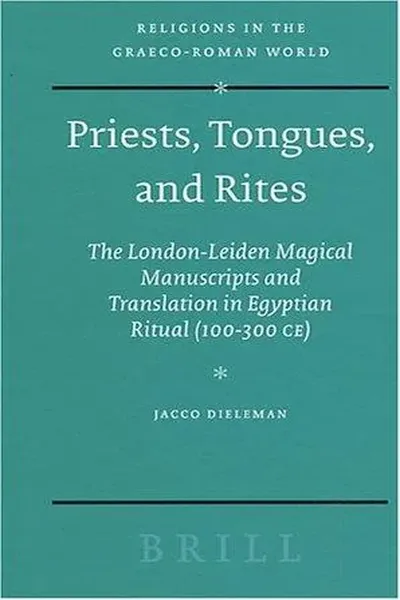
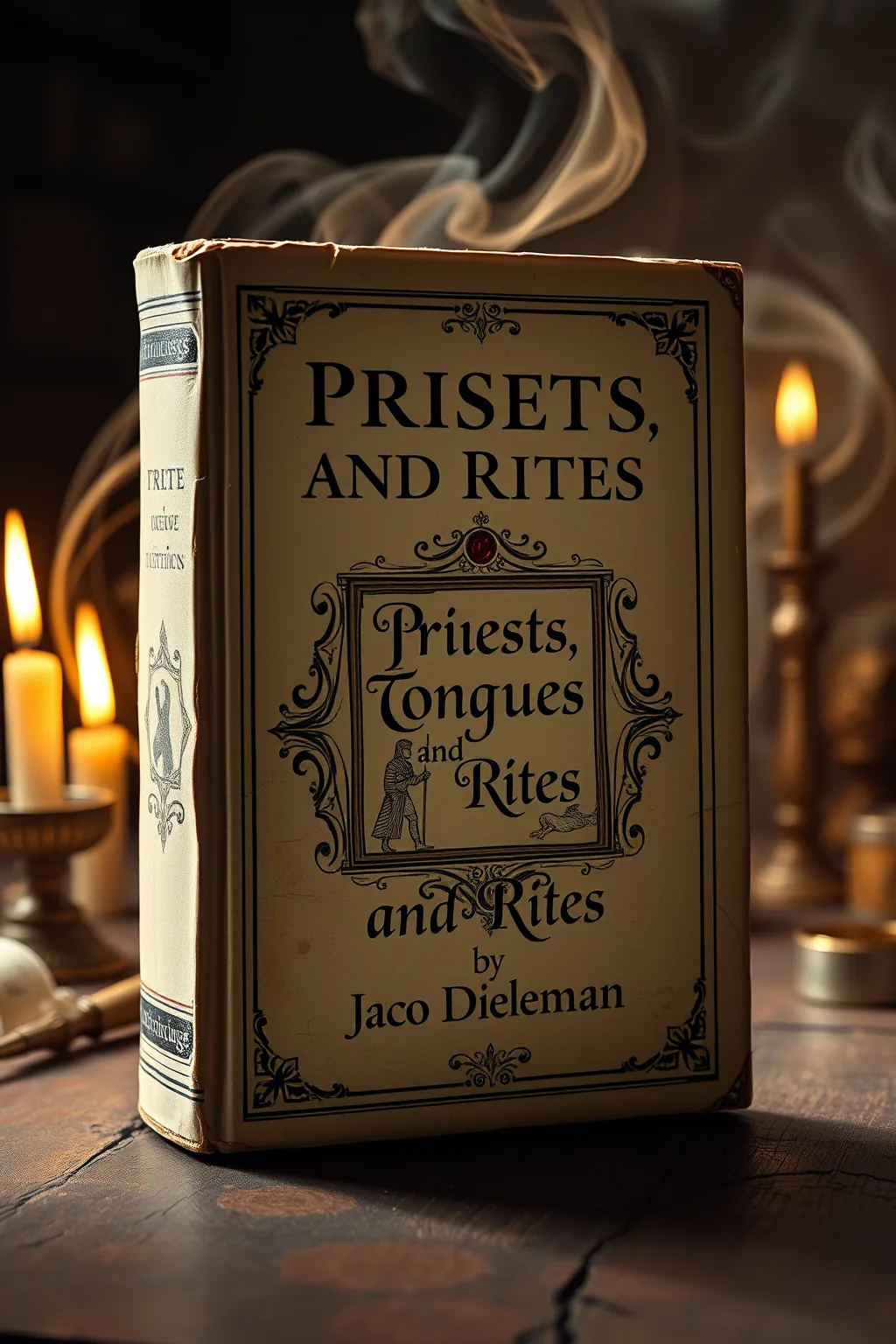
Priests, Tongues, and Rites
 71
71

Priests, Tongues, and Rites
Jacco Dieleman's "Priests, Tongues, and Rites" bypasses broad strokes to meticulously dissect the mechanics of ancient Egyptian religion. The strength of this work lies in its granular focus on the interplay between language and ritual performance. Dieleman compellingly argues that the precise utterance of sacred texts and the correct execution of rites were not mere symbolic acts but were considered directly efficacious in maintaining cosmic order. A particular passage that illuminates this is the detailed breakdown of incantatory formulas, revealing how specific phonetic structures were believed to hold inherent power. If there is a limitation, it's that the academic density may present a barrier for casual readers; this is a text for dedicated study. Nevertheless, its rigorous analysis offers an unparalleled glimpse into the operational logic of Pharaonic priesthoods. It stands as a significant scholarly contribution to understanding ancient Egyptian ritual.
📝 Description
71
### What It Is Jacco Dieleman's "Priests, Tongues, and Rites" offers a meticulous examination of ancient Egyptian religious practices, focusing on the linguistic and ritualistic elements that underpinned their worldview. The work unpacks the complex relationship between the spoken word, the divine, and the performance of sacred acts in Pharaonic Egypt. It moves beyond mere description to analyze the underlying structures of religious expression. The book addresses the function of specialized priestly knowledge and its role in maintaining cosmic order.
### Who It's For This volume is essential for scholars of Egyptology, religious studies, and ancient languages. It will also appeal to serious practitioners of esoteric traditions who seek to understand the foundational principles of one of history's most enduring religious systems. Individuals interested in the evolution of ritual, the power of sacred language, and the mechanics of ancient priesthoods will find substantial material here. Those seeking a deep, academic understanding of Egyptian religion, rather than a popularized overview, should engage with this text.
### Historical Context Published in 2005, Dieleman's work emerged during a period of increasing academic interest in the micro-history of ancient religions and the performative aspects of ritual. It contributes to ongoing debates in Egyptology concerning the nature of religious authority and the transmission of esoteric knowledge. The book engages with earlier scholarship on Egyptian cosmology and temple practices, situating itself within a lineage of research that emphasizes the functional aspects of religious institutions. It addresses scholarly discussions active since the late 20th century regarding the textual and performative dimensions of ancient Egyptian ritual.
### Key Concepts The book systematically dissects concepts central to Egyptian religious life, including the efficacy of divine pronouncements, the role of incantations in ritual efficacy, and the hierarchical structure of the priesthood. It explores how specific linguistic forms and ritual actions were believed to directly influence the cosmos and the gods. Dieleman investigates the technical vocabulary and specialized knowledge held by priests, demonstrating how this expertise was crucial for the proper functioning of temples and the maintenance of ma'at (cosmic order). The analysis highlights the practical, rather than purely symbolic, application of religious knowledge.
💡 Why Read This Book?
• Gain an understanding of the critical role of precise linguistic formulation in ancient Egyptian ritual, a concept Dieleman details through his analysis of incantations and divine pronouncements. • Learn about the specific functions and knowledge domains of Egyptian priests, as explored in chapters detailing their hierarchical roles and specialized expertise. • Discover the practical application of religious knowledge in maintaining ma'at, the ancient Egyptian concept of cosmic order, as elucidated by Dieleman's examination of ritual efficacy.
⭐ Reader Reviews
Honest opinions from readers who have explored this book.
❓ Frequently Asked Questions
What is the primary focus of Jacco Dieleman's "Priests, Tongues, and Rites"?
The book's primary focus is the intricate relationship between language, ritual performance, and religious efficacy in ancient Egypt, particularly the role of priests in wielding sacred knowledge.
When was "Priests, Tongues, and Rites" first published?
The work was first published in 2005, placing it within a modern scholarly context for the study of ancient Egyptian religion.
Does the book discuss the concept of Ma'at?
Yes, "Priests, Tongues, and Rites" explores the concept of Ma'at, examining how priestly rituals and linguistic practices were understood to maintain this principle of cosmic order and truth.
Who would benefit most from reading this book?
Scholars of Egyptology, religious studies, ancient languages, and practitioners of esoteric traditions seeking a deep academic understanding of Egyptian religious mechanics will find it highly beneficial.
What is an example of a specific ritual element discussed?
The book delves into the use of incantations and divine pronouncements, analyzing how specific linguistic forms were believed to possess inherent power and efficacy in ritual contexts.
Is this book suitable for beginners in ancient Egyptian studies?
While comprehensive, the academic depth of "Priests, Tongues, and Rites" makes it more suited for advanced students or those with a foundational knowledge of Egyptology and religious studies.
🔮 Key Themes & Symbolism
Ritual Efficacy and Language
Dieleman meticulously details how ancient Egyptian priests viewed language and ritual not as symbolic representations but as directly operative forces. The book examines the belief that the correct pronunciation of spells and the precise execution of rites possessed inherent power to influence divine and cosmic realms. This perspective challenges simplistic notions of ancient religion, highlighting a sophisticated understanding of performative action and its material consequences within the Egyptian worldview. The efficacy was tied to the form and utterance itself.
The Role of the Priesthood
Central to the work is an examination of the Egyptian priesthood as custodians of specialized, often esoteric, knowledge. Dieleman illustrates how priests functioned as intermediaries, equipped with linguistic and ritual expertise essential for maintaining Ma'at. Their roles extended beyond mere worship to include administrative and cosmological functions, underpinned by a deep understanding of sacred texts and practices. This section emphasizes the practical, knowledge-based authority wielded by the priestly class.
Cosmic Order and Maintenance
The book elucidates how religious practices were intrinsically linked to the concept of Ma'at – the principle of truth, balance, and cosmic order. Dieleman shows how daily temple rituals, festivals, and incantations were performed with the explicit aim of preserving this order against chaos. The actions of priests and the efficacy of their words were seen as vital contributions to the stability of the universe, demonstrating a functional approach to religion deeply embedded in societal and cosmological structures.
Sacred Lexicon and Performance
Dieleman's analysis underscores the importance of a specific sacred lexicon and its proper performance. The book explores how certain words, phrases, and modes of address were imbued with divine power and were essential for successful ritual communication with the gods. This focus on the performative aspect of language reveals a sophisticated understanding of its capacity to shape reality, moving beyond simple communication to ritual action.
💬 Memorable Quotes
“The efficacy of a rite was directly proportional to the precision of its performance.”
— This paraphrased concept highlights the book's central argument that ancient Egyptian religious acts were not merely symbolic but were believed to have tangible, causal effects when executed correctly. It emphasizes the functional and operational aspect of their ritual system.
“Priests were the essential conduits for maintaining cosmic equilibrium through specialized knowledge.”
— This interpretation emphasizes the active, knowledge-driven role of the priesthood in Dieleman's analysis. It frames them as crucial agents responsible for the stability of the universe, not just passive worshippers.
“Sacred language possessed inherent power, shaping reality through its utterance.”
— This paraphrased concept captures the book's exploration of the belief in the inherent force of specific words and phrases within ancient Egyptian religion, suggesting language was a tool for direct manipulation of the cosmos.
“The correct performance of ritual actions was paramount for divine favor and cosmic order.”
— This interpretation underscores the book's focus on the performative aspects of Egyptian religion, stressing that accurate execution of rites was considered fundamental for achieving desired religious outcomes.
“Temple cults functioned as operational centers for cosmic maintenance.”
— This interpretation frames the ancient Egyptian temple not just as a place of worship but as a functional institution actively engaged in preserving the cosmic order, as detailed in Dieleman's work.
🌙 Esoteric Significance
Tradition
This work is situated within the academic study of ancient Egyptian religion, which has long informed esoteric traditions, particularly those focused on Hermeticism and foundational Western mystery schools. While Dieleman's approach is strictly scholarly and historical, his detailed exposition of ritual efficacy and the power of sacred language resonates with esoteric principles concerning the manipulation of subtle energies and the potency of focused intent and utterance. It provides a historical and linguistic grounding for practices that later esoteric movements adapted.
Symbolism
Though focused on function, the book implicitly touches on potent symbols. The concept of Ma'at itself, often depicted as a feather, represents cosmic balance and divine order, a fundamental principle. The 'tongues' refer not just to human speech but to the divine pronouncements and the very fabric of creation as articulated by the gods. Ritual actions, beyond their functional purpose, often involved symbolic gestures that mirrored cosmic events or divine attributes, reinforcing the interconnectedness of the human and divine realms.
Modern Relevance
Contemporary practitioners of Western esotericism, particularly those involved in ceremonial magic or ritualistic reconstruction, often draw upon scholarly works like Dieleman's to understand the mechanics and underlying principles of ancient practices. Modern occultists seeking to deepen their understanding of Egyptian deities and rituals find value in Dieleman's rigorous analysis of temple cults and the efficacy of incantations. His work provides a scholarly framework for exploring the practical application of ancient Egyptian religious concepts in contemporary magical systems.
👥 Who Should Read This Book
• Academic researchers in Egyptology and Religious Studies seeking a detailed, linguistically informed analysis of Pharaonic ritual practices and priestly functions. • Students of comparative religion interested in the operational mechanics of ancient religious systems and the role of specialized knowledge. • Esoteric practitioners aiming to understand the historical underpinnings and functional aspects of ancient Egyptian magic and religious rites, moving beyond symbolic interpretations.
📜 Historical Context
Published in 2005, Jacco Dieleman's "Priests, Tongues, and Rites" entered a scholarly landscape deeply engaged with the functional and performative aspects of ancient religions. It emerged in dialogue with scholars who, from the late 20th century onward, increasingly emphasized the practical application of religious knowledge in societies like ancient Egypt. Dieleman builds upon and refines earlier studies by figures such as Jan Assmann, who explored Egyptian cosmology and the role of memory, and Erik Hornung, known for his work on Egyptian funerary beliefs and cosmology. The book’s meticulous analysis of ritual language and priestly duties addressed ongoing academic debates concerning the nature of religious authority and the transmission of esoteric knowledge within Pharaonic civilization. Its reception contributed to the ongoing scholarly project of understanding Egyptian religion as a complex, operational system, rather than solely a matter of belief or symbolism.
📔 Journal Prompts
The precise articulation of sacred language in maintaining Ma'at.
Reflect on the priestly role as custodians of specialized ritual knowledge.
Analyze the concept of ritual efficacy as presented by Dieleman.
Consider the function of temple cults in the broader Egyptian worldview.
Examine the connection between utterance, performance, and cosmic order.
🗂️ Glossary
Ma'at
The ancient Egyptian concept representing truth, balance, order, harmony, law, morality, and justice. It was considered the fundamental principle of the universe, maintained through divine and human actions.
Ritual Efficacy
The belief that religious rituals and spoken spells possess inherent power to produce tangible effects in the world, influencing gods, cosmic order, or human affairs.
Sacred Language
The specialized vocabulary, incantations, and pronouncements used by priests in religious contexts, believed to hold divine power and be essential for effective ritual communication.
Temple Cults
The complex system of daily rituals, festivals, and offerings performed within ancient Egyptian temples, dedicated to specific deities and aimed at maintaining cosmic order and divine favor.
Priestly Knowledge
The specialized body of linguistic, ritualistic, and cosmological information held and transmitted by priests, which granted them authority and enabled the functioning of religious institutions.
Cosmic Order
The structured and harmonious state of the universe as understood by the ancient Egyptians, maintained through the correct performance of divine and human actions, epitomized by Ma'at.
Incantation
A specific form of spoken magical or religious formula, often a spell or charm, believed to have a direct effect when recited correctly, as explored in the context of Egyptian priestly practices.