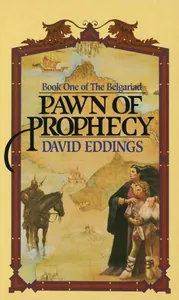
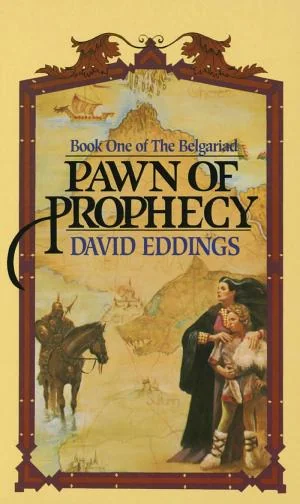
Pawn of Prophecy
 82
82

Pawn of Prophecy
David Eddings' Pawn of Prophecy establishes a classic fantasy framework with a compelling, if predictable, setup. The strength lies in its accessible prose and the gradual unfolding of Garion's world, hinting at a much larger, intricate lore. The character of Polgara, the seemingly all-knowing sorceress, often overshadows the protagonist, which can feel like a narrative imbalance at times. A particularly engaging element is the introduction of the ancient prophecy concerning the Orb of Sorcerer, which immediately raises the stakes. While it adheres closely to established fantasy conventions, the book effectively lays the groundwork for a grander saga.
This is a solid, if unadventurous, beginning to an epic quest.
📝 Description
82
### What It Is Pawn of Prophecy is the inaugural volume in David Eddings' "The Belgariad" series, a foundational work in epic fantasy that debuted in 2010. It introduces a sprawling world where ancient prophecies dictate the fates of kingdoms and the destinies of disparate individuals. The narrative centers on Garion, a seemingly ordinary boy whose life is irrevocably altered when he is drawn into a quest of monumental importance.
### Who It's For This book appeals to readers who appreciate meticulously crafted worlds, complex character arcs, and a narrative steeped in mythic undertones. It is particularly suited for those interested in the archetypal journeys of heroes and the intricate interplay between destiny and free will. Fans of classic fantasy tropes, such as quests, magical artifacts, and the struggle between good and evil, will find familiar ground here.
### Historical Context Published in 2010, Pawn of Prophecy emerged during a period when epic fantasy continued to thrive, building upon the foundations laid by earlier authors like J.R.R. Tolkien and Ursula K. Le Guin. While not directly engaging with contemporary esoteric movements, its exploration of prophecy, destiny, and the sacred object—the Orb of Sorcerer—echoes themes present in various mystical traditions. The work arrived in a literary landscape where authors like George R.R. Martin were also gaining prominence, albeit with a grittier tone.
### Key Concepts The narrative hinges on the concept of the "Will and the Word," a cosmic force that shapes destiny and is wielded by powerful entities. The "Prophecy of the Gods" is central, guiding the actions of characters and the unfolding of events. Furthermore, the existence of the "Child of the Dark" and the "Child of the Light" establishes a fundamental dualism that underpins the conflict. The quest for the "Orb of Sorcerer" serves as a tangible manifestation of this struggle, representing power and divine will.
💡 Why Read This Book?
• Gain an understanding of the "Will and the Word" concept, a central driving force in the narrative that influences character actions and world events, offering a unique perspective on cosmic determinism. • Experience the introduction of the Orb of Sorcerer, a potent artifact whose quest forms the backbone of the plot, providing insight into how tangible objects can symbolize immense spiritual or political power. • Follow Garion's early journey, observing his transition from an unassuming boy to a pivotal figure in a grand prophecy, illustrating the classic hero's awakening and the burdens of destiny.
⭐ Reader Reviews
Honest opinions from readers who have explored this book.
❓ Frequently Asked Questions
When was Pawn of Prophecy first published?
Pawn of Prophecy, the first book in The Belgariad series, was first published in 2010, introducing readers to the world of the ancient prophecy and the Orb of Sorcerer.
What is the main conflict in Pawn of Prophecy?
The central conflict involves a race against time to recover the Orb of Sorcerer, a powerful artifact, before it falls into the hands of the dark god Torak, thereby preventing a catastrophic future foretold by prophecy.
Who are the main characters introduced in Pawn of Prophecy?
The primary characters introduced are Garion, a young boy unaware of his destiny; Polgara, a powerful sorceress guiding him; and Belgarath, an ancient sorcerer also involved in the quest for the Orb of Sorcerer.
What role does prophecy play in the book?
Prophecy is a fundamental element, dictating the grand narrative arc and influencing the actions and motivations of the characters, particularly regarding the retrieval of the Orb of Sorcerer.
Is Pawn of Prophecy part of a larger series?
Yes, Pawn of Prophecy is the first book in David Eddings' "The Belgariad" series, a multi-volume epic fantasy saga that continues the narrative arc established in this initial volume.
What is the significance of the Orb of Sorcerer?
The Orb of Sorcerer is an ancient, immensely powerful artifact that holds significant influence over the fate of the world, making its recovery a crucial element in the ongoing struggle between light and darkness.
🔮 Key Themes & Symbolism
The Weight of Prophecy
The narrative is heavily driven by ancient prophecies, particularly the "Prophecy of the Gods." This theme explores how predetermined futures can influence present actions and the free will of individuals. Characters grapple with the knowledge of what is 'supposed' to happen, questioning whether they are merely actors in a cosmic play or possess the agency to alter their destinies. The quest for the Orb of Sorcerer is a direct manifestation of this, as its recovery is foretold as essential to averting a world-ending catastrophe.
The Archetypal Hero's Awakening
Garion's journey embodies the classic 'hero's journey' trope, beginning as an ordinary, unaware individual thrust into extraordinary circumstances. His gradual realization of his own significance and latent powers forms a core part of the narrative. This theme examines the transformative process of accepting responsibility and embracing a destiny that extends far beyond personal desires, highlighting the internal struggle against overwhelming external forces and the burden of being a "Child of Light."
Dualism and Cosmic Conflict
The story is framed by a fundamental conflict between opposing cosmic forces, often personified as the "Child of the Dark" (Torak) and the "Child of the Light." This Manichaean worldview underpins the motivations of various factions and deities. The struggle for control of the Orb of Sorcerer is a tangible representation of this eternal battle between creation and destruction, order and chaos, and the forces that seek to preserve the world versus those that wish to dominate it.
The Power of Sacred Objects
The Orb of Sorcerer is more than just a magical item; it is a focal point for divine power and a critical component of the overarching prophecy. Its existence and the quest to retrieve it underscore the esoteric concept that certain objects can channel or embody immense spiritual or cosmic energy. The narrative suggests that control over such artifacts can tip the balance in the cosmic struggle, making its recovery paramount.
💬 Memorable Quotes
“The boy knew nothing of his destiny.”
— This concise statement encapsulates the central premise of Garion's early life, highlighting the dramatic irony of his ignorance regarding the monumental role he is destined to play in the unfolding events.
“Polgara the Sorceress was ancient, and she had her secrets.”
— This points to Polgara's enigmatic nature and immense power, suggesting a depth of knowledge and experience that influences her actions and her guidance of Garion.
“The Orb of Sorcerer was the key to the future.”
— This emphasizes the artifact's critical importance, framing the quest not merely as a treasure hunt but as a pivotal event that will determine the fate of the world and the outcome of the cosmic conflict.
“Torak craved dominion over all.”
— This succinctly describes the malevolent ambition of the antagonist, Torak, establishing his role as the primary force of darkness seeking to impose his will upon creation.
“Destiny is not always a path, but sometimes a choice.”
— This interpretation suggests that while prophecy lays out a potential future, the characters' decisions and actions can shape whether that future comes to pass, introducing an element of agency.
🌙 Esoteric Significance
Tradition
While not overtly aligned with a specific esoteric lineage, Pawn of Prophecy draws heavily on archetypal themes found across Gnostic, Hermetic, and Zoroastrian traditions, particularly the concept of cosmic dualism. The struggle between a "Child of Light" and a "Child of Dark" echoes Gnostic principles of a cosmic battle between divine sparks and a malevolent creator or force. The focus on prophecy and destiny also aligns with divinatory practices and the belief in a predetermined cosmic plan, common in many mystical systems.
Symbolism
The "Orb of Sorcerer" functions as a potent symbol of divine will, concentrated power, and the nexus of fate. Its recovery is crucial for maintaining cosmic balance. The concept of the "Will and the Word" represents the underlying creative or directive force of the universe, akin to the Logos in Hermeticism or the divine utterance in creation myths. These symbols serve as tangible anchors for abstract metaphysical concepts within the narrative's framework.
Modern Relevance
Contemporary fantasy authors and readers continue to engage with the archetypal structures and narrative frameworks popularized by works like Pawn of Prophecy. Its exploration of destiny versus free will, the nature of prophecy, and the symbolic power of artifacts remains relevant in discussions of mythology and narrative structure in modern speculative fiction and even in broader philosophical explorations of determinism.
👥 Who Should Read This Book
• Aspiring epic fantasy authors seeking to understand foundational world-building and quest structures. • Readers new to the fantasy genre looking for a classic, accessible entry point into grand narratives. • Students of comparative mythology interested in modern interpretations of archetypal hero journeys and cosmic dualism.
📜 Historical Context
Published in 2010, Pawn of Prophecy entered a fantasy landscape shaped by decades of genre evolution. It followed in the footsteps of foundational epics like J.R.R. Tolkien's The Lord of the Rings, which established many of the tropes concerning quests, ancient evils, and chosen heroes. Eddings' work, while popular, was often seen as engaging with more traditional fantasy elements compared to the emerging darker, more politically complex narratives of authors like George R.R. Martin, whose A Game of Thrones had already gained significant traction. The early 2000s also saw a resurgence of interest in mythological and archetypal storytelling, a current to which Pawn of Prophecy, with its focus on prophecy and divine will, implicitly contributed. The reception of such works often highlighted their escapist qualities and adherence to classic good-versus-evil structures, distinguishing them from more morally ambiguous contemporary fiction.
📔 Journal Prompts
Garion's initial ignorance of his destiny.
The motivations behind Polgara's secretive guidance.
The symbolic significance of the Orb of Sorcerer.
Torak's desire for dominion.
The interplay between the "Will and the Word" and character choices.
🗂️ Glossary
The Will and the Word
A fundamental, cosmic force or principle that governs creation and destiny, often interpreted as the divine intention or active power shaping the universe.
Orb of Sorcerer
A powerful, ancient artifact central to the prophecy, possessing immense magical capabilities and crucial for influencing the balance of power in the world.
Child of the Dark
Refers to Torak, the dark god, and his followers, representing the forces of destruction, chaos, and malevolent dominion in the cosmic conflict.
Child of the Light
Refers to the forces aligned against Torak, often embodied by Garion and his allies, representing preservation, order, and benevolent power.
Prophecy of the Gods
An ancient foretelling that dictates key events and the roles of certain individuals, guiding the actions of those who believe in or seek to fulfill it.
Sorcerer
A powerful practitioner of magic, often possessing ancient knowledge and significant influence over events, such as Belgarath and Polgara.
Torak
The primary antagonist, a dark god whose ambition is to dominate the world, embodying the "Child of the Dark" in the cosmic struggle.