Original Magic
 62
62

Original Magic


Sophia Crane (Associate Editor) — Stephen E. Flowers delivers a masterclass in esoteric scholarship with 'Original Magic.' He masterfully navigates the intricate tapestry of ancient Iranian magical practices, illuminating the profound connection between Zoroastrianism and early occult traditions. Flowers' deep familiarity with the subject matter is evident on every page, offering readers access to hidden knowledge typically obscured by time and mistranslation. The book is a vital resource for anyone seeking to understand the foundational principles of Western magical thought and its often-overlooked Eastern roots. Its strength lies in its rigorous research and its ability to present complex mystical concepts with clarity and compelling insight. An essential read for serious students of magic and ancient religions.
📝 Description
62
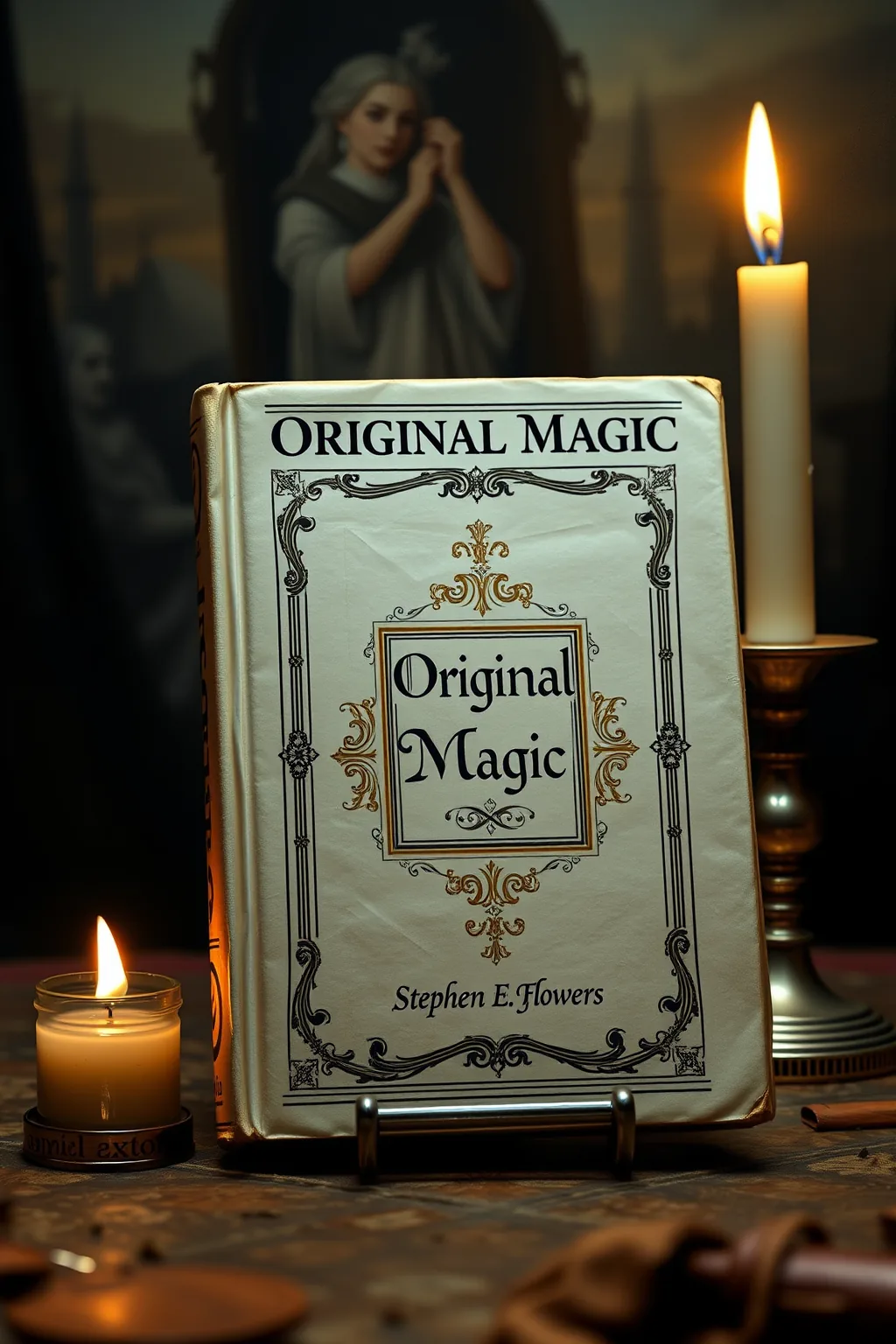
Embark on a profound journey into the heart of ancient power with 'Original Magic' by Stephen E. Flowers. This seminal work unveils the esoteric currents flowing through the primordial Iranian magical traditions, particularly the potent mysteries of Zoroastrianism. Flowers, a seasoned guide in the arcane, meticulously excavates forgotten rituals, potent symbolism, and the philosophical underpinnings of a magic system deeply intertwined with cosmic forces and spiritual evolution. Discover a world where the manipulation of subtle energies was not mere superstition, but a sophisticated art form aimed at achieving gnosis and influencing the very fabric of reality. 'Original Magic' is an invitation to those who seek to understand the roots of Western esotericism, to practitioners yearning for authentic, primal power, and to scholars fascinated by the enduring legacy of ancient Iranian spiritual and magical thought. This is not just a history; it's a key to unlocking veiled knowledge that resonates with the deepest archetypes of the human soul, offering a glimpse into a primal, untamed magic that shaped civilizations and continues to whisper through the ages. Prepare to have your perception of magic fundamentally transformed.
✍️ Author

Stephen E. Flowers
Stephen Edred Flowers, commonly known as Stephen E. Flowers or his pen name Edred Thorsson, is an American runologist, university lecturer, and occultist, especially of Neo-Germanic paganism and Odinism.
💡 Why Read This Book?
Uncover the foundational magic of the ancient Iranian world, delving into the esoteric heart of Zoroastrianism. 'Original Magic' offers a rare glimpse into primal power and hidden knowledge, crucial for understanding the roots of Western esotericism. Ideal for practitioners seeking authentic techniques, scholars exploring ancient spiritual systems, and seekers drawn to the profound mysteries of forgotten magical traditions.
⭐ Reader Reviews
Honest opinions from readers who have explored this book.
❓ Frequently Asked Questions
What is the primary focus of 'Original Magic'?
The book primarily focuses on the esoteric and magical traditions of ancient Iran, with a deep exploration of Zoroastrianism as a foundational source of this primal magic and its influence on later occult systems.
Is this book suitable for beginners in magic?
While comprehensive, the depth of the subject matter may be more accessible to those with some background in esoteric studies or a strong intellectual curiosity. However, dedicated beginners will find a rich foundation for understanding magical history.
What makes the magic described in this book 'original'?
The term 'original' refers to the foundational, primal nature of these magical practices, predating many later developments and offering a direct connection to the earliest known systematic approaches to manipulating spiritual and natural forces.
Does Stephen E. Flowers discuss practical magical techniques?
Yes, Flowers delves into the principles and conceptual frameworks of these ancient magical practices, providing insights that can inform contemporary magical understanding and application, though it is primarily an academic and historical exploration.
How does 'Original Magic' relate to modern occultism?
The book demonstrates the direct lineage of many modern occult concepts and practices back to ancient Iranian and Zoroastrian magical thought, offering a deeper historical and philosophical context for contemporary esoteric work.
🔮 Key Themes & Symbolism
The Primacy of Iranian Magic
This theme explores the concept of 'original magic' as rooted in the ancient spiritual and magical landscape of Iran, particularly the pre-Islamic era. It posits that these traditions, especially those influenced by Zoroastrianism, represent a foundational stratum of Western and global esoteric thought. The focus is on understanding the unique worldview, cosmology, and practical applications of magic that emerged from this rich cultural crucible, emphasizing its potency and its direct connection to the manipulation of both the visible and invisible realms. It challenges conventional narratives by highlighting Iran's significant, often overlooked, contribution to the history of magic.
Zoroastrianism as a Esoteric Nexus
Stephen E. Flowers meticulously examines Zoroastrianism not just as a religion, but as a profound esoteric system that deeply influenced magical practices. This theme delves into the dualistic cosmology, the significance of Amesha Spentas and Yazatas as divine intermediaries, and the concept of 'fravašis' as potent spiritual forces. It investigates how these religious tenets were translated into practical magical operations, including the use of incantations, symbolic gestures, and the harnessing of elemental and cosmic energies. The exploration aims to reveal the hidden magical dimensions within the sacred texts and rituals of this ancient Persian faith.
Symbolism and the Architecture of Power
This theme scrutinizes the intricate symbolism embedded within ancient Iranian magic and how it served as the blueprint for wielding power. It unpacks the meaning behind specific sigils, cosmic diagrams, divine names, and ritualistic objects, demonstrating how they acted as keys to unlock and direct spiritual forces. Flowers illustrates how the understanding and manipulation of these symbolic languages were central to the magician's art, allowing for communication with higher powers and the manifestation of desired outcomes. The focus is on the sophisticated semiotics of magic and its role in constructing a potent worldview.
💬 Memorable Quotes
“Magic is the art of the possible, the manipulation of the subtle forces that govern existence.”
— This quote encapsulates the practical and intentional nature of magic as understood in the original traditions, highlighting its role as a skill to influence reality through the understanding and application of unseen energies.
“The ancient Iranians understood the cosmos as a living entity, responsive to focused will.”
— This suggests a holistic view of reality where the universe is not inert but alive and interconnected, capable of being influenced by human consciousness and directed intent, a core tenet of many ancient magical systems.
“True power lies not in brute force, but in the mastery of spiritual currents.”
— This emphasizes the esoteric principle that ultimate efficacy in magic comes from understanding and skillfully navigating the energetic and spiritual dimensions, rather than relying on purely physical or mundane means.
“The symbols are not mere representations; they are gateways to the forces they denote.”
— This highlights the potent nature of magical symbolism, asserting that these signs are not simply decorative but active conduits that can invoke and channel specific energies or entities when correctly understood and employed.
“To know the original magic is to touch the very source of creative energy.”
— This implies that by studying and understanding these primordial magical systems, one gains access to the fundamental forces of creation, offering a path to profound insight and transformative potential.
🌙 Esoteric Significance
Tradition
The esoteric significance of 'Original Magic' lies in its direct exploration of proto-Indo-European and early Iranian magical traditions, with a particular emphasis on the esoteric dimensions of Zoroastrianism. This tradition represents a foundational stream of Western esotericism, predating many later systems and offering a unique perspective on the relationship between humanity, the divine, and the cosmos. It reveals a sophisticated understanding of spiritual forces, cosmic dualism, and the practical application of these principles through ritual and symbolic manipulation, providing a direct link to ancient sources of power.
Symbolism
The symbolism within 'Original Magic' is rich and deeply layered, drawing from the cosmogonic myths and ritualistic practices of ancient Iran. Key symbols include the divine entities of Zoroastrianism (Ahura Mazda, Amesha Spentas), elemental forces, cosmic trees (like the Gaokerena), and potent incantations (Avestan mantras). These symbols are not merely decorative but are understood as active agents, gateways to spiritual power and cosmic order. Their interpretation reveals a profound understanding of the interconnectedness of all things and a sophisticated methodology for influencing reality through focused intent and symbolic resonance.
Modern Relevance
The modern relevance of 'Original Magic' is profound for contemporary practitioners and scholars of esotericism. It offers a vital connection to the primal roots of magical practice, providing insights into ancient techniques and worldviews that can inform and enrich modern occult endeavors. By understanding these original currents, individuals can gain a deeper appreciation for the historical evolution of magic, recover forgotten principles, and potentially tap into potent, archetypal energies. The book serves as a bridge, allowing modern seekers to engage with the enduring power and wisdom of one of humanity's earliest systematic approaches to the sacred arts.
👥 Who Should Read This Book
This book is essential for serious students of Western esotericism and comparative religion, particularly those interested in the origins of magical thought. Practitioners of magic, especially those who value historical authenticity and primal techniques, will find invaluable insights into foundational practices and symbolic systems. Scholars of ancient history, mythology, and religious studies will appreciate the rigorous research and the uncovering of often-overlooked connections. Seekers of deeper spiritual knowledge and those fascinated by the enduring influence of ancient Iranian culture on occult traditions will also find 'Original Magic' a compelling and illuminating read.
📜 Historical Context
Stephen E. Flowers' 'Original Magic' delves into a period of profound spiritual and cultural development in ancient Iran, spanning from the early Indo-Iranian period through the height of the Achaemenid and Sasanian empires, with Zoroastrianism as a central pillar. This era witnessed the crystallization of complex theological concepts, sophisticated cosmological views, and a deeply ingrained understanding of magical practices that permeated daily life and elite spiritual pursuits. The book situates these magical traditions within a historical context where the struggle between forces of creation and destruction, as articulated in Zoroastrianism, provided a powerful framework for magical operations. It acknowledges the influence of pre-Zoroastrian beliefs and the subsequent impact of these Iranian magical currents on Hellenistic, Gnostic, and later Islamic esoteric thought, presenting a rich tapestry of historical forces that shaped the evolution of magic.
📔 Journal Prompts
Reflect on the concept of 'original magic' presented by Flowers. How does it differ from your current understanding of magic?
Explore the connection between Zoroastrian dualism (good vs. evil) and its potential influence on magical practices described in the book.
Consider the power of symbolic language in ancient Iranian magic. How can understanding these symbols enhance your own spiritual or magical work?
What ethical considerations arise when studying or attempting to practice ancient magical systems like those discussed?
How might the concept of 'fravašis' or guiding spiritual forces from Zoroastrianism be interpreted and applied in a modern context?
🗂️ Glossary
Avesta
The primary collection of religious texts of Zoroastrianism, containing hymns, prayers, and rituals that form the basis of the faith and its associated magical traditions.
Fravaši
In Zoroastrianism, the 'fravaši' is often understood as a guardian spirit or a pre-existent spiritual essence of an individual or divine being, believed to influence earthly existence and act as a protective force.
Yazata
Divine beings or angels in Zoroastrianism, worshipped and invoked in rituals, often associated with specific aspects of creation or cosmic order, and central to magical practices.
Ahura Mazda
The supreme creator deity in Zoroastrianism, representing absolute goodness, wisdom, and light, and the ultimate source of all spiritual and material existence.
Daeu
Evil spirits or demons in Zoroastrian cosmology, representing the forces of chaos and destruction, often the targets or adversaries in magical workings.