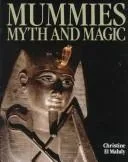
Mummies, myth, and magic in ancient Egypt

 77
77

Mummies, myth, and magic in ancient Egypt
Christine El Mahdy's "Mummies, myth, and magic in ancient Egypt" attempts to bridge the gap between the ritualistic preservation of bodies and the underlying spiritual cosmology. The book's strength lies in its detailed exploration of the textual evidence, particularly the funerary literature that accompanied the deceased into the tomb. For instance, the discussion of the spells within the Book of the Dead, and their intended purpose for navigating the Duat, offers a clear window into Egyptian anxieties and aspirations regarding the afterlife. However, the work occasionally struggles to fully integrate the 'magic' aspect with the 'myth and mummies' it promises. While the ritualistic elements are well-described, a deeper dive into the practical application of magic as understood by the ancient Egyptians, beyond funerary spells, could have enhanced its occult appeal. El Mahdy presents a solid academic foundation, but the esoteric practitioner might wish for more direct engagement with the magical worldview. Nevertheless, it provides a valuable, fact-grounded overview of a civilization deeply concerned with eternal life.
📝 Description
77
### What It Is Christine El Mahdy's "Mummies, myth, and magic in ancient Egypt" offers a scholarly yet accessible examination of the funerary practices and beliefs of one of history's most enduring civilizations. It moves beyond simple descriptions of mummification to explore the complex symbolic and religious frameworks that underpinned these rituals. The work investigates the Egyptian worldview, particularly concerning death, the afterlife, and the preservation of the body as a vessel for the soul's journey.
### Who It's For This book is primarily for students and enthusiasts of Egyptology, comparative religion, and ancient history. It will appeal to those interested in the intersection of archaeology, mythology, and the occult, offering a nuanced perspective on Egyptian spirituality. Readers seeking to understand the cultural and religious motivations behind mummification, rather than just the technical process, will find substantial material here.
### Historical Context Published in 1989, El Mahdy's work emerged during a period of renewed academic and popular interest in ancient Egypt, building upon decades of archaeological discovery and theoretical development in Egyptology. It engaged with scholarship that sought to interpret Egyptian religion not merely as a collection of primitive beliefs but as a sophisticated system of thought. The book's focus on the magical and symbolic aspects reflects a scholarly trend that began to move away from purely materialistic interpretations of ancient cultures.
### Key Concepts The text illuminates core Egyptian concepts such as the *ka* (life force), *ba* (personality/soul), and *akh* (transfigured spirit). It details the significance of the Book of the Dead, not as a single text but as a collection of spells and incantations intended to guide the deceased through the underworld. The role of deities like Osiris, Anubis, and Thoth in the judgment and resurrection of the dead is also explored, connecting funerary rites to broader cosmological beliefs.
💡 Why Read This Book?
• Gain insight into the specific Egyptian beliefs about the afterlife, learning about the functions of the *ka* and *ba* as detailed in funerary texts like the Book of the Dead. • Understand the symbolic importance of mummification beyond preservation, exploring its role in ensuring the deceased's transition to an *akh* (transfigured spirit) as described by El Mahdy. • Discover the roles of specific deities, such as Anubis and Osiris, in the judgment and resurrection processes, understanding their significance within the broader Egyptian pantheon and cosmology.
⭐ Reader Reviews
Honest opinions from readers who have explored this book.
❓ Frequently Asked Questions
What is the primary focus of "Mummies, myth, and magic in ancient Egypt"?
The book focuses on the intricate relationship between ancient Egyptian funerary practices, particularly mummification, and their complex religious beliefs concerning death, the afterlife, and the spiritual journey of the deceased.
Does the book explain the mummification process in detail?
While it touches upon the physical aspects of mummification, the primary emphasis is on the religious and symbolic significance of the process and the rituals surrounding it, rather than a step-by-step technical guide.
What are some key Egyptian concepts discussed in the book?
Key concepts explored include the *ka* (life force), *ba* (soul/personality), *akh* (transfigured spirit), and the significance of funerary texts like the Book of the Dead.
Who is Christine El Mahdy?
Christine El Mahdy is an author who has written on ancient Egypt, with her 1989 work "Mummies, myth, and magic in ancient Egypt" being a notable contribution to the field.
Is this book suitable for beginners in Egyptology?
Yes, it is suitable for beginners and enthusiasts interested in the spiritual and mythical aspects of ancient Egyptian culture, offering a blend of factual information and interpretive analysis.
What is the historical period covered by the book?
The book focuses on ancient Egypt, spanning various dynasties and periods within its long history, with particular attention to the beliefs and practices related to death and the afterlife.
🔮 Key Themes & Symbolism
The Journey of the Soul
The book meticulously details the Egyptian conception of the soul's post-mortem journey. It explains how the physical preservation of the body through mummification was inextricably linked to the spiritual survival of the *ka* and *ba*. The spells and rituals found in texts like the Book of the Dead are presented not as mere superstitions, but as essential tools designed to navigate the perilous challenges of the Duat and ensure the deceased's eventual transformation into an *akh*, a blessed and eternal spirit.
Deities and the Divine Order
Central to Egyptian beliefs about death and resurrection were the pantheon of gods. El Mahdy explores the roles of key figures such as Osiris, the god of the underworld and resurrection; Anubis, the jackal-headed god of embalming and the dead; and Thoth, the ibis-headed god of wisdom and writing, who often recorded the judgment. Their involvement in the judgment of the soul and the maintenance of cosmic order (*ma'at*) is crucial for understanding the Egyptian desire for eternal life.
Symbolism of Mummification
Mummification itself is presented as a profound symbolic act, far exceeding mere preservation. The process mimicked the myth of Osiris, aiming to facilitate a rebirth. The linen wrappings, amulets, and sarcophagi were all imbued with magical significance, protecting the deceased and aiding their transition. The book examines how these physical preparations were seen as vital components in the magical and religious framework required for achieving immortality.
Magic and Ritual Efficacy
The work delves into the pervasive role of magic (*heka*) in ancient Egyptian society, particularly in funerary contexts. It's not depicted as separate from religion but as an integral part of it. The spells, incantations, and protective amulets were believed to possess genuine power to influence the divine, ward off malevolent forces, and ensure a successful afterlife. The efficacy of these magical practices was fundamental to the Egyptian worldview.
💬 Memorable Quotes
“The spells of the Book of the Dead were not mere magical charms; they were carefully constructed incantations designed to provide the deceased with the knowledge and power needed to overcome obstacles in the afterlife.”
— This highlights the functional, rather than purely superstitious, view of funerary texts in ancient Egypt, emphasizing their role as guides and empowerment tools for the soul's journey.
“Preservation of the physical body was intrinsically linked to the continuity of the spiritual essence, the *ka* and *ba*, in the Egyptian belief system.”
— This statement underscores the core tenet that the physical and spiritual realms were not separate but interdependent in ancient Egyptian thought, especially concerning the afterlife.
“Anubis presided over the embalming ritual, ensuring the body was properly prepared for its eternal existence and transition into the realm of Osiris.”
— This interpretation focuses on Anubis's critical role not just in the physical act of mummification but in its spiritual and ritualistic significance, connecting it to the broader mythos of death and rebirth.
“The concept of the *akh* represented the ultimate goal: a transformed, effective spirit capable of interacting with the living and enjoying eternal existence.”
— This explains the desired outcome of the entire funerary process, defining the *akh* as the perfected state of being achieved after successfully navigating the trials of the underworld.
“Ancient Egyptian magic, or *heka*, was a force that enabled the divine to manifest and interact with the material world, particularly in ensuring cosmic order and personal salvation.”
— This defines *heka* not as trickery but as a fundamental cosmic force integral to Egyptian religion, vital for maintaining balance and achieving spiritual goals like immortality.
🌙 Esoteric Significance
Tradition
This work fits within the broad tradition of esoteric interpretations of ancient Egyptian religion, drawing parallels with Hermeticism and theosophical explorations of Egyptian mysteries. While rooted in Egyptological scholarship, it delves into the symbolic and magical aspects that appeal to those seeking deeper spiritual meaning beyond historical accounts. It treats Egyptian myths and rituals as keys to understanding universal principles of life, death, and rebirth, aligning with the esoteric quest for hidden knowledge.
Symbolism
Key symbols explored include the scarab beetle, representing rebirth and the sun god Ra; the Eye of Horus (*Udjat*), a powerful symbol of protection, healing, and royal power; and the Ankh, the symbol of life. The book elucidates how these symbols were not merely decorative but potent carriers of magical and religious meaning, integral to funerary rites and the assurance of an eternal existence for the deceased.
Modern Relevance
Contemporary practitioners of Western esoteric traditions, including some Hermeticists and ceremonial magicians, continue to draw inspiration from ancient Egyptian cosmology and symbolism. The concepts of the *ka*, *ba*, and *akh*, along with the archetypal roles of Egyptian deities, are often incorporated into modern magical systems and personal spiritual practices for understanding soul dynamics and achieving spiritual transformation.
👥 Who Should Read This Book
• Students of comparative religion and ancient history seeking to understand the Egyptian worldview concerning death and the afterlife, gaining a factual basis for their studies. • Practitioners of esoteric traditions interested in the roots of Western occultism, who will find detailed explanations of Egyptian symbolism and magical concepts. • Enthusiasts of ancient Egypt who wish to move beyond basic historical facts to explore the deeper mythological and spiritual dimensions of Egyptian culture.
📜 Historical Context
Christine El Mahdy's "Mummies, myth, and magic in ancient Egypt," published in 1989, entered the discourse on ancient Egypt at a time when scholarship was increasingly moving beyond purely descriptive archaeology to more interpretive religious and cultural studies. The late 20th century saw a growing interest in the esoteric and mythological underpinnings of ancient civilizations, partly influenced by figures like Mircea Eliade and his work on the history of religions. El Mahdy's book contributed to this by emphasizing the magical and symbolic dimensions of Egyptian funerary practices. It engaged with established Egyptological traditions while highlighting aspects that resonated with broader occult and comparative mythology studies. The era was marked by a push to understand ancient belief systems as coherent worldviews, rather than collections of isolated myths or rituals. While not a direct engagement with a specific contemporary author's critique, the work's reception likely fed into ongoing academic debates about the nature of ancient religion and the interpretation of funerary evidence.
📔 Journal Prompts
Reflect on the Egyptian concept of the *akh* and its implications for personal transformation.
Analyze the role of Anubis in the funerary rites and its symbolic representation of death's transition.
Consider the practical application of spells from the Book of the Dead in navigating perceived spiritual obstacles.
Explore the connection between the physical preservation of the mummy and the spiritual continuity of the *ka*.
How does the Egyptian understanding of *heka* differ from modern notions of magic?
🗂️ Glossary
Ka
In ancient Egyptian belief, one of the spiritual aspects of a person, often translated as 'life force' or 'vital essence,' which needed sustenance and protection in the afterlife.
Ba
Another spiritual aspect of a person, representing personality, character, or soul, often depicted as a human-headed bird, capable of moving between the tomb and the world.
Akh
The transfigured spirit of the deceased, considered an effective and immortal being in the afterlife, achieved through successful funerary rituals and judgment.
Book of the Dead
A collection of ancient Egyptian funerary spells and texts intended to guide the deceased through the underworld and protect them from dangers during their journey to the afterlife.
Duat
The ancient Egyptian underworld or realm of the dead, a perilous landscape through which the sun god Ra and the souls of the deceased traveled during the night.
Heka
The ancient Egyptian concept of magic, understood as a fundamental cosmic force that enabled the divine to manifest and interact with the material world.
Ma'at
The ancient Egyptian concept of truth, balance, order, harmony, law, morality, and justice, personified as a goddess and central to the cosmic and social order.