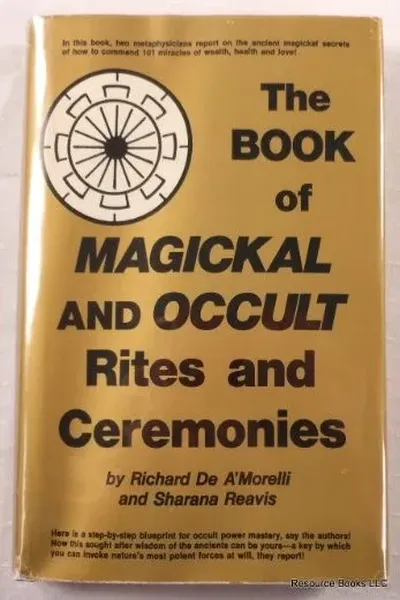
Mountain magick

 76
76

Mountain magick
Edain McCoy’s *Mountain Magick* offers a refreshing departure from the often generalized narratives of witchcraft. Its strength lies in its meticulous focus on the specific environmental and cultural milieu of mountainous regions, particularly the Appalachians. McCoy avoids abstract theorizing, instead grounding her work in practical, actionable magic derived from place. A particularly insightful passage discusses the use of specific local herbs not merely for their generalized magical properties, but for their efficacy within the unique microclimates of mountain slopes. However, the book’s limitation is its occasional reliance on somewhat anecdotal evidence, which, while evocative, could benefit from more rigorous historical or anthropological corroboration. The chapter on working with mountain spirits, for instance, feels more like a personal cosmology than a documented tradition, though it remains compelling. Despite this, *Mountain Magick* provides a valuable, grounded perspective on regional witchcraft. It is a focused exploration of place-based magic that succeeds in its aim.
📝 Description
76
Edain McCoy's 1997 book, Mountain Magick, details folk magic traditions tied to mountainous regions.
Mountain Magick, published in 1997, focuses on the folk magic practices specific to mountainous areas, especially Appalachia. It moves away from broad paganism to examine how local environments and cultures influence magical systems. The book describes beliefs and actions grounded in the natural world, with an emphasis on practical uses for daily life and spiritual growth. McCoy aims to show the unique energies and techniques that come from living near mountains, valleys, and their specific plants and animals. This work intends to give readers knowledge of earth-centered magic, drawing on a history of practical witchcraft and folk wisdom.
This book is for folk magic practitioners, witches, and pagans wanting a deeper connection to nature spirituality. It will interest those curious about regional magic, particularly from the American Appalachian area. Readers drawn to earth magic, plant knowledge, and the elemental forces of mountains will find useful material. It is also suitable for students of religion and folklore, offering a close look at a particular type of magical practice. Those interested in how geography shapes spiritual paths will also benefit.
Published in 1997, Mountain Magick appeared during a time of expansion and variety in Neo-Pagan and witchcraft movements. While many books covered general Wiccan practices or European traditions, McCoy's work found a specific place by looking at regional folk magic. This period saw growing academic and public interest in witchcraft history. McCoy's book contributed to this by documenting and analyzing a less-covered aspect of magical practice, showing how local geography and culture create distinct spiritual paths.
💡 Why Read This Book?
• Gain practical techniques for earth-based magic specifically adapted to mountainous or high-altitude environments, moving beyond generic nature spells. You will learn how to utilize specific mountain flora and geological formations for ritualistic purposes as detailed in the book's regional focus. • Understand the concept of 'mountain energy' and how geographical features can influence spiritual practice and the effectiveness of spells. This offers a unique lens through which to view nature-based magic, distinct from forest or coastal traditions. • Discover the historical and cultural underpinnings of Appalachian folk magic, appreciating its specific lineage and the wisdom passed down through generations. This provides context for a particular branch of witchcraft that is often overlooked in broader surveys.
⭐ Reader Reviews
Honest opinions from readers who have explored this book.
❓ Frequently Asked Questions
What kind of magic does Edain McCoy's 'Mountain Magick' focus on?
The book concentrates on folk magic traditions specifically tied to mountainous regions, most notably the American Appalachians. It details practical applications of magic drawing from the unique environment, flora, fauna, and ancestral knowledge of these areas.
Is 'Mountain Magick' suitable for beginners in witchcraft?
Yes, it can be suitable for beginners interested in folk magic and nature-based practices. While it assumes some familiarity with magical concepts, its practical approach and focus on specific regional traditions make it accessible for those looking to explore a particular niche.
What makes the magic described in 'Mountain Magick' different from other witchcraft books?
Its distinctiveness comes from its deep focus on geographical influence. Unlike books with broader scopes, it analyzes how mountain landscapes shape magical practices, energies, and the use of local resources, offering a localized, earth-centered perspective.
When was 'Mountain Magick' first published?
Edain McCoy's 'Mountain Magick' was first published in 1997, placing it within the burgeoning period of Neo-Pagan and witchcraft literature that explored diverse traditions.
Does 'Mountain Magick' discuss specific plants or herbs?
Yes, the book extensively discusses the use of local plants and herbs found in mountainous regions. It details their magical properties and how they can be incorporated into spells and rituals specific to these environments.
What is the core philosophy behind the practices in 'Mountain Magick'?
The core philosophy is rooted in a deep respect for nature and the belief that specific geographical locations, like mountains, possess unique energies that can be harnessed for magical purposes. It emphasizes practical, earth-centered spirituality.
🔮 Key Themes & Symbolism
Place-Based Energetics
The work meticulously explores the concept of 'mountain energy,' arguing that elevation and specific geological formations imbue a locale with distinct spiritual forces. This isn't generic nature worship; it's about understanding the unique vibrational frequencies of peaks, valleys, and specific rock types. McCoy details how these energies can be tapped for magical work, influencing spell efficacy and personal spiritual connection. The book provides practical methods for attuning oneself to these localized powers, distinguishing it from broader pantheistic approaches.
Indigenous Flora and Fauna
A significant portion of Mountain Magick is dedicated to the specific plants, herbs, and animals indigenous to mountainous terrains, particularly Appalachia. McCoy emphasizes sympathetic magic, detailing how the inherent qualities of these natural elements—their growth patterns, medicinal uses, and symbolic associations—can be applied in spellcraft. This includes not just common herbs but also lesser-known mountain botanicals and the spirits of local wildlife, offering a grounded, ecological approach to magical ingredients.
Generational Folk Wisdom
The book highlights the transmission of magical knowledge through oral tradition and familial lineage within mountain communities. It recognizes that folk magic is often a deeply embedded cultural practice, passed down through generations rather than learned from printed texts alone. McCoy’s work seeks to document and honor this living tradition, emphasizing the importance of ancestral connections and the practical, often unwritten, rules that govern these practices.
Practical Spellcraft
Mountain Magick is fundamentally a practical guide. It moves beyond theoretical discussions to offer concrete rituals, spells, and workings tailored to the mountain environment. This includes methods for divination using natural materials, charms for protection and prosperity relevant to rural life, and ways to invoke mountain spirits. The focus remains on efficacy and direct application, making the magic accessible for practitioners seeking tangible results within a specific natural context.
💬 Memorable Quotes
Direct passages from the work, attributed to the author.
“The mountain itself is a living entity, possessing its own spirit and energy.”
— This statement captures the book's core premise: that geographical features are not inert but possess conscious vitality. It suggests a form of animism where the landscape is an active participant in magical practice, offering power and guidance.
“Local herbs hold the secrets of the mountain's health and vitality.”
— This highlights the book's emphasis on ecological magic. It suggests that the plants growing in a specific mountainous region are intrinsically linked to its unique energy and can be used as conduits for that power in magical workings.
“Ancestral knowledge provides the roots for mountain magic.”
— This interpretation points to the importance of lineage and tradition within folk magic. It posits that the practices described are not newly invented but are built upon a foundation of wisdom passed down through generations of mountain dwellers.
“Sympathetic magic finds its purest expression in the natural world.”
— This suggests that the principles of like-attracting-like are most potent when working with materials directly from the environment. The book explores how the inherent qualities of mountain elements can be used to influence corresponding effects.
“The rhythm of the mountain dictates the timing of the spell.”
— This concept emphasizes the importance of natural cycles and environmental cues in magical practice. It implies that effective spellcasting is not arbitrary but is attuned to the specific temporal and energetic patterns of the mountain landscape.
🌙 Esoteric Significance
Tradition
Mountain Magick primarily draws from the broad umbrella of Western folk magic and witchcraft traditions, with a strong emphasis on animism and nature reverence. It departs from more formalized Neopagan paths like Wicca by focusing on localized, often pre-formalized, magical systems. Its lineage is rooted in the practical, earth-centered spirituality observed in isolated rural communities, particularly the Appalachian region of the United States. The work emphasizes the immanent divine within nature, aligning with a panentheistic or pantheistic worldview where spirit is found directly within the physical world.
Symbolism
Key symbols include the mountain itself, representing stability, ancient power, and a connection to the heavens and earth. Local flora, such as specific herbs like ginseng or oak, symbolize healing, strength, and rootedness, their magical properties directly tied to their natural environment. Animal spirits, like the hawk or bear, represent specific archetypal energies—vision, power, instinct—relevant to survival and spiritual insight within the mountain ecosystem. Water sources, like springs and creeks, often symbolize purification, flow, and the life-giving essence of the land.
Modern Relevance
Contemporary practitioners of ecological witchcraft, animism, and place-based spirituality often draw inspiration from McCoy's work. Thinkers and groups focused on re-wilding practices and land-based magic find resonance in her detailed exploration of regional traditions. The book’s emphasis on the specific energetic qualities of landscapes remains relevant for modern practitioners seeking to deepen their connection to their immediate environment, moving beyond generalized nature worship towards localized, potent magical systems.
👥 Who Should Read This Book
• Practitioners of folk magic seeking to deepen their understanding of regional traditions, particularly those interested in the unique magical practices of the American Appalachian mountains. They will gain specific techniques and lore distinct from European-based witchcraft. • Students of comparative religion and folklore interested in examining how geography and culture shape spiritual expression. They will find a detailed case study of a specific, localized magical system and its historical roots. • Nature-based spiritualists and animists looking for practical ways to connect with the land and harness its inherent energies. They will learn about the concept of 'mountain energy' and how to work with specific local flora and fauna.
📜 Historical Context
Edain McCoy’s *Mountain Magick*, published in 1997, appeared during a dynamic period for Neo-Paganism and witchcraft studies. The 1990s saw a proliferation of books exploring diverse magical traditions, moving beyond the dominant Gardnerian and Alexandrian Wicca models. This era was also marked by increasing academic rigor in the study of Western Esotericism, with scholars like Ronald Hutton publishing influential works such as *The Rise of Western Magic* (1991), which critically examined the historical roots of witchcraft. McCoy's focus on Appalachian folk magic provided a counter-narrative to the prevalent European-centric witchcraft traditions, highlighting indigenous North American magical practices. While not a direct engagement with academic discourse, the book contributed to a broader trend of recognizing regional variations and the importance of localized spiritual expression within the burgeoning witchcraft revival. It offered a grounded, place-based approach at a time when many texts focused on more generalized or cosmopolitan forms of magic.
📔 Journal Prompts
The unique energies of the mountain landscape: how do they manifest in your experience?
Reflect on the specific local plants in your area and their potential magical correspondences.
Consider the concept of ancestral knowledge and its role in your personal spiritual path.
How can the spirits of local wildlife inform your understanding of the natural world?
Document a ritual or spell adapted from Mountain Magick's principles to your own environment.
🗂️ Glossary
Mountain Energy
The specific spiritual and energetic forces believed to emanate from mountainous geographical features. This concept suggests that mountains possess a unique vibratory quality that can be harnessed for magical purposes.
Folk Magic
A type of magic rooted in the traditions, beliefs, and practices of ordinary people within a specific culture or region. It is often practical, passed down orally, and integrated into daily life.
Sympathetic Magic
A magical practice based on the principle that like produces like or that a "contagious connection" exists between things that were once in contact. It involves using elements that share characteristics with the desired outcome.
Animism
The belief that natural objects, phenomena, and the universe itself possess an animating, or spiritual, essence. In this context, it refers to the belief that mountains, plants, and animals have distinct spirits.
Place-Based Magic
Magical practices that are deeply connected to and draw power from a specific geographical location. The environment itself is seen as a primary source of magical energy and influence.
Appalachian Traditions
Refers to the specific cultural and spiritual practices, including folk magic, that originated and developed within the Appalachian mountain region of the United States.
Divination
The practice of seeking knowledge of the future or the unknown by supernatural means. In Mountain Magick, this often involves using natural elements found in mountainous terrains.
🔮 Readers Also Liked
Browse all →






More by Edain McCoy
All books →



More Free Magic & Ritual Books
View all →