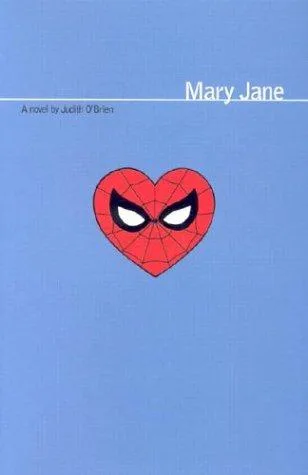
Mary Jane
 80
80

Mary Jane
Judith O'Brien and Mike Mayhew’s "Mary Jane" presents a bold artistic interpretation of Christ’s life, rendering familiar narratives with a visual dynamism that is often striking. Mayhew’s art, a clear strength, imbues the story with a gritty, contemporary feel, effectively juxtaposing the ancient setting with a modern sensibility. The narrative's reimagining of key events and figures offers a fresh perspective, particularly in its focus on the human and relatable aspects of spiritual figures. However, the work occasionally struggles with pacing; certain theological dialogues feel protracted, slowing the otherwise engaging visual flow. The exploration of the Sermon on the Mount, for instance, while visually arresting, could benefit from greater narrative concision. Despite this, "Mary Jane" succeeds in prompting a re-examination of established religious iconography through a compelling artistic lens. It is a visually rich, if sometimes narratively uneven, re-imagining of a foundational spiritual narrative.
📝 Description
80
### What It Is
Mary Jane is a graphic novel that reimagines the life and teachings of Jesus Christ through a modern, often counter-cultural lens. It presents a narrative that is both familiar in its spiritual underpinnings and strikingly unconventional in its execution. The work is a collaborative effort, with Judith O'Brien contributing to the narrative and Mike Mayhew providing the distinctive artwork. First published in 2003, the book sought to explore theological concepts and historical narratives in a format accessible to a new generation of readers.
### Who It's For
This graphic novel is intended for individuals interested in exploring religious and spiritual themes through alternative media. Readers who appreciate artful storytelling and are open to reinterpretations of established religious figures and narratives will find much to engage with. It appeals to those who enjoy philosophical discussions presented visually and who are curious about how ancient spiritual ideas can be translated into contemporary contexts. It is not a devotional text but rather an artistic and intellectual exploration.
### Historical Context
The early 2000s saw a growing interest in graphic novels as a medium for serious storytelling, including religious and philosophical topics. This period followed the critical acclaim of works like Art Spiegelman's "Maus" and Alan Moore's "From Hell," which demonstrated the artistic and narrative potential of the form. "Mary Jane," published in 2003, emerged within this landscape, offering a unique perspective on Christian narrative that diverged from more traditional portrayals. It contributed to the broadening acceptance of comics as a legitimate medium for complex subject matter.
### Key Concepts
The book engages with several core concepts found in Christian theology and esotericism. It examines the nature of divinity, the role of prophecy, and the interpretation of miracles. The narrative often contrasts traditional religious dogma with more personal, experiential approaches to spirituality. Themes of enlightenment, self-discovery, and the challenges of living a spiritual life in a secular world are central. The work also touches upon the idea of divine presence manifesting in unexpected ways and individuals.
💡 Why Read This Book?
• Gain a new visual interpretation of Christ’s life, exploring his teachings through Mike Mayhew’s distinctive artistic style, as seen in the portrayal of the Sermon on the Mount. • Understand how esoteric and spiritual concepts can be communicated through the graphic novel medium, diverging from traditional religious texts. • Examine the juxtaposition of ancient spiritual narratives with a modern aesthetic, offering a fresh perspective on familiar biblical events and figures first explored in 2003.
⭐ Reader Reviews
Honest opinions from readers who have explored this book.
❓ Frequently Asked Questions
What is the primary artistic style of "Mary Jane"?
The graphic novel "Mary Jane" by Judith O'Brien and Mike Mayhew features a distinctive, often gritty, visual style. Mike Mayhew's artwork combines realistic character rendering with a dynamic, cinematic approach, lending a contemporary feel to the biblical narrative.
When was "Mary Jane" first published?
The graphic novel "Mary Jane" was first published in 2003. This places its release during a period when graphic novels were increasingly recognized for their potential to tackle complex thematic material.
Does "Mary Jane" offer a traditional portrayal of Jesus?
No, "Mary Jane" presents a re-imagined, often unconventional portrayal of Jesus. The narrative focuses on his human aspects and spiritual teachings, filtered through a modern, artistic lens rather than adhering strictly to traditional iconography.
Who are the creators behind "Mary Jane"?
The creators of "Mary Jane" are Judith O'Brien, who wrote the narrative, and Mike Mayhew, who provided the illustrations. Their collaboration resulted in this unique 2003 graphic novel.
What kind of themes does "Mary Jane" explore?
The book explores themes of divinity, prophecy, miracles, spiritual enlightenment, and the challenges of living a spiritual life in a secular world. It aims to translate ancient spiritual ideas into contemporary contexts.
Is "Mary Jane" suitable for religious study?
"Mary Jane" is more of an artistic and intellectual exploration than a devotional text. While it engages with religious themes, its re-interpretive nature makes it best suited for those interested in comparative religion and art.
🔮 Key Themes & Symbolism
Spiritual Reinterpretation
The work reimagines familiar biblical narratives, presenting Jesus not solely as a divine figure but as a relatable individual grappling with spiritual truths. This approach invites readers to reconsider established doctrines and explore the human element within sacred stories. The visual medium, especially Mike Mayhew’s art, allows for symbolic representations that go beyond literal interpretation, offering new layers of meaning to events like the Sermon on the Mount.
The Nature of Divinity
"Mary Jane" delves into the multifaceted nature of divinity, questioning how it is perceived and understood across different contexts. It contrasts institutionalized religious views with more personal, experiential encounters with the sacred. The book explores the idea that divine presence can manifest in unconventional ways, challenging readers to expand their definitions of spiritual experience beyond traditional frameworks.
Art as Spiritual Medium
This graphic novel highlights the power of the visual arts to convey complex spiritual and philosophical ideas. The artistic choices made by Mike Mayhew are integral to the narrative's impact, translating abstract concepts into tangible imagery. The work demonstrates how artistic expression can serve as a conduit for exploring esoteric themes, making them accessible and engaging for a contemporary audience.
Counter-Cultural Spirituality
The book often aligns with a counter-cultural approach to spirituality, emphasizing personal authenticity and questioning established authority. It presents a vision of faith that is less about dogma and more about lived experience and individual enlightenment. This perspective resonates with those seeking spiritual paths outside of mainstream religious institutions, offering a narrative that champions independent thought.
💬 Memorable Quotes
“The light that shines in the darkness is often misunderstood.”
— This statement speaks to the esoteric concept of hidden knowledge or profound spiritual truth being rejected or feared by the uninitiated or those bound by conventional understanding.
“Miracles are not violations of nature, but of our understanding of it.”
— This challenges a literal, dogmatic view of miracles, suggesting they are phenomena that operate within a larger, perhaps undiscovered, natural order, emphasizing the limitations of human perception.
“The kingdom is not a place, but a state of being.”
— This paraphrased concept points towards an inward-focused spirituality, suggesting that true spiritual attainment is an internal transformation rather than an external reward or location.
“Follow the path that calls to your soul, not the one prescribed by others.”
— This highlights the theme of individual spiritual authority and the importance of personal discernment in one's esoteric journey, diverging from external religious dictates.
“True prophecy speaks not just of the future, but of the present truth.”
— This reframes prophecy away from mere prediction, emphasizing its role in revealing present spiritual realities and guiding individuals toward awakening in the here and now.
🌙 Esoteric Significance
Tradition
While not strictly adhering to a single esoteric lineage, "Mary Jane" draws upon Gnostic and Hermetic principles by emphasizing personal gnosis (knowledge) and the inner spiritual journey over dogma. It aligns with traditions that view spiritual truth as accessible through individual revelation rather than solely through prescribed religious structures. The work’s focus on the human experience of the divine echoes the Gnostic interest in the spark of divinity within each person.
Symbolism
The book employs potent symbolism, often recontextualizing traditional Christian imagery. The figure of Mary Jane herself can be seen as a modern archetype of the divine feminine or an embodiment of spiritual wisdom accessible to all. The parables and miracles are presented with visual metaphors that invite deeper, multi-layered interpretations, encouraging the reader to look beyond the surface narrative for hidden esoteric meanings.
Modern Relevance
Contemporary spiritual seekers and artists continue to find relevance in "Mary Jane's" approach. Its blend of accessible narrative and profound spiritual questioning resonates with modern movements exploring mindfulness, personal enlightenment, and alternative spiritualities. Thinkers and practitioners interested in the intersection of art, religion, and psychology find value in its nuanced portrayal of spiritual awakening outside conventional religious frameworks.
👥 Who Should Read This Book
• Students of comparative religion and mythology seeking alternative visual interpretations of foundational spiritual figures and narratives. • Art enthusiasts and graphic novel collectors interested in works that push the boundaries of storytelling and visual expression in exploring complex themes. • Individuals on a personal spiritual path who appreciate explorations of faith that prioritize inner experience and question traditional dogma.
📜 Historical Context
Published in 2003, "Mary Jane" emerged during a period when the graphic novel medium was gaining significant critical traction beyond its traditional audience. Following the success of works like Art Spiegelman's "Maus" (1980-1991) and the burgeoning interest in creator-owned comics, the early 2000s saw publishers and artists exploring more mature and complex themes. This era was marked by a growing acceptance of comics as a vehicle for literary and philosophical exploration, moving away from the perception of them as solely for children. "Mary Jane" participated in this cultural shift, offering a spiritual narrative that diverged from conventional portrayals, contrasting with the more traditional religious comics that had previously dominated the market. Its release predated many of the later mainstream graphic novel successes in religious and philosophical genres, positioning it as an early example of the medium's expanding thematic range.
📔 Journal Prompts
Reflect on the concept of 'misunderstood light' as presented in the work.
Consider the interpretation of miracles as extensions of natural law.
Analyze the portrayal of spiritual authority versus personal conviction.
Explore the idea of the 'kingdom' as an internal state of being.
Meditate on the symbols used to represent divinity in contemporary art.
🗂️ Glossary
Gnosis
A Greek term meaning 'knowledge,' often referring to esoteric or spiritual knowledge acquired through personal experience or intuition, central to Gnostic traditions.
Hermeticism
An esoteric tradition based on the writings attributed to Hermes Trismegistus, emphasizing divine wisdom, the interconnectedness of all things, and the pursuit of spiritual enlightenment.
Archetype
A universal, inherited symbol, character, or image that recurs across cultures and time, representing fundamental human experiences or patterns of behavior.
Esoteric
Intended for or likely to be understood by only a small number of people with a specialized knowledge or interest; relating to hidden meanings or spiritual truths.
Dogma
A principle or set of principles laid down by an authority as incontrovertibly true, often associated with religious or political systems.
Spiritual Enlightenment
A state of profound spiritual insight, understanding, and liberation, often characterized by peace, wisdom, and transcendence of ordinary limitations.
Divine Feminine
A spiritual concept that emphasizes the feminine aspects of the divine, often associated with creation, nurturing, intuition, and wisdom.