Dreamland
 72
72

Dreamland
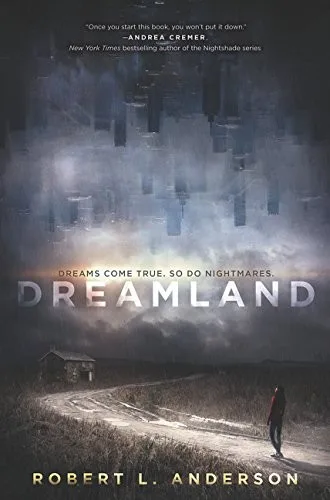
Robert L. Anderson's *Dreamland* attempts to chart the uncharted territories of the subconscious with a rigor seldom seen outside academic philosophy. The book's primary strength lies in its systematic deconstruction of the dream state, moving beyond anecdotal accounts to propose a coherent, if speculative, cosmology of the sleeping mind. Anderson's concept of 'Anchors' as stabilizing forces within the chaotic Dreamscape is particularly compelling, offering a practical handle for readers seeking to navigate their own nocturnal visions. However, the work occasionally falters under the weight of its own terminology. The sheer density of invented or repurposed terms, while intended to create a precise lexicon, can sometimes obscure the central arguments, requiring multiple readings to fully grasp. A passage detailing the 'Phantasmal Resonance' between the waking world and the Dreamscape, while conceptually rich, could have benefited from clearer illustrative examples. Despite this, *Dreamland* is a significant and ambitious contribution to esoteric literature, offering a unique framework for understanding the mind's hidden dimensions.
📝 Description
72
Robert L. Anderson's 2016 book, Dreamland, examines consciousness through speculative narrative.
Dreamland, published in 2016, investigates the nature of consciousness and reality by blending philosophical inquiry with speculative narrative. The work questions the boundaries between waking life and altered states, proposing that the dreamscape is not merely a product of sleep but a distinct realm of existence with its own governing principles. Anderson presents a structured way to see these states as fundamental aspects of human awareness, not secondary phenomena.
This book is for individuals drawn to the mind's deeper workings, especially those involved with spiritual or philosophical paths that focus on internal exploration. Readers familiar with Jungian psychology, Gnosticism, or Hermeticism will find resonance. It also appeals to those open to unconventional ideas about consciousness. Dreamland is suited for the dedicated student of esoteric philosophy, the lucid dreamer, or anyone curious about the mind's latent capabilities. It requires focused reading.
Published in 2016, Dreamland arrives during a resurgence of interest in consciousness studies and alternative spiritualities. Anderson's work connects to a long history of esoteric thought that maps inner worlds, similar to Helena Blavatsky's Theosophical Society from the late 19th century. Unlike purely scientific views of sleep or neuroscience, Anderson's approach aligns with traditions that posit non-material dimensions accessible through altered states of consciousness.
💡 Why Read This Book?
• Gain a structured understanding of the 'Dreamscape' as a contiguous realm, learning concepts like 'Phantasms' and 'Anchors' to interpret your own dream experiences beyond common psychological interpretations. • Explore the potential for conscious interaction within altered states by studying Anderson's 'Dream Weaving' techniques, offering practical methods for lucid dreaming and intentional psychic exploration. • Understand the historical lineage of consciousness mapping, placing Anderson's 2016 work within the context of esoteric traditions that sought to define non-physical realities.
⭐ Reader Reviews
Honest opinions from readers who have explored this book.
❓ Frequently Asked Questions
What is the primary focus of Robert L. Anderson's 'Dreamland'?
Dreamland primarily focuses on the architecture of consciousness and the nature of the dream state, proposing it as a distinct realm with its own laws, rather than solely a byproduct of sleep.
When was 'Dreamland' by Robert L. Anderson first published?
The book 'Dreamland' by Robert L. Anderson was first published in 2016.
What are 'Phantasms' as described in 'Dreamland'?
In 'Dreamland', 'Phantasms' are described as entities or constructs that inhabit the Dreamscape, conceptualized as manifestations of archetypal energies or fragments of consciousness.
Does 'Dreamland' offer practical techniques for dream exploration?
Yes, the book introduces 'Dream Weaving,' a practice detailed by Anderson for consciously interacting with and influencing elements within the Dreamscape.
What kind of reader would most benefit from 'Dreamland'?
Individuals interested in esoteric philosophy, consciousness studies, lucid dreaming, Jungian psychology, and those seeking a structured framework for understanding subjective experience would find 'Dreamland' beneficial.
How does 'Dreamland' relate to historical esoteric traditions?
Anderson's work builds upon traditions that map inner worlds, akin to late 19th-century Theosophy, by positing non-material realms accessible through altered states of awareness.
🔮 Key Themes & Symbolism
The Dreamscape as a Realm
Anderson posits the Dreamscape not as an illusion but as a contiguous dimension of existence, accessible during sleep and other altered states. This perspective challenges conventional views that relegate dreams to mere neurological epiphenomena. The work outlines its own geography and inherent logic, suggesting it is a space where consciousness can actively engage with its own constructs and externalized psychic energies. The text details the structure of this realm, differentiating it from the physical world while asserting its lasting impact on waking life and personal development.
Phantasms and Anchors
Central to the book's cosmology are 'Phantasms' and 'Anchors'. Phantasms are presented as dynamic entities or archetypal energies residing within the Dreamscape, potentially representing stabilized thoughts, emotions, or collective unconscious elements. 'Anchors', conversely, are conceptualized as points of stability or reference within this fluid environment. Anderson suggests that understanding and utilizing these Anchors is crucial for maintaining psychic coherence and for reading through the Dreamscape effectively, preventing disorientation or psychic dissolution.
Dream Tying and Conscious Interaction
The practice of 'Dream Tying' is a central to Anderson's exploration, offering a methodology for conscious engagement within the Dreamscape. This concept moves beyond passive dream recall or simple lucid dreaming, advocating for an intentional shaping and interaction with the dream environment and its inhabitants. The book provides a theoretical basis and practical guidance for developing this skill, framing it as a vital aspect of self-mastery and psychic exploration, enabling individuals to harness the creative and diagnostic potential of their dream lives.
The Collective Unconscious Interface
Dreamland explores how the individual psyche interfaces with the collective unconscious within the Dreamscape. Anderson suggests that dreams are a primary conduit for this interaction, allowing personal consciousness to access and be influenced by broader psychic currents and archetypal patterns. The work elucidates how shared symbols and narratives emerge from this interface, underscoring the interconnectedness of human consciousness. Understanding this connection is presented as key to deciphering personal symbolism and its broader implications.
💬 Memorable Quotes
Direct passages from the work, attributed to the author.
“The Dreamscape is not a void, but a range of potential.”
— This statement expresses the book's core thesis: that the field of dreams possesses its own inherent structure and reality, offering fertile ground for exploration and creation rather than being an empty space.
“Anchors provide the tether for the exploring mind.”
— This highlights the function of 'Anchors' as crucial stabilizing elements within the often chaotic and fluid environment of the Dreamscape, enabling the consciousness to maintain its integrity during exploration.
“Phantasms are the elements of thought given form within the psychic ether.”
— This defines 'Phantasms' as more than mere dream images; they are presented as distinct entities or constructs that arise from the interplay of thought and the subtle substance of the Dreamscape.
“Waking awareness is but one facet of the full spectrum of consciousness.”
— This interpretation suggests that the book advocates for a broader understanding of consciousness, asserting that the states experienced during dreams are equally valid and significant aspects of our total being.
💡 Key Ideas
Editorial paraphrase of the work's core concepts — not direct quotes.
To combine is to consciously participate in the unfolding of the dream.
This paraphrased concept emphasizes the active role described in 'Dream Tying,' portraying it as a deliberate engagement with the dream narrative and environment, rather than passive observation.
🌙 Esoteric Significance
Tradition
Dreamland can be situated within the broader tradition of Hermeticism and Western Esotericism, particularly its branches focused on consciousness, cosmology, and the exploration of subtle realms. It shares common ground with Gnostic ideas about the nature of reality and the potential for spiritual liberation through knowledge (gnosis), as well as with Theosophical concepts of planes of existence. Anderson's work departs by offering a more systematized, almost architectural, model of the dream state, emphasizing practical application for the individual seeker.
Symbolism
Key symbols in *Dreamland* include the 'Dreamscape' itself, representing the boundless potential and inherent structure of non-physical reality accessible through altered states. 'Phantasms' function symbolically as archetypal forces or personified psychological complexes that populate this realm, akin to figures in a psychic drama. 'Anchors' symbolize points of stability, grounding, or essential selfhood that allow for navigation and orientation within the flux of the subconscious, much like lighthouses in a storm.
Modern Relevance
Contemporary thinkers and practitioners in fields such as lucid dreaming, consciousness hacking, and transpersonal psychology often draw upon frameworks that echo Anderson's ideas. His systematic approach to the Dreamscape speaks to modern efforts to integrate subjective experience with empirical inquiry. Communities focused on dream analysis, astral projection, and the exploration of the collective unconscious find value in Anderson's conceptual tools for understanding and engaging with these phenomena.
👥 Who Should Read This Book
• Individuals interested in the philosophical underpinnings of consciousness, particularly those seeking to understand dream states beyond conventional psychological explanations. • Practitioners of lucid dreaming or those curious about developing their abilities to consciously navigate and interact with their dream environments. • Students of esoteric traditions, comparative religion, and metaphysics who are looking for contemporary perspectives on subtle realms and the architecture of the psyche.
📜 Historical Context
Robert L. Anderson's *Dreamland*, published in 2016, arrived amidst a resurgence of interest in consciousness studies, propelled by advancements in neuroscience, the re-evaluation of psychedelic research, and a growing popular engagement with esoteric philosophies. This period saw a divergence between empirical, often reductionist, scientific approaches to consciousness and more holistic, experiential traditions. Anderson's work fits within the latter, drawing parallels to the speculative mapping of inner worlds undertaken by figures like Helena Blavatsky and the Theosophical Society in the late 19th century, and the psychological explorations of Carl Jung. While not directly engaging with contemporary academic debates in its prose, *Dreamland* implicitly contrasts with purely materialist explanations of mind. Its reception occurred within niche metaphysical and esoteric publishing circles, distinct from mainstream academic discourse, positioning it as a contribution to a lineage of thought concerned with non-ordinary states of awareness.
📔 Journal Prompts
The architecture of the Dreamscape: mapping its known territories.
Reflecting on personal 'Anchors' in moments of psychic disorientation.
Analyzing a recurring 'Phantasm' from recent dreams.
Documenting attempts at 'Dream Tying' and their outcomes.
The relationship between waking anxieties and Dreamscape phenomena.
🗂️ Glossary
Dreamscape
The conceptualized realm or dimension of reality explored in the book, accessed primarily through dream states and other altered states of consciousness.
Phantasm
Entities, constructs, or archetypal energies perceived to inhabit the Dreamscape, often representing stabilized thoughts, emotions, or collective unconscious elements.
Anchor
Points of stability, reference, or grounding within the Dreamscape that help maintain psychic coherence and orientation for the exploring consciousness.
Dream Tying
A practice described in the book for consciously interacting with, shaping, and influencing elements within the Dreamscape.
Psychic Ether
The subtle, non-physical substance or medium believed to constitute the Dreamscape and other planes of consciousness.
Consciousness Fragments
Portions of awareness or psychic energy that may exist independently or form constructs within the Dreamscape.
Archetypal Energies
Fundamental patterns or forces of the collective unconscious that manifest within the Dreamscape, often taking symbolic forms.
🔮 Readers Also Liked
Browse all →







More Free Magic & Ritual Books
View all →