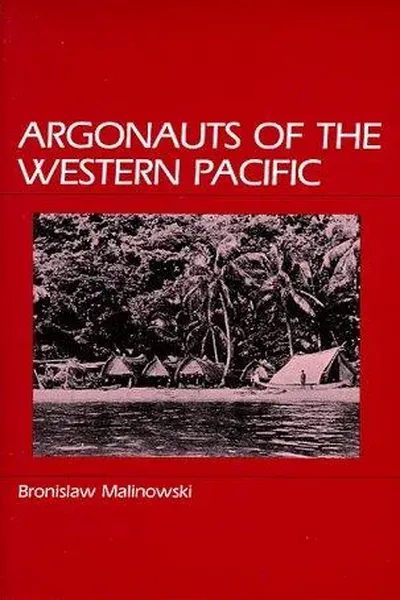
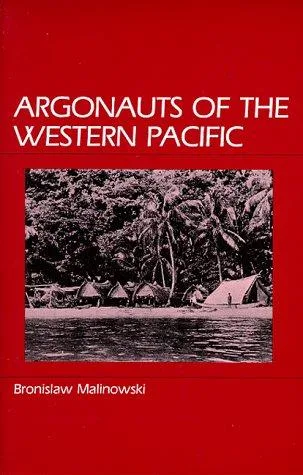
Argonauts of the western Pacific
 79
79

Argonauts of the western Pacific
Malinowski's "Argonauts of the Western Pacific" remains a monumental work, even a century after its initial publication. The sheer density of detail regarding the Trobriand Islanders' Kula exchange system is astonishing, offering an unparalleled glimpse into a complex social and economic web. The author’s insistence on participant observation, living among the people he studied, imbues the text with an authenticity that later ethnographies struggled to match. However, the prose can be dense and occasionally repetitive, a testament to the exhaustive nature of his research but a hurdle for some readers. The section detailing the Trobriand conception of kinship and magic, while crucial, can feel less immediate than the vibrant descriptions of the Kula voyages. Nevertheless, it is an essential, if challenging, study of human social organization.
📝 Description
79
### What It Is
Bronisław Malinowski's "Argonauts of the Western Pacific," first published in 1922, presents an extensive ethnographic study of the Trobriand Islanders. It details their complex social structures, economic systems, and intricate belief systems, particularly focusing on the Kula Ring. This is not a romanticized travelogue, but a rigorous, often painstaking, account of fieldwork conducted between 1914 and 1918.
### Who It's For
This work is intended for serious students of anthropology, sociology, and comparative religion. It appeals to readers interested in the foundational texts of modern ethnography and those seeking to understand the methodologies that shaped the discipline. Those fascinated by non-Western cosmologies and economic practices will find substantial material.
### Historical Context
Published in the wake of World War I, "Argonauts" emerged during a period of intense development in anthropological theory. Malinowski's empirical, participant-observation approach challenged prevailing armchair ethnology. His work was a direct counterpoint to diffusionist theories and evolutionary models of culture, offering a holistic view of a single society.
### Key Concepts
The book meticulously describes the Kula Ring, a ceremonial exchange system involving shell necklaces and bracelets that circulates among islanders in the Massim region of Papua New Guinea. It also explores the concept of 'mana,' a supernatural force or prestige, and the intricate horticultural practices and social obligations that underpin Trobriand society.
💡 Why Read This Book?
• Learn about the Kula Ring, a ceremonial exchange system documented extensively by Malinowski in the Trobriand Islands, offering unique insights into non-monetary economies. • Understand the concept of 'mana' as presented in the text, a supernatural force central to Trobriand social and spiritual life, providing a window into their worldview. • Grasp the significance of participant observation as a research method, exemplified by Malinowski's fieldwork between 1914-1918, which revolutionized ethnographic practice.
⭐ Reader Reviews
Honest opinions from readers who have explored this book.
❓ Frequently Asked Questions
What is the Kula Ring described in Argonauts of the Western Pacific?
The Kula Ring is a ceremonial exchange system among inhabitants of the Trobriand Islands and surrounding regions. It involves the circulation of shell necklaces and bracelets, creating social bonds and prestige among participants.
When did Bronisław Malinowski conduct his research for this book?
Malinowski conducted his primary fieldwork for "Argonauts of the Western Pacific" between 1914 and 1918, during the early years of World War I.
What is 'mana' in the context of Malinowski's study?
'Mana' refers to a supernatural force or spiritual power attributed to people, animals, and objects in Trobriand society. It is intrinsically linked to prestige, authority, and effectiveness.
How did 'Argonauts of the Western Pacific' influence anthropology?
The book is considered a foundational text in modern anthropology, popularizing the method of participant observation and emphasizing the holistic study of a culture.
Is this book considered an esoteric text?
While not traditionally esoteric in the sense of magic or mysticism, its deep dive into the symbolic and ritualistic aspects of the Kula Ring and Trobriand cosmology offers esoteric interpretations for those studying human belief systems.
What are the Trobriand Islanders known for besides the Kula Ring?
Besides the Kula Ring, the Trobriand Islanders are known for their complex kinship structures, matrilineal descent, and sophisticated agricultural practices, all meticulously detailed in Malinowski's work.
🔮 Key Themes & Symbolism
The Kula Ring Exchange
The Kula Ring forms the central focus of "Argonauts." This elaborate system of reciprocal gift-giving involves the exchange of ornate shell necklaces (soulvaku) and bracelets (mwali) among islanders across the Massim archipelago. Malinowski meticulously maps the pathways of these objects, demonstrating how the exchange creates and reinforces social hierarchies, alliances, and obligations, transcending mere economic transactions to become a fundamental expression of Trobriand social fabric.
Mana and Social Prestige
Central to understanding Trobriand society is the concept of 'mana.' Malinowski describes it as a supernatural force that imbues individuals, objects, and actions with power and prestige. The Kula objects themselves are believed to possess mana, and their circulation is a primary means of accumulating and displaying social status. This concept highlights how spiritual power and social standing are inextricably linked in their worldview.
Participant Observation Methodology
Malinowski's extensive fieldwork (1914-1918) exemplifies the then-emerging method of participant observation. He lived among the Trobriand people, learning their language and customs, and documenting their lives from an insider's perspective. This approach was revolutionary, moving away from detached scholarly analysis to a more immersive, empathetic understanding of a culture's internal logic and lived experience.
Trobriand Cosmology and Magic
Beyond the Kula, the work offers insights into Trobriand beliefs about magic, spirits, and the natural world. Malinowski details the role of sorcery, the importance of horticultural magic for ensuring bountiful harvests, and the intricate understanding of kinship and lineage, particularly the matrilineal system. These elements collectively paint a picture of a society deeply interwoven with spiritual forces and ritualistic practices.
💬 Memorable Quotes
“The Kula is a great institution, the most important one in the life of the natives.”
— This statement underscores the centrality of the Kula exchange system, positioning it not just as an economic activity but as a defining feature of Trobriand social and cultural life, shaping relationships and status.
“The aim of the ethnographer is to comprehend the native's point of view, his relations to life, to realize his vision of his world.”
— This reflects Malinowski's commitment to an emic perspective in anthropology, emphasizing the importance of understanding a culture from the inside, through the eyes of its own members.
“The natives are animated by the same passions and driven by the same needs as we are.”
— This highlights Malinowski's belief in the fundamental shared humanity across cultures, challenging ethnocentric views and advocating for an empathetic approach to ethnographic study.
“Magic is for me a practical matter, a means of influencing the world.”
— This interpretation captures the pragmatic orientation of Trobriand magic as described by Malinowski, where ritual is employed to achieve tangible results in areas like gardening and fishing.
“The detailed study of the Kula is a piece of research into the functioning of a primitive economic system.”
— This frames the Kula not merely as a ritual, but as a complex economic mechanism that Malinowski sought to analyze systematically, revealing its underlying principles and social impact.
🌙 Esoteric Significance
Tradition
While "Argonauts" is primarily an ethnographic text, its exploration of 'mana' and complex ritualistic exchange systems touches upon themes often found in animistic and shamanistic traditions. It offers a Western academic lens on belief systems that posit unseen forces influencing the material world, resonating with broader inquiries into the nature of power and belief found in many esoteric lineages.
Symbolism
The Kula objects—necklaces (vaygu'a) and armbands (mwali)—are potent symbols. They represent not just wealth but also spiritual power ('mana'), social status, and historical lineage. Their circulation imbues them with a sacred quality, embodying the interconnectedness of the Trobriand Islanders and their cosmos. The act of exchange itself becomes a ritual, reinforcing social bonds and cosmologial order.
Modern Relevance
Contemporary scholars of ritual studies, economic anthropology, and even certain strands of comparative psychology draw on Malinowski's detailed descriptions of the Kula. His work provides a foundational case study for understanding symbolic exchange, the construction of social capital, and the intricate relationship between belief systems and social action, influencing discussions on gift economies and the anthropology of consciousness.
👥 Who Should Read This Book
• Anthropologists and students of cultural studies seeking to understand foundational ethnographic methods and theories. • Readers interested in non-Western economic systems, particularly gift economies and ceremonial exchange. • Individuals fascinated by the study of belief systems, ritual, and the concept of 'mana' in different cultures.
📜 Historical Context
Published in 1922, Bronisław Malinowski's "Argonauts of the Western Pacific" was a product of the burgeoning field of social anthropology and a direct challenge to the prevailing evolutionary and diffusionist theories. Malinowski's immersive fieldwork, conducted between 1914 and 1918, championed the method of participant observation, demanding a holistic understanding of a society from within. This approach stood in stark contrast to the "armchair anthropology" that characterized much of the preceding era. His work was influenced by figures like W.H.R. Rivers but forged its own path. Malinowski's rigorous ethnographic detail and focus on the functional interrelation of social institutions were highly influential, particularly his emphasis on understanding the native's point of view. The book's reception was significant, establishing Malinowski as a leading figure and solidifying the functionalist school of thought, which emphasized how social institutions serve the needs of society.
📔 Journal Prompts
The Trobriand Islanders' concept of 'mana' and its role in social standing.
Reflect on the intricate pathways of the Kula Ring exchange system.
Malinowski's dedication to participant observation in the Trobriand Islands.
The balance between economic pragmatism and spiritual belief in Trobriand magic.
The significance of matrilineal descent in Trobriand social structure.
🗂️ Glossary
Kula Ring
A ceremonial system of exchange in the Massim region of Papua New Guinea involving shell necklaces and bracelets, creating social bonds and prestige.
Mana
A supernatural force or spiritual power believed to inhabit people, animals, and objects, conferring prestige and influence in Trobriand society.
Participant Observation
An ethnographic research method where the researcher immerses themselves in a culture, living with and participating in the daily lives of the people being studied.
Vaygu'a
The Trobriand term for the shell necklaces that are part of the Kula exchange, carrying significant social and spiritual value.
Mwali
The Trobriand term for the shell armbands exchanged in the Kula Ring, recognized for their specific paths of circulation.
Matrilineal Descent
A system of social organization in which descent and inheritance are traced through the mother's line.
Sorcery
Magical practices believed to cause harm or misfortune, a significant element within Trobriand belief systems alongside beneficial magic.