American folk magick

 73
73

American folk magick
Silver Ravenwolf’s *American Folk Magick* arrives with a directness that is both its greatest strength and its most apparent limitation. The author's commitment to presenting a distinctly American brand of witchcraft, unburdened by overt European influences, is commendable. The section detailing the use of common household items for potent charms, for instance, offers a refreshing, grounded perspective. However, the prose occasionally lacks the depth needed to fully explore the nuances of the traditions it touches upon, sometimes feeling more like a practical manual than a scholarly exploration. While it succeeds in its aim to provide accessible, actionable magic, readers seeking extensive historical analysis or deeper philosophical underpinnings might find it somewhat superficial. Nevertheless, for its intended audience, it provides a clear and functional guide to a localized magical path.
📝 Description
73
Published in 1998, American Folk Magick by Silver Ravenwolf addresses witchcraft practices specific to the United States.
Silver Ravenwolf's 1998 book, American Folk Magick, details practical magical methods drawn from American traditions. It moves past theory to give readers concrete ways to engage with magic that has roots in the United States, distinguishing it from European witchcraft. The book aims to clarify American conjure and witchcraft as they have formed uniquely on this continent.
This work is for practitioners of witchcraft and folk magic interested in American expressions of these arts. It speaks to those who feel a connection to North American land and history and want to weave these elements into their spiritual practices. Readers seeking a practical approach to spellcasting, ritual, and personal magical development, informed by an American viewpoint, will find this book valuable.
The book covers how place and land matter in magic, the use of everyday items for spells, and building personal power outside organized groups. It highlights the adaptive, eclectic character of American folk magic, which combines influences from various sources.
Emerging in the late 1990s, a time of growth and diversification in Neopagan and witchcraft movements, American Folk Magick distinguishes itself by focusing on the syncretic magical traditions that developed within the United States. Unlike many contemporaries who cataloged European Wicca or older folk magic, Ravenwolf carved out a specific area of study. This work acknowledges and helps legitimize a distinct magical heritage influenced by immigrant practices and indigenous traditions, forming on the North American continent.
💡 Why Read This Book?
• Gain practical techniques for spellcasting using readily available materials, as detailed in the chapter on "Hearth & Home Magick," allowing for immediate application in your personal practice. • Understand the specific historical development of witchcraft in North America, differentiating it from European roots by examining the influences discussed in the book's exploration of American syncretism. • Develop a stronger connection to the land and your immediate environment as a source of magical power, a concept central to the book’s approach to American folk traditions.
⭐ Reader Reviews
Honest opinions from readers who have explored this book.
❓ Frequently Asked Questions
When was Silver Ravenwolf's American Folk Magick first published?
American Folk Magick by Silver Ravenwolf was first published in 1998, positioning it as a significant work during the late 20th-century resurgence of Neopagan and witchcraft studies.
What differentiates American folk magic from European traditions, according to the book?
The book argues that American folk magic is distinct due to its syncretic nature, blending European folk practices with Native American and African diaspora influences, and emphasizing a connection to the North American landscape.
Does the book provide practical spells or just theory?
Yes, the book is heavily focused on practical application, offering concrete methods, spellwork, and ritualistic approaches rooted in American folk traditions, rather than purely theoretical discussions.
What kind of materials does American Folk Magick suggest for spells?
It emphasizes the use of common, everyday objects and materials found in the home and natural environment, reflecting the accessible and pragmatic nature of folk magic as presented in the text.
Is this book suitable for beginners in witchcraft?
Yes, its direct approach and focus on practical, accessible magic make it a suitable resource for beginners interested in exploring American-based witchcraft traditions.
Who is Silver Ravenwolf?
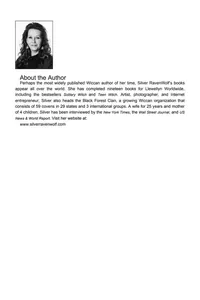
Silver Ravenwolf is an author known for her contributions to modern witchcraft literature, particularly focusing on practical, often solitary, practice and American folk magic traditions.
🔮 Key Themes & Symbolism
The American Landscape as Sacred Space
The work emphasizes that the North American continent itself is a potent source of magical energy. Unlike traditions tied to ancient European ley lines or specific sacred groves, American folk magic, as presented here, draws power from the local environment – its plants, animals, rocks, and weather patterns. This connection is not merely symbolic but is presented as a practical resource for spellcasting and ritual, encouraging practitioners to ground their work in their immediate surroundings and the unique spirit of the land they inhabit.
Syncretism and Eclectic Practice
A core theme is the inherently syncretic nature of magic that developed in the United States. Ravenwolf illustrates how immigrant traditions from various European countries, African diaspora practices, and indigenous Native American beliefs intermingled over centuries. This blending resulted in unique magical systems that are not beholden to a single lineage. The book encourages practitioners to embrace this eclecticism, adapting and combining elements to create a personal magical practice that reflects their own heritage and environment.
Hearth and Home Magick
This theme focuses on the utilization of common, everyday objects and domestic spaces for magical purposes. The book highlights how ordinary items found within the home – such as kitchen implements, household plants, or even cleaning supplies – can be imbued with magical intent and used effectively in spells and charms. This approach clarifies magic, making it accessible to everyone, regardless of their access to specialized tools or ritual spaces, reinforcing the idea that magic is woven into the fabric of daily life.
Personal Power and Solitary Practice
American Folk Magick champions the development of individual magical strength and self-reliance. It often caters to the solitary practitioner, suggesting that profound magical work can be accomplished outside of formal groups or covens. The emphasis is on cultivating one's own intuition, will, and connection to the divine or universal energies. This empowers individuals to take ownership of their spiritual path and magical development, fostering a sense of autonomy and personal responsibility.
💬 Memorable Quotes
Direct passages from the work, attributed to the author.
“Magic is not found in the old world alone; it grows here, too.”
— This statement directly addresses the book's central thesis: that North America possesses its own distinct and potent magical traditions, separate from and as valid as those originating in Europe.
“The tools of your kitchen can be the tools of your power.”
— This highlights the book's practical approach, suggesting that everyday domestic objects are not mundane but can be readily consecrated and utilized for significant magical work.
“Know the land, and the land will know you.”
— This emphasizes the deep, reciprocal relationship between the practitioner and their environment, a core part of American folk magic as depicted in the text, where the landscape is an active participant.
“Your own will is the strongest ingredient.”
— This underscores the importance of personal agency and focused intent in spellcraft, positioning the practitioner's inner strength as the primary driver of magical outcomes.
“Tradition is a root, not a cage.”
— This offers a perspective on how to engage with magical history, encouraging adaptation and growth rather than rigid adherence, aligning with the eclectic nature of American folk magic.
🌙 Esoteric Significance
Tradition
This work fits within the broader umbrella of modern eclectic witchcraft, often termed 'Folk Witchcraft' or 'Traditional Witchcraft' in contemporary discourse. It departs from strict Wiccan or ceremonial lineages by focusing on practical, often solitary, magic rooted in North American soil. It shares an affinity with traditions that emphasize animism, shamanic journeying, and the power of place, though it may not explicitly use those terms. Its lineage is less about direct transmission from ancient orders and more about the rediscovery and adaptation of practices that evolved organically within the American context.
Symbolism
Key symbols often revolve around the natural world specific to North America: native plants (like oak, pine, or local herbs), animal spirits (such as the coyote, hawk, or deer), and celestial bodies as observed from the continent. The hearth and home itself becomes a symbolic center of power, representing personal sanctuary and the locus of domestic magic. Tools are often simple, natural objects – stones, sticks, water from local sources – imbued with meaning through the practitioner's intent and connection to the land.
Modern Relevance
Contemporary practitioners of American Folk Witchcraft, practitioners focused on animism, and those exploring solitary paths often draw inspiration from Ravenwolf's foundational text. It informs modern discussions on 'land magick' and bioregional witchcraft, encouraging a deep engagement with local ecologies. Thinkers and groups seeking to decolonize witchcraft from its purely European roots find value in its articulation of a distinctly American magical identity, influencing current trends toward more localized and personalized spiritual practices.
👥 Who Should Read This Book
• Solitary practitioners seeking to ground their witchcraft in the North American landscape, drawing power from local flora, fauna, and natural energies. • Students of comparative magic interested in the unique syncretic traditions that developed in the United States, blending European, Native American, and African diaspora influences. • Beginners looking for practical, accessible spellcraft and ritual techniques that utilize common household items and focus on personal empowerment, moving beyond complex ceremonial structures.
📜 Historical Context
Published in 1998, *American Folk Magick* emerged during a dynamic period for Neopaganism and witchcraft. The late 20th century saw a significant expansion and diversification of these movements, moving beyond the initial waves of Wicca. Authors like Scott Cunningham were popularizing a gentler, more nature-based approach, while others explored more ceremonial or eclectic paths. Ravenwolf's contribution was distinctive in its deliberate focus on the specific evolution of magical practices within the United States, seeking to articulate a witchcraft that was not solely derivative of European forms. This period also saw increased academic interest in contemporary paganism, though often from anthropological or sociological perspectives rather than sympathetic engagement. The work implicitly countered the notion that all authentic witchcraft originated in Europe, offering a counter-narrative that acknowledged the unique syncretism occurring on American soil, influenced by various immigrant groups and indigenous cultures.
📔 Journal Prompts
Reflect on the concept of the 'American landscape as sacred space' in your immediate surroundings.
Consider how the 'hearth and home magick' principles can be applied using objects currently in your dwelling.
Explore the idea of tradition as a 'root, not a cage' for your personal magical development.
How might the syncretism discussed in the book inform your own spiritual or magical eclectic approach?
Identify three common items in your environment and brainstorm potential magical uses based on the book's philosophy.
🗂️ Glossary
Folk Magic
A category of magical practices often passed down orally or through family lines, typically characterized by practicality, common materials, and a focus on tangible results in daily life.
Syncretism
The merging or blending of different religious, cultural, or magical beliefs and practices, often occurring when different traditions come into contact, leading to new forms.
Hearth Magick
Magical practices associated with the home, domestic life, and the central hearth or kitchen area, often utilizing everyday objects for spells and blessings.
Solitary Practitioner
An individual who practices witchcraft or other magical arts independently, without belonging to a formal coven or group, relying on personal study and intuition.
Animism
The belief that spirits inhabit natural objects (like rocks, plants, rivers) and phenomena (like weather), and that these spirits can influence human affairs.
Conjure
A term often used for folk magic traditions, particularly those with roots in the Southern United States, emphasizing spellcasting, rootwork, and often a direct relationship with spirits.
Bioregionalism
An approach to living that emphasizes respect for and work within the natural boundaries and systems of a specific region or ecosystem.
🔮 Readers Also Liked
Browse all →





More by Silver Ravenwolf
All books →


More Free Magic & Ritual Books
View all →