A War of Witches
 72
72

A War of Witches
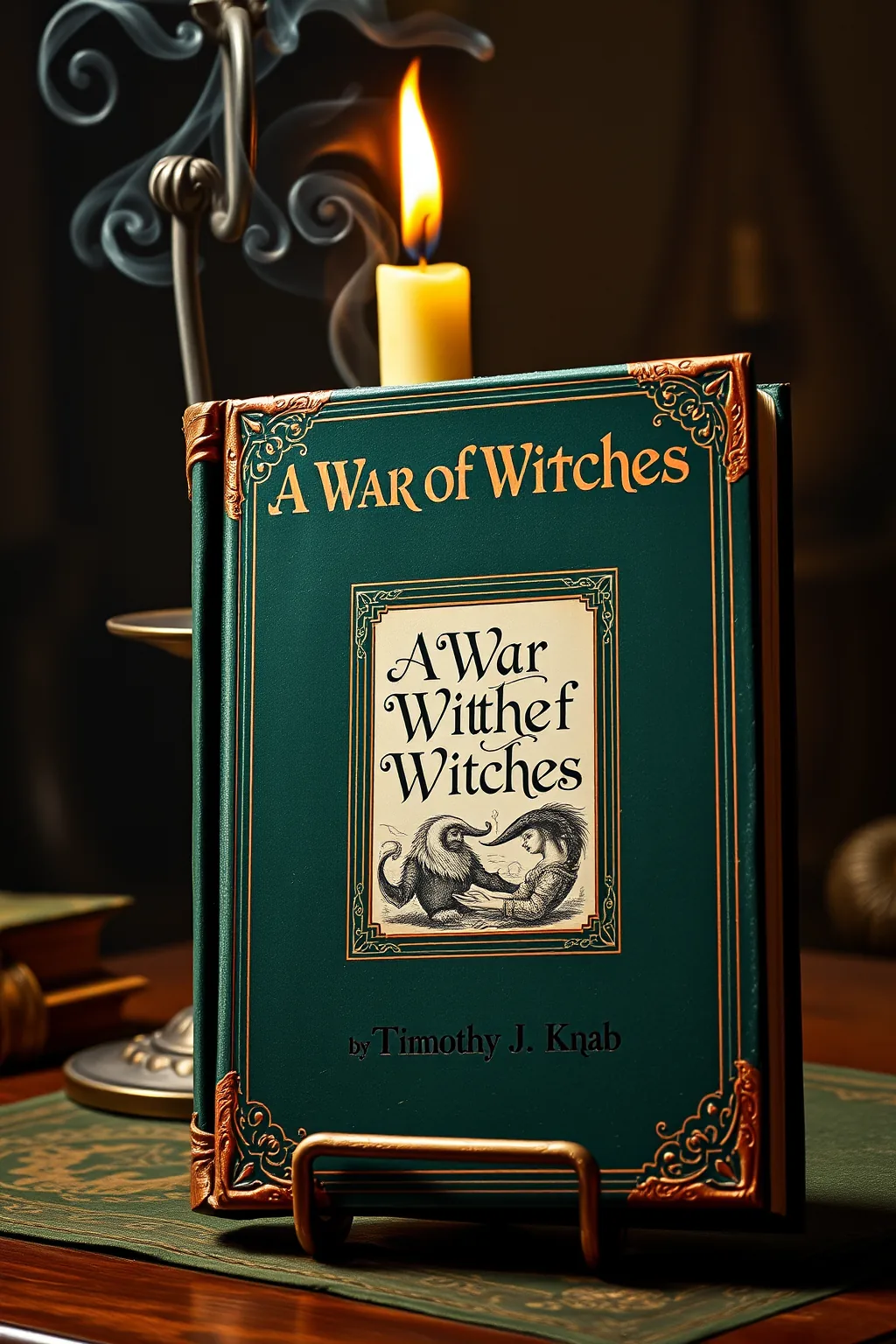
Timothy J. Knab's A War of Witches offers a compelling, if sometimes dense, examination of witchcraft's historical trajectory and its persistent spiritual resonance. Knab excels at dissecting the historical narrative of witch persecution, particularly in the chapter detailing the shift from alleged demonic pacts to accusations rooted in social anxieties. The work’s strength lies in its meticulous tracing of ideas and its refusal to accept facile definitions. However, the book occasionally struggles with accessibility, at times assuming a familiarity with esoteric terminology that might leave less initiated readers adrift. The exploration of the concept of the "witch goddess" archetype, while interesting, could benefit from more direct engagement with primary source material to anchor its assertions. Despite this, Knab provides a valuable, critical perspective on a complex subject.
📝 Description
72
### What It Is A War of Witches by Timothy J. Knab, first published in 2002, is an exploration of the esoteric and often contentious history of witchcraft. The book examines the evolution of witchcraft beliefs, moving beyond simplistic portrayals to investigate its roots and transformations across various cultural and historical landscapes. It engages with the spiritual, psychological, and social dimensions that have defined witchcraft throughout different eras.
### Who It's For This work is suited for readers interested in a serious, academic-style examination of witchcraft's historical and spiritual dimensions. It appeals to occultists seeking to understand the underpinnings of modern witchcraft movements, historians of religion looking for nuanced perspectives on pre-Christian and post-Christian spiritual practices, and anyone curious about the persistent archetypes and rituals associated with the witch figure across Western history.
### Historical Context Published in 2002, A War of Witches emerged during a period of renewed academic and popular interest in witchcraft studies, building on earlier scholarly work by figures like Jeffrey Burton Russell and his series on the Devil. The early 2000s saw a proliferation of both academic texts and popular interpretations of witchcraft, sometimes leading to debates about historical accuracy versus modern reconstruction. Knab's work situates itself within this ongoing discourse, offering a particular lens on the historical narrative of witch persecution and the spiritual lineage of witchcraft.
### Key Concepts The book dissects concepts such as the historical persecution of alleged witches, the spiritual core of pre-Christian European faiths, and the re-emergence of witchcraft as a spiritual path in the modern era. It explores the distinction between historical accusations and the self-identified practices of modern witches, addressing the continuity and discontinuity of traditions. Knab also touches upon the psychological and symbolic dimensions of the witch archetype.
💡 Why Read This Book?
• Gain a nuanced understanding of the historical persecution of witches, distinct from modern witchcraft practices, by examining Knab's analysis of the 17th-century witch trials. • Explore the concept of the "witch goddess" archetype as a recurring motif in esoteric thought, as detailed in Knab's discussions on pre-Christian spiritual beliefs. • Understand the evolution of witchcraft from historical accusations to contemporary spiritual paths, a journey illuminated by Knab's exploration of post-19th century revival movements.
⭐ Reader Reviews
Honest opinions from readers who have explored this book.
❓ Frequently Asked Questions
When was A War of Witches first published and by whom?
A War of Witches was first published in 2002. The author is Timothy J. Knab. It was released during a period of significant interest in witchcraft studies.
What historical period does A War of Witches primarily focus on?
While the book covers a broad span, it significantly delves into the historical periods of witch persecution, particularly the 17th century, and the subsequent re-emergence of witchcraft as a spiritual path.
Does the book discuss modern witchcraft practices?
Yes, A War of Witches discusses modern witchcraft by tracing its lineage and contrasting it with historical perceptions and persecutions, exploring its revival as a spiritual path.
What is the author's approach to the subject of witchcraft?
Timothy J. Knab takes a critical and analytical approach, moving beyond simplistic portrayals to investigate the spiritual, historical, and psychological dimensions of witchcraft and its associated figures.
Is A War of Witches suitable for beginners interested in witchcraft?
The book is more suited for those with some background in esoteric studies or history, as it can be dense and assumes a certain familiarity with related concepts. Beginners might find it challenging without prior context.
What kind of "war" is depicted in the book's title?
The title refers to the historical and ideological conflicts surrounding witchcraft, including the persecution of alleged witches and the ongoing debate about its nature and legitimacy as a spiritual tradition.
🔮 Key Themes & Symbolism
The Persecution Narrative
Knab examines the historical construction of witchcraft as a malevolent force, particularly during the European witch hunts. He scrutinizes the legal and theological frameworks used to condemn individuals, often highlighting how societal anxieties and political motives fueled these persecutions. The book distinguishes between genuine spiritual practices and the fearful narratives imposed upon them, presenting a critical view of how "witchcraft" became synonymous with evil in the Western imagination, particularly in the 17th century.
Archetypes of the Witch
The work delves into the enduring archetypes associated with witchcraft, from the wise woman and healer to the demonic figure. Knab explores how these archetypes have been shaped and reshaped across cultures and historical periods. He investigates the concept of the "witch goddess" and its potential roots in pre-Christian spiritual traditions, analyzing how this imagery has been reclaimed and reinterpreted by modern practitioners seeking a connection to ancient feminine divine energies.
Witchcraft as Spiritual Path
A War of Witches traces the evolution of witchcraft from a subject of historical persecution to a recognized spiritual path in the modern era. Knab discusses the revival movements of the 19th and 20th centuries, examining how contemporary witches draw upon historical, mythological, and psychological sources. The book addresses the ongoing process of defining and practicing witchcraft today, emphasizing its diverse manifestations and its role in personal and collective spiritual seeking.
Esoteric Lineage and Interpretation
The book engages with the esoteric traditions that inform understandings of witchcraft. Knab explores how various occult and metaphysical currents have interpreted witchcraft's history and symbolism. He navigates the complex interplay between historical fact, folklore, and esoteric doctrine, offering a perspective that acknowledges the spiritual dimension without necessarily adhering to dogmatic interpretations. The work highlights the subjective nature of spiritual experience and its connection to historical phenomena.
💬 Memorable Quotes
“The historical witch trials were not solely about religious heresy but often intertwined with social control and misogyny.”
— This interpretation highlights Knab's critical stance, suggesting that the persecution of individuals accused of witchcraft was driven by a complex interplay of factors beyond simple religious doctrine, including societal power dynamics and gender bias.
“Modern witchcraft often seeks to reclaim a pre-Christian spiritual lineage, connecting with ancient feminine divine concepts.”
— This paraphrase points to the book's exploration of contemporary witchcraft's roots, emphasizing its practitioners' efforts to revive and connect with older spiritual traditions, particularly those centered on female deities or principles.
“The archetype of the witch has shifted dramatically, from a feared sorceress to a symbol of empowered feminine energy.”
— This reflects Knab's analysis of how the cultural perception and symbolic meaning of the witch figure have transformed over time, acknowledging both negative historical portrayals and contemporary positive reinterpretations.
“Understanding witchcraft requires differentiating between historical accusations and the lived spiritual experiences of its practitioners.”
— This captures the essence of Knab's approach, advocating for a nuanced view that separates the historical record of persecution from the self-defined spiritual practices and beliefs of those who identify as witches.
“The 'war' in witchcraft is often a war of ideas and interpretations, fought across history and belief systems.”
— This interpretation emphasizes Knab's perspective on the title, suggesting that the conflicts surrounding witchcraft are primarily ideological and interpretative, spanning historical eras and diverse belief structures rather than purely physical confrontations.
🌙 Esoteric Significance
Tradition
A War of Witches engages with the broad Western esoteric tradition, particularly its interpretations of ancient European spiritual practices and the phenomenon of witchcraft. While not strictly adhering to a single lineage like Hermeticism or Kabbalah, it draws upon the historical discussions and symbolic interpretations that have emerged within these fields. The work departs from purely academic historical accounts by acknowledging and exploring the spiritual and psychological dimensions that have made witchcraft a potent force within esoteric thought.
Symbolism
Key symbols explored include the "witch goddess," representing a potential pre-Christian divine feminine and a source of power often suppressed historically. Another motif is the transformation of the witch archetype itself, shifting from a figure of fear and demonic association to one of empowerment and connection to natural forces. The book also implicitly examines the symbolism inherent in the persecution narratives, where accusations of pacts with the Devil served to demonize and control perceived societal deviants.
Modern Relevance
Contemporary neo-paganism and modern witchcraft movements frequently reference the historical narratives and archetypes discussed by Knab. Thinkers and practitioners seeking to understand the roots of their traditions, reclaim marginalized spiritual histories, or explore the feminine divine often find Knab's analysis relevant. His work contributes to ongoing dialogues about historical accuracy versus spiritual interpretation within these evolving paths, providing a critical framework for understanding the ongoing fascination with witchcraft's complex legacy.
👥 Who Should Read This Book
• Students of Western esotericism interested in the historical evolution of witchcraft beliefs and practices beyond modern interpretations. • Historians of religion and culture seeking a critical examination of the witch trials and their enduring impact on Western consciousness. • Practitioners of modern witchcraft who wish to understand the historical context and the various archetypes associated with their path.
📜 Historical Context
Published in 2002, Timothy J. Knab's A War of Witches entered a scholarly and popular landscape increasingly engaged with the study of witchcraft. This period saw a continuation of the academic reassessment initiated by scholars like Jeffrey Burton Russell, whose extensive works on the Devil and witchcraft from the late 20th century provided foundational analysis. The early 2000s witnessed a flourishing of both academic discourse and popular interest, sometimes blurring the lines between historical inquiry and modern neo-pagan reconstruction. Knab's work positioned itself within this dynamic, offering a critical perspective that sought to disentangle historical realities from later interpretations. It appeared at a time when the legacy of the European witch trials, particularly those in the 17th century, was being re-examined through lenses of gender studies, social history, and comparative religion, prompting ongoing debates about the nature of evidence and the motivations behind persecution.
📔 Journal Prompts
The historical witch trials' connection to social control and misogyny.
The transformation of the witch archetype across different eras.
Reclaiming pre-Christian spiritual lineage and the concept of the witch goddess.
The distinction between historical accusations and contemporary witchcraft practices.
The ongoing 'war of ideas' surrounding witchcraft's interpretation and legitimacy.
🗂️ Glossary
Witch Hunts
Historical periods, most notably in early modern Europe (roughly 15th-18th centuries), characterized by widespread persecution and execution of individuals accused of practicing witchcraft.
Witchcraft Archetype
The recurring symbolic figure or pattern of the witch as it appears in mythology, folklore, literature, and historical narratives, evolving over time from feared sorceress to empowered figure.
Esoteric
Relating to or accessible only by a relatively small number of people with a specialized knowledge or interest; often pertaining to mystical, spiritual, or occult traditions.
Neo-Paganism
A broad term for modern spiritual or religious movements that draw inspiration from or attempt to revive pre-Christian European pagan beliefs and practices.
Divine Feminine
The concept of a divine principle or deity understood as feminine, often associated with creation, nature, intuition, and life cycles, central to many spiritual and esoteric traditions.
Spiritual Lineage
A line of succession or transmission of spiritual teachings, practices, or authority from a teacher to a student or through a historical tradition.
Occult
Relating to supernatural, mystical, or magical powers, practices, or phenomena; often associated with hidden knowledge or secret traditions.