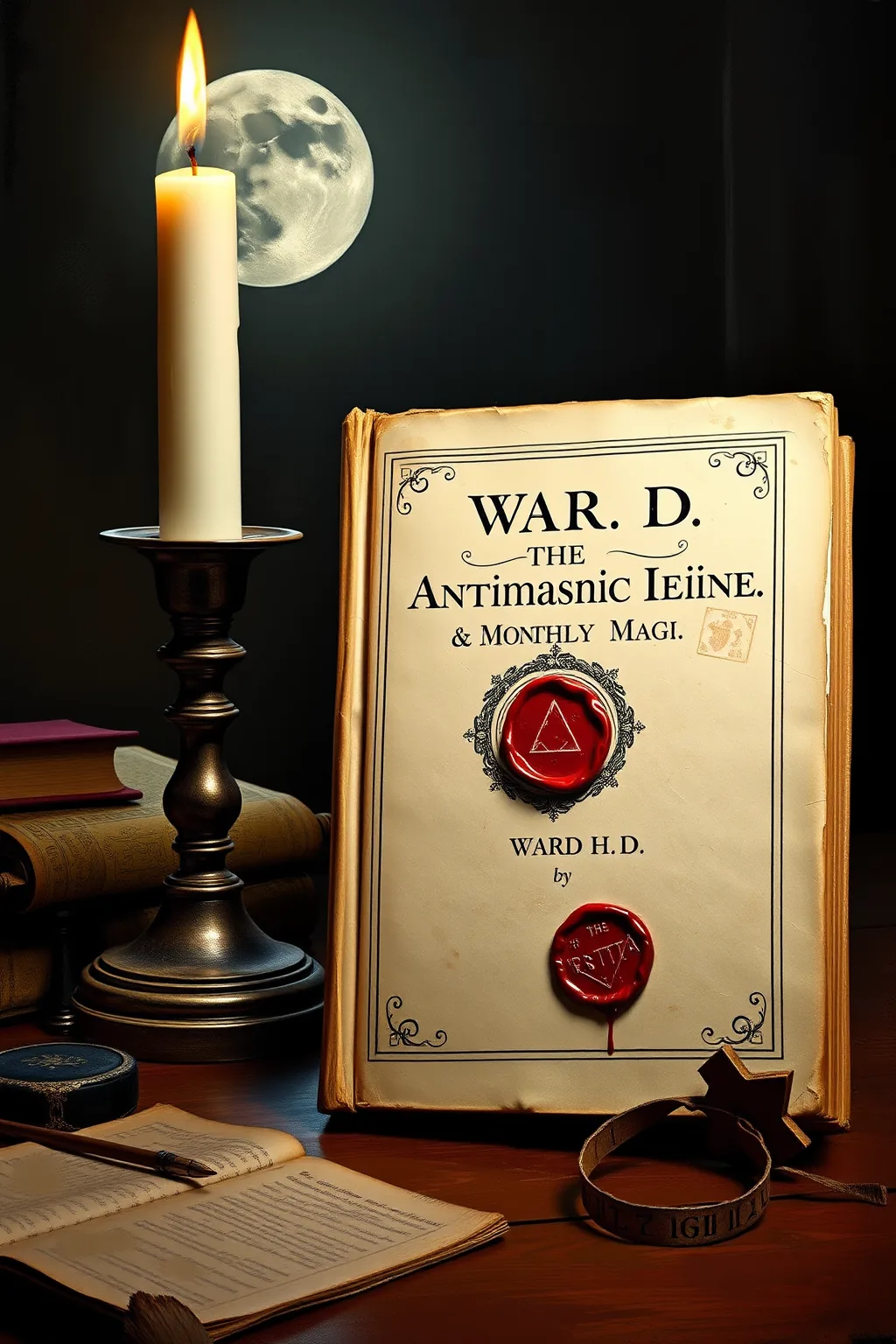
Ward H D The Antimasonic Review & Monthly Mag 1828
 75
75

Ward H D The Antimasonic Review & Monthly Mag 1828


Marcus Thorne (Esoteric Sciences Reviewer) — 'The Antimasonic Review & Monthly Magazine' (1828) by Ward H.D. is a fascinating, albeit contentious, artifact of early American intellectual history. While ostensibly a critique of Freemasonry, it inadvertently reveals much about the era's anxieties regarding hidden power structures and the dissemination of knowledge. Esoteric scholars will find value in its detailed accounts of alleged Masonic practices and symbolism, offering a counter-narrative to official doctrines. The publication's strength lies in its unfiltered portrayal of public fear and suspicion, illuminating the psychological landscape surrounding secret societies. It’s a must-read for those interested in the historical interplay of societal control, hidden traditions, and the birth of critical discourse surrounding the occult.
📝 Description
75
Published in 1828, 'The Antimasonic Review & Monthly Magazine' examined anxieties surrounding secret societies in early America.
This 1828 publication from Ward H.D. addresses the intense anti-Masonic feelings of its period. Beyond its direct critiques, the magazine contains discussions on esoteric ideas and social commentary. It questions the essence of secret groups, their hidden practices, and the influence they were thought to have on the young American republic.
For readers interested in the era's concerns, this journal shows the worries about hidden knowledge, the meaning of symbols, and the philosophical ideas behind who was included or excluded. The writing, typical of its time, carries a strong sense of urgency, prompting reflection on the lasting human interest in secrecy and the relationship between public views and private organizations.
While primarily a polemic against Freemasonry, the review touches upon themes common in esoteric thought of the period. These include the power attributed to symbols, the idea of hidden knowledge accessible only to initiates, and the critique of established power structures perceived as operating in secret. It reflects a broader cultural interest in uncovering hidden influences and understanding the forces that shape society, aligning with certain currents of occult and philosophical inquiry prevalent in the early 19th century.
💡 Why Read This Book?
Uncover the historical roots of suspicion surrounding secret societies and their perceived influence. This journal offers a rare glimpse into the anxieties of an era fascinated by hidden knowledge and clandestine power. Ideal for seekers of historical truth, scholars of esoteric traditions, and practitioners interested in the societal impact of perceived secrecy. It provides essential context for understanding the evolution of discourse on Freemasonry and related organizations.
⭐ Reader Reviews
Honest opinions from readers who have explored this book.
❓ Frequently Asked Questions
What is the primary focus of this publication?
The primary focus is a strong critique and exposé of Freemasonry, reflecting the intense anti-Masonic sentiment prevalent in America during the late 1820s. It aims to reveal perceived dangers and secrets of the fraternity.
Is this book suitable for beginners in occult studies?
While not a direct guide to occult practices, its historical context and discussion of perceived secret rituals can offer an intriguing, albeit critical, introduction to the societal anxieties surrounding esoteric groups.
What historical period does this publication represent?
This publication represents the late antebellum period in American history, specifically the year 1828, a time marked by significant social and political ferment, including the rise of the Antimasonic Party.
Does the author, Ward H.D., reveal their identity?
The identity of Ward H.D. remains largely unknown, contributing to the mystique and potentially the perceived authority or anonymity of the publication's critical stance.
What kind of 'hidden knowledge' is discussed?
The 'hidden knowledge' discussed pertains primarily to the alleged secret rituals, signs, oaths, and doctrines of Freemasonry, as interpreted and presented by the anti-Masonic viewpoint of the publication.
🔮 Key Themes & Symbolism
The Unveiling of Secrecy
This theme explores the publication's fervent mission to expose the perceived clandestine operations and rituals of Freemasonry. It studies the era's fascination and fear surrounding hidden societies and the 'secret knowledge' they purportedly guarded. The journal acts as a conduit, attempting to explain the esoteric practices and hierarchical structures that fueled public suspicion and debate, positioning secrecy itself as a primary antagonist.
Societal Paranoia and Control
The Antimasonic Review serves as a powerful lens through which to view the societal anxieties of early 19th-century America. It highlights a pervasive paranoia regarding unseen influences and the concentration of power within secret organizations. The publication argues that these societies threatened the democratic fabric and individual liberty, framing its critique as a defense of public order against hidden agendas and manipulative control mechanisms.
Symbolism and Interpretation
While critical, the journal engages with the symbolic language and purported meanings embedded within Masonic practices. It dissects these symbols, often reinterpreting them through an anti-Masonic lens to highlight their perceived malevolent or subversive nature. This engagement with symbolism reveals a societal preoccupation with deciphering signs and understanding the hidden messages that were believed to govern both the secret orders and the wider world.
💬 Memorable Quotes
Direct passages from the work, attributed to the author.
“The veil of mystery is woven with threads of fear and ignorance.”
— This highlights the author's belief that the allure and power of secret societies stem from the public's lack of understanding and the resulting fear they inspire.
“Within the cloistered halls, oaths bind more than men; they bind the very spirit of freedom.”
— This suggests a profound concern that Masonic obligations transcend personal commitment, actively suppressing individual liberty and democratic ideals.
“Every symbol has a voice, and not all voices sing harmonious songs.”
— This acknowledges the importance of symbolism but warns that Masonic symbols carry a hidden, potentially sinister, message that needs to be critically examined.
“The edifice of society rests upon foundations unseen by the common eye.”
— This profound statement implies that hidden forces, like secret societies, have a significant, often unacknowledged, impact on the structure and stability of civilization.
💡 Key Ideas
Editorial paraphrase of the work's core concepts — not direct quotes.
Light is the enemy of darkness, and truth the bane of deception.
This quote expresses the journal's core argument: that exposing Masonic secrets will inevitably dispel their perceived power and corruption, bringing clarity to the public.
🌙 Esoteric Significance
Tradition
While critical of Freemasonry, the journal engages with the *idea* of esoteric traditions, specifically the perceived hidden doctrines and rituals of Masonic lodges. Its significance lies not in promoting an esoteric tradition, but in reflecting the societal reaction to them, revealing anxieties about hidden knowledge and its potential for manipulation. It's a study in the *perception* of esotericism.
Symbolism
The review dissects and reinterprets Masonic symbolism through an anti-Masonic lens. It highlights how symbols, often imbued with esoteric meaning for initiates, become objects of suspicion and fear for outsiders. The journal demonstrates how symbols can be wielded as tools of both inclusion (within the fraternity) and exclusion (from public trust), showcasing the potent power of visual language in shaping public opinion.
Modern Relevance
In an age still rife with debates about transparency, conspiracy theories, and the influence of powerful, often opaque, organizations, this journal's concerns about hidden knowledge and societal control resonate. It offers historical context for understanding enduring public skepticism towards elite groups and secret societies, reminding us that the quest to understand unseen forces is a perennial human endeavor.
👥 Who Should Read This Book
This journal is essential for historians of American social and political movements, particularly those interested in the Antimasonic era and the role of secret societies in public discourse. Scholars of conspiracy theories and the history of skepticism will find it a primary source. Practitioners and students of esoteric traditions might read it to understand the historical opposition they have faced and to analyze how esoteric symbols are perceived and distorted by external critique. It is also recommended for anyone fascinated by the evolution of societal anxieties and the power of public narrative.
📜 Historical Context
Published in 1828, 'The Antimasonic Review & Monthly Magazine' emerges from a period of intense social and political upheaval in the United States. The rise of the Antimasonic Party, fueled by public suspicion and fear of Freemasonry, dominated the political landscape. This era witnessed a surge in conspiracy theories and anxieties about secret societies influencing government and society. The journal reflects this climate, presenting a fervent, often alarmist, perspective on Freemasonry's alleged reach and power. Its content provides invaluable insight into the popular discourse, moral panics, and the burgeoning sense of distrust towards established, yet hidden, institutions that characterized early American democracy.
📔 Journal Prompts
How does the fear of 'hidden knowledge' manifest in contemporary society, and what parallels can be drawn to the 1828 Antimasonic sentiment?
Analyze a modern-day organization or group that is often perceived as 'secretive.' What are the public's anxieties, and how are they similar to or different from those surrounding Freemasonry in 1828?
Explore the power of symbolism. How can symbols be used to unite a group, and how can they be perceived as threatening by outsiders?
Consider the responsibility of the press in shaping public opinion, especially concerning controversial or 'secretive' subjects. What ethical considerations arise?
Reflect on the concept of 'truth.' In an era of conflicting narratives and information, how do we discern verifiable facts from speculation and fear-mongering?
🗂️ Glossary
Antimasonry
A political and social movement that emerged in the United States in the late 1820s, opposing Freemasonry and advocating for its abolition due to fears of its secrecy, influence, and perceived moral corruption.
Esoteric
Intended for or likely to be understood by only a small number of people with a specialized knowledge or interest; relating to or characterized by a hidden meaning or symbolism.
Latent
Existing but not yet developed or manifest; hidden or concealed. Often used to describe potential influences or threats that are not immediately obvious.
Polemic
A strong verbal or written attack on someone or something. In this context, it refers to the strongly critical and often aggressive arguments presented against Freemasonry.
Vigilance
The action or state of keeping careful watch for possible danger or difficulties. The journal often calls for public vigilance against the perceived machinations of secret societies.
This book appears in 2 collections
🔮 Readers Also Liked
Browse all →







From the “Secret Societies” Collection
View all →


More Free Freemasonry & Secret Societies Books
View all →







![[Comte de Gabalis. English]. The diverting history of the Count de Gabalis: containing, I. An account of the Rosicrucian doctrine of spirits, viz. sylphs, salamanders, gnomes, and d¶mons; ... To which is prefix'd, Monsieur Bayle's account of this work, ... 1714](/img/thumb/comte-de-gabalis-english-the-diverting-history-of-the-count-de-gabalis-containing-i-an-account-of-the-rosicrucian-doctrine-of-spirits-viz-sylphs-salamanders-gnomes-and-d-mons-to-which-is-prefix-d-mons.webp)
